

Medically reviewed by Dr. Joel Kopelman, MD, FACS, a board-certified facial plastic and oculoplastic surgeon.
A persistent, sudden, or intense violet tone needs a closer look. Possible medical causes include injury, infection, inflammation, medication side effects, or dermatomyositis, an autoimmune disease that causes a reddish-purple rash around the eyes along with muscle weakness. Seek care if the discoloration comes with pain, swelling, fever, vision changes, or new weakness.
Key Takeaways
- Purple eyelids usually come from thin skin, visible veins, or a minor bruise, and the color fades once swelling or irritation settles.
- A bruise on the eyelid with no clear cause often comes from rubbing, sleeping on your face, blood thinners, or supplements like ginkgo. Don’t stop a prescribed medication on your own.
- Most minor eyelid bruises clear in 2 to 3 weeks, shifting from purple to green to yellow along the way.
- A violet rash on both upper lids with muscle weakness can point to dermatomyositis, so see a doctor soon.
- Get emergency care for sudden vision loss, severe eye pain, fever with a swollen red lid, a bulging eye, or bruising around both eyes after a head injury.
What Causes Purple Eyelids and Common Causes
Most cases come down to one of five things:
- Blood vessels showing through thin skin
- A small bruise from pressure or rubbing
- Inflammation from allergies or infection
- A medication side effect
- Less often, an underlying condition such as dermatomyositis
What does it mean if your eyelids are purple?
It usually means blood, or the vessels that carry it, is showing through the skin. The lid can look bruised even without injury. The color can come from vascular changes, inflammation, minor trauma, or fragile skin.
Why do my eyelids look bruised?
Broken capillaries under the skin are the most common reason. Allergies, minor trauma, and dark circles that extend onto the upper lid can create the same look.
Can purple eyelids appear for no reason?
Most people who find a bruise on the eyelid for no reason missed a small trigger, such as rubbing or pressing the eye into a pillow while asleep. In some cases, they appear spontaneously, especially with sensitive or thin skin. Skin this thin marks easily.
If you can’t think of a trigger, the section on bruising without trauma below covers medication and clotting causes.
Are purple eyelids linked to illness or COVID?
Illness can play an indirect role. Rubbing, coughing, and vomiting during an infection can break small vessels around the eyes, so the lids look darker. Purple lids with fever, pain, or spreading swelling need prompt evaluation.
Common Early Signs
- Discoloration that resembles a bruise
- Mild swelling or tightness
- Changes in skin texture or tone on the lid
Bruised Eyelid Causes and Eyelid Discoloration
The table below summarizes the most common causes, what each tends to look like, and how quickly to act.
| Cause | What it looks like | Other clues | How urgent |
|---|---|---|---|
| Thin skin and visible veins | Bluish or violet tint, often on both upper lids | Present for months or years; more noticeable with age or fatigue | Usually harmless |
| Minor bruise (rubbing, crying, pressure) | Purple patch that turns green, then yellow | Recent rubbing, hard crying, or sleeping face down | Usually harmless |
| Straining (vomiting, coughing, lifting) | Pinpoint red-purple dots on the face, often around the eyes | Appeared right after the episode; you otherwise feel well | Usually harmless |
| Blood thinners or supplements | Bruises from very light pressure | Aspirin, ibuprofen, warfarin, apixaban, clopidogrel, ginkgo | Talk to your doctor |
| Allergies or contact dermatitis | Puffy, itchy, darker lids on both sides | New makeup or skin care, pollen, pets | Usually harmless |
| Blepharitis, stye, or chalazion | Red, swollen, tender lid | Crusting at the lash base, a tender bump, gritty feeling | See a doctor if it doesn't clear |
| Bimatoprost (Latisse, Lumigan) | Gradual darkening of the lid skin | Started lash serum or glaucoma drops weeks or months earlier | Talk to your doctor |
| Heliotrope rash (dermatomyositis) | Violet rash, usually on both upper lids, often puffy | Muscle weakness, rash on the knuckles, trouble swallowing | See a doctor soon |
| Low platelets or clotting disorder | Repeated bruises with no injury | Nosebleeds, bleeding gums, bruises elsewhere | See a doctor soon |
| Orbital cellulitis | Red, warm, swollen lids | Fever, pain when moving the eye, bulging eye, blurred or double vision | Emergency |
| Head injury | Bruising around both eyes | Recent head injury, bruising behind the ears | Emergency |
Heliotrope eyelid rash and autoimmune issues
This violet rash, named after the purple heliotrope flower, is a hallmark of dermatomyositis, a rare autoimmune disorder. It usually appears on both upper lids and often comes with puffiness and tiny visible vessels. The rash can appear before or at the same time as muscle weakness, so it can be an early clue. (AAO EyeWiki)
Trauma, crying, or broken blood vessels
Frequent crying, rubbing, or sneezing can break small vessels, leaving a purple bruise on the eyelid or making veins more visible. Even a bump you barely notice can do the same, since eyelid skin is so thin. These bruises typically fade on their own within two to three weeks.

Bruising on the eyelid without trauma
Bruising on the eyelid without trauma usually has a hidden trigger rather than no cause at all. The most common culprits include:
- Blood thinners and pain relievers: aspirin, ibuprofen, warfarin, apixaban, and clopidogrel slow clotting, so a tiny leak spreads further. (Mayo Clinic)
- Supplements and steroids: ginkgo biloba mildly thins the blood, and long-term corticosteroids thin the skin.
- Straining: vomiting, hard coughing, or heavy lifting can burst tiny capillaries and leave pinpoint red-purple dots on the face, often around the eyes. (Cleveland Clinic, Indian Dermatology Online Journal)
- Recent injections: bruising after under-eye filler can leave a purplish tint around the eye that usually fades within one to two weeks.
- Age: the skin gets thinner and loses some of the fat layer that cushions small vessels.
Don’t stop a prescribed blood thinner on your own. See a doctor if bruises appear often, keep getting larger, or come with nosebleeds, bleeding gums, or bruises elsewhere. A blood test can check your platelet count and clotting.
Infections like blepharitis
Inflammation along the lid margin, called blepharitis, may cause redness, swelling, crusting, or discoloration. Styes and chalazia (blocked oil glands) can also leave the lid red, swollen, and tender.
Veiny or dark upper eyelids
Vein visibility increases with age and as skin thins. Fair skin and genetics also play a role. This type of discoloration is usually cosmetic.
Medications that darken the eyelids
Some medications darken the lid skin itself rather than causing a bruise. Bimatoprost is the active ingredient in Latisse lash serum and Lumigan glaucoma drops. It can darken eyelid skin within weeks to months of starting. (American Academy of Ophthalmology)
This darkening can fade after you stop the drug, but eye color changes from the same medication can be permanent. (bimatoprost drug label) Talk to your doctor before stopping a prescribed eye drop.
Purple eyelids in babies, toddlers, and adults
In newborns, a bruised look on the lids often comes from pressure during delivery. Puffy or bruised lids are common in the first days or weeks after birth and usually settle on their own. (Kaiser Permanente)
A raised red or purple mark that grows during the first months may be an infantile hemangioma. These are common on the upper eyelid and can affect vision if they press on the eye, so have a doctor check it promptly.
In adults, the cause often relates to lifestyle, medications, aging skin, or chronic conditions.
Medical vs. Cosmetic Causes
- Medical causes: autoimmune conditions, infections, trauma, clotting problems, medication side effects
- Cosmetic causes: aging, vein visibility, lifestyle-related discoloration
For related problems, see this guide to other eyelid conditions.
Swelling, Tenderness, and Sudden Spots
Swollen or tender purple eyelids: Causes & signs
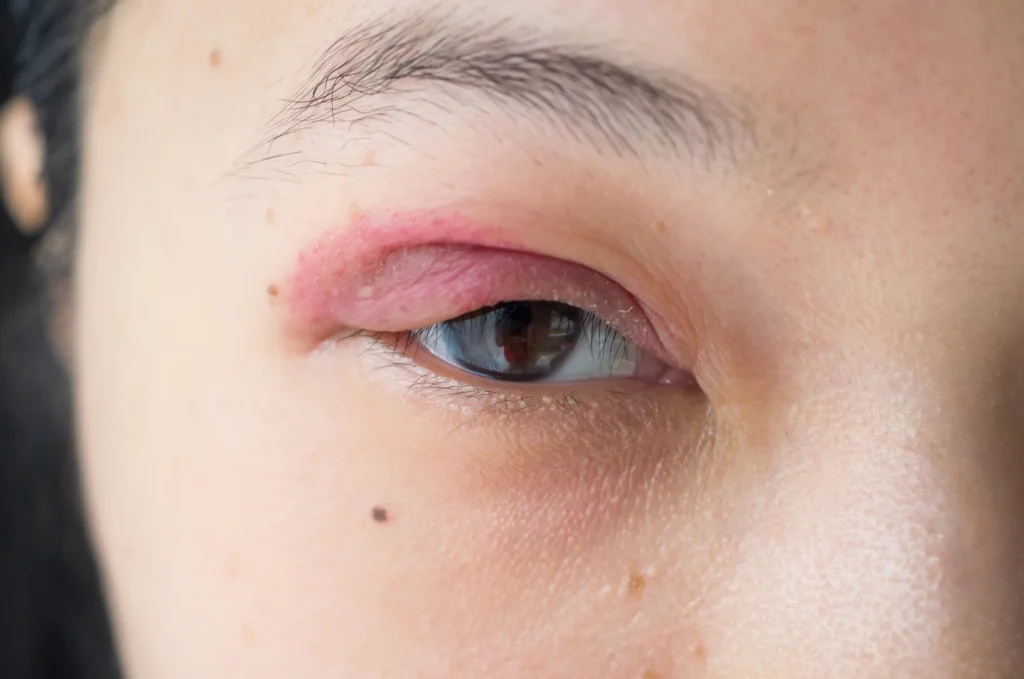
These may result from an allergic reaction such as eyelid dermatitis, a blocked gland, or a localized infection. A purple, swollen eyelid can be alarming, especially if you have pain or vision changes. If the swelling worsens or makes it hard to open your eye, get medical attention.
Swelling with tenderness can also point to a chalazion or an internal stye. If the upper lid is tender to the touch, apply a warm compress and watch for changes.
Sudden purple spot on eyelid
A sudden spot usually comes from a broken blood vessel, a bug bite, or minor trauma, and it typically heals on its own. An unexplained bruise on the upper eyelid can feel alarming. Get it checked if the discoloration lasts or spreads; a doctor can rule out clotting issues or vascular inflammation.
Woke up with a bruised eyelid?
If you woke up with a bruised eyelid, the cause most likely happened overnight without you noticing. Common triggers:
- Rubbing your eyes in your sleep, often from allergies or dry eyes
- Sleeping face down or pressing the eye into a pillow
- A night of coughing, sneezing, or vomiting
- A bug bite near the eye
- A new blood thinner or supplement that makes bruising easier
Overnight bruises heal like any other, as the timeline below shows.
How long does an eyelid bruise last?
Most minor bruises on the lid clear in two to three weeks. They follow a predictable color pattern as your body breaks down the trapped blood. (Healthline) Bruising after eyelid surgery shows the same color stages, as these photos of bruising after lower eyelid surgery illustrate.
| Timeframe | Typical color | What's happening |
|---|---|---|
| First hours | Pink or red | Fresh blood leaks from broken capillaries under the skin |
| Days 1 to 5 | Blue or dark purple | Low oxygen and swelling darken the bruise |
| Around day 6 | Pale green | Hemoglobin starts to break down |
| Day 7 onward | Pale yellow or light brown | The last stage of reabsorption |
| 2 to 3 weeks | Fades | Most minor bruises are gone; healing may take longer with age |
Healing can take longer as you age. See a doctor if the bruise keeps growing, feels firm, hurts more over time, or doesn’t improve after two weeks. Also get checked if the bruise is close to the eye and you have trouble seeing properly.
What a Purple Eyelid Can Reveal About Your Health
A purple eyelid can sometimes be more than a surface issue. In rare cases, it may point to an underlying condition like vasculitis, orbital cellulitis, or a blood clotting disorder.
Very rarely, bruising around both eyes after minor strain can signal amyloidosis, a protein buildup that makes small vessels fragile. (Sultan Qaboos University Medical Journal)
Signs to Watch For
- Persistent pain or heat around the eye
- Headaches or vision changes
- Discoloration that spreads beyond the lid
Diagnosis and Evaluation
What doctors look for
Doctors assess color, swelling, pain, and your medical history, including any medications and supplements.
Common questions during checkups
You may be asked about recent infections, fatigue, muscle weakness, easy bruising or bleeding elsewhere, or other whole-body symptoms.
Tests used to identify the cause
Evaluations may include a physical exam, blood tests (including a platelet count and clotting tests), imaging, and autoimmune panels.
Diagnostic Steps
- Physical examination of the eyelid and surrounding area
- Patient history review, including immune-related symptoms and current medications
- Possible use of imaging and blood tests
If you’re wondering, “Why is my eyelid purple?”, a proper diagnosis begins with an eye exam. A provider will assess the color, swelling, texture, and related symptoms. In some cases, tests may be needed to rule out autoimmune disorders or vascular concerns.
Patients with a heliotrope rash may undergo evaluation for dermatomyositis. The condition most often appears in children ages 5 to 15 and adults ages 40 to 60, and it affects women more often than men. Along with the rash, doctors look for muscle weakness, fatigue, difficulty swallowing, joint pain, and sensitivity to sunlight.
Juvenile dermatomyositis, the form that affects children, presents with similar skin and muscle symptoms and often requires long-term follow-up. In adults, the condition is sometimes linked to an underlying cancer, so doctors often recommend cancer screening after diagnosis. (Medical News Today)
When to Seek Emergency Care for a Purple Eyelid
Most cases are not emergencies, but seek immediate care if you experience:
- Sudden vision loss or severe eye pain
- Swelling that spreads to the cheek or forehead
- High fever with discoloration around the eye
- Inability to move the eye or eyelid
- Bruising around both eyes after a head injury
Painful eye movement, a bulging eye, fever, and vision changes together can signal orbital cellulitis, a serious infection that needs same-day care. Bruising around both eyes after a head injury, sometimes called “raccoon eyes,” can signal a skull fracture. If in doubt, get checked.
Treatments and Relief
At-home remedies for mild cases
A small bruise on the eyelid usually heals on its own, and a few simple steps help:
- Applying a cold compress, wrapped in a cloth, soon after the bruise appears
- Avoiding eye rubbing or makeup use
- Keeping your head raised during sleep
Medical treatment options
- Antibiotic ointment or drops for bacterial infections
- Short courses of steroid cream for inflammation, only under a doctor’s care
- Immunosuppressants for autoimmune cases
Red eyelids: How to reduce irritation
Use warm compresses and gently clean the lids. Avoid irritants such as new cosmetics or harsh cleansers.
Managing long-term discoloration
Cosmetic procedures or topical treatments may help, depending on the cause. A doctor can advise whether laser treatment for visible veins or lightening creams for pigment changes fit your case.
Mild darkening from pigment or thin skin may improve with a targeted eye cream; creams do not treat bruising or visible veins.
In some cases, patients also seek treatment for scars on eyelids, especially if the discoloration comes with raised or visible marks from past injuries or surgeries.
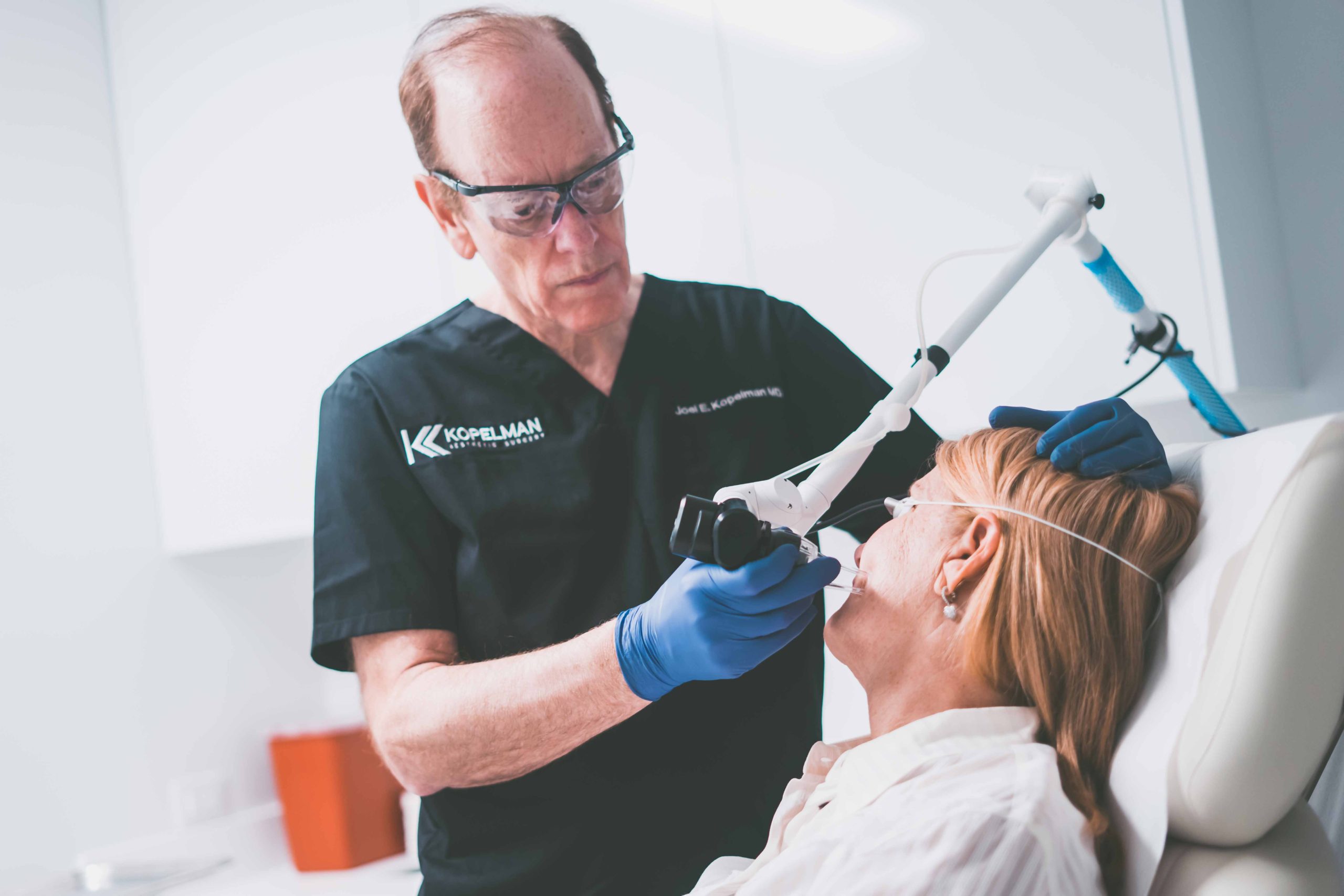
For autoimmune causes, Dr. Kopelman often coordinates care with dermatologists and rheumatologists. Physical therapy may also help manage muscle inflammation.
Common Questions
Can stress cause purple eyelids?
Stress may worsen underlying inflammation and disrupt sleep, which makes vessels more visible. It is rarely a direct cause.
Are purple eyelids permanent?
Most cases resolve. Bruises fade within two to three weeks, and medication-related darkening can improve after stopping the drug. Chronic discoloration from visible veins or pigment may need treatment.
Should I be concerned if only one eyelid is affected?
A one-sided bruise after rubbing or a bump is usually harmless. See a doctor if it’s painful, swollen, spreading, or affects your vision.
Other Concerns Patients Ask
- What if the discoloration worsens? Spreading discoloration, worsening swelling, or new pain needs prompt evaluation.
- Could medications be the cause? Yes. Blood thinners, aspirin, ibuprofen, steroids, and bimatoprost are common culprits.
- Can lifestyle changes reduce recurrence? Better sleep, treating allergies, and avoiding eye rubbing can reduce how often it happens.
If symptoms persist or worsen, seek professional evaluation. Dr. Joel Kopelman and his team provide detailed assessments and treatment plans tailored to each patient’s needs.
To discuss eyelid discoloration with the team at Kopelman Aesthetic Surgery, schedule a consultation today.