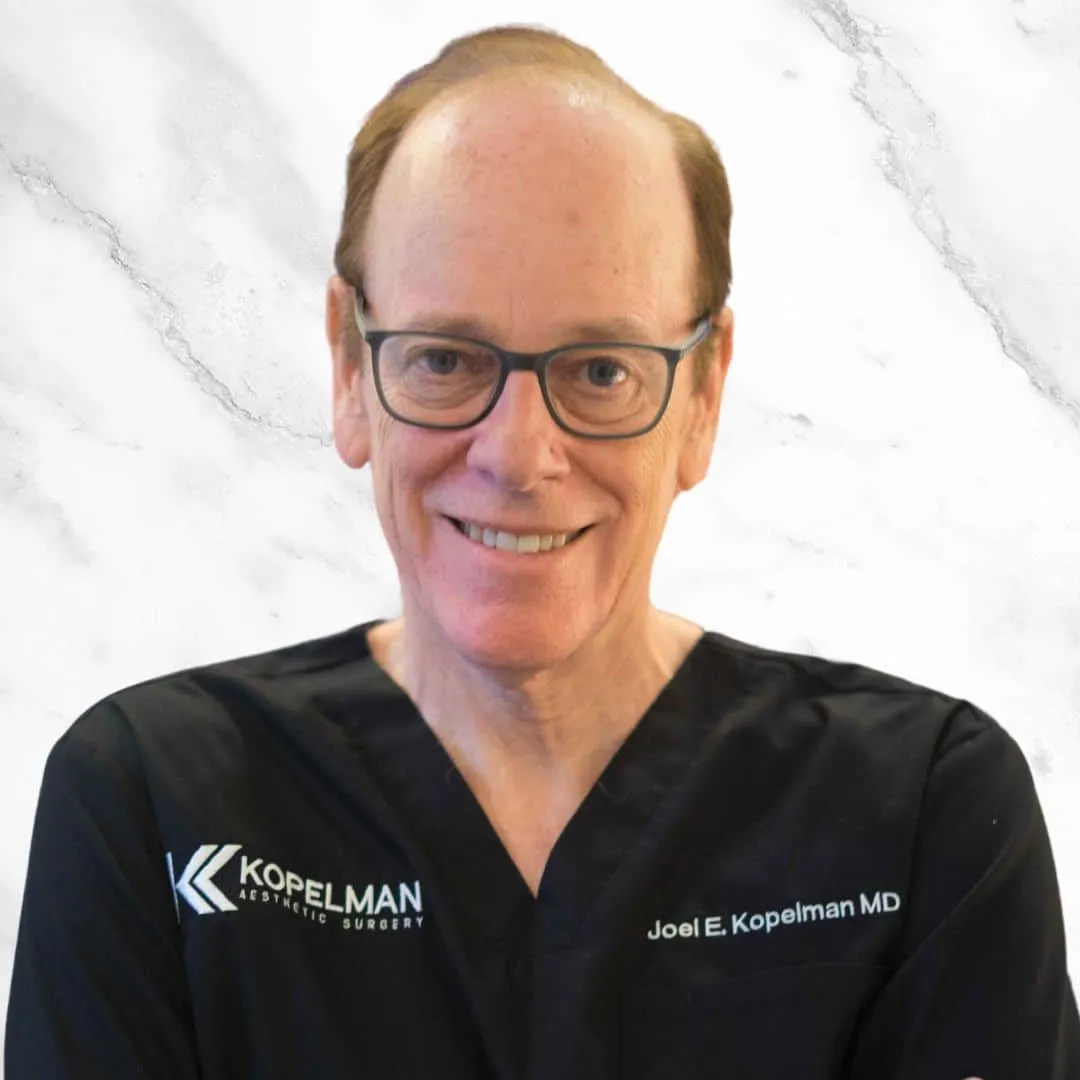
A deep-plane facelift in New Jersey is a surgical facial rejuvenation procedure that lifts deeper facial tissues rather than just pulling the skin. It may help improve sagging cheeks, jowls, jawline definition, nasolabial folds, and marionette lines while supporting a more natural-looking result. The best deep-plane facelift approach depends on facial anatomy, skin quality, aging pattern, surgeon’s experience, and whether the patient needs additional treatments such as a neck lift, fat grafting, or skin resurfacing. Dr. Joel Kopelman evaluates the deeper facial support layers, including the SMAS and midface tissues, to determine whether this technique is appropriate.
A deep plane facelift in New Jersey is a surgical facial rejuvenation procedure that lifts and repositions the deeper facial tissues rather than pulling on skin alone. It may help improve sagging cheeks, jowls, jawline definition, nasolabial folds, and marionette lines while supporting a natural-looking result.
Whether this technique is right for you depends on facial anatomy, skin quality, aging pattern, surgeon experience, and whether you also need a neck lift, fat grafting, or skin resurfacing. Dr. Joel Kopelman evaluates the deeper facial support layers, including the SMAS and midface tissues, to determine whether the approach is appropriate.
| Detail | What to Expect |
|---|---|
| Surgery time | Approximately 4 to 6 hours, longer when combined with eyelid surgery or fat grafting |
| Anesthesia | General anesthesia, or IV sedation in selected cases |
| Back to desk work | Roughly 2 weeks for most patients |
| Presentable for events | 6 to 8 weeks as a minimum; 3 months is ideal |
| Longevity of results | Commonly 10 to 15 years |
| Typical cost range | $45,000 to $60,000 [confirm with client before publishing] |
| NJ office | Paramus, Bergen County, serving northern New Jersey and the NYC metro area |
A patient should consider a deeper-layer facelift because it offers more comprehensive and enduring results than surface-level techniques. By addressing the tissues beneath the skin, the procedure lifts and smooths the midface, cheeks, and jawline, and can significantly soften nasolabial folds and marionette lines.
The approach does more than tighten skin; it restores position and volume and improves overall facial harmony. The result is a rejuvenated appearance that can last for many years rather than a temporary tightening effect.
Because tension is carried by the deeper structures rather than the skin, there is less pull on the incision lines. This lowers the risk of widened scars and supports a softer, more natural outcome.
The technique is particularly useful for patients who want meaningful rejuvenation without the “pulled” look that superficial lifts can produce. With Dr. Kopelman’s technique and attention to detail, patients can expect a manageable recovery and results that read as their own face, refreshed.


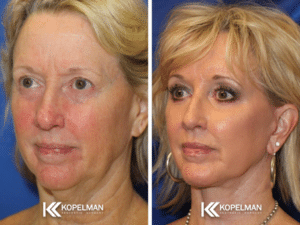
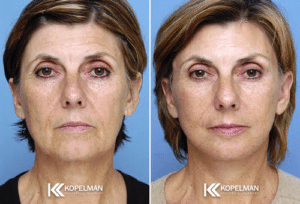
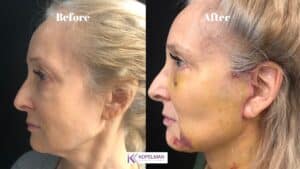
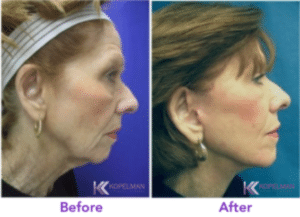
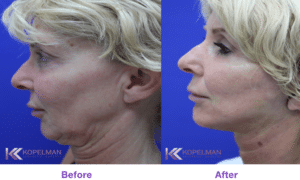
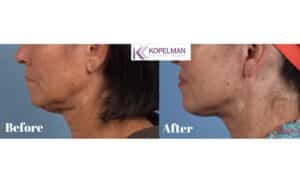
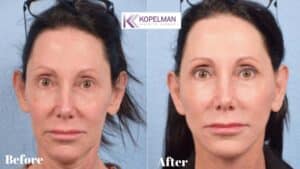
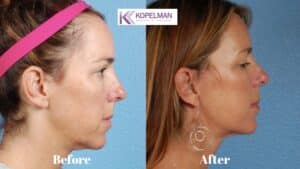
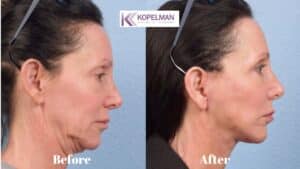
These Facelift before and after pictures represent actual patients from Dr. Kopelman. They will help you to set realistic goals for your own surgical outcome. Click on a patient to learn more about their Deep Plane Facelift.
“I recently had a deep plane facelift with Dr. Kopelman, and the results are incredible. My face looks naturally lifted and more youthful. The recovery was manageable, and the care I received was exceptional. I couldn’t be happier
~ Megan M. ~
During your facial consultation, Dr. Joel Kopelman will focus on the areas that concern you most and also assess other aspects of facial aging that may be present. He addresses sagging cheeks, jowls, and loose neck skin by repositioning the deeper facial tissues to achieve a natural, long-lasting result.
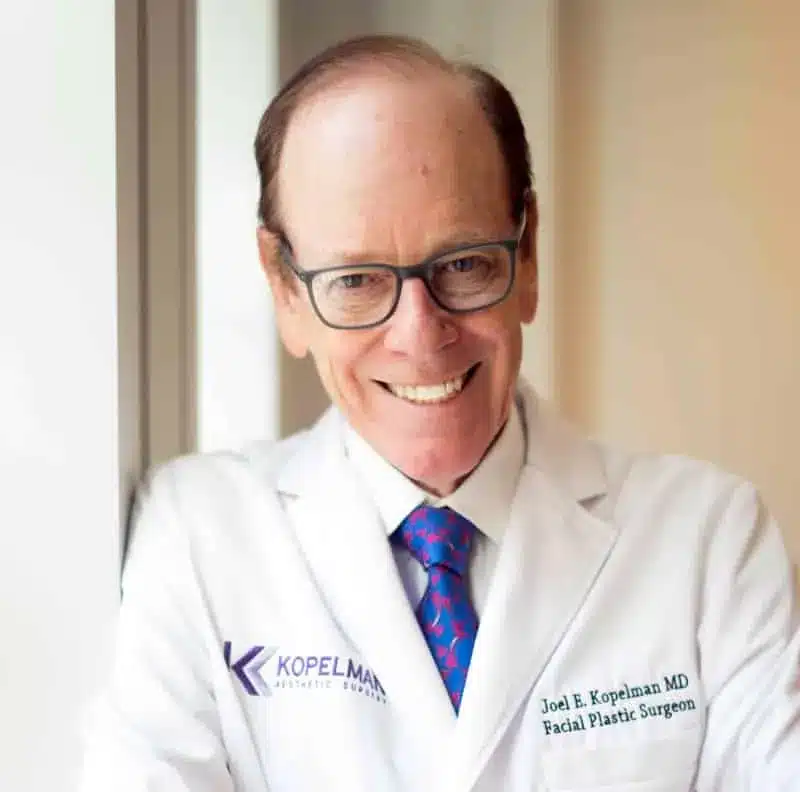
Dr. Kopelman is dual-trained as a facial plastic and oculoplastic surgeon, which is unusual among surgeons offering this procedure. Because the eyelids and midface age as a single unit, that background matters when the lift extends toward the lower eyelid-cheek junction.
His credentials include [board certification: confirm exact boards and wording with client] and more than 35 years of experience in facial and eyelid surgery. Consultations are conducted in person, and the surgical plan is tailored to your anatomy rather than a single default technique.
A facelift is meant to enhance your natural facial contours and, when done well, will improve your facial symmetry.
Dr. Joel Kopelman’s approach involves repositioning the deeper layers of facial tissue, including muscle and fat. The method specifically targets the malar fat pad and the retaining ligaments of the face.
By releasing and repositioning these structures, he lifts and smooths the midface, cheeks, and jawline. This reduces nasolabial folds and marionette lines while improving overall facial contour, and the effect commonly holds for 10 to 15 years.
The facelift procedure is distinct in its approach to facial anatomy. During surgery, Dr. Kopelman dissects beneath the SMAS layer to reach and release the ligaments that tether the facial tissues in a descended position.
That deeper release allows a more complete repositioning without excessive tension on the skin. Patients typically see improved midface volume, a cleaner jawline, and a rejuvenated appearance that still reads as their own face.
Not every patient needs the same operation, and the honest answer at consultation is sometimes a smaller procedure. Understanding how the main techniques differ helps you arrive with better questions.
The comparison below covers the three options most often discussed at consultation, including a mini facelift in New Jersey for patients with early laxity.
| Technique | Tissue Layer Addressed | Best Suited For | Typical Longevity |
|---|---|---|---|
| Deeper-plane lift | Sub-SMAS dissection with release of retaining ligaments; skin and deep tissue moved as a unit | Moderate to advanced midface descent, deep folds, prominent jowls, neck laxity | 10 to 15 years |
| SMAS facelift | SMAS layer tightened by folding or overlapping, without full ligament release | Moderate lower-face laxity with well-preserved midface volume | 7 to 10 years |
| Mini facelift | Limited incision around the ear with more conservative lifting | Early jowling and mild jawline laxity, often patients under 55 with good skin elasticity | 5 to 7 years |
If your primary concern is early jowling rather than midface descent, a mini facelift in New Jersey may achieve what you want with a shorter recovery. Dr. Kopelman will tell you directly when a smaller operation will not deliver the result you are describing.
Patients weighing surgery against injectables should know the distinction clearly. Fillers and neuromodulators work on volume and surface texture; surgery works on structure and position, and only surgery removes excess skin.
Good candidates are in general good health, have realistic expectations, and have reached a point where non-surgical treatments no longer address the laxity that bothers them. Most patients are between 45 and 70, though candidacy is based on anatomy rather than age alone.
The concerns most commonly addressed include:
Some conditions can make a patient unsuitable or require clearance before scheduling:
Patients who have had a previous lift elsewhere and are unhappy with the outcome are evaluated separately, as scar tissue can alter the surgical plan.
Every surgical procedure carries risk, and an honest discussion of it is part of an informed decision. The risks here are similar to those of other facelift techniques.
Potential complications include bruising, swelling, hematoma, infection, delayed healing, visible or widened scarring, asymmetry, numbness, hair loss near incisions, and injury to the facial nerve. Nerve-related weakness is uncommon and is usually temporary when it occurs.
Risk is reduced by choosing an experienced, board-certified surgeon, operating in an accredited facility, disclosing your full medical history and medications, and following pre- and post-operative instructions precisely. Nicotine in any form is the single most modifiable risk factor for poor healing.
Patients researching the procedure independently can review general facelift safety information from the American Society of Plastic Surgeons.
Healing varies from patient to patient, and combining procedures, such as eyelid surgery or fat grafting, can extend the visible bruising phase. The timeline below reflects a typical course.
| Time After Surgery | What Most Patients Experience |
|---|---|
| Days 1 to 3 | Dressings in place, peak swelling and bruising, tightness and mild discomfort; rest and head elevation are essential |
| Days 4 to 7 | Sutures and any drains typically removed; bruising begins to shift and comfort improves noticeably |
| Weeks 1 to 2 | Bruising fades; many patients return to desk or remote work and light daily activity |
| Weeks 3 to 4 | Light exercise usually resumes; residual swelling and firmness are still present |
| Weeks 6 to 8 | Strenuous exercise and lifting generally cleared; minimum window before a significant social event |
| Months 3 to 6 | Final contours emerge as swelling fully resolves; incision lines continue to fade for up to a year |
If you have a wedding, filming, or major event on the calendar, plan three months rather than the six-week minimum. That interval is far more representative of your long-term result.
Cost depends on the extent of the lift, whether a neck lift or eyelid surgery is performed in the same session, anesthesia, and facility fees. Pricing is confirmed in writing after your consultation, once the surgical plan is set.
| Procedure | Price Range | Notes |
|---|---|---|
| Deeper-plane facelift | $45,000 to $60,000 | Varies with extent of the lift and combined procedures |
| Neck lift | $40,000 to $50,000 | Frequently performed in the same session |
| Upper eyelid surgery | $8,500 | Common addition when upper lid hooding is present |
| Lower eyelid surgery | $8,500 | Addresses under-eye bags a facelift does not correct |
| Consultation | $350 | Includes full facial assessment and surgical planning |
Quoted fees reflect the full surgical episode, including follow-up visits during the recovery period. The practice does not offer financing.
Patients searching for a deep plane facelift near me in northern New Jersey are typically weighing surgeon experience, travel logistics, and follow-up access. All three matter, and the third is often underestimated.
The New Jersey office is located in Paramus in Bergen County, drawing patients from Ridgewood, Hackensack, Englewood, Fort Lee, Montclair, Wayne, and surrounding towns. Many patients also travel from Manhattan, Hoboken, and Jersey City, since the Paramus office offers straightforward parking and easier scheduling than Midtown.
Because follow-up visits are frequent in the first two weeks, choosing a surgeon within reasonable driving distance of your home genuinely affects your recovery experience. Dr. Kopelman also sees patients at the New York and Palm Beach locations.
Frequently asked questions
about a Facelift
The ultimate goal of your face lift surgery is to “turn back the clock” by tightening and lifting the skin and muscle of the neck and mid-facial soft tissue to redistribute skin and muscle and recreate lost facial volume. At the time of the initial consultation Dr. Kopelman will provide a precise assessment of your facial features.This will allow him to outline a detailed plan to restore balanced and harmonious facial features. If you decide that a facelift is the right option for you you can be sure that Dr. Kopelman’s artistic eye, skilled hands and attention to detail will leave you looking years younger without obvious signs that you underwent a facelift procedure. Dr. Kopelman will individualize his face lifting techniques to match your unique features. One facelift technique cannot be applied to all patients.
Schedule a Consultation
For a Deep Plane Facelift
To schedule a private consultation with Dr. Kopelman, please call the office or request an appointment online.
Lorem ipsum dolor sit amet, consectetur adipiscing elit. Ut elit tellus, luctus nec ullamcorper mattis, pulvinar dapibus leo.