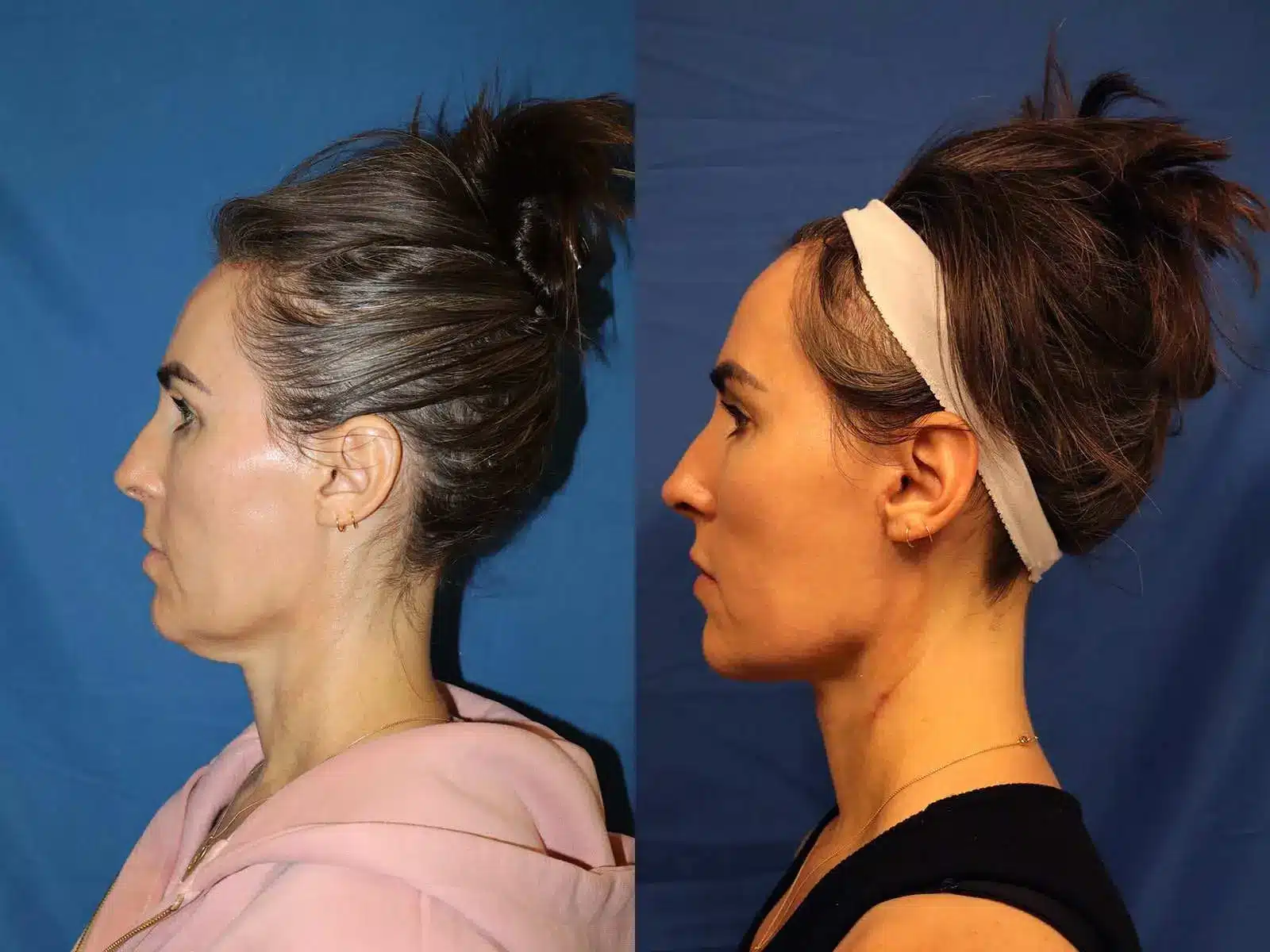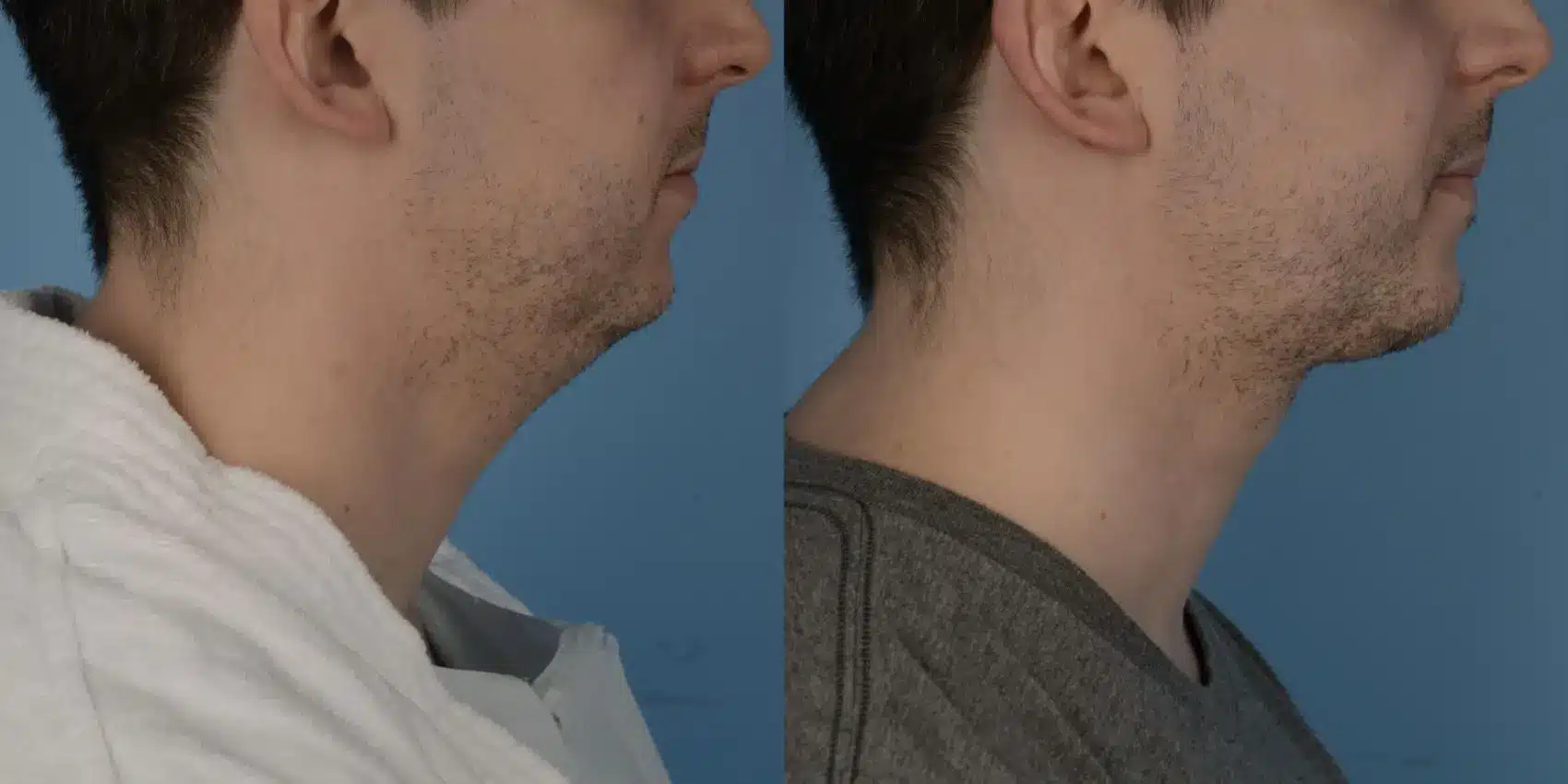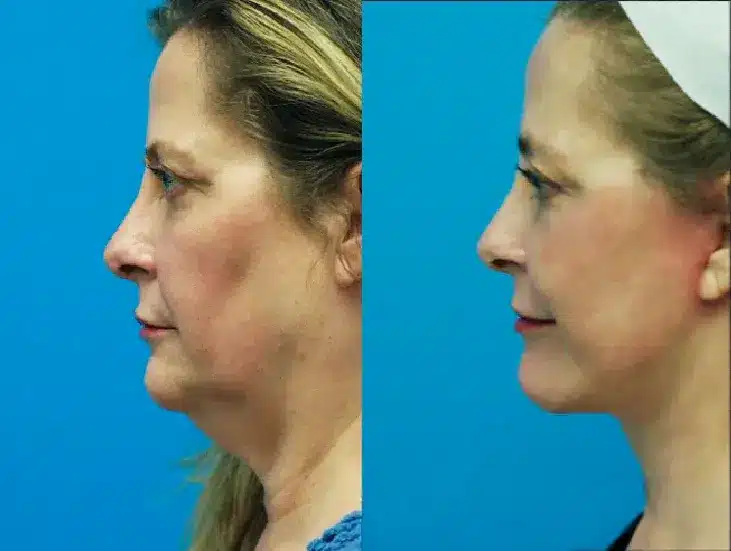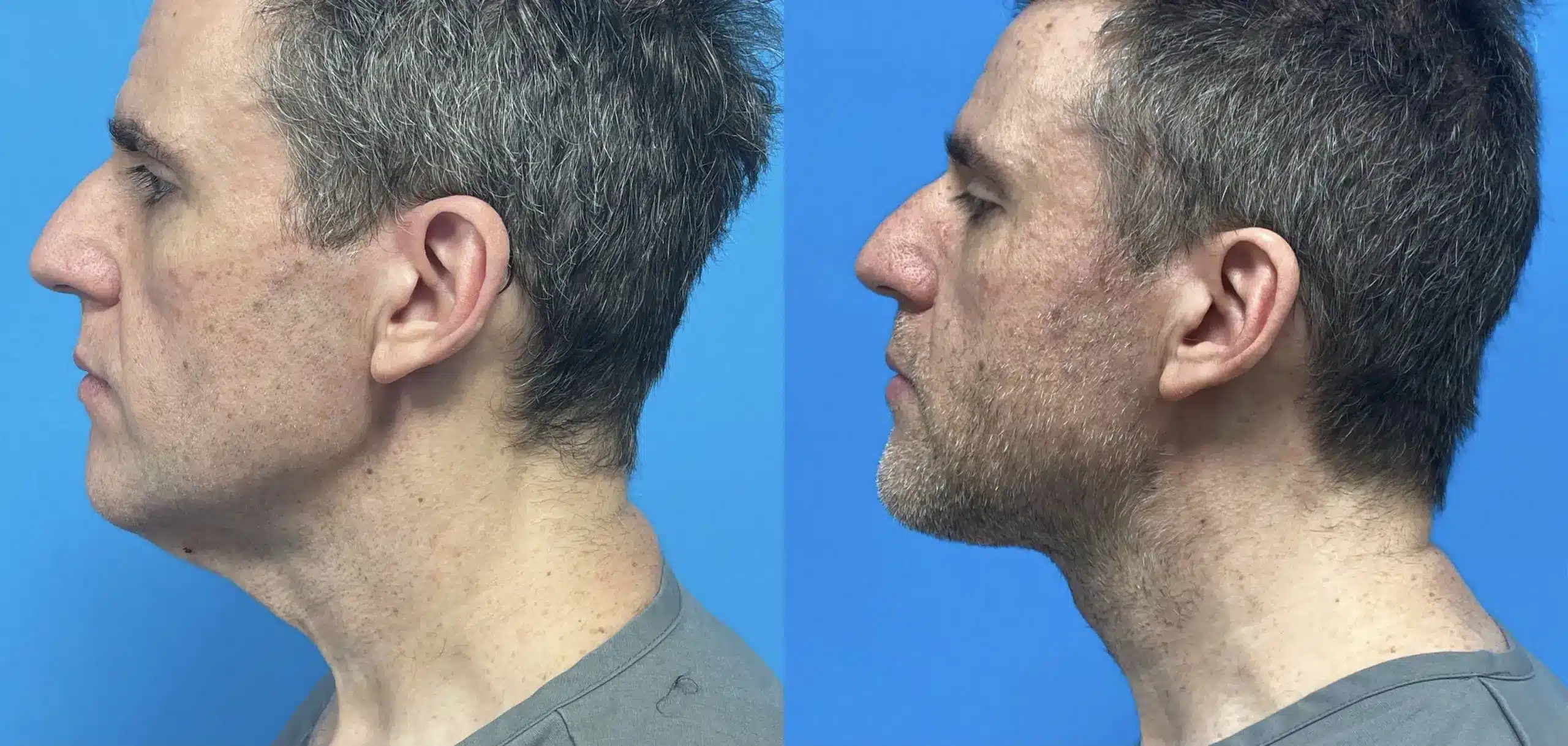
Neck lift surgery corrects loose skin, visible platysma bands, excess fat beneath the chin, and sagging below the jawline. Most patients need one of three approaches: liposuction alone, platysmaplasty to repair the muscle, or a combined lift with skin removal behind the ears.
Which one is right depends on whether your concern comes from fat, muscle laxity, loose skin, or a combination of all three. The procedure is performed on an outpatient basis, usually under local anesthesia with intravenous sedation, and most patients return to work between one and two weeks later.
At your consultation, we evaluate neck anatomy, jawline definition, skin quality, and overall facial balance before recommending an approach. Joel Kopelman, MD, FACS, has spent more than 35 years performing facial and oculoplastic rejuvenation across New York, New Jersey, and Palm Beach.
1,000+
5.0 ★
Dr. Joel Kopelman
OCULOPLASTIC SURGEON
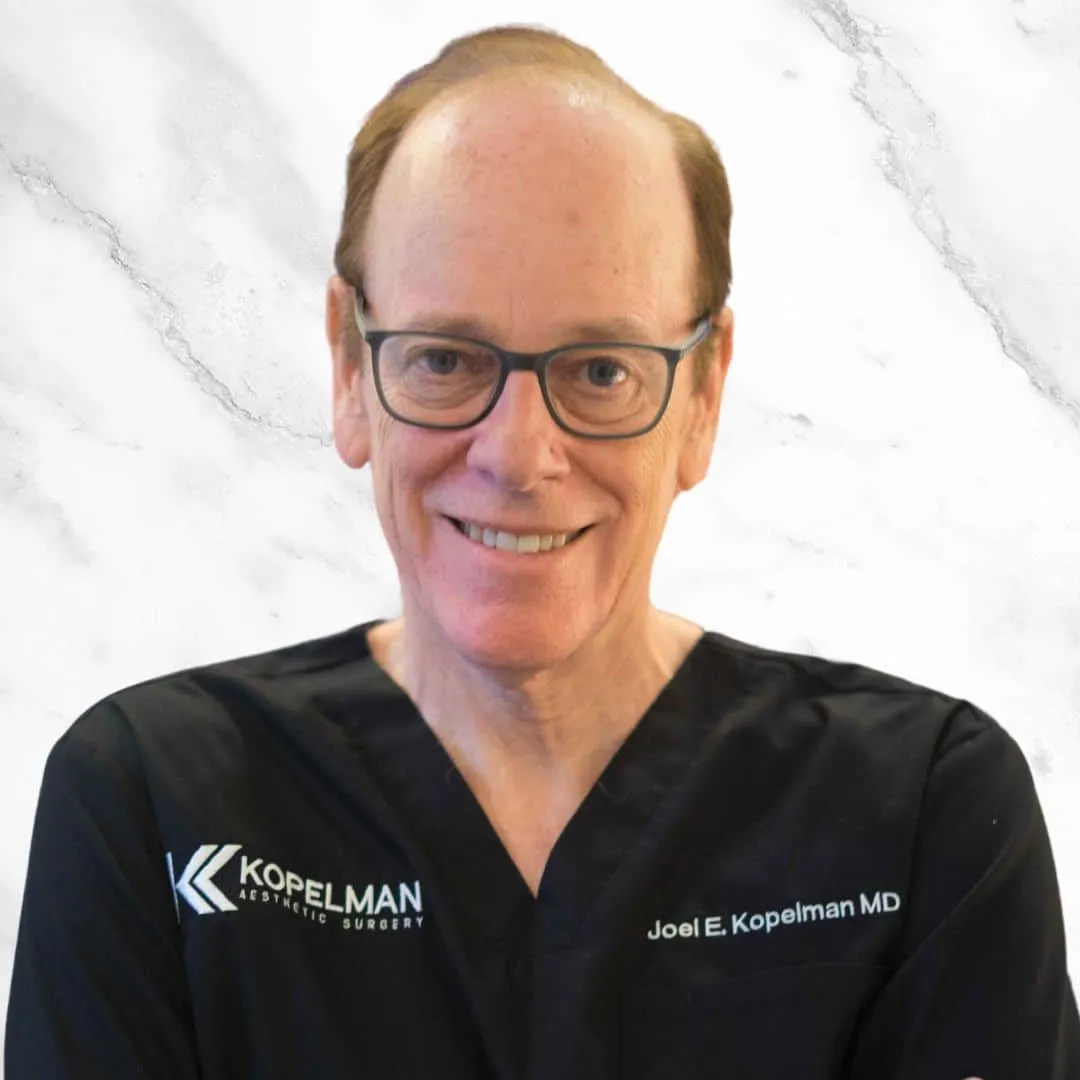
Joel Kopelman, MD, FACS, is a facial plastic and oculoplastic surgeon with more than 35 years of experience. He meets neck lift patients at his office at 1112 Park Ave #1A in New York City.
His training covers both facial plastic surgery and oculoplastic surgery, the fine work around the eyes. For a neck lift, that shapes how he plans the incisions. He places them under the chin and behind the ears so they settle into natural creases, and he treats the jawline, lower face, and neck as one connected area.
See his neck lift before and after photos or read more about Dr. Kopelman’s background.
For more advanced laxity, the classical approach adds well-concealed incisions behind the ears so that excess skin can be trimmed and redraped rather than simply tightened. This version is frequently combined with a facelift when mid-facial descent is present alongside the neck concern. Not sure whether you need a neck lift or a full facelift? Dr. Kopelman compares the two in his guide to face lift vs neck lift.
| Technique | Best suited for | Procedure length | Incisions | Back to work | Return to exercise |
|---|---|---|---|---|---|
| Liposuction only | Excess submental fat with good skin elasticity and no muscle banding | About 1 hour | One small incision beneath the chin | 4 to 7 days | Light activity at 7 to 10 days |
| Platysmaplasty, with or without liposuction | Visible vertical neck bands with mild to moderate skin laxity | About 2.5 to 3 hours | Beneath the chin, occasionally behind the ears | 7 to 10 days | Moderate exercise at 3 to 4 weeks |
| Classical lift with skin removal | Significant laxity, jowling, and loose skin that will not redrape on its own | About 3 hours | Beneath the chin and behind both ears | 10 to 14 days | Strenuous exercise at about 6 weeks |
| Combined with facelift or laser | Neck laxity alongside mid-facial descent or surface wrinkling | 4 to 5 hours | Facelift incision pattern | 14 to 21 days | Strenuous exercise at about 6 weeks |
These Necklift before and after pictures represent actual patients from Dr. Kopelman. They will help you to set realistic goals for your own surgical outcome.
These complications are uncommon, but they are the reason the choice of surgeon matters. We review your specific risk profile against your medical history before scheduling, and we monitor recovery at regularly scheduled intervals rather than at a single follow-up.
A neck lift with Dr. Kopelman typically costs $40,000 to $50,000. Your quote depends on the technique, time in surgery, anesthesia, and whether you combine the neck lift with another procedure, such as a facelift or eyelid surgery. You receive a written estimate before anything is scheduled. Cosmetic surgery is generally not covered by insurance.
Consultations cost $350, in person or virtual. The fee covers a full year of visits with Dr. Kopelman, as many as you need, and does not apply toward the cost of surgery.
| Factor | Why it affects your estimate |
|---|---|
| Technique required | Liposuction alone is the least involved option; muscle repair and skin excision each add surgical time and complexity. |
| Operating room time | Procedures range from roughly one hour to four or five hours when combined with a facelift. |
| Anesthesia type | Local anesthesia with intravenous sedation differs in cost from general anesthesia. |
| Combined procedures | Chin implant, eyelid surgery, fat grafting, or laser resurfacing performed in the same session change the total. |
| Post-operative care | Overnight nursing care, garments, and follow-up visits are factored into a full estimate. |
| Insurance coverage | Cosmetic procedures are not typically covered, so the estimate reflects out-of-pocket investment. |
Posted on Google
 Aiden Askari
Trustindex verifies that the original source of the review is Google.
Fine in my opinion.Posted on Google Stephanie Suskind
Trustindex verifies that the original source of the review is Google.
Excellent straight forward consult. Looking forward to booking Dr. Kopelman for fat transfer and upper blephPosted on Google Robert SayourHad a consultation visit with Dr Kopelman yesterday to discuss possible upper & lower eyelid surgery. Had a good consult and felt the Doctor was quite knowledgeable. He listened to my concerns and goals and was quite upfront about what he could do and what my expectations were. This was an initial consultation and I have seen a few other surgeons prior to this consult and have one more to go next week. So I haven't made any final decisions yet. Only downside for me personally is that the ambulatory center he uses is in Bergen County, NJ - I live in Queens and that might be a bit cumbersome to get to and from for me. I found his proposal a bit higher then the others I secured insofar as price but that is neither here nor there His demeanor, manners and knowledge were very good and I enjoyed the consultation experience with Dr Kopelman I have no further experience to share at this point Robert SPosted on Google
 Mike FieldsDr kopelman and his son worked on my eye lids and eye area and did a really wonderful job. Very family oriented decent people. The mother was incredibly kind, thoughtfull and always answered my calls. The daughter is also very kind.Posted on Google
 Amarys EspinosaI cannot express how grateful I am to have found Dr. Kopelman. After countless failed attempts at getting real help for my scalp and hair thinning, I felt defeated. I live in an area that doesn’t truly cater to ethnic or textured hair, so finding someone who understood my concerns felt almost impossible. After doing extensive research on specialists experienced with African American hair, I discovered Dr. Kopelman and I’m so glad I did. From the moment I met him, he provided a clear, thorough, and compassionate explanation of what was happening with my hair. For the first time, I felt seen, understood, and taken seriously. He created a personalized treatment plan specifically tailored to my needs and even prescribed medications to address the root cause. Walking out of his office, I felt genuine relief. Instead of hearing the usual “there’s nothing we can do,” I finally had answers, a plan, and hope. If you’re struggling with hair loss or scalp issues and want a doctor who truly understands ethnic hair and takes the time to guide you, I highly recommend Dr. Kopelman. His expertise, kindness, and clarity make all the difference.Posted on Google
 Kim TomasinoDr Kopelman is incredible. He knew I was worried about a scar forming & in less than a month he cured me with topical cream. He is the real deal! I’m so happy I found him.Posted on Google
 Alexa FreedDr. Kopelman 10/10: I was seeing an ophthalmologist weekly for months to take care of an eye issue I was having. When they couldn’t help me anymore, they told me to find an ocular plastic surgeon. After doing my research, I found Dr. Kopelman who is not only a top plastic surgeon, but has the ocular speciality I was looking for. Right when he saw me at our consultation, he immediately knew I needed a CT scan. He couldn’t believe any other doctor let this situation go on for this long. Dr Kopelman sat there for hours finding me the proper place to get my CT scan, along with making dozens of calls to my insurance company arguing with them on my behalf. He went above and beyond. Not even a week later, I was in his chair getting an orbital tumor removed! He made me so comfortable and the process was seriously so quick and painless. I did not bruise or swell at all. I went back a week later to get my stitches removed, which was also extremely quick and painless. It looked as if I scratched myself- not that anyone performed surgery on my face. There isn’t even a scar. That being said- Dr. Kopelman (and Kiki) had the best bedside manner, where so attentive, and just all around amazing. If I ever need a surgeon again, this is where you will find me. I truly can not thank this office enough.Posted on Google
 Vanessa TaylorHey! Let me start by saying Doctor kopleman was amazing! He listened to the things I said and understood everything. He was soooo nice and patient and gave me all the time I needed to explain exactly what I wanted and my results are amazing! Thank Doctor kopelman and staff.
— COMMON QUESTIONS
We review your medical history along with any prescription and non-prescription medications you take. Blood thinners such as aspirin, Motrin, fish oil, and Vitamin E must be stopped at least two weeks before surgery to reduce bleeding, bruising, and swelling.
If you smoke, you must stop for two weeks beforehand. Smoking compromises healing and raises the likelihood of visible scarring.
The operation is usually performed under local anesthesia with intravenous twilight sedation. The goal is to elevate and tighten sagging soft tissue through short incisions.
Fat below the chin and neck is recontoured, sagging muscle is repositioned and tightened, and excess skin is trimmed behind the ear. Incisions are hidden within natural creases so they become inconspicuous over several months.
Most patients are back to daily activities within a week and back at work between 10 and 14 days, with the classical technique sitting at the longer end of that range. Exercise resumes progressively, starting with light cardio at around one to two weeks.
You will be seen the morning after surgery, again for suture removal at 5 to 7 days, and at scheduled intervals afterward so healing can be monitored properly.
Yes. Depending on your concerns, we may recommend complementary procedures such as cosmetic eyelid surgery (blepharoplasty), fat grafting, endoscopic brow lifts, chin augmentation, and laser skin rejuvenation.
Combining procedures in a single session often produces a more balanced overall result and consolidates recovery into one period rather than several.
A neck lift with Dr. Kopelman typically costs $40,000 to $50,000, depending on technique, operating time, anesthesia, and any procedures combined with it. Consultations cost $350, in person or virtual, and cover a year of visits. The consultation fee does not apply toward surgery. We do not offer financing.
Your neck lift takes place at our New York office, 1112 Park Ave #1A. Consultations are available in person or virtual.
SCHEDULE ONLINE →
Our NYC office
















Lorem ipsum dolor sit amet, consectetur adipiscing elit. Ut elit tellus, luctus nec ullamcorper mattis, pulvinar dapibus leo.