Asian Blepharoplasty in New York: Asian Eyelid Surgery NYC

Asian eyelid surgery in New York, also called Asian blepharoplasty, creates or refines a crease in the upper lid. It can also remove overhanging skin and reduce bulging fat that causes a puffy, heavy appearance around the eyes.

The goal is not to Westernize the face. The procedure is planned to add definition while preserving the anatomy and ethnic character that make each patient’s eyes their own.

An Asian blepharoplasty is detail-intensive and requires precise surgical technique to produce a natural result. Dr. Kopelman specializes in creating a well-defined “double eyelid” crease by placing the incision in the anatomically correct location.

That step is followed by the gentle removal of overhanging upper-lid skin and any bulging fat in the lids. The new crease creates the look of eyes that open fully and widely, adding a more youthful, rested appearance. Consistently high patient satisfaction in these cases comes from that attention to detail.

6 different Types of Asian Blepharoplasty in New york

Crease anatomy varies widely, and the crease you start with determines the technique used. These are the six patterns most often seen during consultations for Asian eyelid surgery in NYC.

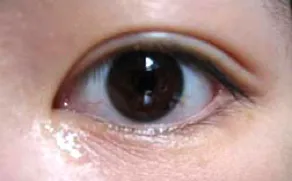
1. Monolid CreaseA monolid means a single lid without any visible crease. There is no defined fold separating the upper lid into two distinct parts. This pattern is common among people of East Asian descent.
 

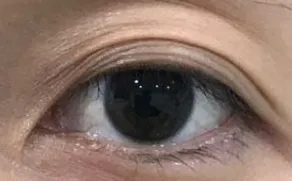
2. Tapered Eyelid CreaseA tapered crease narrows as it approaches the inner corner of the eye. Tapered eyelid surgery is one of the most requested crease styles because the result reads as soft and understated.

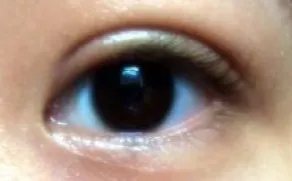
3. Multiple Eyelid CreasesMultiple creases occur when more than one fold forms instead of a single clean line. Double eyelid surgery can consolidate these into one defined crease.

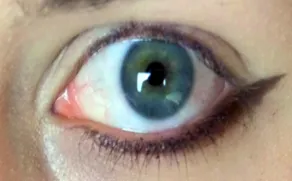
4. Parallel Eyelid CreaseA parallel crease runs at a consistent height and does not narrow toward the inner corner. This pattern is most common among Caucasian patients, though it appears in patients of Asian descent as well.

5. Hooded Eyelid Crease Hooded eyes result from an extra layer of skin that hangs over the crease along the outer corner. Skin removal is usually needed alongside crease creation.

6. Lateral Flare CreaseA lateral flare crease sits wider at the outer corner than it does across the central part of the upper lid, producing a subtly elongated shape.

Surgical Techniques Used in Asian Blepharoplasty NYC

There is no single technique that suits every patient. Approaches fall into three broad categories, and the right one depends on skin thickness, muscle bulk, fat distribution, levator strength, and the prominence or deep-set position of the globe.

Full incision. An incision is made along the planned crease line, giving direct access to remove precise amounts of fat, muscle, and skin. This approach offers the most control and the most durable crease, and it is generally preferred when there is excess skin or significant fullness.

Partial incision. A shorter incision addresses limited fullness while reducing the surgical footprint. It suits patients with thinner lids and modest fat deposits.

Suture fixation. No skin is removed. Sutures anchor the skin to the deeper lid structures, forming the fold. Recovery is quicker, but the fold is more likely to loosen or fade over time in patients with heavier tissue.

Epicanthoplasty and Canthoplasty as Adjunct Procedures

Many patients of Asian descent have an epicanthal fold that rounds the inner corner and limits how much of the new crease shows. In mild cases, the inner-corner tissue can be shaped during Asian blepharoplasty in New York without a separate incision.

In more pronounced cases, a formal epicanthoplasty advances a small skin flap to open the inner corner. This adds a small external scar, so the trade-off is discussed carefully before it is recommended.

Lateral canthoplasty widens the outer corner and is generally reserved for patients with a marked slant, since loosening an anatomical structure carries a higher chance of asymmetry than tightening one.

Are You a Candidate for Asian Eye Surgery NYC?

Good candidates are in stable general health, are not on blood-thinning medication, and want a defined crease that still looks like their own eye. Realistic expectations matter more than age.

Most women who request this procedure are in their twenties and thirties and want a subtle change that preserves their ethnic identity. Older patients often present with an existing fold obscured by excess skin, in which case skin removal alone restores definition without creating a new crease.

You may be a candidate if you have a monolid with no visible fold, uneven or multiple creases, a crease that disappears through the day, heaviness that makes eye makeup difficult to apply, or hooding that interferes with your field of vision.

Surgery may not be appropriate if you have uncontrolled dry eye, active eye infection, an untreated thyroid eye condition, or a bleeding disorder. Suitability for any specific technique is determined during examination, not from photos alone.

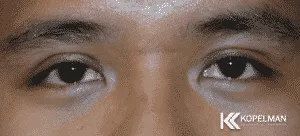
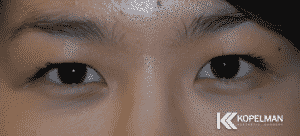
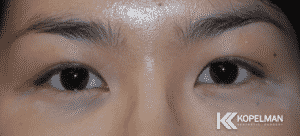
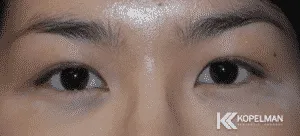
Asian Eyelid Surgery NYC Before & After

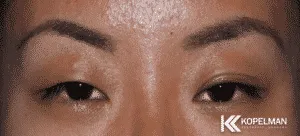
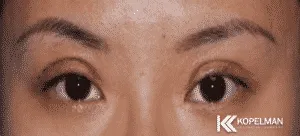
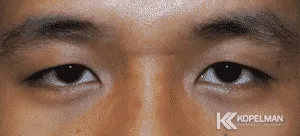
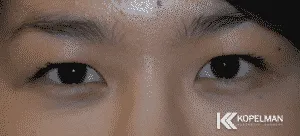
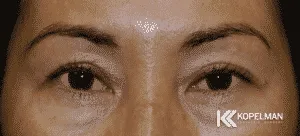
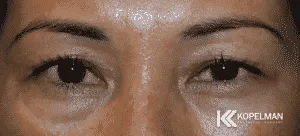
These before-and-after pictures show actual patients from our practice. They will help you set realistic goals for your own surgical outcome. Click on a patient to learn more about their Asian Eyelid surgery.

“I was looking for a plastic surgeon with extensive experience with Asian eyelid surgery, and I was fortunate to find Dr. Kopelman who helped me achieve the results I was hoping for. ”

~ Seo-Yeon ~

Asian Eyelid Double Fold Surgery in NYC with Dr. Joel Kopelman

Asian Eyelid Double Fold Surgery in NYC with Dr. Joel Kopelman

As an oculoplastic surgeon with 35 years in practice, Dr. Kopelman performs blepharoplasty to create and refine the Asian double fold. He recognizes that “Asian” covers a broad range of anatomic characteristics across Chinese, Japanese, Korean, and Southeast Asian populations, and plans accordingly.

Surgical technique is modified for each patient rather than applied from a template. During the preoperative consultation, the proposed depth, shape, and height of the crease is discussed in detail alongside the epicanthal fold, so a clear objective is agreed before the day of surgery.

Female patients usually request a low or medium crease height and are pleased when makeup can be applied to the upper lid without smearing. Men typically request a lower crease that produces a more alert look without appearing done.

Eyelid surgery for men in NYC focuses on reducing drooping skin, under-eye bags, and a tired appearance while preserving a natural, masculine look. The procedure can improve vision when excess upper lid skin obstructs the field of view. Treatment plans are tailored to male anatomy to avoid overcorrection.

Your ethnicity is preserved, and the subtle differences found in each individual face are accounted for in the surgical plan.

How to Prepare for Asian Blepharoplasty in New York

Avoid anything that thins the blood for two weeks before surgery, including aspirin, ibuprofen, and most supplements, unless your physician directs otherwise. Confirm every medication and supplement with the office in advance.

Maximizing skin fitness beforehand is encouraged, usually with an at-home regimen that includes a retinol or Retin-A. In selected cases, preoperative treatment such as a chemical peel, Fraxel, or laser may be recommended to improve the final result, much like priming a canvas.

Routine blood tests are obtained, and medical clearance is organized as necessary. Written preoperative instructions are provided at your initial consultation and reviewed in detail at a preoperative visit approximately 2 weeks before surgery, during which prescriptions are issued and any remaining questions are answered.

Arrange for someone to drive you home, and plan to keep your head elevated for the first several nights.

Asian Eyelid Surgery Recovery Timeline

Patients of Asian descent tend to swell more than Caucasian patients, so the recovery curve is longer than many people expect. Sutures come out in about 5 days, but swelling resolution takes weeks to months.

The crease often looks too high or too deep at first. Over several months, it settles downward as swelling subsides and the skin above the fold drapes into place. Anticipating this normal, prolonged period of settling makes the early weeks far less stressful.

Typical recovery milestones after Asian blepharoplasty. Individual healing varies.
TimeframeWhat to ExpectActivity Guidance
Days 1 to 3Peak swelling and bruising. Crease appears high and tight.Rest with head elevated. Cold compresses. No bending or lifting.
Days 4 to 7Sutures removed around day 5. Bruising begins to fade.Light activity at home. Screen use in short intervals.
Week 2Most visible bruising resolved. Incision line still pink.Return to desk work for most patients. Eye makeup usually resumed.
Weeks 3 to 6Swelling continues to settle. Crease starts to soften downward.Gradual return to exercise as cleared at follow-up.
Months 2 to 6Crease height settles into its intended position.Full activity. Sun protection over the incision line.
Months 6 to 12Final contour and scar maturation. Line fades into the fold.No restrictions. Final result assessed.

How Much Does Asian Eyelid Surgery Cost in NYC?

Cost depends on which structures are addressed, whether one or both lids are treated, and whether ptosis correction or corner refinement is combined with the crease procedure. The figures below reflect our current fees in New York.

Kopelman Aesthetic Surgery fees, New York. Final quote confirmed after examination.
ProcedureCostNotes
Consultation or medical management$350Initial evaluation, measurement, and surgical planning.
Double eyelid surgery$8,500 to $10,000Crease creation or refinement. Range reflects technique and complexity.
Upper blepharoplasty$8,500Removal of excess upper lid skin, with or without fat adjustment.
Ptosis correction$10,000 per eyeLevator adjustment for a drooping lid margin. Often combined with crease surgery.
Lateral canthoplasty$7,500 to $8,500Outer corner refinement. Recommended selectively.

Frequently asked questions
about Asian Eyelid Surgery

Frequently asked questions
about Asian Eyelid Surgery

It is important to avoid anything that thins the blood for two weeks prior to surgery. Maximizing skin “fitness” prior to surgery, using an at-home regimen that usually incorporates a retinol or Retin-A, is encouraged. In certain cases, other preoperative treatments (chemical peel, Fraxel, or laser) may be recommended to enhance the postoperative results (akin to “priming the canvas”). Routine blood tests are obtained, and medical clearance is organized as necessary. At your initial consultation with Dr. Kolker in his office in NYC, facelift instructions are given, and are reviewed with you in great detail at a preoperative visit two weeks prior to surgery. Prescriptions are given at this visit, and any outstanding questions can be answered.

Asian patients tend to swell to a greater extent compared with Caucasian patients. Therefore, even though the sutures will be removed within 5 days following surgery, the eyelid swelling may take several weeks to months before the eyelid swelling subsides. Initially the eyelid crease may appear “too” high or deep but over several months this “high” crease will settle downward as the eyelid swelling subsides and the skin above the crease drapes downward. This can be a period of great anxiety and stress because the eyelid may not initially look like what the patient envisioned. However with time and patience the eyelid swelling will subside and the desired eyelid height and contour will become apparent. Anticipating this “normal” prolonged period of swelling and recuperation will help to lower your anxiety. Dr. Kopelman and his staff will be available to answer all your questions. Ultimately you will see that the surgery was performed according to your expectations and the outcome will be pleasing.

Patients who have pockets of fat can be reduced through an incision placed on the inside of their lower eyelids. This allows the fat to be redraped downward without creating a visible scar on the outside of the lower eyelid. A skin incision is unnecessary because unlike Caucasian patients, Asian lower eyelid skin usually do not show the same advanced degrees of sun damage therefore it is unnecessary in most cases to remove or tighten lower eyelid skin. Rarely there is an extra fold of skin that pushes

Asian eyelid Surgery differs internally in several ways from Caucasian eyelid surgery. If we compare a sagittal diagram between a typical Asian and Caucasian eyelid we can see that an Asian eyelid anatomically has a lower point of fusion of the orbital septum which allows the preseptal fat to descend to a lower level. These two anatomic differences create a fuller appearance to the upper eyelid, and a lower or absent eyelid crease in the Asian population. When doing surgery on asian eyelids these features distinguish the external appearance of their external anatomy from Caucasian external eyelids. In addition, there are fewer or sometimes absent interdigitations of the levator aponeurosis which accounts for an absent or less distinct eyelid crease found amongst Asian people.

Drooped eyelids are sometimes difficult to determine prior to surgery because the excess of overlying skin and compensatory upward contraction of the eyebrow may mask the pre-existing underlying droop of the eyelid. If eyelid ptosis (droop) is not noted in advance of “double eyelid” surgery then it will become apparent following surgery. Dr. Kopelman is excellent when it comes to doing Asian eyelid surgery and will correct the drooped lid position at the time of the double–eyelid procedure or following the double lid procedure.

Dr. Joel E. Kopelman is a both a facial plastic and oculoplastic surgeon with over 35 years of experience in cosmetic rejuvenation of the face, neck, and eyes. Renowned for his innovative techniques and meticulous approach, Dr. Kopelman has built a reputation as a trusted expert among patients seeking transformative results that are both beautiful and natural.
Dr. Kopelman’s commitment to excellence extends beyond surgery; his warm and compassionate approach provides patients with a sense of comfort and trust throughout their treatment journey. Supported by a team of first-class professionals, Dr. Kopelman continuously strives to exceed patient expectations, fostering a reputation for delivering unparalleled satisfaction and long-lasting results.
Page Updated on [last_updated_date] by Dr. Joel Kopelman (Facial Plastic Surgeon) of Kopelman Aesthetic Surgery.

Schedule a Consultation

For Asian Eyelid Surgery

To schedule a private consultation with Dr. Kopelman,

please call the office or request an appointment online.

Add Your Heading Text Here

Lorem ipsum dolor sit amet, consectetur adipiscing elit. Ut elit tellus, luctus nec ullamcorper mattis, pulvinar dapibus leo.