Liposuction cost in NJ is quoted at consultation because the fee is based on your specific treatment plan rather than a fixed price list. The three variables that move the number most are how many areas are treated, how much fat is removed, and what type of anesthesia your case requires. Facility time and case complexity account for most of the remaining difference between one patient’s quote and another’s.
For outside context, the American Society of Plastic Surgeons reports a national average surgeon’s fee of roughly $3,518 per treatment area, and that figure covers the surgeon only. Most practices list anesthesia, the surgical facility, compression garments, and follow-up visits as separate line items. Northern New Jersey pricing typically sits above national averages because regional operating costs and surgeon demand are higher here.
At our Paramus office, you receive a single written quote after your examination, so you won’t have separate numbers to reconcile later. That quote reflects the areas you and Dr. Kopelman agree to treat, not an estimate built from averages. The tables below break down exactly which components go into that figure.
| Cost Component | What It Covers | Effect on Your Total |
|---|---|---|
| Surgeon's fee | Operative planning, the procedure itself, and post-operative follow-up visits | Largest single component; rises with experience, complexity, and number of areas |
| Anesthesia | Local anesthesia, or IV sedation administered by a board-certified anesthesiologist | Local-only cases cost less; sedation adds an anesthesiologist fee and monitoring time |
| Facility fee | Use of the accredited surgical suite, equipment, sterile supplies, and staff | Billed by operative time, so longer or multi-area cases increase this line |
| Number of areas treated | Each distinct zone, such as upper abdomen, flanks, or submental region | Combined areas in one session generally cost less than the same areas treated separately |
| Volume of fat removed | Total aspirate, capped at roughly five liters per session for safety | Higher volume means longer operative time and a higher facility component |
| Pre-operative workup | Routine blood tests and medical clearance where indicated | Modest, but should be confirmed so it does not surprise you later |
| Post-operative supplies | Compression garment, prescriptions, and any recommended lymphatic massage | Small relative to the total; confirm what is bundled into your written quote |
| Combined procedures | Contouring performed alongside a lift or other operation | Priced as one surgical plan rather than as separate procedures |
Smaller, well-defined regions such as the chin and neck sit at the lower end of any body contouring fee range, because they involve less operative time and often only local anesthesia. Larger regions like the abdomen or circumferential thighs require more time, more wetting solution, and typically sedation, which raises the total. When we address several regions in one session, the combined fee is usually less than the sum of treating those regions separately.
The table below shows how scope, anesthesia, and session length differ by area. We confirm pricing during your visit rather than publishing a range, since two patients requesting the same area may need very different amounts of work.
| Treatment Area | Typical Scope | Usual Anesthesia | Pricing |
|---|---|---|---|
| Submental (under the chin) | Smallest area treated; often in office and same-day | Local anesthesia, with optional oral sedation | Quoted at consultation |
| Neck and jawline | Submental region extended along the jawline for definition | Local anesthesia or light IV sedation | Quoted at consultation |
| Upper arms and bra line | Medium-sized area; skin elasticity determines final smoothness | IV sedation | Quoted at consultation |
| Upper abdomen | Single zone; frequently combined with lower abdomen | IV sedation | Quoted at consultation |
| Lower abdomen | Single zone; commonly the primary request in body cases | IV sedation | Quoted at consultation |
| Flanks (love handles) | Paired zone; usually treated with the abdomen for a blended result | IV sedation | Quoted at consultation |
| Inner thighs | Isolated zone; shorter session than circumferential treatment | IV sedation | Quoted at consultation |
| Thighs, circumferential | Inner, outer, and anterior thigh treated together for balance | IV sedation | Quoted at consultation |
| Multiple areas, one session | Two or more zones addressed together to blend transitions | IV sedation | Quoted at consultation; combined pricing applies |
| Neck lift with neck contouring | Performed when skin laxity accompanies fat, not fat alone | IV sedation | $40,000 to $50,000 |
Liposuction cost in New Jersey also shifts depending on whether the procedure stands alone or accompanies another operation. Neck contouring performed alongside a lift, for example, is priced as part of that combined plan rather than as a separate item. Ask for the all-in figure at consultation so you can compare quotes accurately across practices.
If you have dieted and exercised and still have stubborn areas of fat that will not go away, liposuction in NJ may be a good choice for you. While the procedure is not a replacement for a balanced diet and a disciplined exercise program, it can help to contour your body so that you can fit into your clothes and look slimmer.
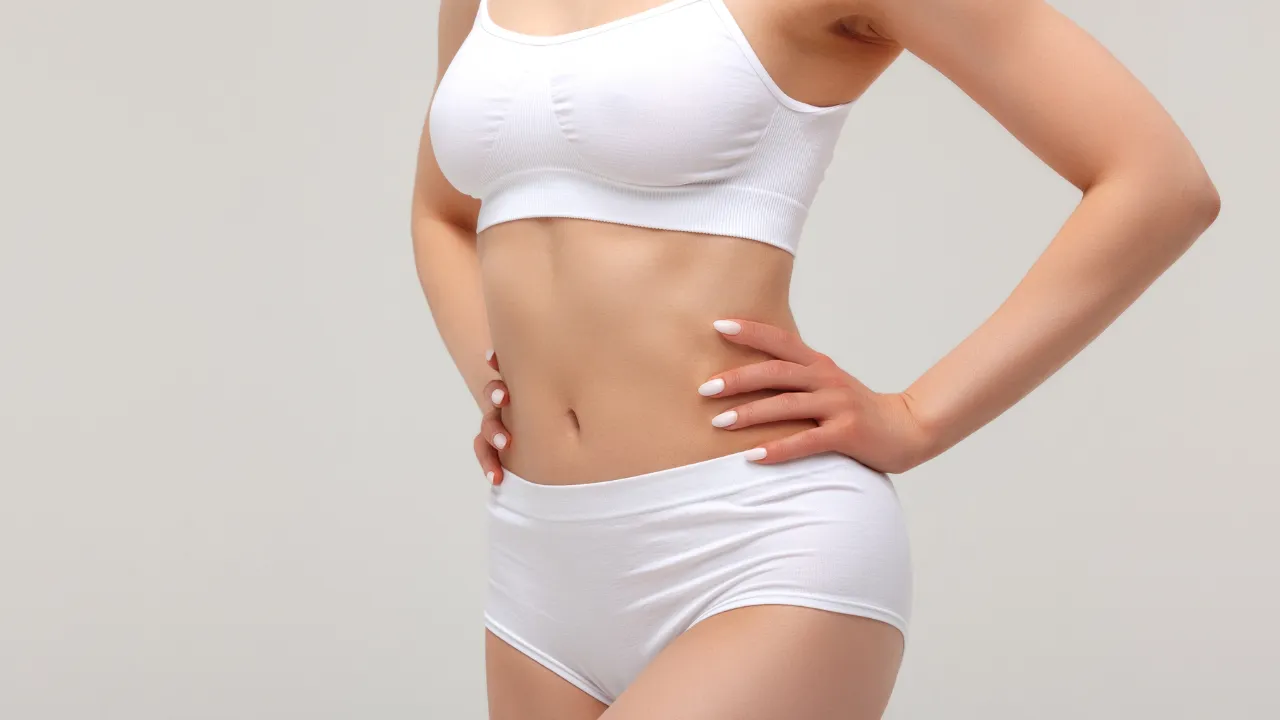
The art of body contouring is sculpting your shape to achieve its natural, beautiful proportions.
Fat removal surgery reduces localized deposits, but you remain responsible for continuing to diet and exercise afterward to maintain an appropriate weight. Results hold well in patients whose weight stays stable. Significant weight gain after surgery will change the contour, even though the treated regions generally stay proportionally slimmer.
Liposuction of Neck, Chin, Face
Contouring the neck, specifically the submental area under the chin, is one of the most requested treatments for removing a double chin. Submental liposuction in New Jersey is often performed in the office under local anesthesia, with most patients back to routine activity within a few days. It is the smallest and least expensive area we treat.
Liposuction of Thighs
Thigh work involves contouring the inner thighs where fat deposits tend to aggregate. Circumferential treatment addressing the inner, outer, and anterior thigh together produces the most balanced result, but it is a longer procedure than a single isolated zone. Skin elasticity in this region is the main factor determining how smooth the final contour will be.
Liposuction of Arms
Arm contouring is most commonly performed on the upper arms and the bra line. This is a medium-sized area, so both operative time and fee fall between the neck and the abdomen. Patients with good skin tone see the cleanest results, while stretched skin may require a different approach.
Liposuction of Abdomen and Flanks
Abdominal work is about restoring the normal curvatures to your body. Removing excess deposits around your waistline will help you look slimmer as you fit into your clothes. The upper abdomen, lower abdomen, and flanks are treated as distinct zones, so an abdominal case can vary widely in scope and price.

“Dr. Kopelman is an excellent surgeon! He performed my eyelid surgery and enhanced my upper lip area. The results are extraordinary, and I continue to use Dr. Kopelman for all of my surgical and nonsurgical needs. There is no other Doctor that I would use.”“Dr. Kopelman is an excellent surgeon! He performed my eyelid surgery and enhanced my upper lip area. The results are extraordinary and I continue to use Dr. Kopelman for all of my surgical and nonsurgical needs. There is no other Doctor that I would use.”
~ Joh Due ~
Dr. Kopelman has performed body and facial contouring in New Jersey for over 35 years and has helped his patients achieve results that they love. While this is one of the most common cosmetic surgery procedures in the United States, achieving beautiful results is uncommon. Dr. Kopelman performs these procedures using the tumescent technique, which most experts consider the gold standard.
The tumescent method involves injecting a dilute solution of lidocaine as a local anesthetic and epinephrine to control bleeding prior to the actual suctioning of the fatty tissue. The process reduces blood loss, allows for increased fat removal and improved sculpting, and speeds recovery. Suctioning is then performed carefully using a 3 to 3.7 millimeter metallic rod, known as the cannula, inserted through a tiny puncture in the skin.
The procedure is generally performed while the patient is comfortably sedated by our board-certified anesthesiologist. Some patients, especially those treating only one small area, opt for pure local anesthesia, usually with some oral sedation. Patients typically have no memory of the event and leave the office within 30 to 60 minutes afterward, feeling well.
The number of different techniques marketed today can be a confusing distraction from the two things that actually determine your result: safety and artistry. Your goals, the balance between your fat distribution and skin elasticity, and your surgeon’s experience are the main determinants of the outcome you can achieve. This is not a quick fix for individuals who are significantly overweight.
Ideal Liposuction Candidate
Strong candidates usually share the following characteristics:
Liposuction Benefits
The main benefits patients report include:
Liposuction Techniques
Over the years, several adjunct technologies have been added to that foundation, and the differences between them matter less than most marketing suggests.
What sets our care apart is not a particular device. It is our extensive experience and technical finesse, superior standards for certification and accreditation, an artistic appreciation of natural, proportional aesthetics, and a relationship with our staff that patients consistently describe as calm and comfortable.
From your initial consultation, through the planning phase, and throughout recovery, you will experience the attentiveness of Dr. Kopelman and our team. During your first visit, he listens to and understands your goals, then examines and evaluates your anatomy. He will then thoroughly explain which techniques or alternative treatments suit you best.
These chin augmentation before and after pictures represent actual patients from Dr. Kopelman. They will help you to set realistic goals for your own surgical outcome.
During the past several years, a variety of technologies have been developed and widely advertised as the next great advance in body contouring. These include laser-assisted (SmartLipo), ultrasonic (UAL), power-assisted (PAL), and radiofrequency-assisted approaches such as BodyTite. Many of these share the goal of delivering heat into fatty tissue to damage fat cells, with the theoretical aim of tightening the skin.
Except for BodyTite, heat is delivered through the tip of a special cannula. With BodyTite, the heat passes from the deep cannula to the surface of the skin. Although some of these technologies claim faster recovery, less bruising, and less pain, the opposite is more often true in practice. They all still require injecting the tissues with a wetting solution first, and they all still require traditional fat aspiration afterward.
BodyTite does differentiate itself by offering true bipolar radiofrequency energy delivery, meaning heat transfer across the skin is precisely controlled. That allows for measurable improvements in skin tightness as collagen shrinks when heated. Even so, the claim that these devices produce lasting tightening has never been well established, and they are best reserved for particularly dense tissues such as the male breast or areas with scar tissue from prior surgery.
Unlike many facilities that operate under general anesthesia, Dr. Kopelman performs virtually all of these cases under IV sedation, also called twilight anesthesia. The patient has an IV, and our board-certified anesthesiologist delivers sedating medication through it. The patient breathes independently and responds to verbal input, but typically has no memory of the procedure.
Following surgery, the patient feels relaxed and comfortable. This lighter technique virtually eliminates the risks associated with general anesthesia, including the risk of blood clots and airway complications. Limited areas, such as submental liposuction in New Jersey, the inner knees, or in some patients the arms, inner thighs, or lower abdomen, may be performed using only local anesthesia.
In those cases, the patient has no IV at all and no anesthesiologist present. The patient either relies completely on numbing injections or takes oral medication for relaxation and mild sedation. We review all of this with Dr. Kopelman at your individual consultation so the plan fits your preferences and priorities.
To begin, we make small, strategically placed poke-hole incisions, each only a few millimeters wide. The team then injects a tumescent solution containing saline, a local anesthetic, and epinephrine into the treatment areas. The solution separates fat globules for easier removal, provides pain control through lidocaine, and minimizes blood loss because epinephrine constricts small vessels.
After the solution is instilled, the technician suctions fat cells from the targeted area using long, sterile cannulas. These instruments are blunt-tipped to minimize trauma. The cannula is inserted through the poke-hole incision and moved back and forth beneath the skin until the desired contour is achieved.
Although the scars are small, on many areas of the body they will heal as circular indented marks if left unsutured. If they are sealed shut completely, they cannot drain, and patients experience more swelling and bruising. For this reason, Dr. Kopelman generally places a single suture in each incision, allowing it to heal as a fine line while still permitting fluid to drain.
Depending on your skin type, we may use dissolvable sutures. If we choose removable sutures, you remove them at the first post-operative visit, roughly one week after surgery. Scars generally range from 2 to 5 millimeters and are hidden in inconspicuous places wherever possible, which is one reason this remains among the best liposuction options for Manhattan and North Jersey patients.
Most procedures are completed in two hours or less, though operative time depends on the number of areas and the extent of fat removal desired. Safety guidelines limit a single session to approximately five liters of aspirated fat, and cases requiring more are staged across separate sessions months apart. The goal is contour and safety, not maximum volume.
Full recovery usually requires about two weeks, though most patients return to work within a few days. Final results appear around three months, but are typically pleasing well before then. Following your post-operative instructions matters, because the body tends to fill any empty space created by fat removal with fluid.
As a result, patients predictably experience some bruising and swelling after surgery. In most cases, a compression garment is recommended to support healing and prevent fluid collection, and lymphatic drainage massage may also be suggested. In rare cases involving large volume removal, a temporary surgical drain may be placed, but this is unusual.
Most patients resume normal daily routines within one week, and many return to desk work three to four days after surgery. Recovery varies by individual, but you may undergo surgery late in the week and return to work the following Monday. Dr. Kopelman will make customized recommendations based on the scope of your procedure and any time constraints you have.
| Timeframe | What to Expect | Activity Guidance |
|---|---|---|
| Day of surgery | Leave the office within 30 to 60 minutes; mild soreness begins as anesthetic wears off | Arrange a ride home; rest for the remainder of the day |
| Days 1 to 3 | Soreness and swelling peak; some drainage from incision sites is normal | Light walking encouraged; compression garment worn continuously |
| Days 3 to 7 | Bruising is most visible during the first week; discomfort eases noticeably | Many patients return to desk work; first follow-up visit occurs around one week |
| Weeks 2 to 3 | Major swelling begins to resolve; bruising fades substantially | Normal daily routine resumed; garment still worn nearly continuously |
| Weeks 4 to 6 | Contour starts to emerge as residual fluid clears | Return to more strenuous exercise as cleared by Dr. Kopelman |
| Months 2 to 3 | Remaining swelling resolves and the final shape becomes apparent | Full activity; maintain stable weight to preserve the result |
Before surgery, avoid anything that thins the blood for two weeks. Stop blood thinners such as aspirin, ibuprofen, fish oil, and Vitamin E during that window to minimize bleeding, bruising, and swelling. If you smoke, you must refrain for at least two weeks beforehand, because smoking compromises healing and increases scarring.
We encourage maximizing skin fitness beforehand with an at-home regimen that usually includes a retinol or Retin-A. In some cases, we may recommend other preparatory treatments, such as a chemical peel or Fraxel, to improve your postoperative results. We obtain routine blood tests and arrange medical clearance as needed.
Your fee is determined at consultation and depends on the number of areas treated, the volume of fat removed, and the anesthesia your case requires. Nationally, the American Society of Plastic Surgeons reports an average surgeon’s fee of about $3,518 per treatment area, before anesthesia and facility costs. Northern New Jersey pricing generally runs above national averages because regional operating costs are higher. You can review what ASPS advises patients to consider when comparing costs</a> for additional context.
Health insurance does not cover cosmetic body contouring. Functional procedures may be covered when they treat a documented medical problem, but fat removal performed for appearance does not qualify. Plan for the full quoted amount as an out-of-pocket expense.
No. It is a contouring procedure that removes localized deposits, and most patients lose only a few pounds. The change you notice is in shape and proportion, not on the scale. Patients seeking meaningful weight reduction should address that first, then reassess.
Not on its own. Fat is removed, and the skin envelope then contracts only if it has good elasticity. Patients with stretched or aged skin may find that isolated fat removal leaves laxity looking more apparent, which is why a lifting procedure is sometimes recommended in combination.
Safety guidelines limit a single session to roughly five liters of pure fat, though most cases involve considerably less. Removing more than that in one sitting raises the risk of fluid shifts and other complications. Patients needing more are staged across two sessions spaced several months apart.
Most patients say it is not pain, but rather the compression garment and the patience required while swelling resolves. The garment is worn nearly continuously for the first two to three weeks, and the final contour is not fully visible for two to three months. Patients who follow the garment protocol consistently get noticeably better results.
Fat cells removed during surgery do not regenerate, so the reduction is essentially permanent as long as weight stays stable. If you gain significant weight afterward, the remaining cells in treated areas enlarge, but the proportional contour change usually persists. Patients who maintain stable weight tend to remain satisfied a decade later.
The technique is the same, but the scale is much smaller. Submental treatment addresses fat beneath the chin, is often performed in office under local anesthesia, and carries a shorter recovery than body regions. It is also the least expensive area we treat.

To schedule a private consultation with Dr. Kopelman, please call the office or request an appointment online.







Lorem ipsum dolor sit amet, consectetur adipiscing elit. Ut elit tellus, luctus nec ullamcorper mattis, pulvinar dapibus leo.