Best Liposuction in Manhattan NYC - Liposuction New York City

Liposuction is a body contouring procedure that removes stubborn, localized fat deposits to sculpt a smoother, more proportionate shape. It is one of the most requested cosmetic surgeries for patients who have reached a stable weight but still carry pockets of fat that resist diet and exercise. Performed by an experienced surgeon, liposuction in New York City can refine the abdomen, flanks, neck, arms, thighs, and other areas where unwanted fat collects.

Genetically, each of us is born with a set distribution of fat throughout the body. Liposuction removes fat cells from the areas you want to refine, which also limits future fat growth in those treated zones. If you have dieted and exercised yet still have stubborn fat that will not go away, liposuction NYC may be a good option for you.

It is important to understand that liposuction is not a substitute for a balanced diet and a disciplined exercise program. The procedure sculpts your existing contours so you can fit into your clothes more comfortably and look slimmer. You will still be responsible for maintaining a healthy weight through diet and exercise after surgery to preserve your result.

Liposuction of Neck, Chin, Face

Liposuction of the neck, specifically the submental area beneath the chin, is a common way to address the appearance of a double chin. In some cases, neck liposuction is complemented by neck lift surgery to achieve a more defined jawline.

A non-surgical option using the injectable Kybella also exists, though the results are less dramatic and less permanent than surgery.

Liposuction of Thighs

Liposuction of the thighs contours the inner thighs, where fat deposits tend to accumulate and create friction or a heavier silhouette.

Liposuction of Arms

Arm liposuction is most commonly performed on the upper arms and along the bra line to create a slimmer, smoother profile.

Liposuction of Abdomen (Love Handles)

Abdominal liposuction in New York restores the natural curves of the waistline. Removing excess fat around the midsection and flanks helps you look slimmer and fit into clothing more comfortably. The abdomen is one of the most frequently requested areas for liposuction surgery in New York.

Liposuction in New York City: Before & After

“Dr. Kopelman is an excellent surgeon! He performed my eyelid surgery and enhanced my upper lip area. The results are extraordinary and I continue to use Dr. Kopelman for all of my surgical and nonsurgical needs. There is no other Doctor that I would use.”

~ Joh Due ~

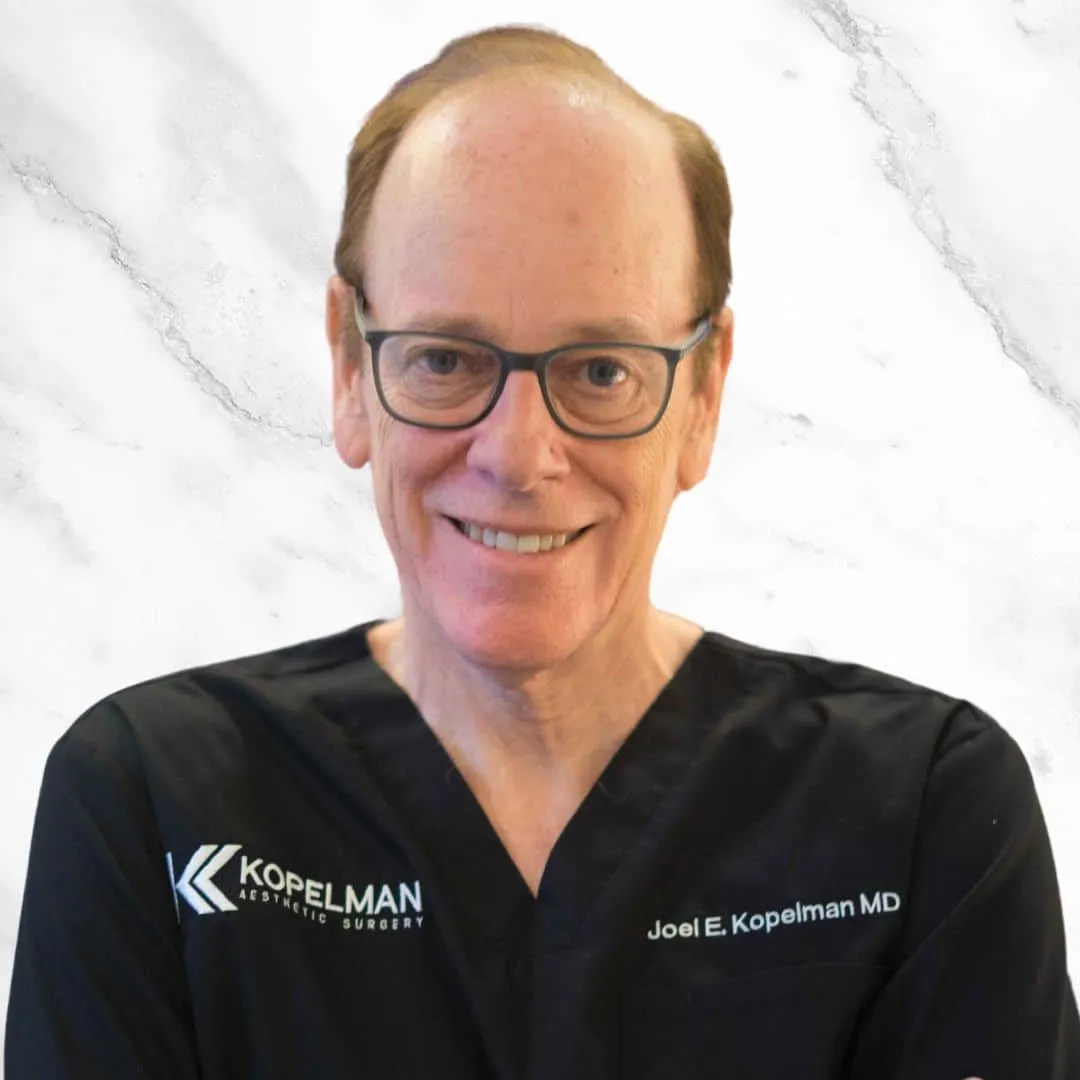
Liposuction Doctor in NYC: Dr. Joel Kopelman

Dr. Kopelman has performed liposuction in New York City for over 35 years and has helped his patients achieve results that they love. While liposuction is one of the most common cosmetic surgery procedures, achieving beautiful results with it is a rare skill. The best liposuction outcomes are achieved when you are at or close to your ideal body weight. When areas of localized adiposity, or contained accumulations of fat, remain after a regimen of diet and exercise, liposuction is most appropriate.

Ideal Liposuction Candidate

  • At or near your ideal body weight, generally within about 10 percent of it
  • Localized pockets of fat that remain despite consistent diet and exercise
  • Good skin elasticity in the areas to be treated
  • A non-smoker, or willing to stop smoking before and after surgery
  • In good general health with no conditions that impair healing
  • Realistic expectations about what body contouring can and cannot do

Liposuction Benefits

  • Removes stubborn fat that does not respond to diet or exercise
  • Improves body proportion and creates smoother, more natural contours
  • Uses tiny incisions, so scars are small and easy to conceal
  • Can be combined with other procedures for a more complete result
  • Typically performed as an outpatient procedure with a quick return to routine
  • Delivers long-lasting results when a stable weight is maintained afterward

Liposuction Techniques

  • Tumescent liposuction, the most common approach for safety and comfort
  • Superwet liposuction, using a moderate volume of solution
  • Suction-assisted lipectomy (SAL), the classic method with thin cannulas
  • Power-assisted liposuction (PAL) for dense or fibrous fat
  • Ultrasound-assisted liposuction (UAL) for larger volumes
  • Laser lipolysis (SmartLipo) for smaller, localized deposits
  • Radiofrequency assisted (BodyTite, FaceTite) for mild skin laxity

These chin augmentation before and after pictures represent actual patients from Dr. Kopelman. They will help you to set realistic goals for your own surgical outcome.

Liposuction in Manhattan: Procedure

Unlike many facilities that perform liposuction under general anesthesia, the surgeon performs virtually all of these procedures under IV sedation, also called twilight anesthesia. During twilight sedation, a board certified anesthesiologist delivers sedating medication through an IV while you breathe on your own and remain responsive, typically with no memory of the procedure. Afterward, most patients feel relaxed and comfortable.

This lighter approach virtually eliminates several risks associated with general anesthesia, including the risk of blood clots and airway complications. Liposuction of limited areas, such as under the chin, the inner knees, the arms, the inner thighs, or the lower abdomen, may be performed using local anesthesia alone. In those cases, there is no IV and no anesthesiologist present.

With local anesthesia, you rely on numbing injections, and you may take oral medication for mild relaxation and sedation. The right anesthesia plan is reviewed during your individual consultation so the procedure suits your preferences and priorities.

To begin, the surgeon makes small, strategically placed poke-hole incisions, each only a few millimeters wide. A liquid called tumescent solution is then injected into the areas to be treated. This solution contains saline, a local anesthetic, and epinephrine, and it provides three benefits:

  • The fluid separates fat globules from one another, allowing the fat to be removed more easily.
  • Lidocaine numbs the area and provides pain control.
  • Epinephrine constricts small blood vessels, which helps minimize blood loss during the procedure.

After the tumescent solution is in place, fat is suctioned from the targeted region using long, sterile, blunt-tipped cannulas that minimize trauma. The cannula is inserted through the tiny incision and moved back and forth beneath the skin, vacuuming out excess fat until the desired contour is achieved.

The key to a great liposuction result is the experience and artistic eye of your plastic surgeon, who is essentially your sculptor. The goal is fit, athletic, natural-looking contours, with the maximum safe amount of fat removed for a balanced result.

Liposuction is typically performed on an outpatient basis. The vast majority of procedures are completed in two hours or less, though operative time depends on the number of areas treated and the amount of fat removed. Your procedure can take place in an accredited, in-office, state-of-the-art operating room in midtown Manhattan.

This facility is accredited by the American Association for Accreditation of Ambulatory Surgery Facilities, Inc. (AAAASF), which certifies it as meeting a standard of care equal to that of a hospital. The privacy, discretion, and convenience of an in-office operating room are benefits many patients appreciate.

Recovery after Liposuction

Full recovery from liposuction usually takes about two weeks, but most patients return to work within a few days. Final results appear at approximately three months, though the contour is typically pleasing well before then. Following your post-operative instructions closely is important, because the body tends to fill empty spaces with fluid after fat is removed.

As a result, some bruising and swelling after surgery is normal and expected. A compression garment may be recommended for a few days to a week to support healing and prevent fluid collection. Lymphatic drainage massage may also be suggested to speed recovery.

In rare cases involving large-volume fat removal, a temporary surgical drain may be placed, though this is unusual. Major swelling generally resolves by two weeks post-op. Most patients resume normal daily routines within one week, and many return to work three to four days after surgery.

Recovery varies from person to person, but it is often possible to have surgery on a Thursday or Friday and return to work on Monday. Your surgeon will make customized recommendations based on the scope of your procedure and any specific goals or time constraints you have.

Frequently asked questions
about Liposuction

It is important to avoid anything that thins the blood for two weeks before surgery, as blood thinners increase the risk of bruising and bleeding. Maximizing your skin health beforehand, often with an at-home regimen that includes a retinol or Retin-A, is encouraged. In some cases, additional skin treatments, such as a chemical peel or Fraxel, may be recommended to enhance your results.

Routine blood tests are obtained, and medical clearance is arranged as needed. At your initial consultation, detailed instructions are provided and then reviewed again at a pre-operative visit. Prescriptions are given at that visit, and any remaining questions are answered.

After anesthesia is administered, small poke-hole incisions are made, and tumescent solution is injected into the treatment areas. Fat is then suctioned through thin cannulas until the targeted contour is achieved.

Most procedures are completed in two hours or less, depending on how many areas are treated and how much fat is removed. The technique is tailored to your anatomy and goals.

Expect some bruising and swelling for the first one to two weeks, with most patients returning to work within a few days. A compression garment is often worn to reduce swelling and support healing.

Strenuous activity is limited for about two weeks, and final results become visible around three months as residual swelling resolves.

You will have post-operative visits to monitor your healing and, if applicable, remove sutures at roughly one week. Following all aftercare instructions, including wearing your compression garment and attending follow-ups, gives you the smoothest recovery and the best long-term contour.

Frequently asked questions
about Mini-Facelift

Dr. Joel E. Kopelman is a both a facial plastic and oculoplastic surgeon with over 35 years of experience in cosmetic rejuvenation of the face, neck, and eyes. Renowned for his innovative techniques and meticulous approach, Dr. Kopelman has built a reputation as a trusted expert among patients seeking transformative results that are both beautiful and natural.

His commitment to excellence extends beyond the operating room. A warm, compassionate approach helps patients feel comfortable and confident throughout their treatment journey. Supported by a team of experienced professionals, the practice continually works to exceed patient expectations and deliver long-lasting results.

Page Updated on [last_updated_date] by Dr. Joel Kopelman (Facial Plastic Surgeon) of Kopelman Aesthetic Surgery.

Best liposuction NYC:
Schedule a Consultation

To schedule a private consultation with Dr. Kopelman, please call the office or request an appointment online.

Add Your Heading Text Here

Lorem ipsum dolor sit amet, consectetur adipiscing elit. Ut elit tellus, luctus nec ullamcorper mattis, pulvinar dapibus leo.