Key Takeaways
- Insurance covers eyelid surgery only when a doctor proves it restores vision, not appearance, using measurable evidence like lid position within 2mm of the pupil center and documented visual field loss.
- Coverage varies by procedure: upper blepharoplasty and ptosis repair are commonly approved when documentation supports medical necessity, lower blepharoplasty is rarely approved, and double eyelid surgery is not covered.
- Obtain pre-authorization before scheduling surgery; the process typically takes two to four weeks after you submit testing, photographs, and physician notes, and Medicare requires patients to sign an Advance Beneficiary Notice because it does not pre-authorize.
- Even an approved claim usually leaves the patient responsible for the deductible, co-insurance, and any cosmetic portion of the procedure performed at the same time.
- A denied claim is not final; patients can appeal internally with stronger evidence and, if that fails, request an external review by an independent medical reviewer.
Understanding Coverage for a Functional Lid Lift
Blepharoplasty can improve both your vision and your appearance. Carriers draw a hard line between those two outcomes, and only the first one qualifies.
Most policies cover medically necessary treatment, so carriers rarely approve a purely aesthetic lid lift. The steps below explain what does qualify and how to build a submission that holds up.
Is Blepharoplasty Covered by Insurance? The Criteria That Decide It
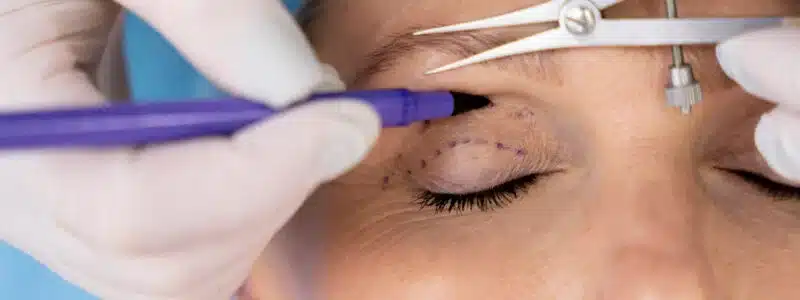
Carriers do not approve claims based on how tired your eyes look. Nearly all of them, including Medicare and Medicaid, apply measurable clinical thresholds drawn from the same underlying standards.
Most reviewers look for the following:
- Lid position: the upper lid margin or overhanging skin typically must sit within 2 millimeters of the pupil center, a measurement your surgeon records as MRD1
- Visual field loss: taped and untaped testing usually must show meaningful improvement in the superior field when the lid is lifted, commonly around 12 degrees or 30 percent
- Functional impact: documented difficulty reading, driving, or working because of the obstruction
- Chronic irritation: lashes or excess skin rubbing the eye, or brow strain from constantly raising the forehead to see
- Failed conservative measures: lubricating drops or lid taping that did not resolve the problem
These thresholds vary somewhat between carriers, so review your own plan documents alongside the insurance coverage criteria published by the American Society of Plastic Surgeons. Check whether you qualify in our recent post.
Which Eyelid Procedures Carriers Actually Approve
Coverage is procedure-specific, not patient-specific. Two people with identical anatomy can get different answers depending on which operation is being billed.

| Procedure | How carriers classify it | Likelihood of approval | Self-pay price at our practice |
|---|---|---|---|
| Upper blepharoplasty | Functional when excess skin obstructs the superior visual field | Most commonly approved, with documentation | $10,000 |
| Ptosis repair | Functional when a weak levator muscle lowers the lid margin | Frequently approved, billed separately from skin removal | $10,000 per eye |
| Lower blepharoplasty | Cosmetic in nearly all cases, since lower lids seldom block sight | Rarely approved | $10,000 |
| Double eyelid surgery | Cosmetic, performed to create or refine a lid crease | Not approved | $14,000 to $16,000 |
| Combined functional and cosmetic plan | Split billing; only the functional portion is submitted | Partial approval typical | Quoted at consultation |
Upper lid work and ptosis repair are distinct operations with separate codes, and a patient can need both. When they are performed together, each is evaluated on its own merits rather than approved as a package.
Documentation Your Carrier Will Require
Incomplete paperwork causes more denials than borderline anatomy does. Assemble everything before submission rather than responding to requests one at a time.
| Document | Who provides it | What it must show |
|---|---|---|
| Visual field test, taped and untaped | Ophthalmologist or optometrist | Measurable superior field loss that improves when the lid is elevated |
| Comprehensive eye examination | Ophthalmologist | Lid measurements including MRD1, plus overall ocular health |
| Standardized clinical photographs | Surgeon's office | Skin or lid margin resting on or near the lashes and pupil |
| Symptom history | Patient and referring physician | Specific daily tasks affected, with duration of symptoms |
| Record of conservative treatment | Treating physician | Non-surgical measures attempted and why they failed |
| Surgical plan with medical rationale | Operating surgeon | Procedure codes, laterality, and the functional goal of each |
This evidence shows the operation isn’t merely aesthetic; it is necessary for your vision and quality of life. An oculoplastic specialist trained through ASOPRS will be familiar with the measurement conventions reviewers expect.
Pre-Authorization Required for Blepharoplasty Insurance Approval
Almost every plan requires written approval before booking the operating room. Proceeding without it usually means the claim is denied afterward, when you have far less leverage.
| Stage | Who acts | Typical timeframe |
|---|---|---|
| Eye examination and visual field testing | Ophthalmologist or optometrist | 1 to 2 weeks to schedule and complete |
| Surgical consultation and photography | Operating surgeon | Same visit, once testing is in hand |
| Submission of the complete packet | Surgeon's office | A few business days after the consultation |
| Carrier review and determination | Insurance plan | 2 to 4 weeks in most cases |
| Appeal, if the claim is denied | Patient and surgeon jointly | Additional 30 to 60 days, varies by plan |
Lorem ipsum dolor sit amet, consectetur adipiscing elit. Ut elit tellus, luctus nec ullamcorper mattis, pulvinar dapibus leo.
Visit both an ophthalmologist and your surgeon early in this sequence. The eye specialist quantifies how much the lid obstructs your vision, while the surgeon explains the operative options and confirms whether your findings meet the plan’s threshold.
Medicare works differently in one respect: it does not issue advance authorization. Patients typically sign an Advance Beneficiary Notice acknowledging responsibility if the claim is later declined.
What You Still Pay When the Claim Is Approved
Approval reduces your cost; it rarely eliminates it. Budget for the remainder so an approved claim does not become an unpleasant surprise.
Expect to remain responsible for your deductible and coinsurance, plus any facility or anesthesia charges billed out of network. If your plan approves only one eye, you’ll be billed for the second at the self-pay rate.
Any cosmetic component performed in the same sitting also stays out of pocket. A common example is combining approved upper-lid work with a lower-lid procedure that does not qualify.
For national context on how these component costs stack up, the ASPS cost overview breaks out surgeon, facility, anesthesia, and medication fees separately. Practice pricing differs from national averages, so use it as a framework, not a quote.
Plan Restrictions and the Cosmetic Line
Plans differ meaningfully in how strictly they apply the same criteria, so read your own policy language rather than assuming a friend’s outcome predicts yours. Some carriers add requirements such as a minimum symptom duration or a specific referral pathway.
Concerns like puffiness, fine lines, and under-eye hollows are cosmetic by definition and are not reimbursed. When you write to your carrier, keep every statement anchored to function rather than appearance.
How to Appeal a Denied Claim
A first denial is not the end of the process. Many claims succeed on appeal once you identify and fill the gap in the original file.
- Review the denial: read the stated reason closely, since it usually names the exact criterion the file failed to meet
- Submit an appeal: provide new evidence such as repeat visual field testing, clearer photographs, or a stronger physician narrative
- Follow up: track the appeal deadline in writing and confirm receipt with your carrier
If the internal appeal fails, most plans allow an external review by an independent medical reviewer. Ask your carrier for that process in writing.
Putting This Into Practice
Insurance coverage for blepharoplasty rewards preparation, not luck. Patients who document lid position, symptoms, and failed conservative treatment before their first consultation move through pre-authorization faster than those who assemble evidence piecemeal after a denial.
Even if your case does not meet the functional threshold, knowing that early lets you plan for a self-pay procedure with a clear price instead of an uncertain one. Both paths start with the same eye exam and consultation described above.
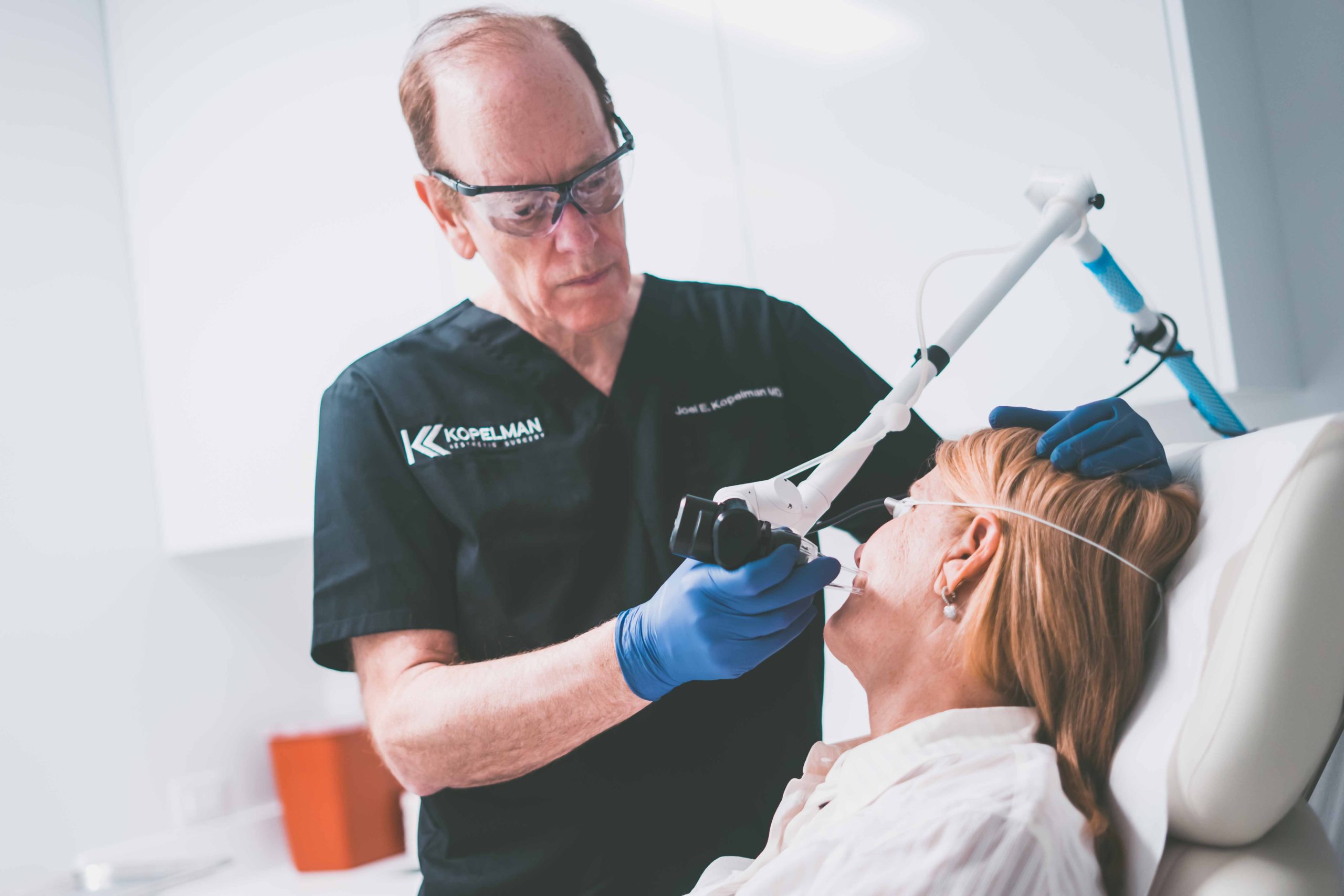
Are you seeking a highly skilled, experienced, board-certified plastic surgeon for your blepharoplasty or eyelid surgery? Dr. Kopelman, a board-certified oculofacial plastic surgeon, is an exceptional choice.
To get started, please call the office closest to you to schedule a consultation or fill out the form below.