

Aetna’s clinical policy, for example, looks for an upper field of 30 degrees or less at rest plus a gain of at least 12 degrees, or 30%, with the lid taped. Other plans set different limits.
Key Takeaways
- Failing a visual field test for eyelid surgery means your drooping eyelids measurably block your upper vision. You should never try to fail the test intentionally.
- The test compares your vision with your eyelids in their natural position and lifted with tape to determine whether eyelid obstruction causes vision loss.
- Insurance requirements vary, but Aetna uses criteria such as an upper visual field of 30 degrees or less and an improvement of at least 12 degrees or 30% with taping.
- Drooping eyelids caused by excess skin (dermatochalasis) or weakened eyelid muscles (ptosis) may qualify for functional eyelid surgery when they interfere with vision.
- Insurance approval often requires visual field test results, clinical photographs, eyelid measurements, and a physician’s evaluation to establish medical necessity.
What Is a Visual Field Test for Eyelid Surgery?
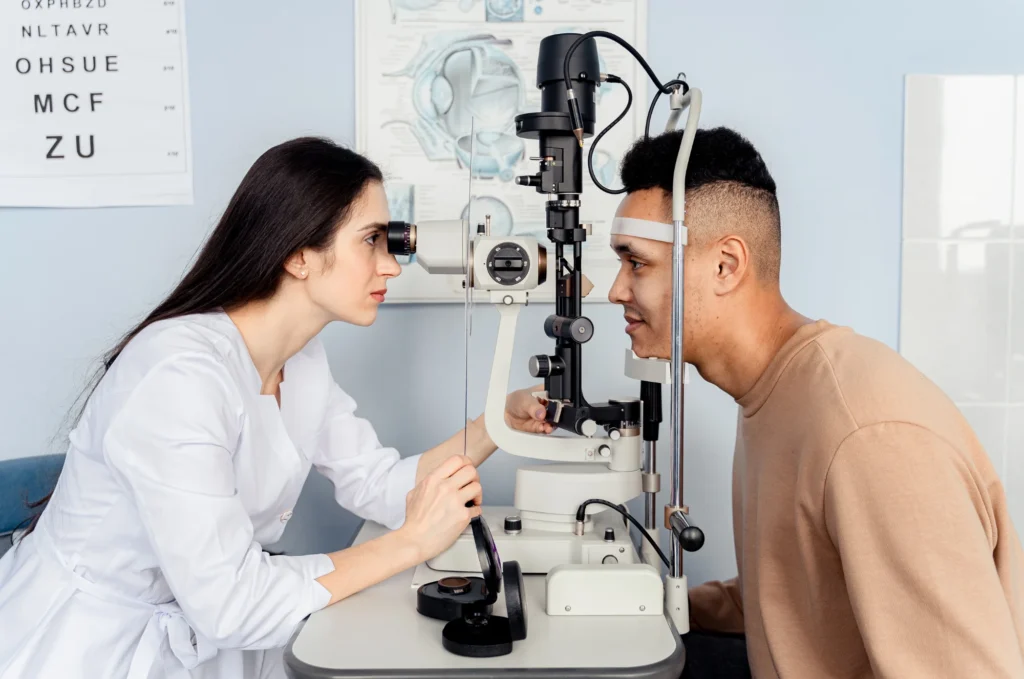
It is a painless peripheral vision test that maps how far you can see above and beside you while looking straight ahead. Doctors use it to see whether drooping eyelids are blocking your vision. Many patients call it the eyelid test, and some offices call it a field-of-vision test.
The result separates cases that call for functional eyelid surgery from cosmetic ones. If the exam shows your lids limit your sight, blepharoplasty may qualify as medical rather than cosmetic.
What a Visual Field Test for Blepharoplasty Measures
The exam measures how much the upper lid blocks your side and upper vision during daily tasks. A visual field test for upper eyelid surgery focuses on the superior field, the area above straight ahead where hanging skin interferes most.
Two conditions cause that blockage. Dermatochalasis is excess skin that hangs over the lashes. Ptosis is a low lid margin caused by a weak lid muscle. The ASOPRS white paper treats ptosis repair as a separate procedure from blepharoplasty.
A dermatochalasis visual field test and a ptosis one measure the same upper field. The cause decides which operation fits.
Which Visual Field Test for Blepharoplasty Do Surgeons Use?
The Humphrey is the most common visual field test overall, according to Guy’s and St Thomas’ NHS Foundation Trust. In a Humphrey visual field test for blepharoplasty, you look at a central light and press a button each time a flash appears elsewhere. Some offices use Goldmann testing, where a technician moves the target by hand.
A standard Humphrey glaucoma pattern (24-2) covers only about 24 degrees above center, according to a study in the journal Eye. Because of that limit, researchers have tested custom upper-field Humphrey programs, and some offices use one such as the Superior 64 visual field pattern. Ask which test your plan accepts.
Humphrey testing usually takes 5 to 10 minutes, according to the NHS, two tests per eye. Goldmann testing can take up to 30 minutes.
Plans expect a physician to order and interpret the test, and some specify an optometrist or ophthalmologist. Ask whether the surgeon’s office runs it or refers you to an eye doctor.
Droopy Eyelid Evaluations and Surgery
How Droopy Eyelids Are Evaluated Using the Ptosis Visual Field Test
The ptosis visual field test measures how much a drooping lid blocks your field of vision. Some patients call it the ptosis test.
Medical Reasons for Eyelid Surgery
Surgeons often recommend lid surgery when ptosis interferes with reading, driving, or other daily tasks. If the exam shows your lids block a meaningful part of your sight, the procedure can be considered medically necessary.
The Surgical Options Available
The most common option is blepharoplasty. It removes excess skin and muscle and can improve the appearance of the lids.
In more severe cases, ptosis surgery tightens the muscle that lifts the lid, often through levator advancement.
Some surgeons use a laser instead of a scalpel for traditional blepharoplasty. The right technique depends on how far the lids droop, your anatomy, and your overall health.
How to Fail a Visual Field Test for Eyelid Surgery?
People often search how to fail an eye test for eyelid surgery, but no trick exists. “Failing” means your results show a measurable loss of upper vision that improves when the lid is lifted. That result supports surgery. A forced one does not.
Taped and Untaped Visual Field Test: How Failing Is Measured
Your doctor runs the exam twice for each eye. First, your lids rest naturally; then they lift, tape the lids, and repeat the exam. A large gain on the second run shows the lid is the cause.
If your sight stays the same when taped, the lid is not the problem and another cause needs checking.
Ptosis Visual Field Test Interpretation: How to Read Your Results
Each number on the printout is a distance in degrees above straight-ahead gaze. The table below shows how one insurer scores them.
Aetna gives an example: a 25-degree field that rises to 37 degrees with taping meets its criteria.
Limits differ by plan. Medicare contractors set their own rules. The AAO’s 2021 fact sheet found that some require taped and untaped fields, while others rely on clinical notes and photographs. Check your contractor’s current policy at aao.org/lcds.
| What the exam checks | Common example criterion | Why it matters |
|---|---|---|
| Resting upper field (untaped) | 30 degrees or less above straight-ahead gaze | Shows a functional loss of upper vision |
| Gain with taping | 12 degrees or more, or 30% or more | Shows the lid is the cause and surgery can help |
| Each eye | Taped and untaped results for every eye being treated | Plans review each eye separately |
| Timing | Testing done within the past 12 months | Keeps the evidence current |
| Supporting records | Photographs, lid measurement (MRD) and a physician's interpretation | Backs up the test printout |
Example based on Aetna's clinical policy and the AAO documentation checklist. Medicare contractors and other plans set their own limits.
Common Reasons for a Failed Visual Field Test
- Excess upper lid skin: dermatochalasis hangs over the lashes and blocks the upper field.
- Severe ptosis: the lid margin sits low enough to cover part of your line of sight.
- Brow ptosis: a low brow can add to the blockage, and some patients need both a brow lift and lid surgery. Compare the two: brow lift vs blepharoplasty.
- Age-related changes: lid skin and muscle loosen over time, which adds to the loss.
Other conditions can also shrink your field. Glaucoma, retinal disease, and neurological disorders cause peripheral vision loss that taping does not fix. These need their own care, and your surgeon will want a full eye exam first.
Failed Visual Field Test in One Eye: What It Means
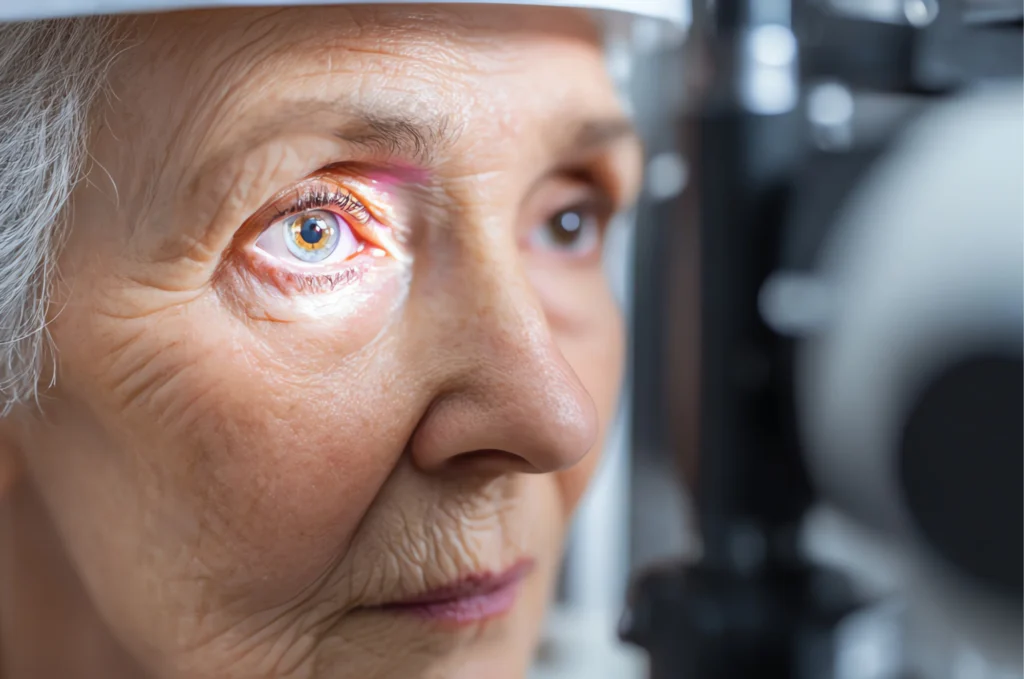
Each eye is measured separately. One eye can meet the criteria while the other does not, especially with uneven lids. Plans generally want taped and untaped results for every eye being treated.
Ask your surgeon how your plan handles a one-sided result.
How to Fail a Visual Field Test for Ptosis
For ptosis, “failing” means the lid margin sits low enough to block your upper vision. The examiner may tape the lid to where it should rest, to show how much sight surgery could restore.
Your surgeon also measures the margin reflex distance (MRD) and takes photos, both of which are listed in the AAO’s documentation checklist.
Test-Day Tips for Your Visual Field Exam
There is no honest way to fail a visual field test for blepharoplasty on purpose. Trying to do so leads to unreliable results and repeat testing.
- Look at the central light the whole time and let the flashes come to you.
- Press the button whenever you see a light, even a faint one. Missing some is normal.
- Blink normally. Many people blink right after pressing the button, as NHS guidance suggests.
- Bring your glasses, or your lens details, if the office asks.
- Tell the technician if you need help or a short rest.
- Keep treating other eye conditions and keep your follow-up visits.
- Describe your symptoms honestly, including trouble reading or driving.
For a fuller walkthrough, read Dr. Kopelman’s guide to tips for taking a visual field test.
How to Qualify for Eyelid Surgery
Medical Criteria
- Functional Impairment: Surgery is typically considered when drooping lids affect your sight and daily activities. You’ll need evidence of how this affects your life.
- Health Status: You should be healthy, with no medical conditions that can impair healing, and ideally a nonsmoker, according to the American Society of Plastic Surgeons. Conditions like uncontrolled diabetes or heart disease may affect eligibility.
- Eye Health: A complete eye exam rules out serious eye conditions, such as glaucoma, dry eyes, or blepharitis.
Insurance Criteria
- Medical Necessity: Insurance often requires proof that the procedure restores function, not just appearance. Blepharoplasty visual field criteria usually require low visual acuity, improvement, and at least a 20/20 gain, plus photos and a physician’s interpretation.
- Pre-Authorization: Many plans require it. Medicare has required prior authorization for eyelid surgery in hospital outpatient departments since July 2020. You submit detailed medical records, and a reviewer may check them.
- Documentation: Provide thorough records from your eye doctor, including test printouts and notes on how the condition affects your daily life.
How to Qualify Based on Your Condition
Document Functional Limitations
- Visual Field Testing: The exam slid droop limits vision.
- Daily Impact Assessment: Record how the condition affects reading and driving.
Seek Professional Evaluation
- Consult Specialists: See an ophthalmologist or oculoplastic surgeon for a thorough evaluation. Rule out other causes.
Prepare for Insurance Requirements
- Submit Detailed Claims: Work with your surgeon to send all required documentation to your insurer.
- Follow Up: Track your claim and confirm the paperwork is processed.
Consider Alternatives
- Non-Surgical Options: Non-surgical treatments may suit mild cases or appearance concerns, but they do not remove excess lid skin. Tell your surgeon if you tried them first.
Your surgeon’s office can tell you which criteria your plan uses. For a fuller checklist, read Dr. Kopelman’s guide to who is a good candidate for blepharoplasty.
How to Prepare for an Eyelid Surgery Evaluation
Gather your medical records, including past eye exams, any earlier visual field printouts, and a summary of your health history. Keep a symptom diary of how your lids affect daily life. Write down questions about the procedure, insurance,e and costs.
Check with your primary care physician about your health and any medications that might affect surgery. Arrange transportation and confirm your insurance coverage and requirements.
Insurance Coverage for Eyelid Surgery
Coverage often depends on whether the procedure is medically necessary or cosmetic.
Ask your insurer about coverage details, out-of-pocket costs, and required documentation.
Coverage is more likely if:
- A field vision test for droopy eyelids shows measurable restriction
- Visual field testing for blepharoplasty demonstrates improvement with taping
- Clinical photos confirm dermatochalasis or ptosis
For the full approval process, read Dr. Kopelman’s guide to how to get insurance to pay for eyelid surgery.
How Dr. Kopelman Can Help
If you need lid surgery for health or beauty reasons, consult an expert like Dr. Kopelman. He will give you a thorough assessment, personalized advice,e and a clear plan for the next steps.
Schedule your consultation with Dr. Kopelman today to discuss your options and improve both your vision and appearance.