
Under-eye filler in Miami restores volume to the tear-trough area, softening dark circles and hollow eyelids in about 30 minutes with minimal downtime. At Kopelman Aesthetic Surgery, reversible hyaluronic acid fillers, typically Restylane, are used and injected with a blunt cannula for a safer, more comfortable experience.
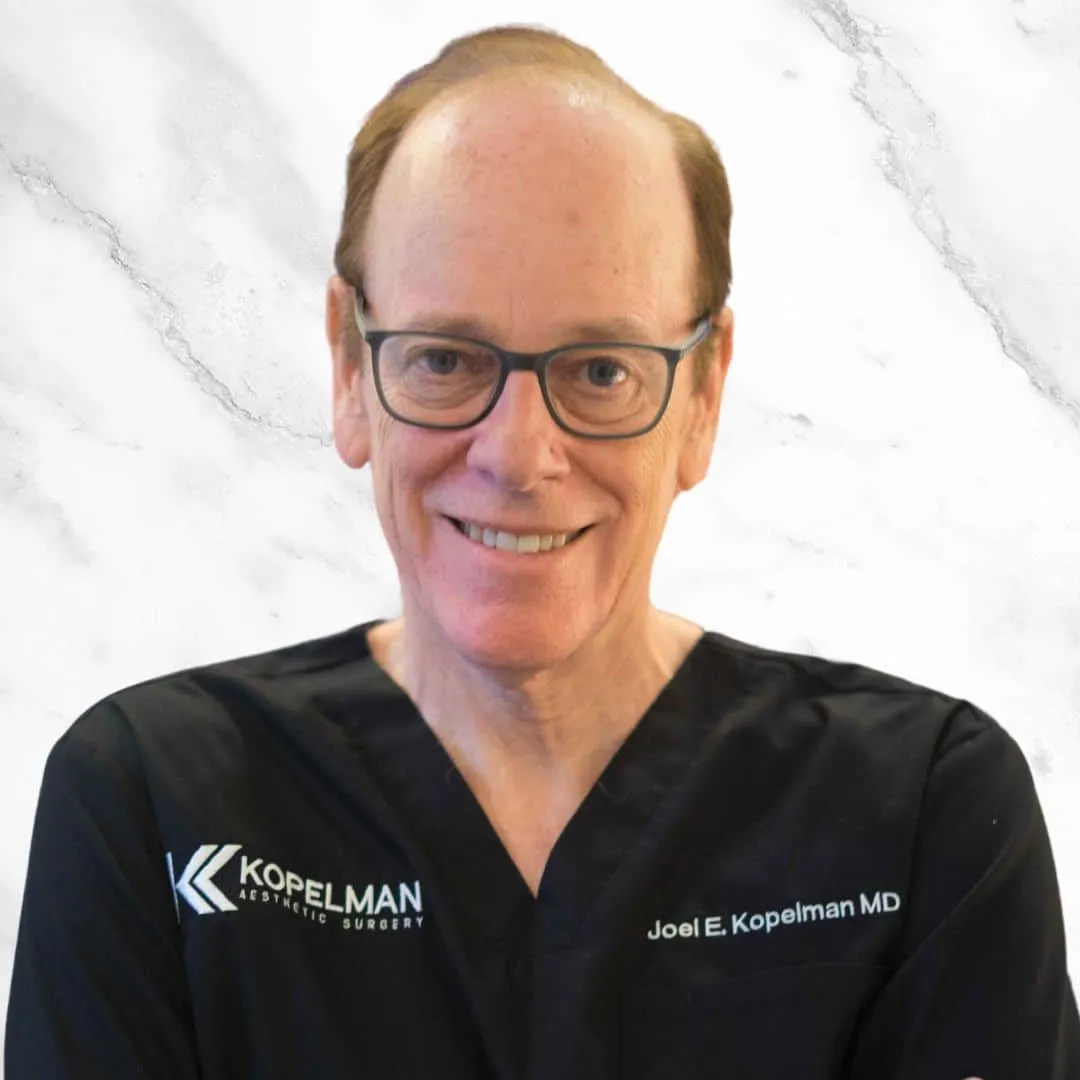
Dr. Joel Kopelman is a fellowship-trained oculoplastic and facial plastic surgeon with more than 35 years of experience treating the delicate area around the eyes. Patients from Miami, Fort Lauderdale, Coral Gables, Miami Beach, and across Florida travel to the practice for expert hollow eyelid treatment from an oculoplastic subspecialist.
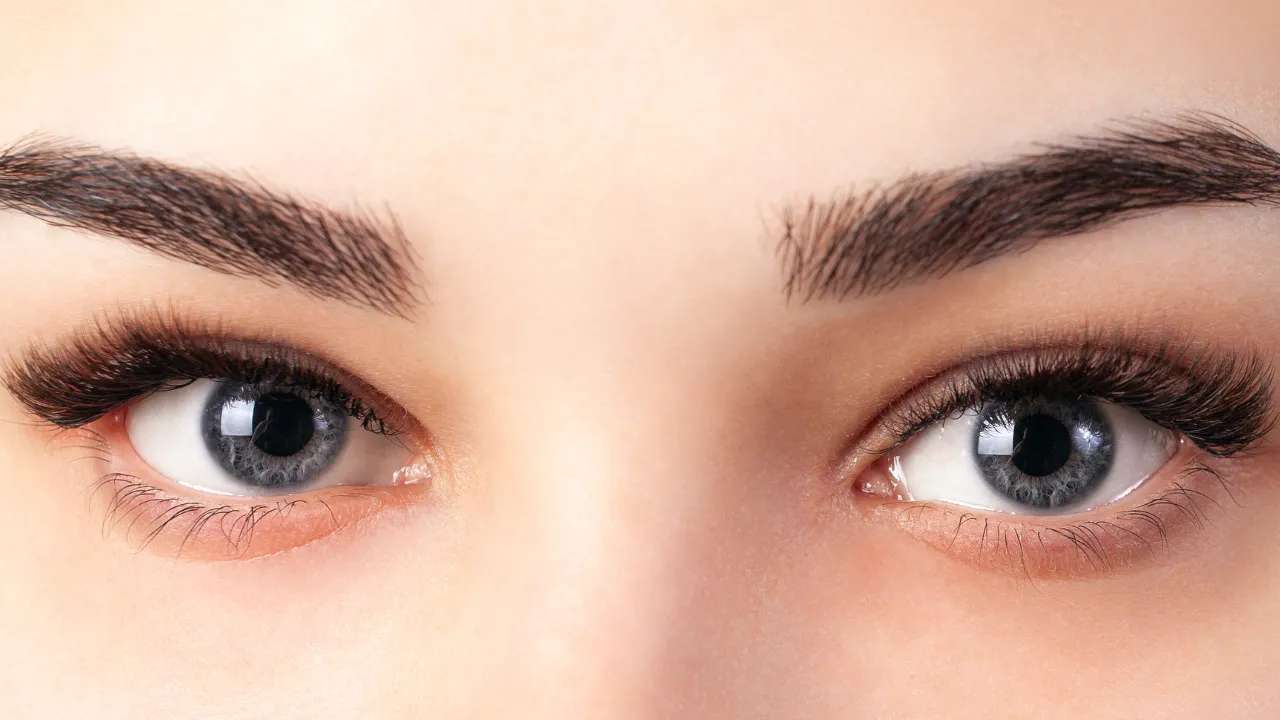
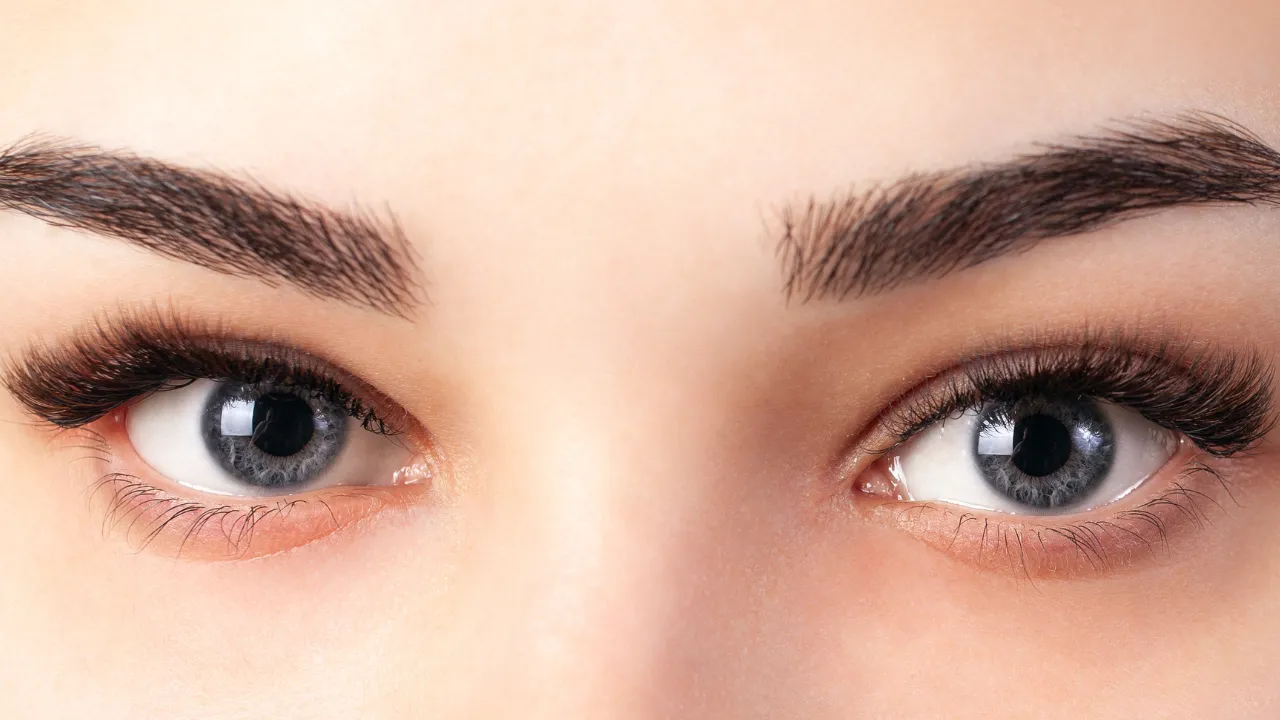
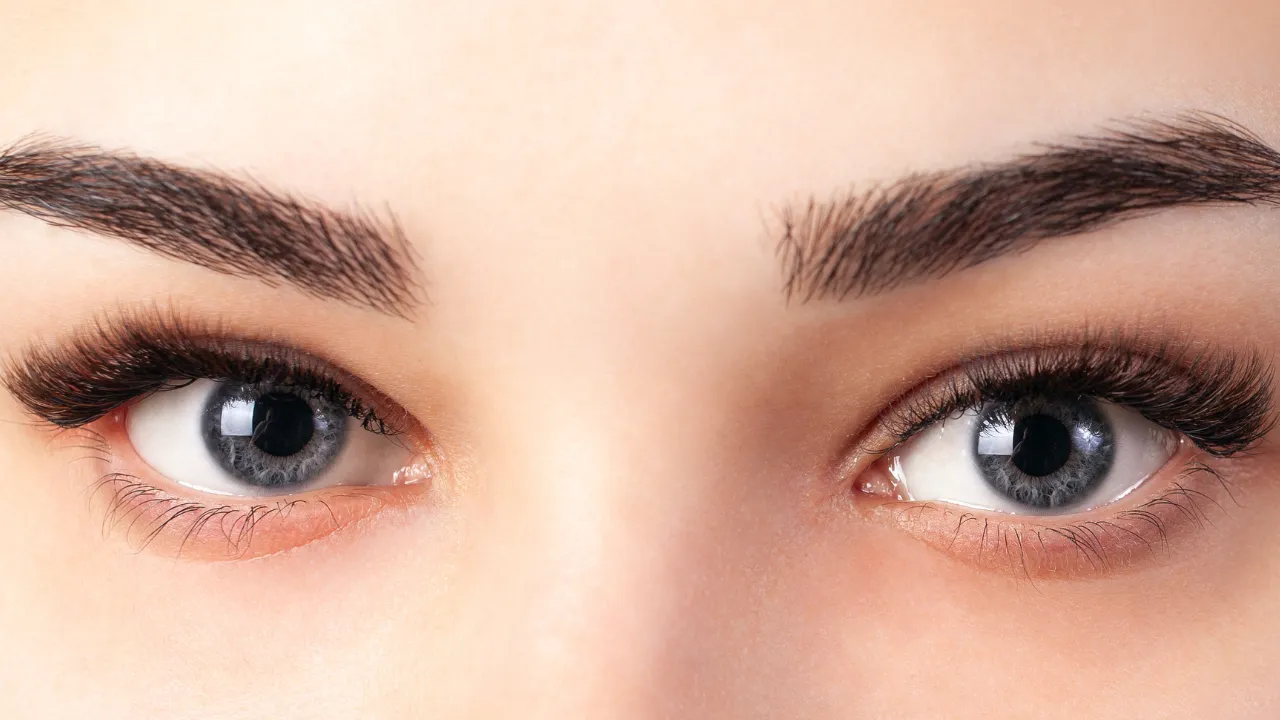
Dark circles of the lower eyelids can affect people of all ages and ethnicities. Hollow eyes can make a person look tired, fatigued, or older than their stated age, even when they feel fully rested.
Dark circles can be a troubling cosmetic feature that is hard to camouflage. The most common causes are loss of facial fat, thinning lower eyelid skin that reveals underlying blood vessels, and increased pigmentation.
Analyzing dark circles under the eyes is not simple. A dark shadow forms in the tear trough from hollowing at the inner corner of the lower eyelid, and this is sometimes made worse by hyperpigmentation of the skin or flattening of the upper cheek and mid-face. This complexity is why consulting a tear trough filler specialist trained in the eye area is essential to achieving results that suit your unique facial features.
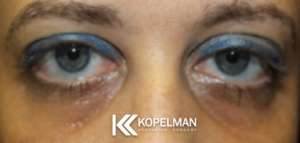
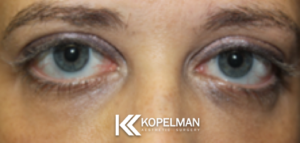
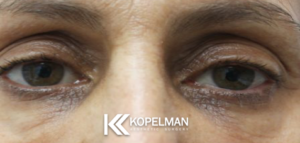
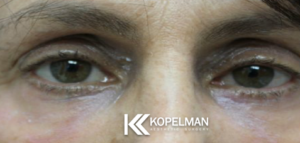
These dark eyelid before-and-after photos show real patients treated at the practice. They will help you set realistic goals for your own outcome. Click on a patient to learn more about their tear trough treatment.
“Dark Circles under my eyes had been bothering me for a long time. I found Dr. Kopelman on the Internet and I had been very impressed by all the positive reviews he had received. The doctor was great, and ultimately I was able to decrease the presence of dark rings around my eyes thanks to his experience and soft touch with injections and a laser resurfacing treatment. ”
~ Sunni K. ~
During your consultation, the underlying causes of your dark circles will be analyzed. Many patients present with a combination of increased skin pigmentation and volume loss. If the primary issue is facial fat loss, an under-eye filler injected into the inner-corner tear troughs is the simplest way to correct the hollows.
Safety comes first. Injections around the eyelids are generally very safe, and that safety improves with proper technique and careful product selection. Fillers with an excellent safety record, a very low risk of allergic reaction, results lasting more than a year, and the ability to be reversed are prioritized. Non-animal-derived hyaluronic acid gel (HA) fillers are typically recommended because they have a high safety profile and a very low risk of allergic reactions.
Restylane is the preferred injectable for lower eyelid tear troughs because it is cross-linked for greater longevity and carries a lower risk of prolonged swelling than Juvederm products. Occasionally, patients arrive after receiving too much filler elsewhere, resulting in a lumpy or bluish tone under the eyelid skin. In most cases, Restylane can be easily dissolved in minutes with an enzyme called hyaluronidase.
More permanent fillers like Radiesse, Sculptra, Belafill, and silicone are not recommended for this area. They may look lumpy, they can be felt beneath the skin, and they cannot be reversed with hyaluronidase.
| Filler | Type | Best For | Reversible | Typical Duration |
|---|---|---|---|---|
| Restylane | Hyaluronic acid, cross-linked | Tear trough hollows (preferred choice) | Yes, with hyaluronidase | 12 to 18 months |
| Juvederm Voluma | Hyaluronic acid, thicker gel | Mid-face and cheek volume | Yes, with hyaluronidase | 18 to 24 months |
| Restylane Lyft | Hyaluronic acid, firm | Mid-face and cheek volume | Yes, with hyaluronidase | 12 to 18 months |
| Fat grafting | Autologous fat (your own) | Select patients seeking longer duration | No | Variable, potentially years |
| Radiesse | Calcium hydroxyapatite | Not recommended near the eyes | No | 12 to 18 months |
| Sculptra | Poly-L-lactic acid | Not recommended near the eyes | No | Up to 2 years |
| Silicone | Permanent synthetic | Not recommended near the eyes | No | Permanent |
After any make-up is removed, the lower eyelid is sterilized with antiseptics, and lidocaine cream is applied. After ten minutes, a small amount of lidocaine (similar to novocaine) is injected to numb the area and constrict capillaries.
A blunt-tipped cannula, not a sharp needle, is then used to inject filler into the eyelid hollows. Sharp needle injections have been associated with HA emboli entering blood vessels, which can rarely lead to blindness. Blunt cannulas are safer instruments because they tend to roll off blood vessels rather than penetrate the vessel wall, and they also produce much less bruising.
Small amounts of filler are used. The procedure takes approximately 30 minutes. Minimal bruising is expected.
HA fillers aren’t permanent, so you’ll need repeat injections about once a year to maintain the cosmetic improvement. Fat is an option that may last longer, harvested from your belly or hip through a minor surgical procedure.
Harvested fat is centrifuged and injected into lower eyelid hollows. Fat as a filler can last longer than synthetic products, so some patients seeking longer-lasting benefits request fat grafts. This procedure is performed on select patients.
Fat grafts can be unpredictable because live fat cells require a good blood supply, and you can inject only very small amounts of fat at a time. Repeat grafts are sometimes necessary to obtain an ideal result, and occasionally fat nodules form that require removal. Fat has the advantage of lasting longer but comes with less predictable outcomes.
In some patients, loss of upper cheek soft tissue volume or natural mid-face flattening contributes to dark eyelid circles and lower eyelid hollows. To counter this natural volume loss, a thicker dermal filler injected deep into the mid-face region can elevate the cheeks, which often improves the appearance of tear troughs.
Either Juvederm Voluma or Restylane Lyft is used to replace upper cheek volume. These HA injectables are safe, long-lasting, and firm enough to elevate the mid-face. They are not injected into the thin eyelid skin; they are placed adjacent to the eyelids in the cheek area.
Hyperpigmentation associated with dark circles may be due to sun exposure or ethnic characteristics. Treating pigmentation under the eyes can be more challenging depending on whether the pigment sits superficially or deep in the skin.
Prevention is the first strategy. Avoiding direct sunlight decreases the stimulation of melanin-producing cells. Wearing polarized sunglasses and applying sunblock with titanium and zinc to the lower eyelids is recommended, especially for anyone active outdoors.
Pigment in the top layer of skin is more accessible to treatment. Several topical depigmenting medicines containing hydroquinone, kojic acid, niacinamide, cysteamine 5% cream (Cyspera), or tranexamic acid can lighten skin by inhibiting melanocytes or plasminogen.
Low-energy lasers using a thulium or erbium fiber can target skin pigment and improve penetration of topical medication. Deep pigmentation is very difficult to treat, and experimental options include injection of small amounts of tranexamic acid.
The best candidates for under-eye filler have hollowing at the inner corner of the lower eyelid, mild to moderate volume loss, and reasonable skin quality. Most healthy adults in their late 20s and older are candidates, since this is typically when tear trough volume loss first becomes noticeable.
You may be a good candidate for under-eye filler if you:
Filler may not be the right choice for patients with significant orbital fat herniation (true under-eye bags), extensive festoons (fluid-swollen pouches lower on the cheek), or dark circles caused primarily by deep pigmentation rather than volume loss. In those situations, surgical evaluation or laser and topical treatment may deliver better results.
Many patients search for solutions to “under-eye bags” when what they actually have is tear trough hollowing. The two problems look similar at a glance but have very different causes and treatments.
Tear trough hollowing is a volume-loss problem. Soft tissue at the inner lower eyelid recedes with age or genetics, creating a shadow. Under-eye bags, by contrast, typically result from orbital fat herniating forward through weakened tissue, creating a visible bulge that no amount of filler will flatten.
Filler is the right answer when the concern is a shadow, a hollow, or thinning skin over the tear trough. Lower blepharoplasty (eyelid surgery) is the right answer when there is a true fat bulge or excess skin. Some patients benefit from a combined approach that addresses both problems in sequence.
Because Dr. Kopelman is a fellowship-trained oculoplastic surgeon, both surgical and non-surgical paths are evaluated in a single practice, which is uncommon among filler injectors. If tear trough surgery or dark circle surgery in Miami is a better fit than filler for your anatomy, that recommendation will be made honestly during your consultation.
Under-eye filler is generally safe when a specialist injector uses proper technique, though every injection carries some risk. Common, temporary side effects include mild redness, swelling, and bruising at the injection site, typically resolving within a few days.
Less common risks include lumps or bumps under the skin, prolonged swelling (particularly with fillers that bind water strongly), and a bluish tone called the Tyndall effect that can result from filler placed too superficially. These can typically be corrected by dissolving the filler with hyaluronidase.
The most serious rare risk is vascular occlusion, where filler enters a blood vessel. Around the eye, this can theoretically lead to vision loss. This is why blunt-tipped cannula technique, small aliquot injections, and treatment by an oculoplastic-trained injector meaningfully reduce risk compared with sharp-needle technique in less experienced hands.
Patients who are pregnant, breastfeeding, or dealing with active skin infections should postpone treatment. Anyone taking blood thinners or aspirin should discuss timing with the injector to minimize bruising.
The cost of under-eye filler in Miami varies based on the type of filler used, the treatment area, and the amount of product needed for your specific anatomy. Most Miami practices price by treatment session or syringe, so confirm exactly what is included in any quote you receive.
At Kopelman Aesthetic Surgery, Restylane treatment costs $2,500. This rate applies to Restylane injections used across several treatment areas, including the lips, cheeks, and under the eyes, since the specific product type and volume needed depend on the area being treated and your individual anatomy.
Combined treatment involving cheek volume replacement alongside tear trough correction starts at the same $2,500 base rate, with additional product priced during consultation. Fat grafting instead of filler is priced separately and discussed during consultation.
Cost should not be the only factor when choosing an injector for this area. The under-eye is one of the most technically demanding regions of the face, and correcting a poorly placed filler is often more expensive than paying for expert placement the first time.
| Treatment Scenario | Price | Notes |
|---|---|---|
| Restylane treatment, under eye filler | $2,500 | Practice rate; the same rate applies whether Restylane is used for lips, cheeks, or under-eye depending on treatment plan |
| Tear trough plus cheek volume (combined treatment) | Starting at $2,500 | Additional product for combined treatment priced during consultation |
| Fat grafting to lower eyelids | $2,500 to $5,000 | Minor surgical procedure; confirm practice-specific rate |
| Filler dissolution with hyaluronidase | $200 to $500 per session | Used to correct lumps or overfilling from any injector; confirm practice-specific rate |
| Maintenance treatment | $2,500 | Same Restylane rate applies to touch-up sessions |
Patients travel from throughout South Florida and from out of state to Kopelman Aesthetic Surgery for under-eye filler treatment. The Palm Beach office is a manageable drive from Miami, Miami Beach, Coral Gables, Fort Lauderdale, and Miami Lakes, and many patients combine their consultation with other injectable or laser treatments in a single visit.
For patients seeking the best under-eye filler in Florida, the combination of oculoplastic subspecialty training and more than 35 years of facial aesthetic experience is uncommon in the state. Whether the primary concern is tear trough hollowing, dark circles, or under-eye bags requiring surgical evaluation, a comprehensive consultation will clarify the best path forward for your specific anatomy.
Frequently asked questions
about Tear Trough Fillers
Eye fillers used to address dark circles are composed of hyaluronic acid, a substance naturally found in your body. Under-eye dermal fillers are made from this organic material, which allows volume to be restored safely and reversibly.
After receiving eyelid fillers with Juvederm or Restylane, mild redness and swelling for a few days are completely normal. Most patients return to normal activities immediately after receiving injections.
Eyelid fillers typically last 12 to 18 months, depending on the product and how quickly your body metabolizes hyaluronic acid. Restylane in the tear trough area tends to last on the longer end of that range because this region has minimal muscle movement.
Restylane treatment at Kopelman Aesthetic Surgery costs $2,500. This rate applies to Restylane injections used for the lips, cheeks, and under-eye area, with your exact treatment plan and product volume confirmed during your consultation.
Under-eye filler is safe when administered by an experienced specialist injector using a blunt-tipped cannula technique and hyaluronic acid products that can be reversed. Serious complications are rare, and choosing an oculoplastic-trained injector significantly reduces risk in this delicate area.
Yes. Hyaluronic acid fillers such as Restylane and Juvederm can be dissolved within minutes using an enzyme called hyaluronidase. This is one of the most important reasons HA fillers are preferred over permanent alternatives for the under-eye area.
Under-eye bags are typically caused by orbital fat herniating forward through weakened tissue, creating a visible bulge that filler cannot flatten. Tear-trough hollows are caused by volume loss and appear as shadows or indentations, which respond well to filler.
Discomfort is minimal because topical numbing cream and a small amount of lidocaine are used before injection. Most patients describe a pressure sensation rather than pain, and the entire treatment takes approximately 30 minutes.
Results are visible immediately after treatment, with the final appearance settling over one to two weeks as any minor swelling resolves. Improvement in dark circles, hollows, and tired appearance is typically noticeable at the initial follow-up visit.
Kopelman Aesthetic Surgery serves patients from Miami, Miami Beach, Coral Gables, Fort Lauderdale, and throughout South Florida from the Palm Beach office.
Frequently asked questions
about Tear Trough Fillers
Eye fillers used to address dark circles are composed of hyaluronic acid, an already naturally found substance in your body. The dermal fillers that Dr. Kopelman uses are made of this organic material that allows you to restore volume under your eyes.
When getting eyelid fillers with Juvaderm or Restylane it is completely normal to have mild redness and swelling for a few days. You will have zero issues returning back to your normal activities after receiving injections.
Eyelid fillers can usually last anywhere from 6 to 9 months. Length of time depends on how your body naturally breaks down the filler.

Page Updated in August 2026 by Dr. Joel Kopelman (Facial Plastic Surgeon) of Kopelman Aesthetic Surgery.
Schedule a Consultation
For a Dark Eyelid Circles
To schedule a private consultation with Dr. Kopelman, please call the office or request an appointment online.













Lorem ipsum dolor sit amet, consectetur adipiscing elit. Ut elit tellus, luctus nec ullamcorper mattis, pulvinar dapibus leo.