
Blepharoplasty in New Jersey, also called an eyelid lift, is a surgical procedure that removes or repositions excess eyelid skin, muscle, and fat to improve eyelid shape, reduce heaviness, and, in some cases, improve vision. Patients typically consider eyelid surgery when drooping upper lids, under-eye bags, puffiness, or loose eyelid skin affect appearance or function.
Choosing an experienced eyelid surgeon matters because the procedure requires a careful balance between facial aesthetics, eyelid support, and eye protection. Dr. Joel Kopelman has more than 35 years of experience in cosmetic and reconstructive eyelid surgery and evaluates each case based on anatomy, goals, and whether tissue should be removed, repositioned, or preserved.
Eyelid reconstruction is one of the most common cosmetic surgeries performed in the United States. Because the eyelid must protect the eye while also framing the face, the procedure calls for delicacy, precision, and years of focused experience. That combination has produced consistently excellent results in cosmetic and functional cases, along with recognition as a best oculoplastic surgeon in New York.
Every eyelid lift is approached individually, removing and preserving tissue and repositioning bulging eyelid fat only where clinical judgment supports it. The goal is a refreshed, natural result rather than a uniform, overdone look.
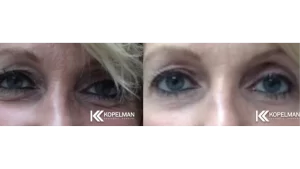
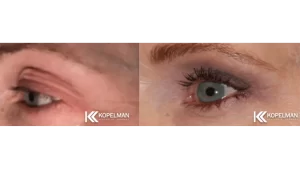
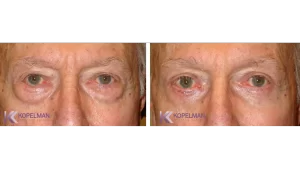
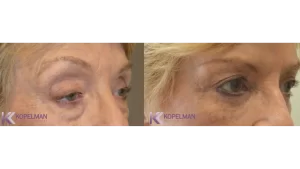
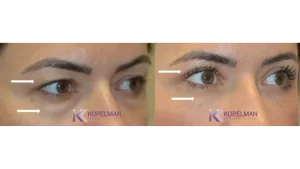
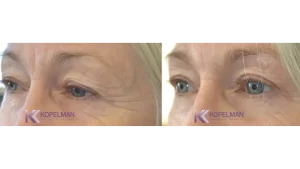
These eye lift before and after pictures represent actual patients and will help you set realistic goals for your own surgical outcome when you get a blepharoplasty in NYC.
“I saw Dr. Kopelman for my upper and lower eyelids. I knew shortly after meeting him, he was the right physician for me. Prior to surgery, he eased my anxiety, and I felt confident and secure. I was 200% sure I made the right decision. My results are beyond my wildest dreams. I look natural, refreshed, and 15 years younger! The office staff is kind, helpful and accommodating. I highly recommend Dr. Kopelman. He is an artist and an extraordinary surgeon, but more importantly a kind and gentle soul.”
~ Susan S.~
Joel Kopelman is an oculoplastic plastic surgeon with offices in New York City, Palm Beach, and New Jersey. He has performed thousands of cosmetic and reconstructive eyelid surgical procedures over more than 35 years, published articles on eyelid surgery, and continues to be sought out for blepharoplasty by colleagues and patients across the east coast.
The credentials that matter most for this procedure include board certification, fellowship training in oculoplastic surgery, and active membership in the American Society of Ophthalmic Plastic and Reconstructive Surgery (ASOPRS), the American Academy of Ophthalmology (AAO), the American Academy of Facial Plastic and Reconstructive Surgery (AAFPRS), and the American College of Surgeons (FACS). This combined training in ophthalmology and facial plastic surgery is what defines an oculoplastic surgeon and separates the approach from a general plastic surgery approach to the eyelids.
Extensive oculoplastic experience allows a careful assessment of each patient’s eyelid anatomy so that both functional and cosmetic improvements are addressed together, rather than treating one at the expense of the other.
For many patients, upper eyelid surgery in New Jersey reduces hooding and restores a more open, rested look. As we age, the contours of the upper eyelids naturally change, causing the skin to droop, encroach on the eyelashes, and sometimes obscure vision. An upper eye lift restores more youthful contours by trimming and reshaping the excess skin.
Cosmetic upper-lid blepharoplasty is a popular procedure that Dr. Joel Kopelman has refined over more than 35 years of practice. Because it requires precision at the millimeter level, incision placement and the amount of tissue removed are planned around each patient’s individual anatomy rather than a standard template.
An oculoplastic surgeon knows exactly where the upper-lid incision should sit and how much skin can be safely removed to create a natural result. Following blepharoplasty, the eyelids appear more open, and patients typically look brighter, rejuvenated, and more alert. Upper eyelid blepharoplasty can often be performed in-office under local anesthesia.
For patients who prefer sedation, surgery is performed in a licensed surgical center with an anesthesiologist present. Blepharoplasty is an outpatient procedure, and patients go home afterward and can resume most normal activities the next day.
Lower eyelid blepharoplasty is designed to flatten the tired-looking bulging bags that form beneath the eyes. As we age, the lower eyelid muscle (the orbicularis oculi) weakens, and this laxity contributes to the appearance of bags and hollows. The advantage of a lower eyelid blepharoplasty is that it is commonly a scarless procedure and produces natural-looking lower eyelids.
A small transconjunctival incision is made behind the lash line of the lower eyelid, and this incision remains hidden. When a patient has too little fat, existing fat is repositioned along the eyelid hollows within a membrane called the orbital septum, filling in the hollow areas around the eye. In select cases, microscopic fat grafts from another site can be used to achieve the same effect.
For patients who have excess skin and lax muscle that need tightening and support, a subciliary approach is used to elevate and reinforce the lower lid. The choice of technique is made after evaluating skin quality, fat position, midface support, and the risk of lower-lid malposition. Cases involving eye bag surgery in New Jersey follow the same individualized planning process.
Blepharoplasty is best suited for adult men and women in good general health with realistic goals for improving the upper or lower eyelids. Good candidates typically show upper-lid hooding, under-eye bags, deep tear troughs, puffiness, or fine wrinkling that has not responded to non-surgical options.
Some medical conditions do not permanently rule out eyelid surgery, but they should be well-controlled first. The table below summarizes the most common candidate profile and the conditions that usually need to be addressed before surgery is scheduled.
| Ideal Candidates | Conditions to Address First |
|---|---|
| Adults in good general health | Chronic dry eye or ocular surface disease |
| Excess upper-lid skin, hooding, or heaviness | Uncontrolled hypertension |
| Under-eye bags, puffiness, or tear-trough hollowing | Thyroid eye disease |
| Vision partially obstructed by lax upper-lid skin | Poorly controlled diabetes |
| Realistic aesthetic and functional goals | Glaucoma or bleeding disorders |
| Non-smoker or willing to stop nicotine for several weeks | Active eyelid or eye-surface infection |
Eyelid surgery begins with careful measurement and planning. Patients are measured in both the lying and sitting positions so that the surgical marks account for how the tissues sit when the face is upright, and the plan is refined again at the time of surgery.
The overall objective is to unravel compressed eyelid folds, flatten bulges, restore more youthful contours, and smooth surrounding wrinkles. In most cases, treatment begins with the least invasive option that will produce a durable result.
The consultation runs about one hour and includes an evaluation of the eyes, vision, brow position, skin condition (wrinkling and sun damage), facial laxity, allergies, and a review of any medical conditions that could affect surgery. Preoperative photographs are taken, prescriptions are provided so they can be filled before the procedure, and surgical consents are reviewed and signed.
Patients may be asked to take an oral antibiotic and to wash their hair with anti-bacterial shampoo the night before the procedure. No eating or drinking is permitted after midnight or on the morning of surgery.
A nurse and an anesthesiologist interview and evaluate the patient before entering the operating suite. The surgical plan is reviewed one last time, and any final questions are answered.
With IV sedation (“twilight sleep”), a sedative is delivered through the vein to place the patient in a relaxed, tranquil state. Precise skin markings are made based on the earlier measurements, and a local anesthetic is infiltrated beneath the skin to numb the area.
Excess tissue is then removed through incisions placed in the natural creases of the upper lid or behind the lash line of the lower lid. For upper-lid cases, a small strip of underlying muscle may also be removed to define the eyelid crease and fold. Bulging fat in the inner corner of the upper eyelids is conservatively trimmed so the eye still looks full rather than “hollowed out.”
Care is taken to leave enough fat behind to prevent a downward descent of the eyebrow. Incisions are sutured with fine non-absorbable sutures, and a topical antibiotic ointment is applied. Surgery is completed in roughly one to two hours, and patients typically do not feel or remember the procedure.
Most patients experience very little discomfort after an eyelid lift. Acetaminophen (Tylenol) every 4 to 6 hours is usually recommended for the first 48 hours, along with ice compresses in zip-lock bags. Antibiotic drops go into the eyes four times a day, with ointment applied along any suture lines.
Sutures are typically removed five to seven days after surgery. Steri-strips may be placed on the outer corners of the eyelids for a few extra days of support during healing.
Incisions are placed in the natural creases of the upper eyelids and are usually well-healed within one week. Suture selection is optimized to minimize scarring. Incisions may look pink initially, but over several months the signs of surgery fade until they become very difficult to detect.
Most patients feel presentable in public within 10 to 14 days, though full internal healing continues for several months. Sleeping with the head elevated for the first week, avoiding strenuous exercise for at least 10 days, and staying out of direct sun help protect the healing tissue. Contact lens wear, eye makeup, and vigorous rubbing of the eye area are typically restricted for one to two weeks.
Blepharoplasty is considered a very safe outpatient procedure when performed by a fellowship-trained oculoplastic surgeon, but every surgery carries some risk.
The most common short-term side effects include swelling, bruising, temporary dryness, mild light sensitivity, and blurred vision from lubricating ointment. These typically resolve within days to a few weeks. Less common risks include mild asymmetry, prolonged dry eye, lower-lid malposition (ectropion or retraction), unfavorable scarring, and, very rarely, changes in vision.
Any new eye pain, sudden decrease in vision, or heavy bleeding after surgery should be reported to the office immediately. Careful patient selection, meticulous surgical technique, and clear post-operative instructions are the best way to keep complication rates low.
Blepharoplasty pricing varies with the type of procedure, the extent of correction required, whether one or both lids are treated, and whether IV sedation is used. The table below reflects typical pricing at the practice for the most requested eyelid procedures.
| Procedure | Typical Fee |
|---|---|
| Upper blepharoplasty | $8,500 |
| Lower blepharoplasty | $8,500 |
| Combined upper and lower | Quoted at consultation |
| Ptosis repair (per eye) | $10,000 |
| Lateral canthoplasty | $7,500 to $8,500 |
These fees typically include the surgeon’s fee, facility fee, and standard follow-up visits. Anesthesia, any additional procedures performed at the same time, and prescription medications may be quoted separately. National averages for cosmetic eyelid surgery published by the American Society of Plastic Surgeons sit lower than these fees, but national averages combine general plastic surgeons with subspecialists and do not reflect oculoplastic expertise or regional cost of care.
Because eyelid surgery affects both appearance and function, the least expensive option is not always the safest or most durable. A detailed in-person consultation is the most reliable way to receive an accurate quote for the specific combination of procedures needed.
Frequently asked questions
about Eyelid Surgery
A blepharoplasty (cosmetic eyelid surgery) procedure is usually performed on adult men and women who have healthy facial soft tissue and have realistic goals for improvement of the upper and/or lower eyelids and surrounding area. The goal is to make a positive change in your self-image.
Frequently asked questions
about Eyelid Surgery
A blepharoplasty (cosmetic eyelid surgery) procedure is usually performed on adult men and women who have healthy facial soft tissue and realistic goals for improvement of the upper or lower eyelids and the surrounding area. The goal is a positive, natural change in self-image rather than a dramatic transformation.
Most eyelid surgeries take between one and two hours, depending on whether both upper and lower lids are being treated and whether any additional procedures are combined.
Upper-lid incisions sit within the natural eyelid crease and are typically very difficult to see once healed. Lower-lid transconjunctival incisions are hidden inside the eyelid and leave no external scar. When a small skin excision is needed on the lower lid, the incision is placed just beneath the lash line and becomes hard to detect after healing.
Results are long-lasting. According to the American Society of Ophthalmic Plastic and Reconstructive Surgery (ASOPRS), upper eyelid blepharoplasty results commonly last 10 to 15 years or more. Lower-lid results are often considered permanent because the fat that causes bags does not typically return. Natural aging does continue, so some patients choose to combine blepharoplasty with a brow lift or facelift in later years.
Results are long-lasting.
According to the American Society of Ophthalmic Plastic and Reconstructive Surgery (ASOPRS), upper eyelid blepharoplasty results commonly last 10 to 15 years or more, and lower-lid results are often considered permanent because the fat that causes bags does not typically return. Natural aging does continue, so some patients choose to combine blepharoplasty with brow lift or facelift procedures in later years.
Yes. Blepharoplasty is often combined with a brow lift, ptosis repair, laser resurfacing, or a facelift when broader facial rejuvenation is the goal. Combining procedures during a single anesthesia event can shorten total recovery time compared with staging them separately.

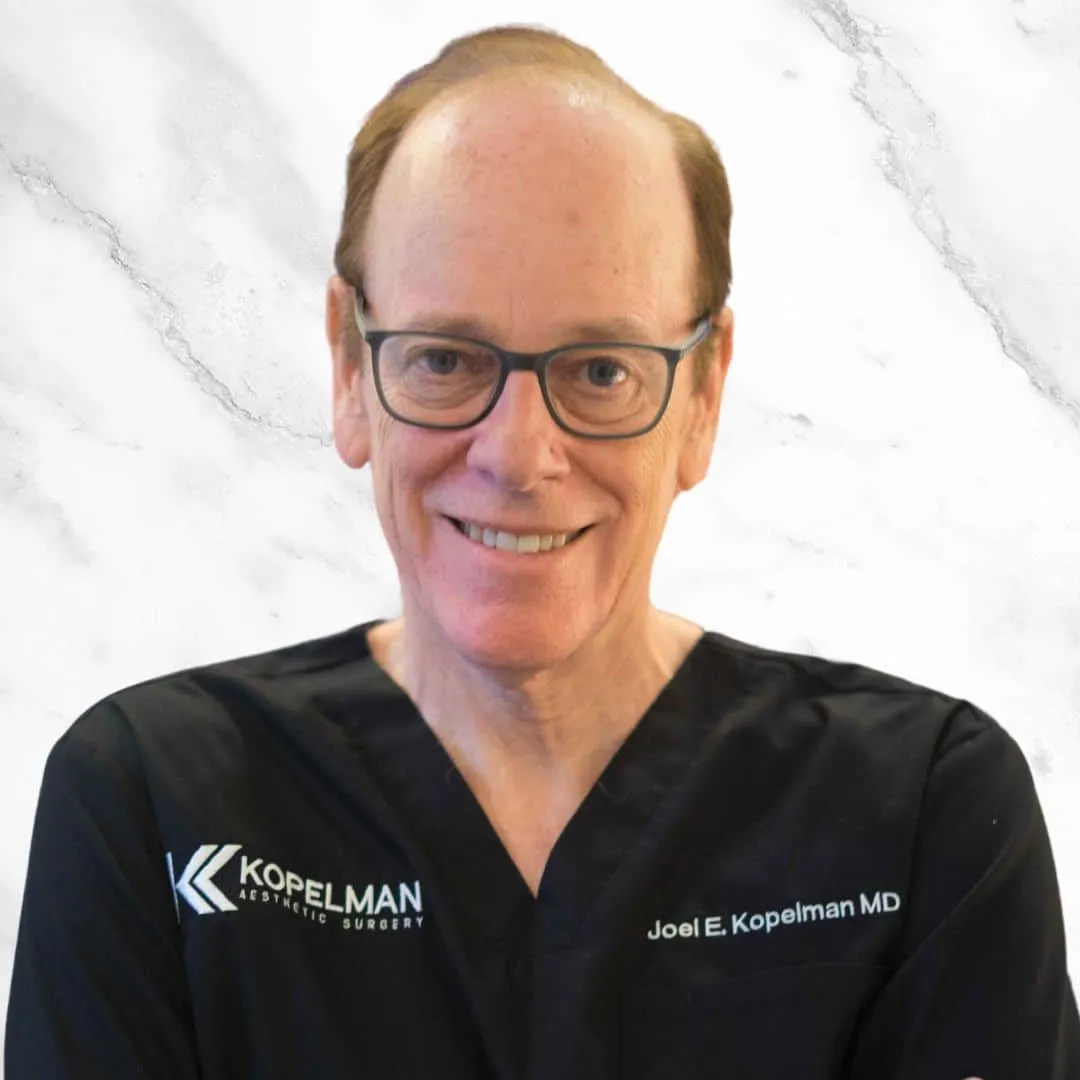
Dr. Joel E. Kopelman is both a facial plastic and oculoplastic surgeon with over 35 years of experience in cosmetic rejuvenation of the face, neck, and eyes. Known for innovative techniques and a meticulous approach, the surgeon has built a reputation among patients seeking transformative results that are both beautiful and natural.
A warm, compassionate approach provides patients with a sense of comfort and trust throughout the treatment journey. Supported by a team of first-class professionals, the practice continuously strives to exceed patient expectations, fostering a reputation for delivering unparalleled satisfaction and long-lasting results.
Schedule a Consultation
For a Blepharoplasty
To schedule a private consultation, please call the office or request an appointment online.












Lorem ipsum dolor sit amet, consectetur adipiscing elit. Ut elit tellus, luctus nec ullamcorper mattis, pulvinar dapibus leo.