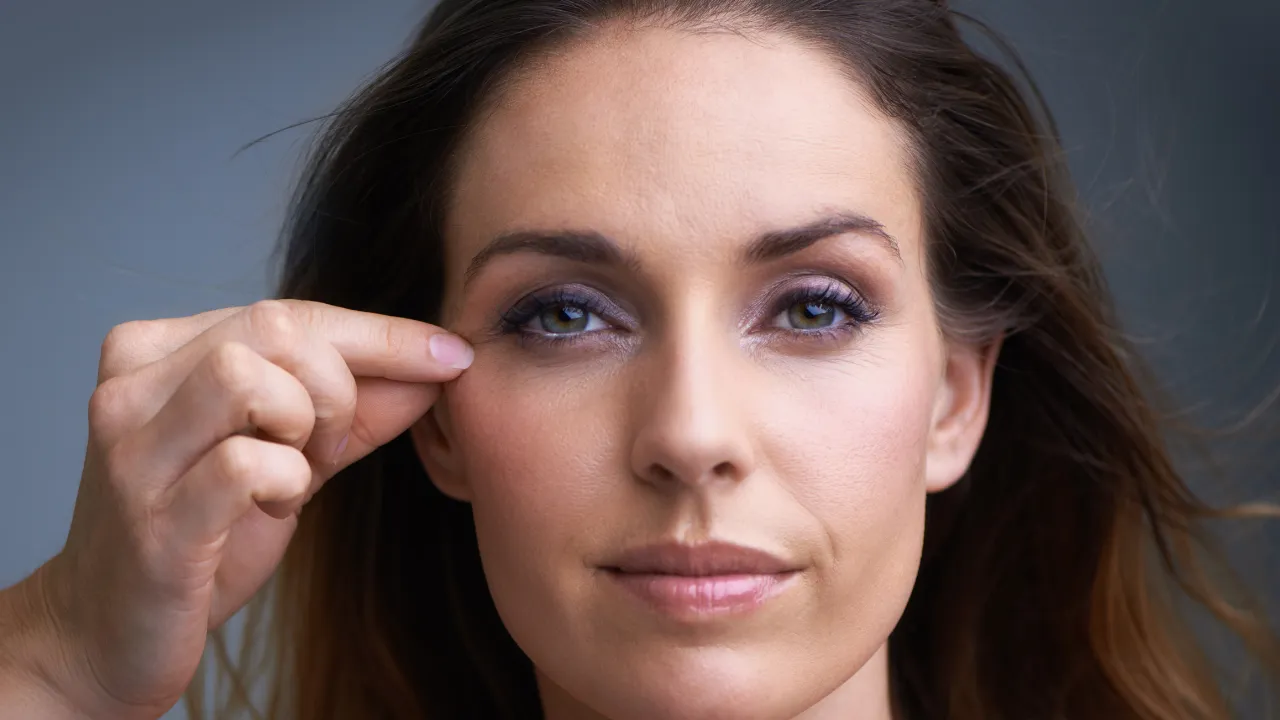

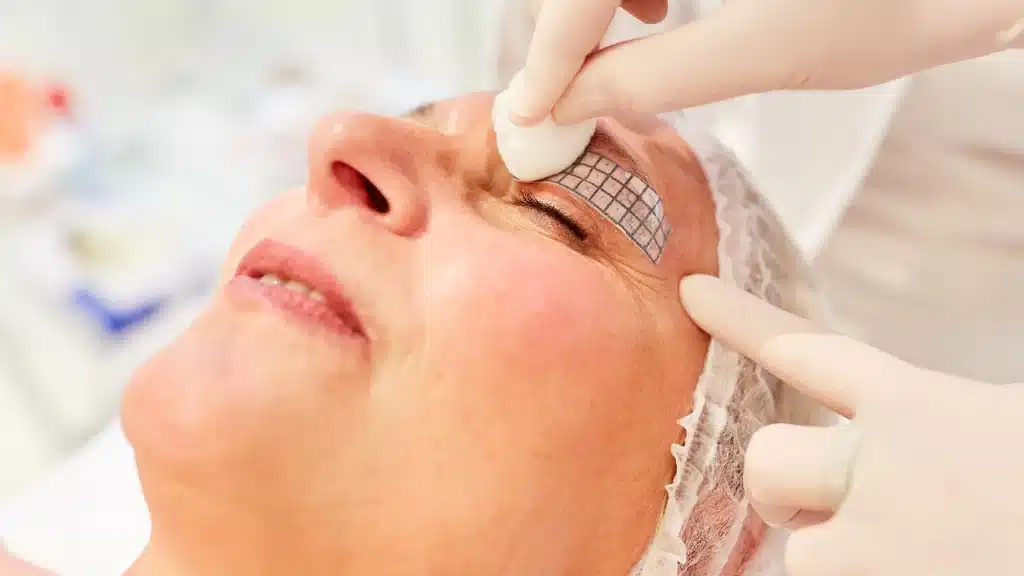
The appearance of the eyes, including the upper and lower lids, plays a key role in how rested and approachable a face looks. Sunken or droopy lids can create a tired or sad impression, and because the skin around the eyes is especially delicate, signs of aging, such as fine lines, fat deposits, and sagging, tend to show here first.
For many patients, smooth lower lids, meaning lids with less puffiness, sagging, or excess skin, are linked with a younger, more refreshed look. To refresh the eyes, many people choose an eyelid lift, also known as blepharoplasty.
What is Blepharoplasty Surgery?
Blepharoplasty, or eyelid surgery, is the medical term most people use when asking what do you call eyelid surgery. It refers to cosmetic or functional procedures that improve the appearance of the upper lids, lower lids, or both.
Depending on the patient’s needs, the procedure may remove excess skin, reposition fat, or correct drooping tissue that affects vision or facial balance. There are several types of cosmetic eye surgery, each addressing a different concern, such as excess skin, puffiness, under-eye bags, or eyelid drooping.
Understanding these options helps patients choose the procedure that best fits their anatomy and goals.
Upper Blepharoplasty
Upper blepharoplasty targets droopy, puffy, and wrinkled upper lids, which can give a tired, aged, or sad look. To improve both appearance and function, the surgeon makes precise incisions along the natural lid crease, keeping them barely visible after healing.
Depending on your needs, small muscles may be tightened, excess skin removed, and fat repositioned for natural-looking results. The procedure usually lasts one to two hours, with recovery of about one to two weeks.
Along with clearer vision, patients can expect a refreshed, more youthful appearance. In Dr. Kopelman’s experience, results from an upper lid lift generally last at least eight years.
Lower Blepharoplasty
As we age, reduced muscle elasticity under the eyes can create baggy lower lids, dark circles, and shadows that add to a tired, worn-out look. Lower blepharoplasty addresses these concerns, and the exact approach depends on whether skin needs to be removed or only fat needs to be adjusted.
This procedure also takes about 1 to 2 hours, with recovery time of 10 days to 2 weeks. Like the upper-lid version, the results of lower blepharoplasty can last 8 years or more.
The technique is tailored to different lower eyelid types, depending on the extent of skin laxity, fat prolapse, or hollowing. Two main methods are used to reach the lower lid.
Transcutaneous (Subciliary) Lower Blepharoplasty
In the transcutaneous approach, the surgeon makes an incision just below the lash line on the outer edge of the lower lid. Excess skin and fat can be removed or repositioned, and the incision is closed with fine sutures.
This method suits patients with loose lower-lid skin, not just bulging fat. Because the incision is placed under the lashes, it heals into a discreet, well-hidden line.
Transconjunctival Lower Blepharoplasty
The transconjunctival technique places the incision inside the lid, on the conjunctiva, so there is no visible external scar. It works well for younger patients, or anyone whose main concern is bulging fat rather than excess skin.
Since no skin is removed, a chemical peel or laser resurfacing can be paired with it to smooth fine lower lid wrinkles. This scarless option is not ideal for patients who need significant skin removal.
Supporting Techniques Used in Eyelid Procedures
Beyond the core procedures, several techniques refine the results or protect the lids’ position. A surgeon may combine one or more of these with an eyelid lift based on your anatomy.
Fat repositioning, sometimes called fat transposition, moves bulging under-eye fat down to fill a hollow at the top of the cheek instead of removing it. Fat-preserving methods keep natural fullness so the lower lid does not look sunken.
Canthopexy and canthoplasty tighten or reshape the outer corner of the lid. A canthopexy supports the corner without changing eye shape, while a canthoplasty can reshape it and helps prevent the lower lid from pulling down after surgery.
A SOOF lift raises the fat pad beneath the lower lid muscle at the top of the cheek, restoring volume to a flattened midface. Some surgeons use a laser rather than a scalpel for incisions, though many, including Dr. Kopelman, prefer a scalpel to limit heat damage to delicate lid skin.
Different Types of Double Eyelid Surgery
Bilateral Eyelid Surgery
Also known as combined blepharoplasty, bilateral surgery addresses both the upper and lower lids simultaneously. It is recommended for individuals with sagging or swollen skin in both areas.
During the operation, the surgeon makes tiny incisions along the eyelid creases or natural lid lines. Loose skin is tightened or removed, fat deposits are repositioned or removed, and the muscles are reshaped for a more youthful, balanced look.
The procedure usually lasts one to three hours, with recovery of 10 days to two weeks. Afterward, patients are advised to wear sunglasses and to avoid activities that strain the eyes, such as watching TV or wearing contact lenses, for at least two weeks. For the first 24 hours, a cold compress helps reduce swelling.
Asian blepharoplasty or Double Eyelid Surgery
Commonly called Asian eyelid surgery because of its popularity among East Asians, double eyelid surgery is designed for people with monolid eyes, which lack a natural crease. It is one of the more specialized types of double eyelid surgery.
While many people of Asian descent feel monolid eyes suit their features, some choose this procedure to make the eyes look larger. It creates supratarsal creases, natural-looking folds that give a permanent crease and make the eyes appear bigger, brighter, and more defined.
Two primary methods create the double eyelid: the full-incision technique and the suture technique. The full-incision method yields a lasting, well-defined crease, while the suture method is less invasive and allows for faster recovery.
Ptosis Repair
Ptosis (pronounced “toe-sis”) refers to drooping of the upper lid, which can reduce vision when the lid partly or fully covers the pupil. People with ptosis often struggle to keep the lids open and may raise their eyebrows to compensate; in severe cases, they lift the lid manually to see.
Children with ptosis can develop amblyopia (lazy eye) or experience developmental delays from restricted vision. Symptoms tend to worsen later in the day or with fatigue, and the cause is usually a loosened or stretched muscle and tendon that lift the lid.
Ptosis surgery tightens or reattaches the affected muscle or tendon, commonly the levator or Müller’s muscle, to raise the lid and restore a normal field of vision.
Ectropion Repair
Ectropion (ek-tro-pe-an) occurs when the lower lid turns outward or sags away from the eye, leaving it exposed and dry. Untreated, it can cause chronic tearing, irritation, redness, pain, a gritty feeling, crusting, mucous discharge, and even corneal damage from prolonged exposure.
Entropion (en-tro-pe-an) is the opposite; the lid rolls inward toward the eye, often from aging and weakened muscles. The in-turned lid rubs the eye, causing redness, irritation, pain, and light sensitivity, and it can lead to tearing, discharge, and corneal abrasions or ulcers if left untreated.
Ectropion repair is a common sagging lower eyelid treatment when the lower lid drops or turns outward. Because this can expose the eye and cause dryness and irritation, surgical correction restores proper lid position and protects the eye from long-term harm.
Functional vs. Cosmetic Blepharoplasty
Not every lid procedure is purely cosmetic. When overhanging upper lid skin blocks part of the visual field, a functional blepharoplasty removes that skin to restore vision; it is considered reconstructive rather than aesthetic.
Insurance may cover part or all of a functional procedure when a documented visual field test confirms the obstruction. Cosmetic blepharoplasty, by contrast, focuses on appearance and is paid out of pocket. Many patients combine both goals in a single operation.
Who Is a Good Candidate for Blepharoplasty?
Good candidates are generally healthy adults who are bothered by heavy upper lids, under-eye bags, or a persistently tired look, and who have realistic expectations. Many patients are in their late 30s or older, though younger patients with hereditary puffiness or monolid concerns also qualify.
Ideal candidates do not smoke or are willing to stop before and after surgery, and have no serious, uncontrolled eye conditions such as severe dry eye or glaucoma.
How Much Does Blepharoplasty Cost?
Cost depends on the procedure, the surgeon’s experience, the facility, anesthesia, and your location. Fees vary widely; national figures reported by the American Society of Plastic Surgeons place the average surgeon’s fee for cosmetic eyelid surgery at roughly $4,000, though experienced oculoplastic specialists in major metro areas typically charge more.
At Dr. Kopelman’s practice, upper blepharoplasty and lower blepharoplasty are each priced at $8,500, and double eyelid surgery ranges from $8,500 to $10,000. Lateral canthoplasty ranges from $7,500 to $8,500.
Ptosis repair is $10,000 per eye, since each side is corrected individually, so treating both eyes is priced accordingly. Combined procedures are quoted during your consultation.
Before and After Results
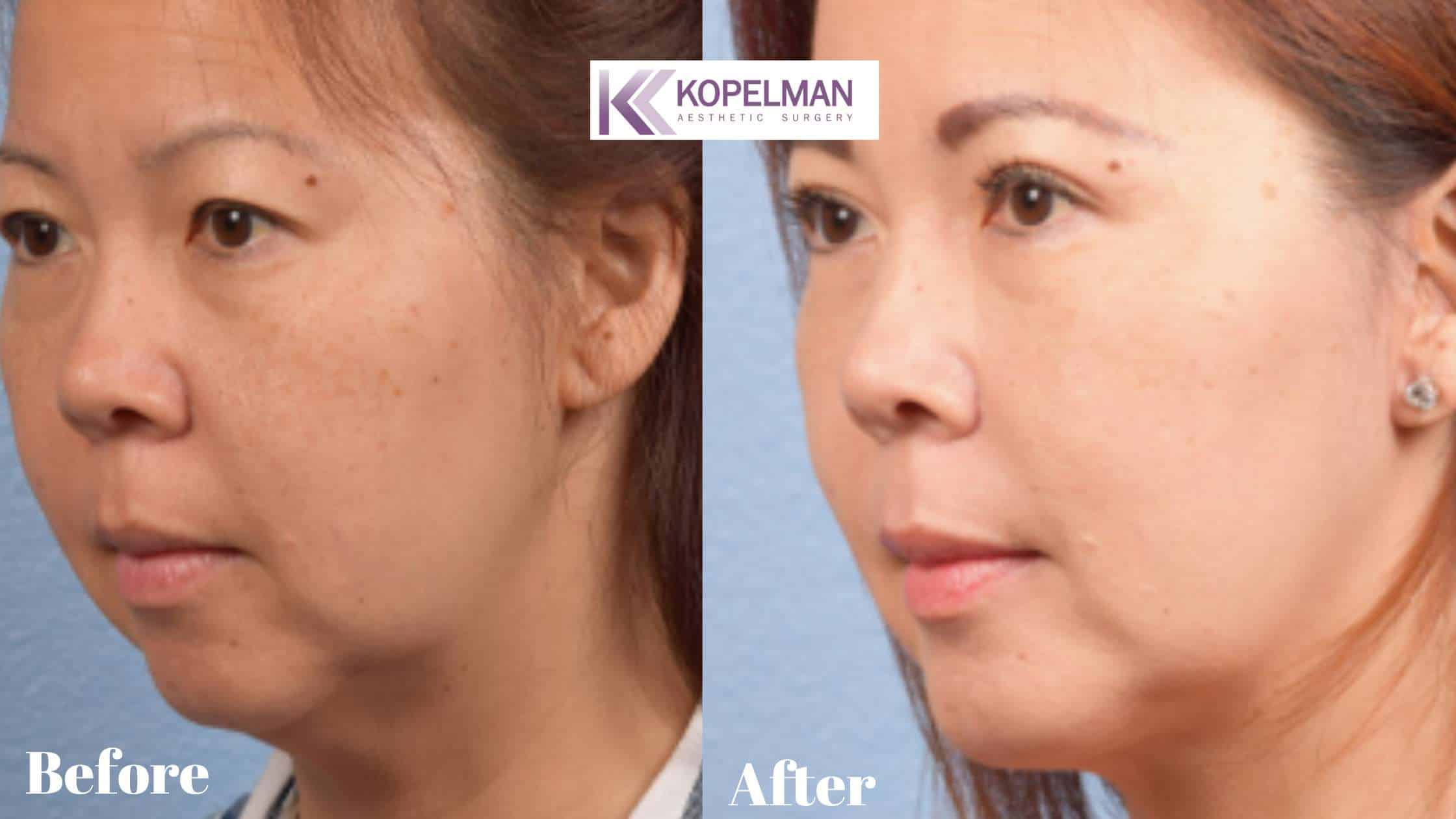
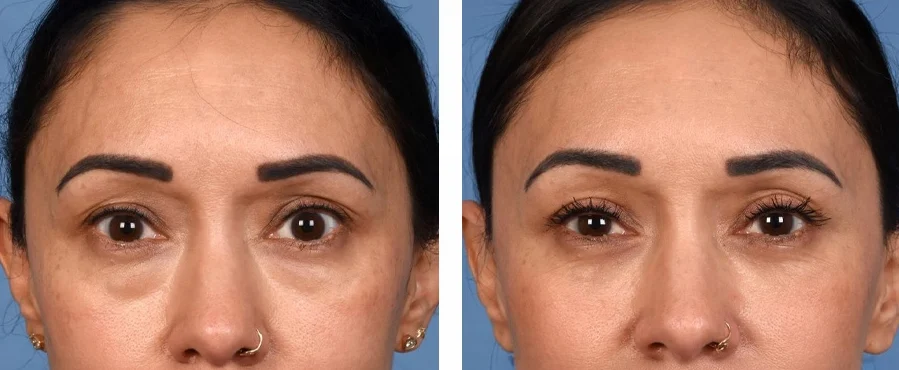
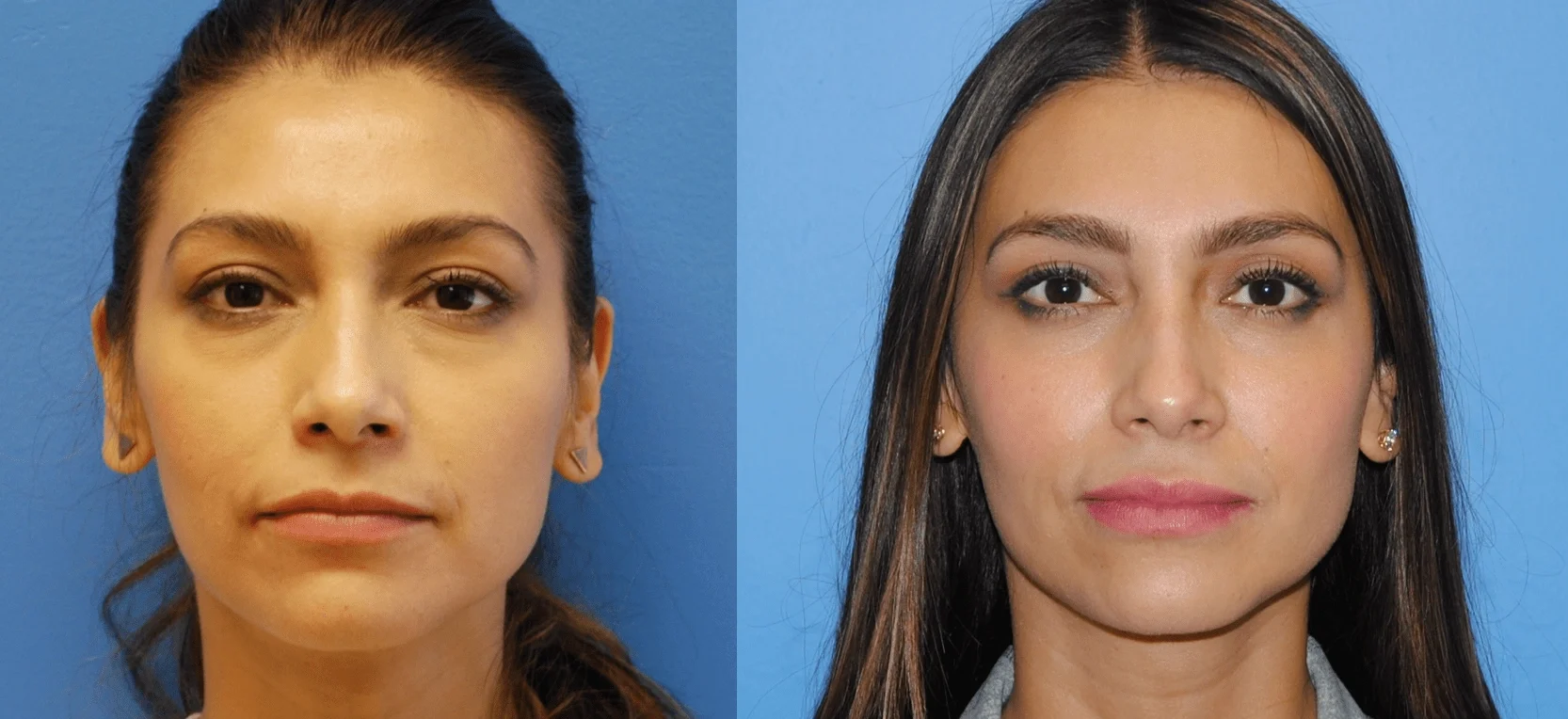
Seeing real outcomes helps set expectations before you commit. The examples below show upper– and lower-lid results from Dr. Kopelman’s patients, and you can view the full collection in the blepharoplasty before-and-after gallery.
Upper blepharoplasty, front view
Lower blepharoplasty, front view
Your Goals
Are you seeking a highly skilled, experienced, board-certified plastic surgeon for your blepharoplasty? Dr. Kopelman, an oculofacial plastic surgeon with more than 30 years of experience, is an exceptional choice.
To start the process, please call the office closest to you to schedule a consultation, or fill out the form below.