

At Kopelman Aesthetic Surgery, Dr. Joel Kopelman provides specialized evaluation and individualized treatment plans for patients with lower eyelid drooping, ectropion, and related conditions.
What Is Ectropion?
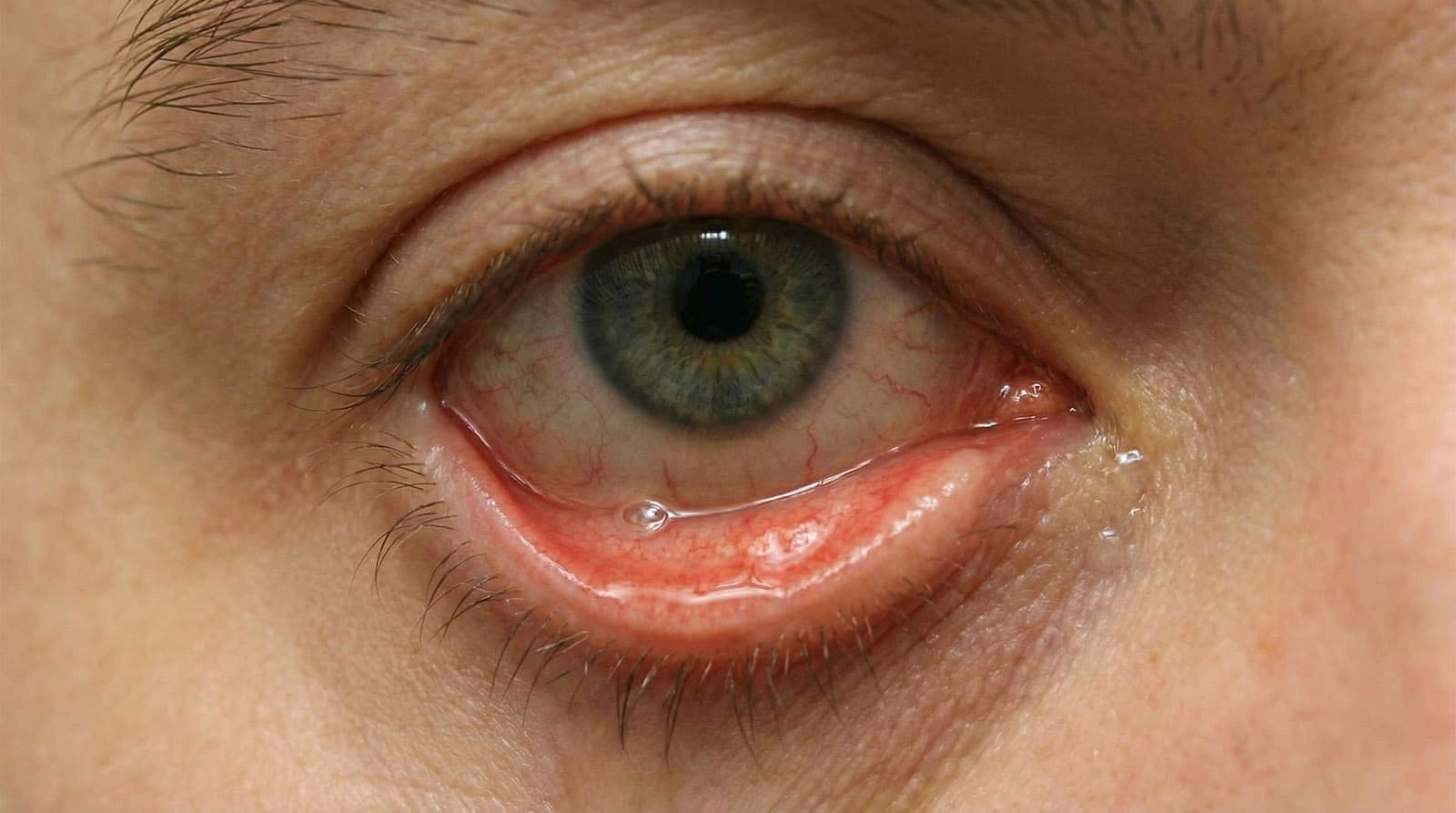
Ectropion occurs when the lower eyelid turns outward, pulling away from the eyeball. This exposes the lid’s delicate inner surface, which is normally in constant contact with the eye. Without that contact, tears can no longer drain properly through the small openings (puncta) on the inner eyelid, and the eye surface loses its protective moisture barrier.
The condition most often affects the bottom eyelid and can develop in one or both eyes. In severe cases, the entire length of the lid turns outward. In milder cases, only a small segment sags away from the eye. Left untreated, ectropion can lead to chronic dryness, recurrent infections, and, in severe cases, corneal abrasions or ulcers that may threaten your vision.
When a Droopy Eyelid Appears Suddenly: Red Flags to Know
Not all eyelid drooping develops slowly. A sudden droopy eyelid, especially on one side, can indicate a serious underlying problem that needs prompt medical attention. Possible causes of sudden onset include:
Facial nerve paralysis from conditions such as Bell’s palsy or stroke can weaken the muscles controlling eyelid position within hours. If the drooping is accompanied by facial weakness on one side, slurred speech, or sudden vision changes, call 911 or go to the nearest emergency room.
A rapidly growing eyelid tumor, cyst, or abscess can shift the lid out of position over a short period. Acute swelling from an allergic reaction, infection, or trauma can produce the same effect.
If your lower eyelid started drooping suddenly and you are unsure of the cause, contact an oculoplastic specialist or visit an urgent care provider for evaluation. Early diagnosis is critical for conditions involving nerve damage, because treatment outcomes are often better when intervention begins quickly.
Types of Ectropion
Not all cases of lower lid drooping are the same. Ectropion is classified into five clinical types based on its underlying cause:
Sources:
American Academy of Ophthalmology, What Is Ptosis?
American Academy of Ophthalmology, Ectropion
MedlinePlus, Ectropion Overview
Common Symptoms of Ectropion
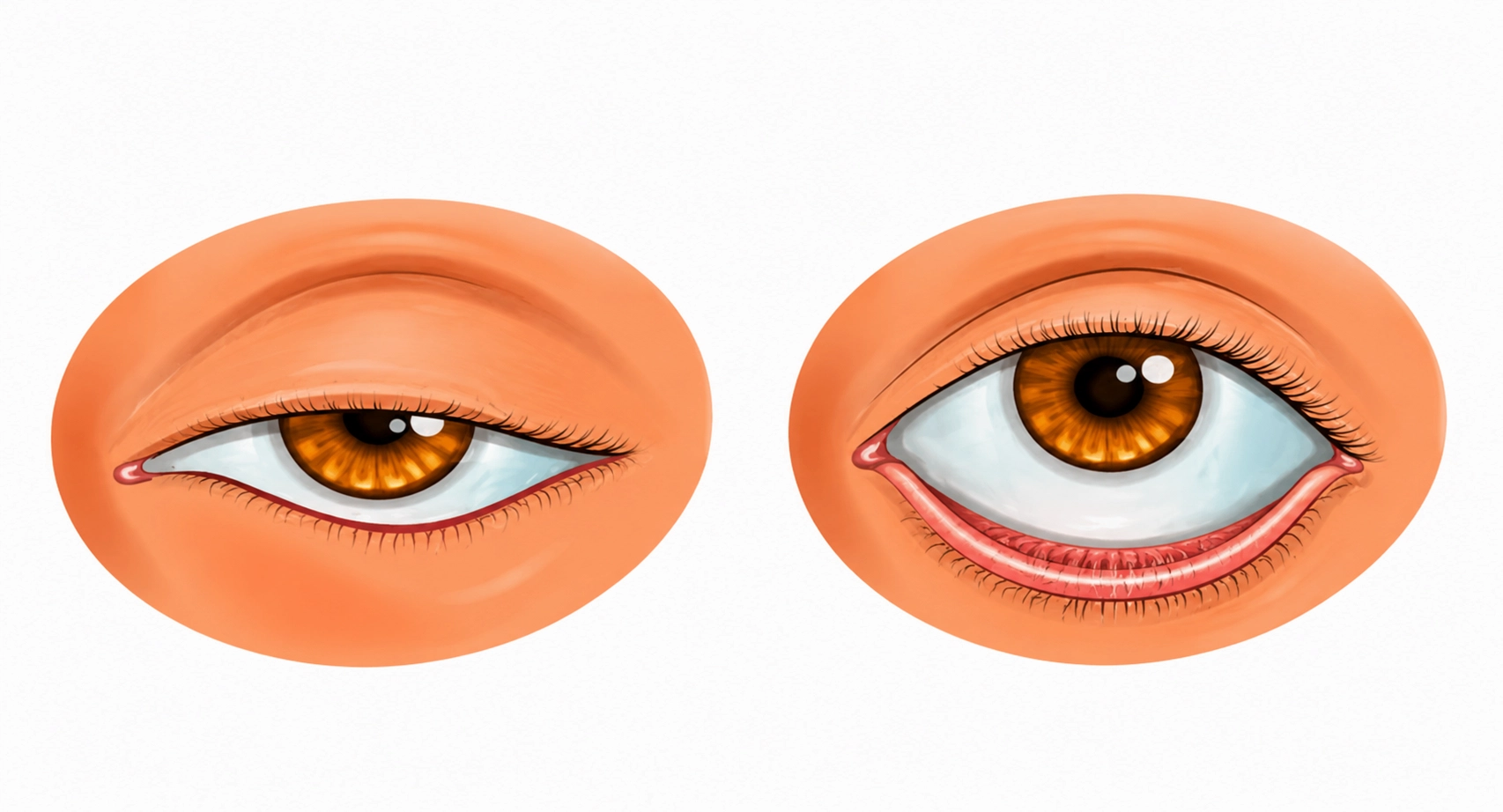
Ectropion can develop gradually or appear suddenly, depending on the cause. Recognizing the early signs helps prevent the condition from worsening and protects the eye’s surface.
- Symptoms to look for include:
- Watery eyes or excessive tearing that does not improve
- Red, irritated, or sore-looking eyes and eyelids
- A dry or gritty feeling, as though something is in the eye
- Sensitivity to light or wind
- The bottom eyelid is visibly sagging or turning outward
- Blurred vision, particularly if the cornea becomes dry
- Mucous-like discharge or crusting around the eyelashes
- Recurring eye infections, including conjunctivitis.
These symptoms may worsen throughout the day, especially in dry or windy environments.
What Causes a Drooping Lower Eyelid?
Age-Related Tissue Weakening
The most common cause of lower eyelid drooping is the natural weakening of muscles and connective tissue that occurs with age. The tendons and ligaments that hold the eyelid taut against the eye gradually stretch and loosen, allowing the lid to sag. Loose eyelid skin and reduced skin elasticity contribute to the problem, which is why involutional ectropion is most frequently seen in adults over age 60.
Women may be more likely to develop ectropion following cosmetic eyelid procedures. Prior blepharoplasty is a recognized risk factor, particularly when a significant amount of skin was removed from the lower lid. Postmenopausal changes in skin thickness and collagen density can also accelerate eyelid laxity, making it important for women who notice early signs of lid sagging to seek evaluation before the condition progresses.
Nerve Damage and Facial Paralysis
Conditions that affect the facial nerve, such as Bell’s palsy or stroke, can weaken or paralyze the muscles that control eyelid position. This type of droopy eye typically appears suddenly and may affect one side of the face. Thyroid eye disease can also alter the tissues around the eye and shift the lid out of its normal position.
Scarring and Prior Surgery
Skin damaged by burns, trauma, chemical exposure, or a previous surgical procedure can form scar tissue that contracts over time, physically pulling the eyelid outward. This is known as cicatricial ectropion, and it may require a skin graft to correct.
Tumors, Cysts, and Eyelid Growths
A benign or cancerous growth on or near the eyelid can weigh the lid down and displace it, causing mechanical ectropion. Significant swelling (edema) around the eye can produce the same effect.
One Droopy Eyelid: Why It Happens on One Side
When only one eyelid is affected, the cause is often localized nerve damage, a prior injury, or a growth on that side. Unilateral drooping can also signal a neurological condition that warrants prompt evaluation, especially if the onset was sudden. Dr. Kopelman examines each case individually to determine whether surgical correction, medical treatment, or further testing is needed.
How Ectropion Is Diagnosed
Diagnosis begins with a thorough eyelid examination and a review of your symptom history. Your doctor will assess the position of the lower lid, the condition of the eye surface, and how well the eyelid protects the cornea.
One key clinical test is the snap-back test: the examiner gently pulls the lower eyelid away from the eye, releases it, and then measures how quickly and completely it returns to its resting position. A lid that is slow to snap back, or that requires you to blink several times before it settles, indicates significant laxity.
Your provider may also examine the cornea for signs of dryness, irritation, or early keratitis (inflammation of the cornea), and will check for any underlying causes such as scarring, growths, or nerve dysfunction. In some cases, imaging or additional testing may be recommended to rule out systemic or neurological conditions.
Treatment for Droopy Lower Eyelids
Non-Surgical Options
For mild ectropion or cases where surgery is not yet necessary, several non-surgical approaches can provide relief and protect the eye:
- Lubricating eye drops and ointments help keep the eye moist and reduce irritation, particularly at night when the eye may not close fully.
- Eyelid tape can temporarily hold the lower lid in a more supportive position.
- Skin-firming treatments and office-based procedures, such as radiofrequency, can improve mild skin laxity around the eye.
- Taping the eyelids closed at night can protect the cornea from drying out during sleep. Your specialist can show you the correct technique using medical-grade skin tape.
These treatments manage symptoms but do not correct the underlying structural problem. If the drooping persists or worsens, surgical repair is typically recommended.
Surgical Repair for Ectropion
Surgery is the most effective long-term treatment for moderate-to-severe cases. The specific procedure depends on the type and severity of ectropion:
For involutional ectropion, the surgeon tightens the loosened eyelid muscles and tendons, often by removing a small section of the outer lid and reattaching the tissue in a more secure position. This restores proper contact between the lid and the eye.
For cicatricial ectropion caused by scarring, a skin graft may be needed to replace the contracted tissue and allow the lid to return to its normal position. Some patients may require more than one procedure to achieve full correction.
Bottom eyelid surgery for ectropion is typically performed as a short outpatient procedure under local anesthesia. Most patients return to normal daily activities within one to two weeks, with swelling and bruising gradually resolving over that period.
At Kopelman Aesthetic Surgery, Dr. Kopelman tailors each surgical plan to the patient’s anatomy, the cause of their lower eyelid problems, and their individual goals.
Reducing Your Risk
Most causes of ectropion cannot be fully prevented, but certain habits can slow progression and protect the eyelid tissues. Avoid rubbing or pulling at your eyelids, and protect the skin around your eyes from prolonged sun exposure with sunglasses and broad-spectrum sunscreen.
If you wear contact lenses, handle them gently and keep your hands clean during insertion and removal. Patients who use a CPAP machine for sleep apnea should wear it consistently, as untreated sleep apnea and face-down sleeping can contribute to eyelid laxity over time.
When to See a Specialist
If Your Eyelid Drooped Suddenly
A sudden droopy eyelid requires prompt evaluation. Contact an oculoplastic specialist or visit urgent care right away if:
- Your lower eyelid drooped or turned outward within hours or days
- The drooping appeared after a facial injury, burn, or surgical procedure
- You notice weakness or numbness on one side of your face, alongside the drooping eyelid
- You are experiencing vision changes, severe eye pain, or difficulty closing the eye
Do not wait to see if sudden eyelid drooping resolves on its own. Early assessment is important for ruling out stroke, Bell’s palsy, and other neurological causes that benefit from time-sensitive treatment.
Routine Evaluation
Contact an eye care provider or oculoplastic specialist if you notice:
- Persistent watery or dry eyes
- A lower eyelid that appears to be sagging or pulling away from the eye
- Irritation, redness, or a gritty feeling that does not resolve with over-the-counter drops
- Recurring eye infections
Urgent Signs
Seek prompt medical attention if you experience:
- Rapidly increasing redness or swelling in one or both eyes
- Sudden sensitivity to light
- Noticeable changes in your vision
- Pain in or around the eye
These may indicate corneal exposure, an ulcer, or an infection that requires immediate treatment to protect your vision.
What to Expect During a Consultation
During your visit, Dr. Kopelman will perform a comprehensive eyelid exam, review your medical and surgical history, assess the skin and muscle tone around the eye, and determine whether the droopy eyelid is caused by age-related laxity, nerve dysfunction, scarring, or another condition. Based on this evaluation, he will recommend the most appropriate treatment path.