Ptosis Treatment NYC: Droopy Eyelid & Eyelid Ptosis New York

Ptosis treatment corrects an upper eyelid that sits too low, either by tightening the muscle that lifts the eyelid or by reattaching it to its proper position. Most cases are corrected in a single outpatient procedure lasting under an hour, with sutures removed 5 to 7 days later. When the droop blocks your upper field of vision, the repair is considered functional and may qualify for insurance coverage.

Eyelid ptosis is commonly caused by a slippage that obstructs a patient’s superior field of vision, which is why many patients begin their search for a ptosis doctor in NYC. Eyelid anatomy can be compared to the structure of a house; a droopy eyelid or “ptosis” is like a weak foundation, where excess loose redundant upper eyelid skin is akin to loose shingles falling down.

The disinsertion of muscle attachments that leads to ptosis most commonly occurs as an age-related change, but it can also occur at birth and in middle-aged patients who have worn hard contact lenses for long periods. Like an overhanging awning, this downward droop obstructs a patient’s superior visual field.

What Is Eyelid Ptosis?

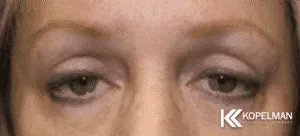
Ptosis, also called blepharoptosis, is a drooping of the upper eyelid margin. It may affect one eye (unilateral ptosis) or both eyes (bilateral ptosis). Bilateral cases often appear uneven from side to side, since the two lids rarely drop at the same rate.

The condition is distinct from loose upper eyelid skin, which is called dermatochalasis. Loose skin hangs down from above and is corrected with upper eyelid blepharoplasty; true ptosis involves the lid margin itself sitting low. The two frequently occur together, and distinguishing between them is the single most important step in planning treatment.

Patients with ptosis often describe a heavy, tired feeling above the eye, eyestrain when reading, or headaches from constantly lifting the brow to compensate. In more advanced cases, patients tilt the head back or lift the lid with a finger to see clearly.

Droopy Eyelid Repair NYC Before and After

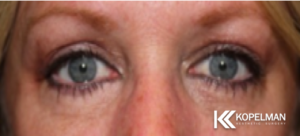
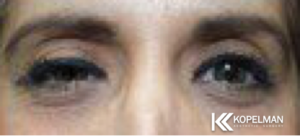
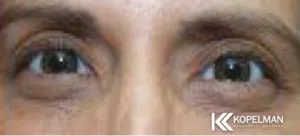
These Ptosis before and after pictures represent actual patients from Dr. Kopelman. They will help you to set realistic goals for your own surgical outcome. Click on a patient to learn more about their Ptosis surgery.

 “I first met Dr. Kopelman when I was diagnosed with a condition called Ptosis which causes dropping eyelids. He performed surgery to correct the problem and the results were outstanding. Dr. Kopelman is a caring, kind physician who treats his patients with respect. In addition, I can’t imagine finding a more skilled doctor.”  

~ Gwen McCarthy ~

Types of Ptosis and What Causes Each

Ptosis is classified by cause, and the cause directly determines which surgical approach is appropriate. A thorough evaluation identifies the type before any treatment plan is made. You can read a fuller breakdown on our types of ptosis page.

Aponeurotic ptosis is the most common form in adults. The tendon connecting the levator muscle to the eyelid stretches and slips over time, usually with age, though long-term contact lens wear, chronic eye rubbing, and prior eye surgery, including cataract surgery, all accelerate this process.

Congenital ptosis is present at birth and results from incomplete development of the levator palpebrae superioris muscle. When the lid covers the pupil, it can interfere with visual development and lead to amblyopia or astigmatism, so early evaluation matters.

Neurogenic ptosis results from a disruption of the nerve signals that control the eyelid muscles. Horner’s syndrome, third cranial nerve palsy, and myasthenia gravis are the conditions most often responsible. Accurate diagnosis here is critical, since the drooping lid may be the first visible sign of a broader neurological problem.

Myogenic ptosis occurs when the levator muscle itself is weakened by a systemic muscular disorder. Mechanical ptosis results from external pressure pulling the lid down, such as from a lesion, scarring, or significant tissue swelling. Traumatic ptosis results from injury to the levator muscle or its attachments.

Types of Ptosis, Causes, and Typical Surgical Approach
TypeTypical CauseUsual Surgical Approach
AponeuroticAge-related stretching of the levator tendon; long-term contact lens wear; prior eye surgeryLevator advancement, or Mueller's muscle resection in milder cases
CongenitalIncomplete development of the levator muscle, present at birthLevator resection, or frontalis sling if levator function is poor
NeurogenicHorner's syndrome, third nerve palsy, myasthenia gravisUnderlying condition treated first; surgery considered once stable
MyogenicSystemic muscular disorder weakening the levatorFrontalis sling in most cases, due to weak levator function
MechanicalLesion, scarring, or tissue weight pulling the lid downRemoval of the underlying cause, then lid repositioning if needed
TraumaticInjury damaging the levator muscle or its attachmentLevator repair, timed after tissue healing and stabilization

Best doctor for Ptosis surgery in NYC: Dr. Joel Kopelman

Are You a Candidate for Droopy Eyelid Repair in New York?

Droopy eyelid repair in New York may be appropriate if you recognize several of the following. A consultation confirms candidacy and rules out causes that require medical rather than surgical management.

Ideal Ptosis Candidate

  • One or both upper eyelid margins sitting lower than they used to
  • Loss of the upper field of vision, especially when looking up
  • A persistently tired or asymmetric appearance to the eyes
  • Eyestrain, brow ache, or headaches from lifting the brow to compensate
  • Good general health and realistic expectations for the outcome

Ptosis Benefits

  • Restoration of the obstructed upper visual field
  • A more open, alert, and rested eye appearance
  • Improved symmetry between the two eyelids
  • Relief from the constant brow strain used to compensate

Ptosis Techniques

  • Conjunctival-Mueller’s muscle resection, performed from inside the eyelid
  • Levator muscle resection or advancement, performed through the eyelid crease
  • Frontalis sling fixation, reserved for cases with very poor levator function

Our approach to ptosis repair will help you restore your vision and will create a more youthful appearance to your face.

Comparing Ptosis Doctors in NYC: Dr. Joel Kopelman

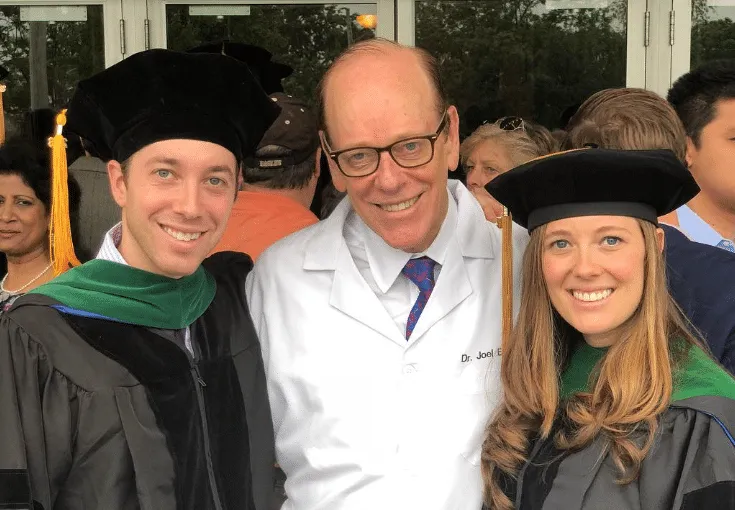
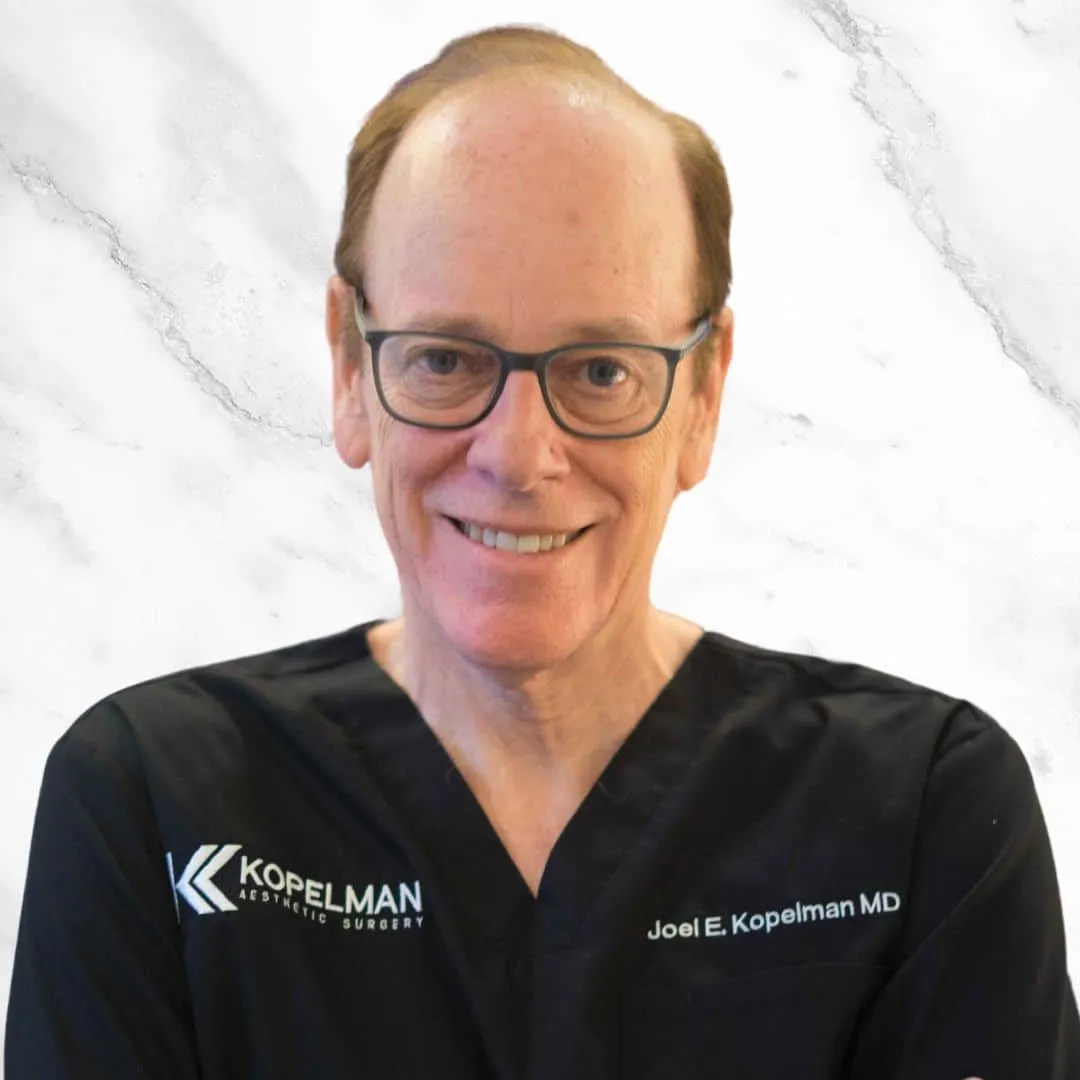
Dr. Joel Kopelman is a top eyelid plastic surgeon who will help address your eyelid ptosis, with offices in both New York City and New Jersey. He is a board-certified facial plastic and oculoplastic surgeon who has performed hundreds of cosmetic and reconstructive eyelid surgical procedures over more than 35 years, and has published numerous articles on eyelid surgery.

Patients comparing ptosis doctors often look for long experience in both functional and cosmetic eyelid work, since the two require different judgment. His expertise in blepharoplasty continues to be sought out by colleagues and patients across the East Coast.

Every patient presents with a unique set of characteristics, both with respect to their anatomy and the degree of surrounding tissue laxity. Extensive experience in oculoplastic surgery enables an assessment of your eyelids that addresses both functional and cosmetic concerns in a single plan.

Eyelid ptosis in New York City: Procedure

Ptosis is corrected by tightening the internal eyelid muscles, which open the eyelids. There are two internal muscle groups that raise the lid: the levator and Mueller’s muscles. Most mild to moderate degrees of eyelid ptosis can be corrected by tightening the posterior Mueller’s muscle.

When a greater degree of ptosis is present, tightening the anterior levator muscle is preferred. The surgery is typically performed under intravenous sedation with local anesthesia, and takes roughly 45 minutes to an hour in most cases.

If the posterior Mueller’s muscle is tightened, the patient can be in a “twilight” sleep, and no cooperation is necessary. However, a greater degree of ptosis requires levator muscle surgery, during which the patient opens and closes the eyelids throughout the procedure.

To precisely titrate the degree of eyelid elevation and restore the lid contour, the patient must be able to raise their eyelids during surgery. Because the patient takes an active role, only light sedation with local anesthesia is used for that approach.

Cases with very weak levator function, most often congenital, may instead call for frontalis sling fixation, which connects the eyelid to the forehead muscle so the brow can lift the lid. This approach is uncommon in adult age-related cases.

Ptosis Surgery Techniques Compared
TechniqueBest Suited ForIncisionAnesthesia
Conjunctival-Mueller's muscle resection (internal)Mild to moderate droop with good levator functionNone on the skin; performed from inside the eyelidTwilight sedation; no patient cooperation required
Levator resection or advancement (external)Moderate to significant droop with good levator functionHidden within the natural eyelid creaseLight sedation with local; patient opens and closes the lid during surgery
Frontalis sling fixationVery poor levator function, most often congenital or myogenicSmall openings in the lid and brow for the sling materialGeneral anesthesia in most cases

Frequently asked questions
about Ptosis

Because the drooped eyelids impairs your vision and can impede your daily activities it is “viewed” as a functional impairment. Your insurance carrier may cover the procedure. However, eyelid ptosis must be differentiated from excessive laxity of upper eyelid skin. 

An eyelid droop must be differentiated from a laxity of the upper eyelid skin that can hang down and impinge on your field of vision. When skin hangs down and fat bulges appear then an upper eyelid blepharoplasty, a cosmetic procedure, is necessary to remove excess skin and protruding fat. At the time of your visit, Dr. Kopelman will perform a comprehensive evaluation of your drooped eyelids. He will determine if ptosis (drooped upper lid) is present alone or whether it exists concurrently with lax upper eyelid skin and bulging fat. If both eyelid muscle and skin laxity exist together then a ptosis repair and cosmetic procedure can be performed at the same time in order to achieve an optimal rejuvenated appearance. Unfortunately, the cosmetic component is not covered by your medical insurance.

Eyelid Ptosis Repair in NYC: Recovery & Droopy Eyelid Treatments in NYC

Swelling and minor bruising are expected following eyelid ptosis repair. Initially, this swelling can be minimized by frequently applying ice compresses using zip-lock bags. After two days of ice compresses, switch to warm compresses, which will help to accelerate the resolution of bruises.

Minimal discomfort is typically experienced, and it is commonly controlled with plain Tylenol. Sutures are removed 5 to 7 days following surgery, and most patients feel comfortable returning to non-strenuous work within one week.

Because the repair lifts the lid, a slightly larger surface of the eye is exposed, and temporary dryness or irritation is common in the first few weeks. Lubricating drops or ointment are prescribed when needed. Contact lenses are generally avoided for one to two weeks.

Eyelid position continues to settle as swelling resolves, and the final result is typically judged at the two- to three-month mark. More detail on the timeline is available on our page covering how long ptosis surgery lasts.

Patients seeking ptosis repair in the Upper East Side can schedule a consultation at our Park Avenue office.

Frequently asked questions
about Ptosis

Patients comparing ptosis doctors often look for long experience in both functional and cosmetic eyelid surgery. Dr. Joel E. Kopelman is both a facial plastic and oculoplastic surgeon with over 35 years of experience in cosmetic rejuvenation of the face, neck, and eyes. 

Renowned for his innovative techniques and meticulous approach, Dr. Kopelman has built a reputation as a trusted expert among patients seeking transformative results that are both beautiful and natural.

Dr. Kopelman’s commitment to excellence extends beyond surgery; his warm and compassionate approach provides patients with a sense of comfort and trust throughout their treatment journey. Supported by a team of first-class professionals, Dr. Kopelman continuously strives to exceed patient expectations, fostering a reputation for delivering unparalleled satisfaction and long-lasting results.
Page Updated on [last_updated_date] by Dr. Joel Kopelman (Facial Plastic Surgeon) of Kopelman Aesthetic Surgery.

Schedule a Consultation

For Ptosis Eyelid Surgery

To schedule a private consultation with Dr. Kopelman, please call the office or request an appointment online.

Add Your Heading Text Here

Lorem ipsum dolor sit amet, consectetur adipiscing elit. Ut elit tellus, luctus nec ullamcorper mattis, pulvinar dapibus leo.