Facial Implants in New Jersey: Cheek Implants and Midface Contouring

Facial implants in New Jersey are solid, biocompatible devices placed over the facial bones to add permanent structure to the cheeks, chin, or jawline. This page covers midface and cheek augmentation. If you’re concerned about a weak or receding chin, see our dedicated page on chin implants in NJ.

Cheek implants may be a good option for patients seeking long-term augmentation rather than temporary fillers. They restore midface volume, improve definition, and support sagging tissues over the cheek area. They are often considered when facial fat loss, bone changes, or midface flattening create a tired, hollow, or gaunt appearance.

Dr. Joel Kopelman evaluates cheek structure, lower eyelid support, facial balance, and treatment goals before recommending whether implants or injectable fillers are the better option. Surgery runs $6,500 to $8,500, including anesthesia, and most patients return to normal activity within one to two weeks.

Our cheekbones give us the “blush” of youth.

As we age, though, it is natural for us to lose volume in our cheeks. This lost volume results from atrophy of the skin and fat, with a downward descent of the facial fat pads. We may also lose bone and muscle, which contributes to this volume loss.

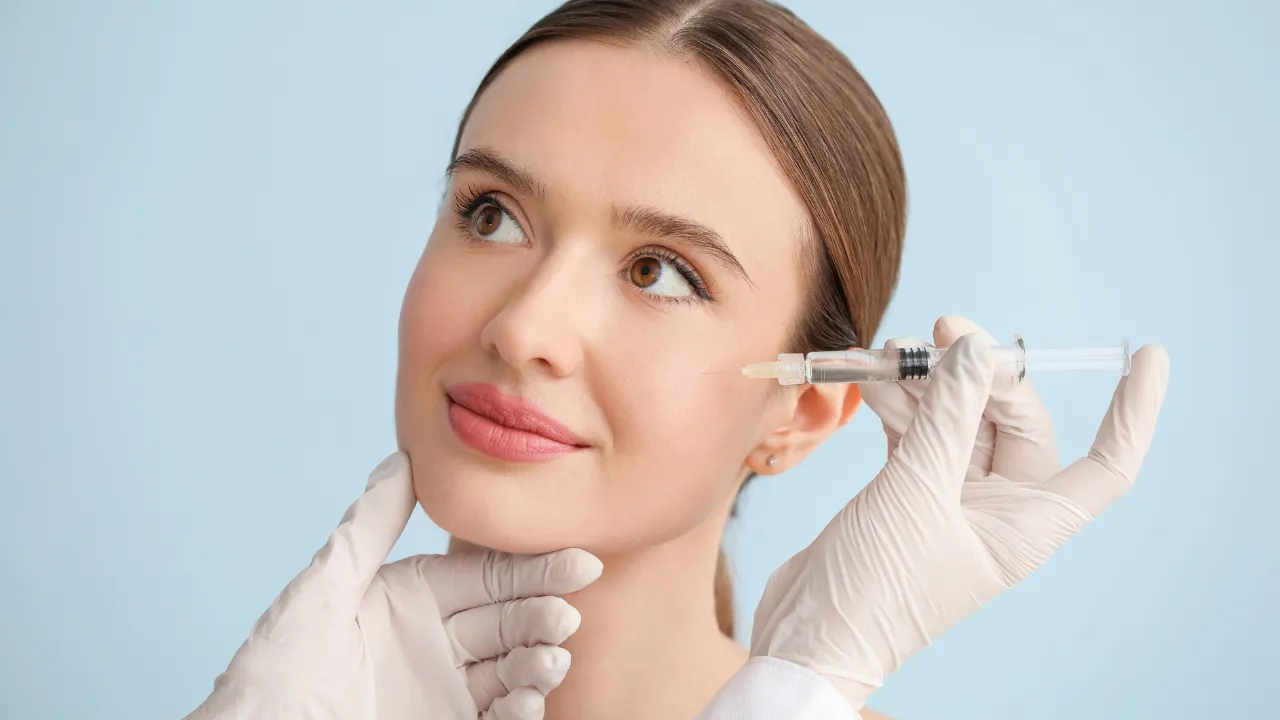
In young patients with mild degrees of mid-facial atrophy, a deep injection of a hyaluronic gel like Juvederm Voluma, Restylane Lyft, or a polylactic acid solution called Sculptra can temporarily restore facial soft tissue volume. However, if you want a longer-term solution for correcting midface flattening, implants are a great option. They are usually made of flexible silicone or other synthetic material.

The Three Types of Facial Implants

Facial implants are not a single procedure. The device, incision, and recovery differ depending on which part of the facial skeleton is being augmented. Dr. Kopelman photographs and measures the face to select the size and shape that balances your profile and frontal dimensions.

Facial Implant Types at a Glance
Implant TypeArea CorrectedTypical IncisionCommon Concern Addressed
Cheek (malar)Midface, over the cheekboneInside the mouthFlattening, hollowing, loss of midface volume
Chin (mentoplasty)Front of the lower jawInside the mouth or under the chinWeak or receding chin, unbalanced profile
JawAlong the jawline and angleInside the mouthNarrow or poorly defined jawline

Some patients benefit from combining two implant types, most often cheek and chin, to correct proportion across the whole face rather than one isolated zone. We assess this during your consultation, not in advance.

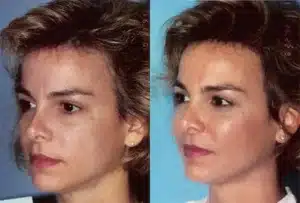
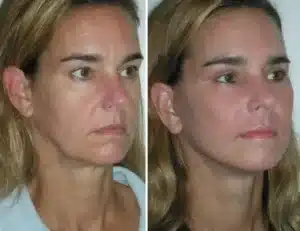
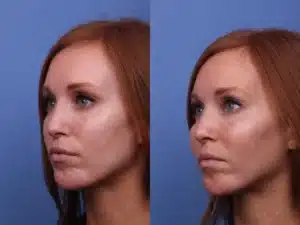
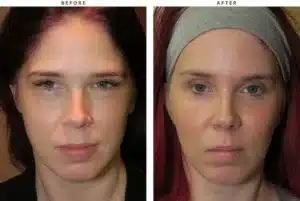
Check Augmentation New Jersey Facial Before & After

These cheek implant before and after pictures represent actual patients from Dr. Kopelman. They will help you to set realistic goals for your own surgical outcome.

Cheek Implants NJ with Dr. Joel Kopelman

To achieve the best results from cheek augmentation in New Jersey, Dr. Kopelman will thoroughly review your facial skin, soft tissues, and skeletal structure, and discuss your desires and expectations. Implants vary in size and shape, and Dr. Kopelman selects the specific device based on your unique facial features.

Finding the right fit is critical to achieving great results. An implant that is too large reads as artificial; one that is too small fails to correct the underlying flatness. Sizing is judged against your existing bone projection, soft tissue thickness, and lower eyelid position.

Ideal Candidate for Midface Augmentation

  • Patients with significant flattening and hollowing of the mid-face and cheeks.
  • Patients who want permanent solutions to mid-facial soft and hard tissue atrophy.
  • Patients who are tired of repetitive injections of dermal fillers.
  • Patients in good general health, without conditions that would interfere with healing.
  • Patients who understand that implants correct volume and projection, not skin laxity.

Patients who smoke are asked to stop well in advance of surgery, since smoking meaningfully impairs healing at the incision site.

Cheek Implants NJ: Benefits

  • More youthful fullness of the midface
  • Improved facial proportions
  • A permanent correction that does not require repeat treatment
  • Improved support for the tissues over the cheekbone
  • Softening of the hollow that forms between the lower eyelid and cheek

Implants or Injectable Fillers?

Fillers and implants solve the same visual problem by different means, and the right choice depends on how much volume is missing and how long you want the correction to last. Fillers are placed in the soft tissue and gradually break down. Implants sit on the bone and stay put.

Fillers make sense for mild atrophy, for patients who want to preview a change before committing, or for anyone unwilling to have surgery. Implants make sense for moderate to severe flattening, for patients tired of maintenance appointments, and for structural deficits that soft tissue volume cannot correct.

Cost is part of this decision. A one-time surgical fee compares differently against filler treatment that is repeated on an ongoing basis, and that arithmetic is worth working through during consultation. See our facial fillers page for details on injectable options.

Midface Implants Compared With Injectable Fillers
FactorCheek ImplantsInjectable Fillers
DurationPermanentTemporary, repeated over time
Best suited toModerate to severe midface flatteningMild volume loss; previewing a change
AnesthesiaSurgical anesthesia by an anesthesiologistTopical or local numbing
DowntimeRoughly one week of visible swellingLittle to none
ReversibilityImplant can be removed or exchangedResolves on its own; some types dissolvable
Ongoing treatmentNot requiredRequired to maintain the result

How Cheek Augmentation Surgery Is Performed

Dr. Kopelman makes a small, concealed incision inside your mouth, which allows him to slip the implant into position on the cheekbone. The implant conforms to the underlying bone so it fits naturally. The mouth incision is sutured closed with absorbable suture.

Placing the incision inside the mouth means there is no visible external scar on the face. According to the American Society of Plastic Surgeons, intraoral placement is the most common approach for this procedure, though alternate incisions inside the lower eyelid or within the hairline may be used when augmentation is combined with other surgery. ASPS

You will take oral antibiotics and use mouthwash for five days. The face will remain swollen for approximately one week.

Recovery Timeline

Recovery from midface augmentation is straightforward for most patients, but the swelling resolves in stages rather than all at once. Sleeping with your head elevated for the first several nights and applying cold compresses reduces early swelling.

What to Expect After Midface Augmentation
TimeframeWhat to Expect
Days 1 to 5Peak swelling; oral antibiotics and mouthwash; soft diet; head elevated when sleeping
Days 7 to 10Mouth incision fully healed; most patients return to desk work
Week 3Residual swelling largely resolved in most cases
Weeks 3 to 4Strenuous activity and exercise typically resumed
Up to 3 monthsTemporary cheek numbness may persist and then resolves

Eat soft foods while the intraoral incision heals. Avoid strenuous exercise and heavy lifting during the first week, and rinse as directed rather than brushing directly over the suture line.

Risks and Side Effects

As with any surgical procedure, cheek augmentation carries risks that you should discuss openly before you decide. Swelling, bruising, and temporary numbness are expected, not complications, and they resolve on their own.

Risks specific to implant surgery include asymmetry, implant shifting or malposition, infection at the implant site, and prolonged numbness if a sensory nerve is disturbed. Infection is uncommon but, if it occurs, may require implant removal.

Results are long-lasting, though the American Society of Plastic Surgeons notes that no surgical outcome is guaranteed and that a second procedure is occasionally needed to achieve an optimal result.

Dr. Kopelman reviews each of these with you directly during consultation, along with how they apply to your specific anatomy and health history.

Cost of Facial Implants in New Jersey

Midface Augmentation and Non-Surgical Alternatives
TreatmentCostNotes
Cheek implants$6,500 to $8,500Includes anesthesia performed by an anesthesiologist
Chin implantsQuoted at consultationPriced separately; may be combined with midface augmentation
Juvéderm Voluma$1,800Cheek and mid-face contouring; priced per session, not per unit
Restylane$2,500Used for lips, cheeks, or under-eye depending on the type
Sculptra$2,500 per vialCollagen-stimulating; typically requires multiple sessions

Pricing is current as published and confirmed at consultation.

Surgical pricing reflects the implant, the surgical fee, and anesthesia administered by an anesthesiologist. Cost may vary if you schedule augmentation alongside another procedure, since operating time and anesthesia are shared.

Choosing the Best Cheek Implant Surgeon in New Jersey

Patients searching for cheek augmentation near me are usually weighing convenience against qualifications. Convenience matters, but the more useful filter is whether the surgeon operates on the face routinely rather than occasionally, and whether they understand how the midface relates to the lower eyelid above it.

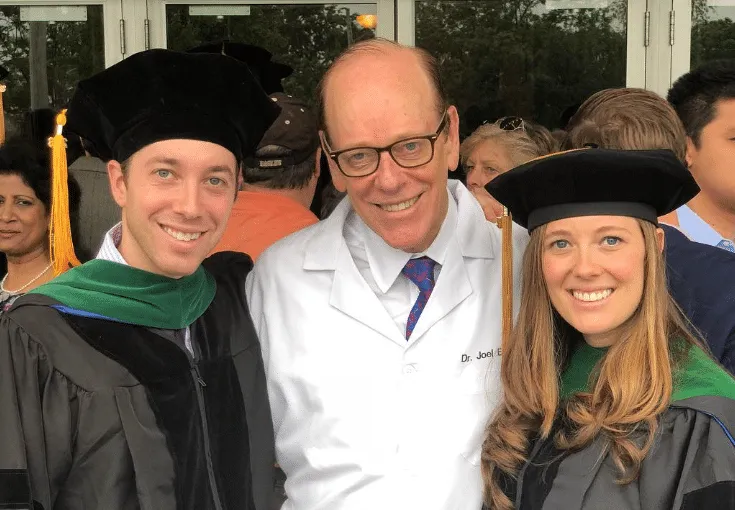
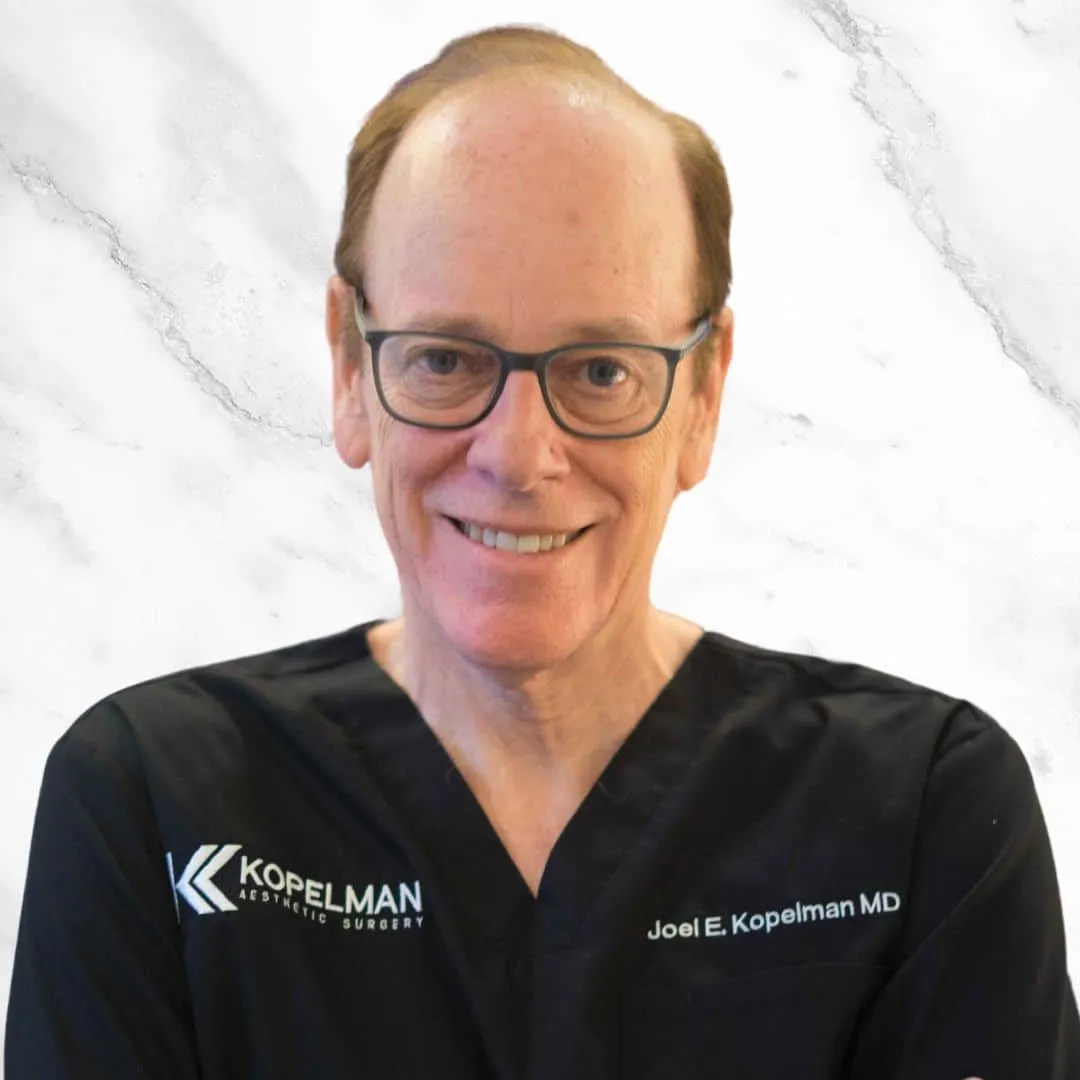
Dr. Joel E. Kopelman, MD, FACS, is a Fellow of the American College of Surgeons and practices as both a facial plastic and oculoplastic surgeon. That dual focus matters here, because midface volume and lower eyelid position are anatomically linked and are frequently assessed together.

The practice maintains affiliations with the American Academy of Facial Plastic and Reconstructive Surgery, the American Academy of Ophthalmology, the American College of Surgeons, and the American Society of Ophthalmic Plastic and Reconstructive Surgery.

Questions worth asking any surgeon you consult: how many facial implant procedures they perform, whether they will show you results on patients with anatomy similar to yours, and what their approach is if the result needs revision.

Frequently asked questions
about Cheek Implants

Dr. Joel E. Kopelman is both a facial plastic and oculoplastic surgeon with over 35 years of experience in cosmetic rejuvenation of the face, neck, and eyes. Renowned for his innovative techniques and meticulous approach, Dr. Kopelman has built a reputation as a trusted expert among patients seeking transformative results that are both beautiful and natural.

Dr. Kopelman’s commitment to excellence extends beyond surgery; his warm and compassionate approach provides patients with a sense of comfort and trust throughout their treatment journey. Supported by a team of first-class professionals, Dr. Kopelman continuously strives to exceed patient expectations, fostering a reputation for delivering unparalleled satisfaction and long-lasting results.
Page Updated on [last_updated_date] by Dr. Joel Kopelman (Facial Plastic Surgeon) of Kopelman Aesthetic Surgery.

Cheek Augmentation in New Jersey NJ:
Schedule a Consultation

To schedule a private consultation with Dr. Kopelman, please call the office or request an appointment online.

Add Your Heading Text Here

Lorem ipsum dolor sit amet, consectetur adipiscing elit. Ut elit tellus, luctus nec ullamcorper mattis, pulvinar dapibus leo.