
At Kopelman Aesthetic Surgery, Dr. Kopelman explains that consistent eyelid cleaning can help reduce irritation, dryness, crusting, and flare-ups. This guide explains how to clean your eyelids safely and when to see a specialist.
Key Takeaways
- Cleaning your eyelids daily with a warm compress and gentle cleanser helps relieve blepharitis symptoms and maintain comfort.
- Tools like hypochlorous acid wipes, diluted baby shampoo, and a clean washcloth support effective blepharitis eye cleaning.
- Medical treatments such as BlephEx, lotilaner, or cyclosporine drops may be recommended when hygiene alone isn’t enough.
- Uncontrolled blepharitis can cause dry eyes, lash loss, or corneal damage.
- Dr. Kopelman stresses consistent hygiene and individualized care to support meibomian gland function and reduce flare-ups.
How to Clean Eyelids Safely and Effectively
Cleaning Eyelids for Blepharitis
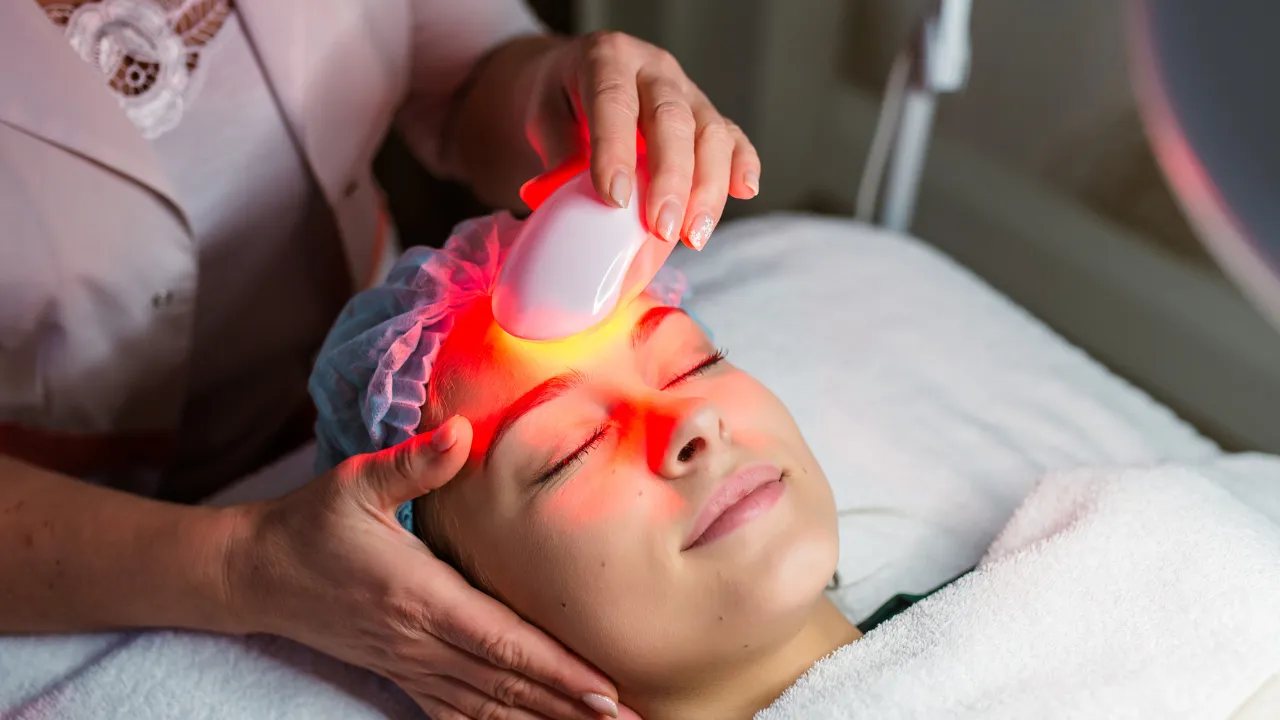
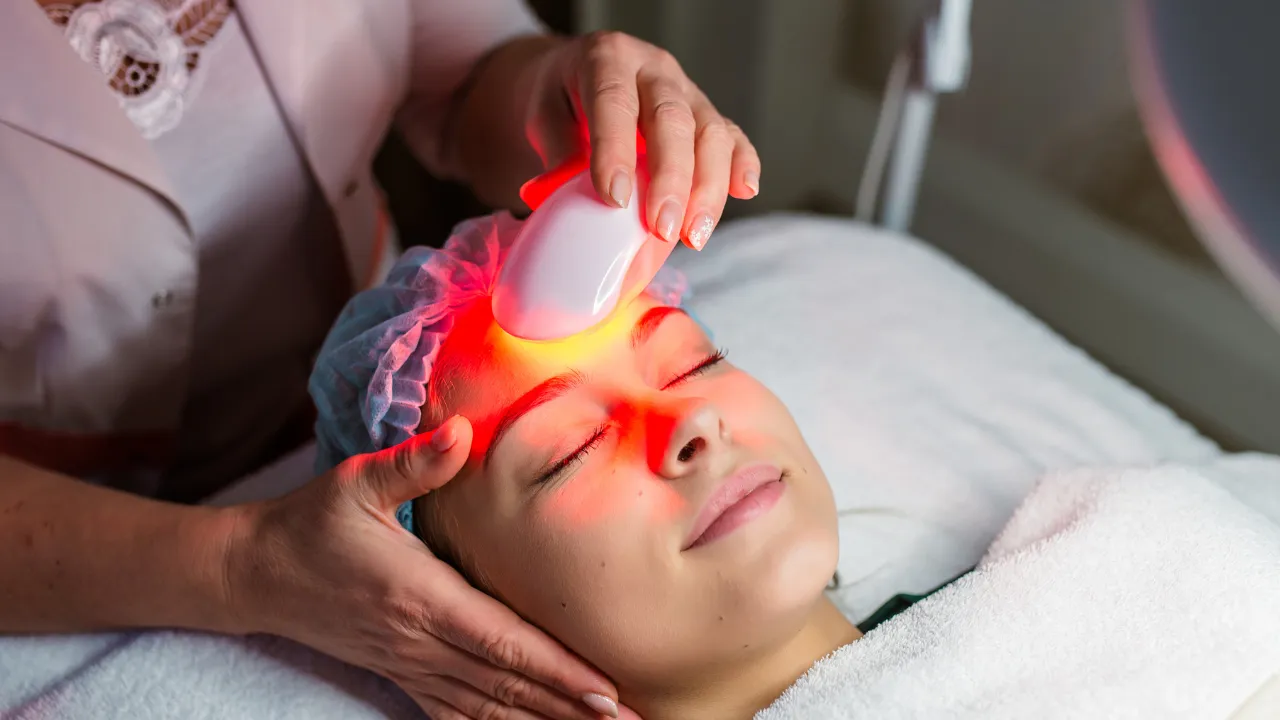
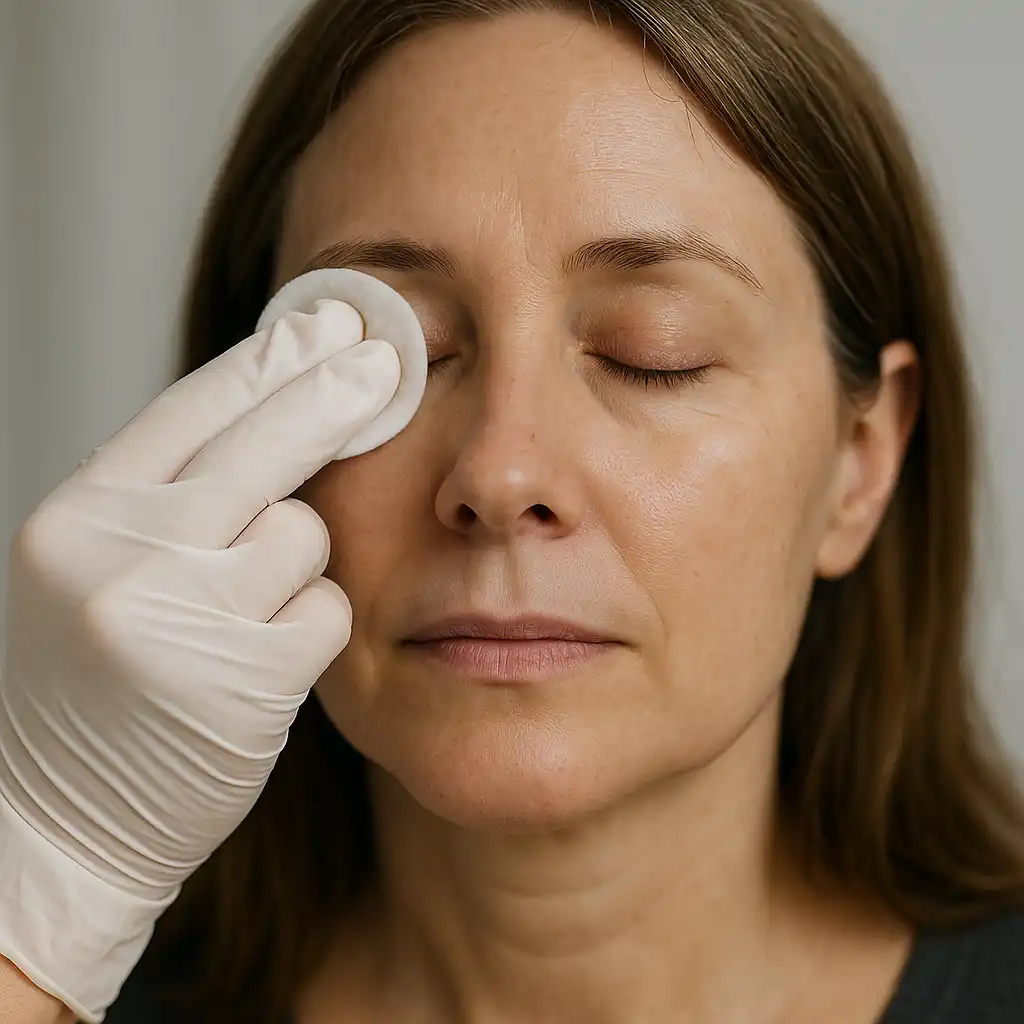
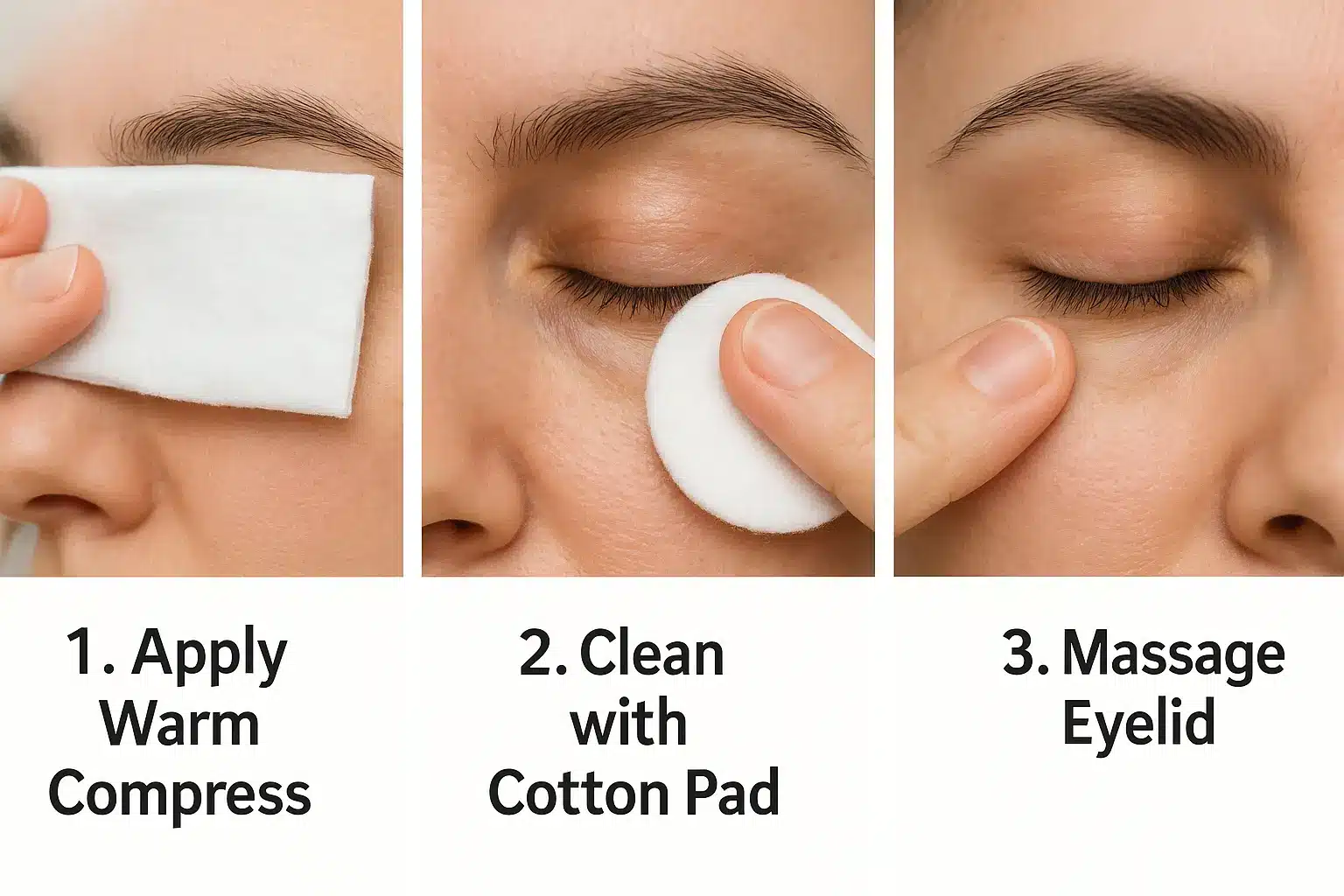
Apply a warm compress over closed eyelids for 5 minutes to soften debris and loosen oil buildup. Then, clean the base of the eyelashes with a lid scrub or diluted cleanser using a soft cotton pad.
Eyelid Massage for Blepharitis to Support Oil Flow
Gently massage the eyelid margin to support oil flow from the meibomian glands. Dr. Kopelman recommends this once or twice daily during flare-ups, and once daily as part of long-term care.
Best Eyelid Wash for Blepharitis and Cleaning Tools
Use:
- Blepharitis eye wash, eyelid cleansers, or diluted baby shampoo
- Hypochlorous acid wipes are considered among the best eyelid wipes for reducing bacteria and irritation
- Cotton pads, swabs, or gentle cloths
Avoid harsh soaps and choose preservative-free items to protect the tear film and reduce irritation.
How Often to Clean Your Eyelids
During flare-ups, clean twice daily. Once symptoms improve, reduce to once per day. Use a small amount, rinse thoroughly, and avoid over-scrubbing, which can worsen inflammation.
What Not to Do With Blepharitis
Avoid:
- Rubbing or scrubbing too hard
- Using eye makeup during flare-ups
- Sharing towels or cleaning tools
- Overusing artificial tears
If left untreated, blepharitis can cause lash loss, bacterial infection, or damage to the eye’s surface.
How Blepharitis Is Diagnosed Before Treatment Begins
Eye doctors may use a slit-lamp exam to check for eyelid inflammation, oil gland issues, or buildup. They might test for Demodex mites or bacteria.
Further evaluation may include tear film testing or meibography, which assesses meibomian gland function and helps customize treatment.
Understanding Different Types of Blepharitis
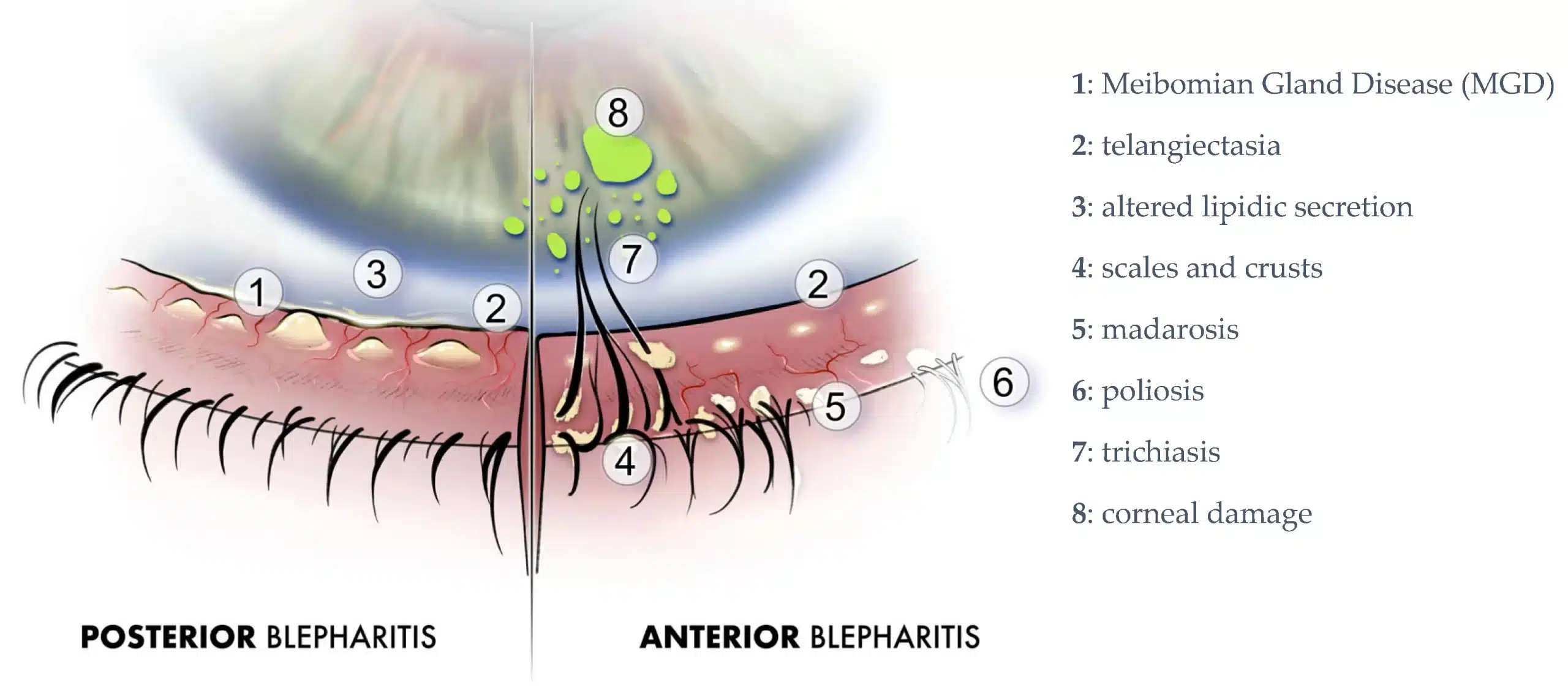
Anterior blepharitis affects the outer eyelid and the base of the lashes, often linked to skin conditions or bacterial infections. Posterior blepharitis affects the inner eyelid and is usually caused by dysfunction of the meibomian glands.
Treatment depends on the type, and you might also wonder whether blepharitis is contagious. Anterior cases respond to blepharitis cleaning, while posterior cases often need warm compresses and long-term maintenance.
Fast Relief and Medical Treatment Options
In-office care from a blepharitis treatment doctor may include:
- BlephEx for biofilm removal
- Lotilaner or anti-inflammatory drops
- Cyclosporine (Restasis) for chronic inflammation
- Oral antibiotics for recurring issues
Artificial tears provide relief, especially for patients with dry eyes, and readers can also learn more about what to apply to a dry eyelid when dryness affects the eyelid skin. Dr. Kopelman tailors treatment based on your exam results and symptoms.
Blepharitis Treatment for Children
Clean children’s lids with warm cloths and baby-safe cleansers for 3–5 minutes. Avoid strong products. If symptoms persist, consult a pediatric eye specialist.
When to See a Specialist
See a specialist if symptoms continue despite daily care. Warning signs include ongoing redness, blurry vision, worsening dry eyes, or frequent styes.
Dr. Kopelman can recommend further testing and treatment options to prevent lasting damage or complications.
Managing Blepharitis Long Term
Use a daily eyelid scrub or compress to keep meibomian glands healthy. Limit eye makeup, and address skin conditions like rosacea.
Triggers such as screen time, pollution, or allergens may contribute to flare-ups. Long-term care helps reduce their frequency and intensity, and the team at Kopelman Aesthetic Surgery offers guidance for every stage of management.