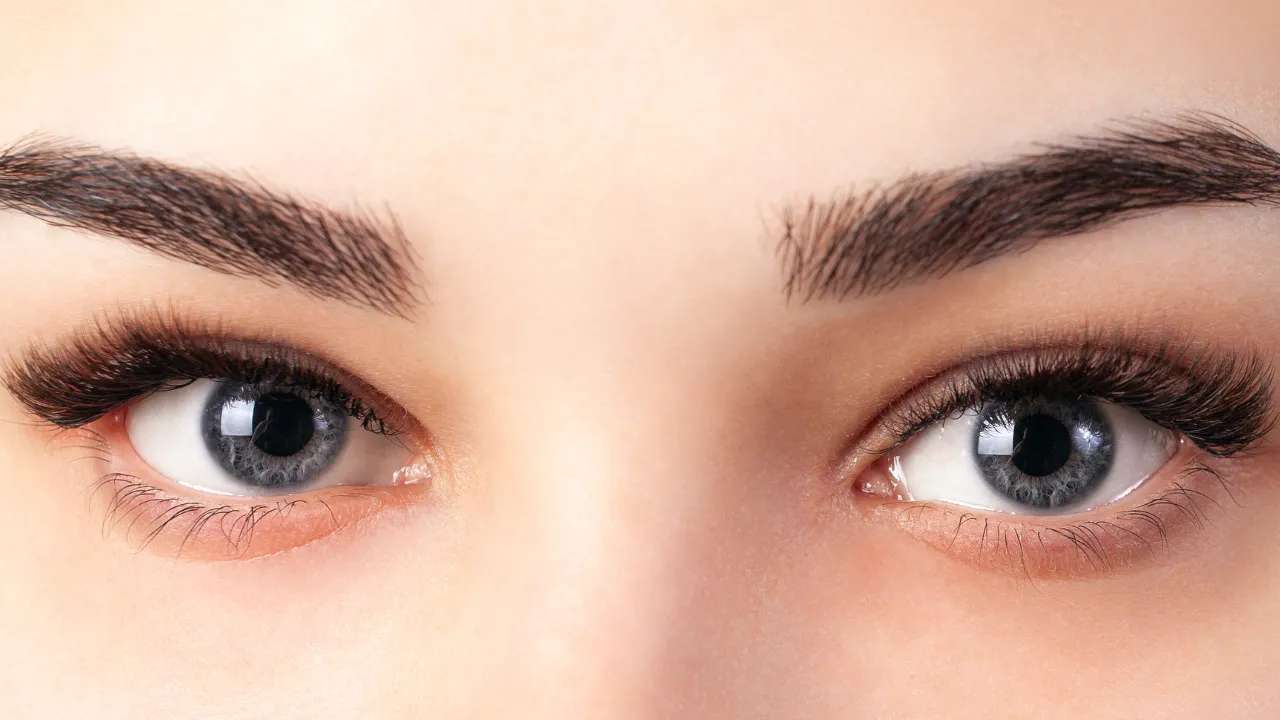

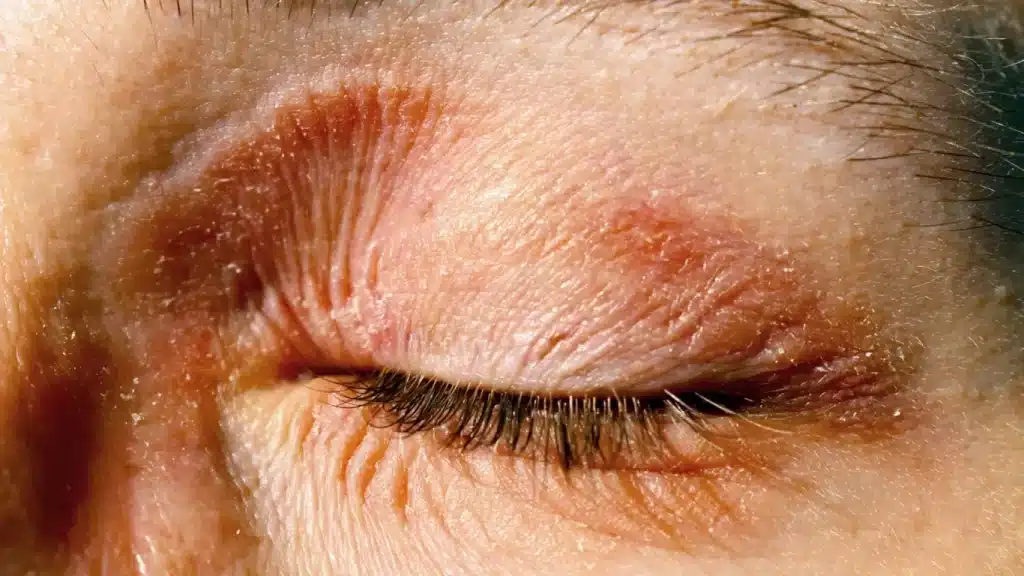
The skin on the eyelid is the thinnest on the body and lacks the fat cushioning found elsewhere, so it reacts quickly to irritants. If you notice dry skin on the eyelid, early care matters. Choosing proven, eye-safe treatments protects this delicate tissue and helps prevent long-term irritation.
Key Takeaways
- Dry eyelids respond well to gentle moisturizers, eye-safe ointments, and warm compresses, while harsh active ingredients should be avoided.
- Common causes include environmental triggers, skin conditions such as eczema and dermatitis, and leftover makeup residue, with age, allergies, and contact lens use raising the risk.
- Symptoms include redness, flaking, burning, and sensitivity, and persistent cases may signal an underlying skin or eye condition.
- Daily prevention includes gentle cleansing, hydration, screen-time breaks, and protection from environmental stressors.
- A professional evaluation ensures an accurate diagnosis and effective dry eyelid treatment when self-care does not work.
Effective Treatments for Dry Eyelids
The right approach depends on the cause, but most mild cases improve with simple, consistent skin care. The goal is to restore the skin barrier without introducing anything that could sting, clog, or trigger a reaction on such thin skin.
What Can You Use on Dry Eyelids
Fragrance-free, hypoallergenic ointments or lightweight moisturizers relieve irritation and help the skin hold moisture. The American Academy of Dermatology recommends plain petroleum jelly for dry, sensitive eyelid skin. Avoid harsh products like retinol, which can worsen dryness and cause unwanted side effects on the eyelid.
Best creams and moisturizers for dry eyelids
Choose eye-safe, non-comedogenic products such as petroleum jelly or a cream with hyaluronic acid or ceramides. Hyaluronic acid draws water into the skin, while ceramides help rebuild the protective barrier that keeps moisture from escaping. Apply a thin layer once or twice daily, and stay consistent if you are dealing with dry, flaky skin on the eyelid.
Dry eyelid home remedies
- Warm compress for five to ten minutes.
- Use a humidifier indoors.
- Washing the face and eyelids with diluted baby shampoo or a mild, soap-free cleanser.
Use warm rather than hot water, since hot water strips natural oils and irritates thin eyelid skin. These simple steps often ease mild eyelid dryness and itching within a few days.
Can I put Vaseline on my eyelids for dry eyes?
Vaseline is generally safe on the eyelid skin and is one of the gentlest options for dry patches there. It must not get inside the eye itself. If your skin is sensitive, test a small area first before applying more broadly.
How to Get Rid of Dry Eyelids Overnight?
A warm compress followed by a thin layer of ointment before sleep often reduces visible dryness by morning. This overnight approach can provide quick relief for anyone with dry, peeling eyelids who wants to calm their skin fast.
Treatments focus on relieving current symptoms through creams, ointments, and home remedies.
What to Avoid Putting on a Dry Eyelid
What you leave off the eyelid matters as much as what you put on it. Many common skincare actives are too strong for this area and can turn mild dryness into extremely dry eyelids that crack or peel.
While the skin is irritated, avoid the following:
- Retinoids and retinol, which speed cell turnover and increase flaking.
- Exfoliating acids such as glycolic, salicylic, and lactic acid.
- Fragranced creams, cleansers, and cosmetics are a frequent cause of contact reactions.
- Heavy or waterproof eye makeup that is hard to remove without scrubbing.
It also helps to identify and stop using any recent products that coincide with the start of your symptoms. New eye creams, eyelash serums, and makeup removers are common culprits behind super dry eyelids.
How to Treat Dry Flaky Eyelids
How to treat dry skin around the eyes
Use lightweight eye creams and apply gently with clean fingers. Avoid rubbing, as it worsens irritation and can aggravate dry, itchy eyelids. Patting the product in, rather than dragging it across the skin, protects the delicate barrier.
Remedies for eyelid dryness and itching
Eyelid dryness and itching often come from allergic reactions or environmental factors. Cool compresses, artificial tears, or mild antihistamine drops can help. Always avoid scratching, as it can break the skin and worsen symptoms.
Why are my eyelids dry and flaky?
Flakiness is often linked to skin conditions such as eczema, eyelid eczema, or blepharitis. Treatment depends on the cause: a doctor may suggest a short course of low-strength corticosteroid cream for eczema, a topical calcineurin inhibitor when steroids are not ideal, an antifungal for seborrheic dermatitis, or gentle lash-line cleaning for blepharitis.
Medicated options are worth discussing when standard remedies do not work.
Dry Eyelids vs. Dry Eyes: What Is the Difference?
Dry eyelids and dry eyes are often confused, but they are not the same thing. Dry eyelids affect the outer skin of the lid, leaving it scaly, flaky, or rough. Dry eye disease affects the tear film on the eye’s surface.
Some conditions, such as blepharitis, can contribute to both at once. Many people, though, have only one or the other. Knowing which one you are dealing with helps you choose the right care, since skin moisturizers treat the eyelid, while artificial tears address the eye surface.
Dry Eyelids Causes & Risk Factors
Why are my eyelids dry?
Cold weather, indoor heating, contact lens use, and rubbing all pull moisture from eyelid skin. Reduced activity in the oil glands along the lash line can also leave the skin dry. Because the eyelid has a rich blood supply, it reacts more readily to irritants than most other areas.
What causes dryness in the upper eyelids
Upper eyelid dryness may come from eye makeup, allergic reactions, or blocked oil glands. Incomplete removal of cosmetics is a frequent trigger and can leave residue that irritates the skin overnight.
Skin conditions like eczema or dermatitis
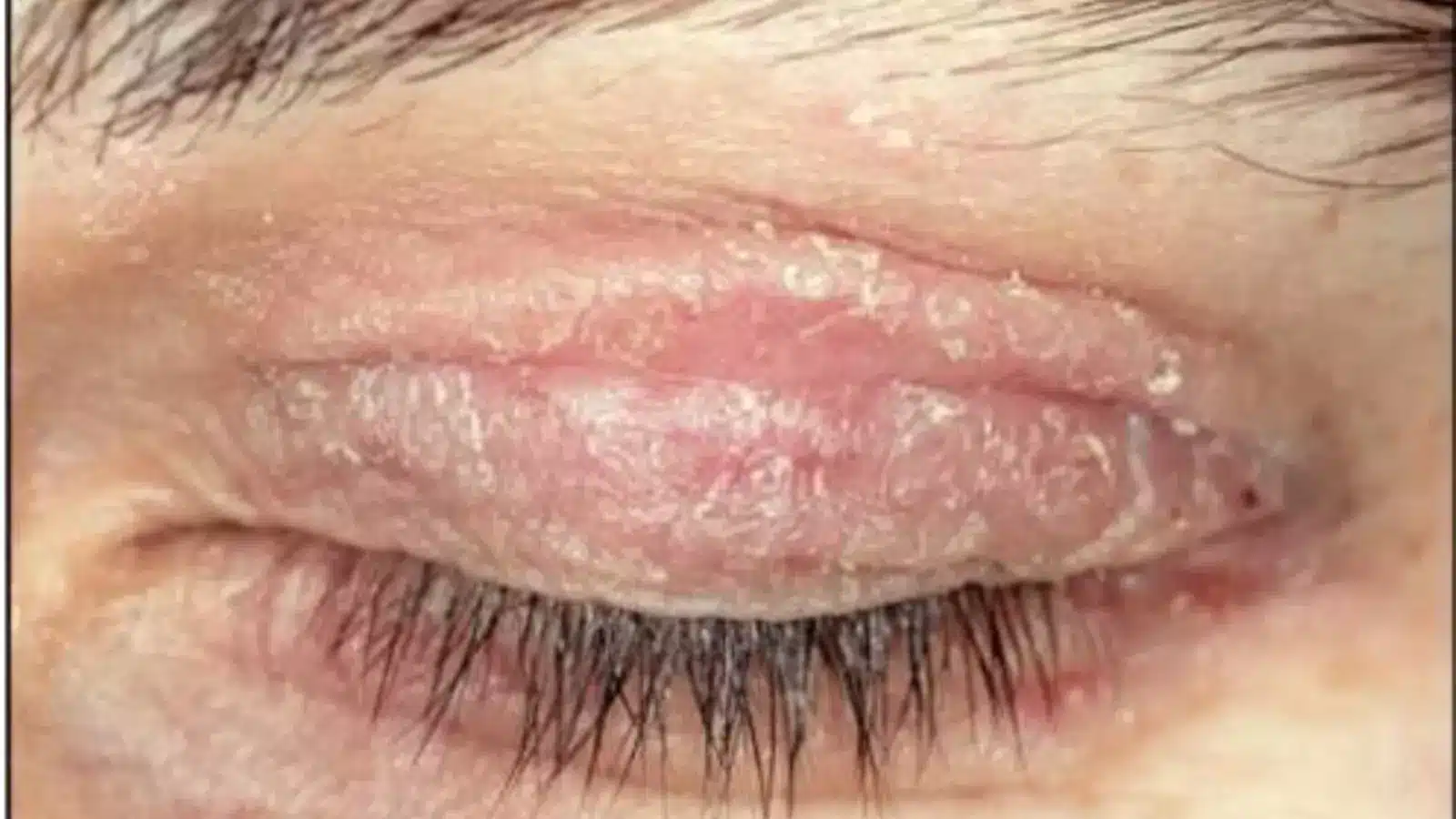
Eczema, including eyelid eczema, and seborrheic dermatitis often affect the eyelids, causing scaling and redness. Contact dermatitis from allergens such as nickel, fragrance, or preservatives in skincare is another common cause. Psoriasis can occasionally produce dry, scaly patches on the lids as well.
Environmental and lifestyle triggers
Pollution, long hours of screen use, and smoking are common environmental factors. Air conditioning and dry climates lower humidity, which can contribute to eyelid irritation over time.
Risk Factors for Dry Eyelids
Some people are more prone to dry eyelids than others. The key risk factors include:
- Older age, as skin oils and collagen naturally decline.
- Contact lens use.
- Skin conditions such as eczema and psoriasis.
- Dry or air-conditioned environments.
- Seasonal allergies.
Patients often report redness, swelling, or gritty sensations. Older adults and allergy sufferers face a higher risk.
Symptoms of a Dry Eyelid
Dry eyelid symptoms include redness, flaking, swelling, and burning. Sensitivity to skincare or makeup is also common, and the skin may feel tight or rough to the touch.
Typical symptoms include:
- Redness or swelling.
- Flaking or peeling skin.
- Burning or gritty sensation.
- Sensitivity to makeup.
- Frequent blinking for comfort.
When Dry Skin on the Eyelid Won’t Go Away
Signs you need medical care
Seek a professional evaluation if dry skin on the eyelid won’t go away after one to two weeks of home care, worsens despite treatment, or affects your vision.
Get care promptly if you notice:
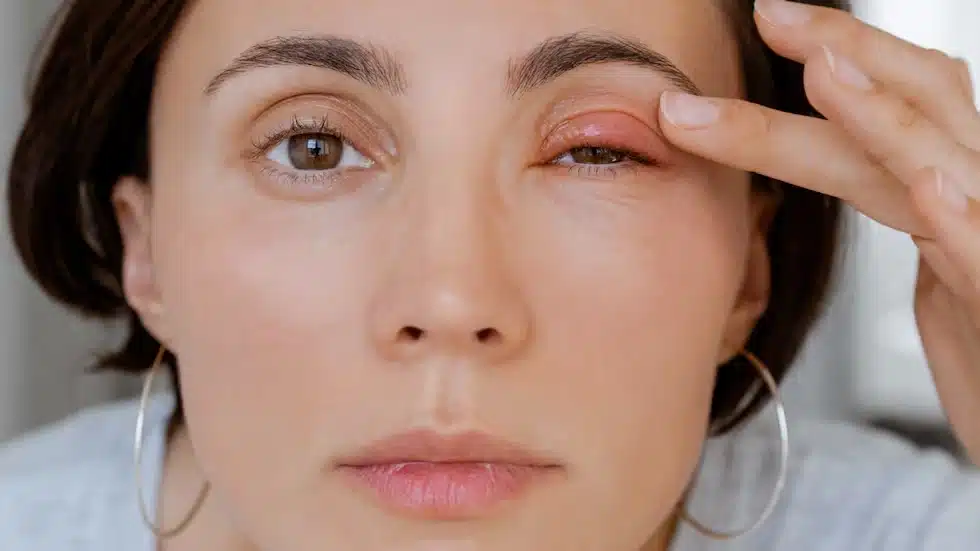
- Severe swelling or redness.
- Increasing pain.
- Discharge or crusting.
- Vision changes.
- No improvement after about a week.
Long-term relief options
Prescription creams, allergy management, or in-office treatment may provide lasting relief when the cause is an ongoing skin or eye condition. Delaying care can let a treatable problem become a recurring one, so persistent symptoms are worth checking.
Prevention Tips for Healthy Eyelids
- Wash with gentle, soap-free cleansers.
- Use a humidifier indoors.
- Limit eye makeup or choose hypoallergenic products.
- Wear sunglasses outdoors.
Consistent prevention keeps the eyelid skin balanced and resilient over time. Limiting screen time and avoiding hot water, which strips natural oils, also helps.
Additional prevention tips include:
- Drink water regularly.
- Keep a consistent sleep schedule.
- Use artificial tears if your eyes also feel dry.
- Avoid harsh cleansers and scrubs near the eyes.
Prevention differs from treatment in that it focuses on protecting the skin barrier before dryness starts.
Expert Insight on Dry Eyelid Care
Eyelid skin is thin and easily irritated, so safe, proven remedies are the best first step and reduce the risk of further harm. Persistent dryness often indicates an underlying condition, such as blepharitis, dermatitis, or eyelid eczema, and an early evaluation can lead to faster, more comfortable relief.
Understanding the common causes and risk factors helps you act early. When symptoms persist, a board-certified specialist can confirm the diagnosis and develop a treatment plan tailored to your skin. Schedule an appointment for a thorough evaluation and a personalized plan.