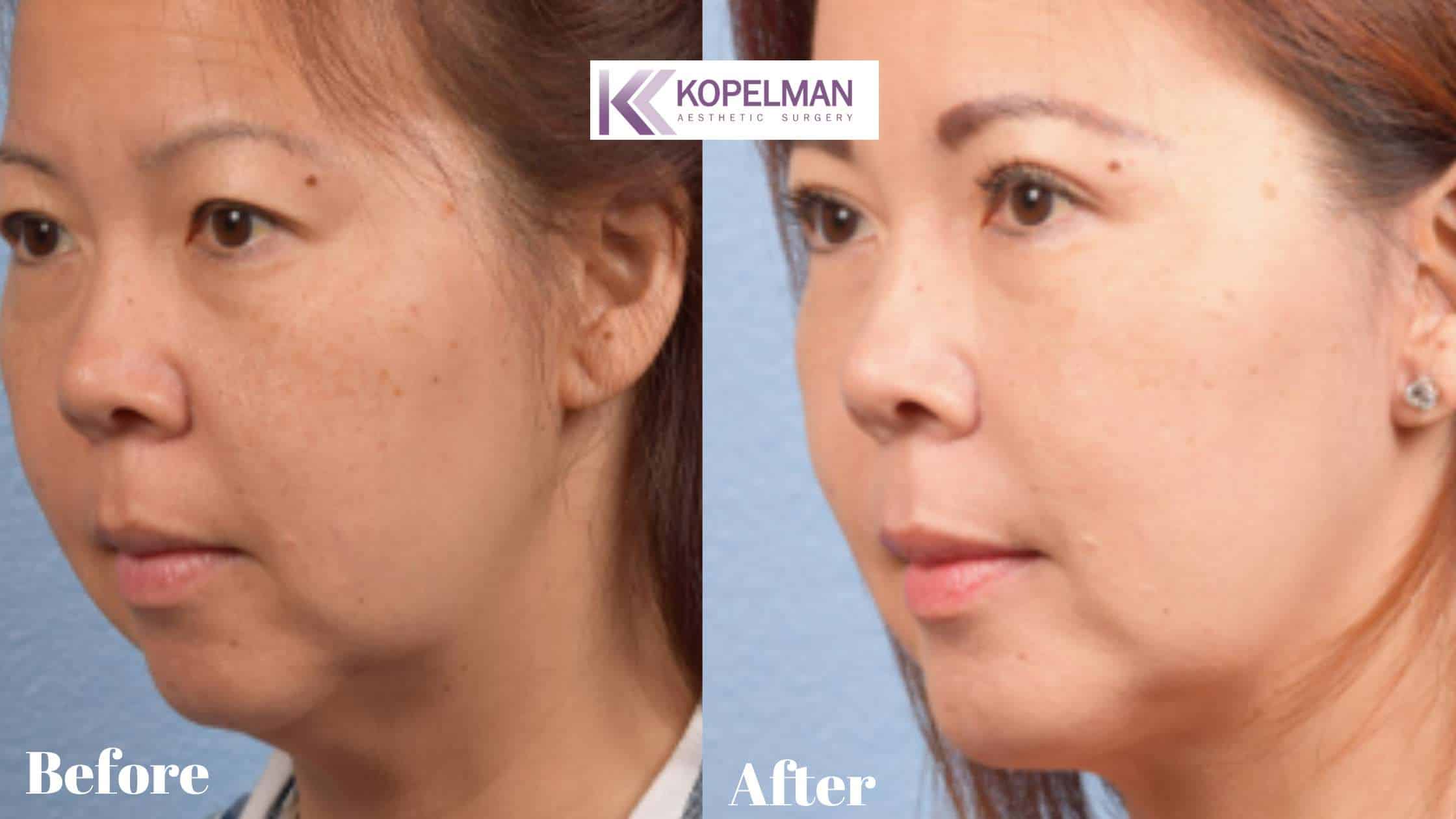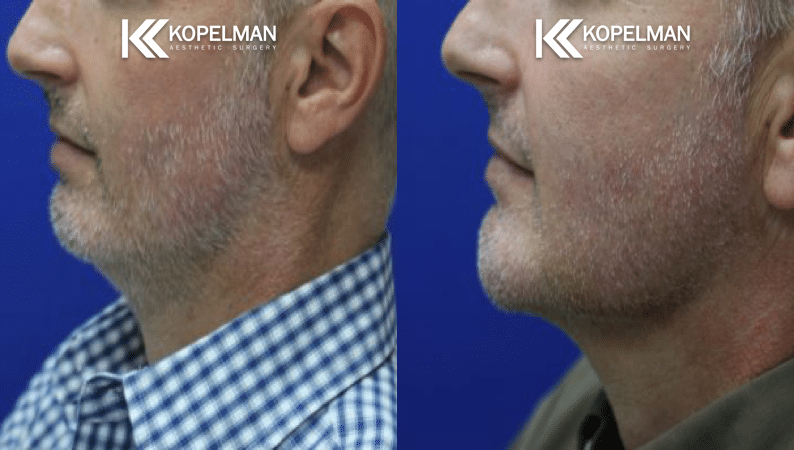


Natural methods cannot remove excess tissue, and fat-reduction treatments do not directly tighten loose skin. Identifying the cause helps you choose an appropriate approach and set realistic expectations.
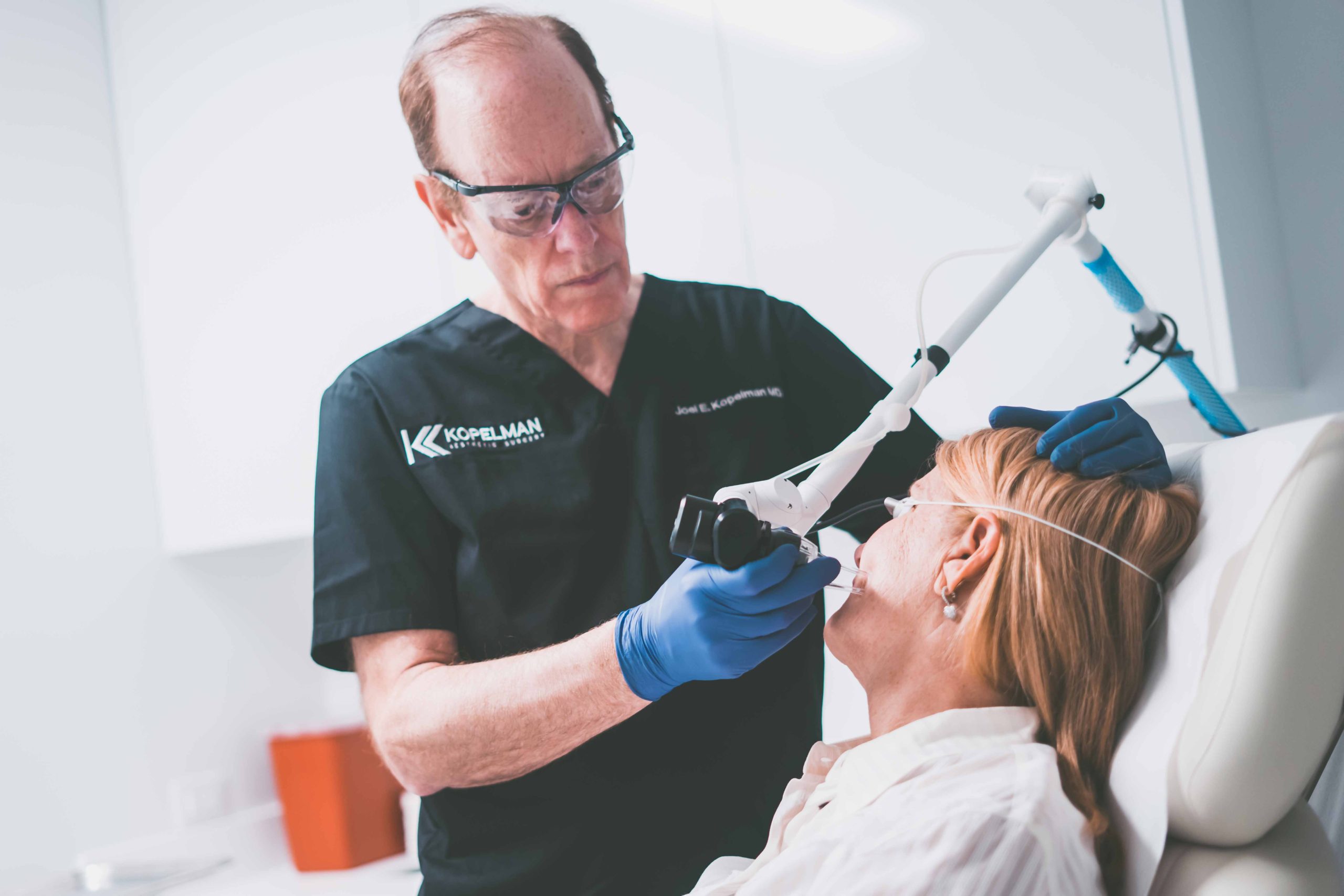
Dr. Joel Kopelman is a facial plastic and oculoplastic surgeon with decades of experience in facial rejuvenation. This guide explains the available treatments, their limitations, expected recovery, and factors that influence results.
Key Takeaways
- Skincare, sunscreen, and healthy habits support firmness but cannot eliminate significant sagging.
- Ultrasound and radiofrequency treatments can gradually improve mild to moderate laxity.
- Kybella and liposuction reduce fat rather than directly correcting loose tissue.
- Botox Cosmetic can temporarily soften prominent neck bands caused by muscle activity.
- A neck lift can address excess tissue and weakened neck muscles, but it requires longer recovery than non-surgical options.
Why Skin Gets Loose Under the Chin and Neck
Loose skin under the chin develops when the tissues beneath the jaw lose elasticity or no longer fit the underlying facial contours.
Several factors contribute to this change:
- Aging: Collagen and elastin production decline with age, reducing firmness and elasticity.
- Weight changes: Significant weight loss can leave folds of excess tissue after the underlying fat decreases.
- Genetics: Inherited facial structure and fat distribution influence how the lower face and neck look over time.
- Muscle changes: The platysma, a thin muscle extending across the neck, can develop prominent bands with aging.
- Sun exposure: Ultraviolet radiation damages collagen and contributes to premature wrinkles and laxity.
Some people also have excess fat beneath the jaw without significant laxity. This creates the appearance of a double chin, which may require a different treatment. Poor posture can temporarily emphasize neck folds, particularly when looking down, but it is not an established primary cause of permanent tissue looseness.
Can You Prevent Loose Skin?
Aging cannot be stopped, but several habits help protect collagen and reduce avoidable damage.
Use broad-spectrum, water-resistant sunscreen with SPF 30 or higher on exposed areas. The American Academy of Dermatology’s sunscreen guidance recommends this level of protection to reduce UV-related damage and premature aging.
Maintaining a stable weight, avoiding smoking, and eating a balanced diet with adequate protein can also support overall tissue health. Hydration helps prevent dryness, but drinking additional water will not restore substantial lost elasticity.
How to Tighten Chin Skin Without Surgery
If you want to tighten loose skin under the chin naturally, focus on methods that improve texture, hydration, and general skin health.
The American Academy of Dermatology’s guidance on firming sagging skin explains that creams typically produce subtle changes, if any. More noticeable tightening generally requires a professional procedure.
Natural Methods: Exercise, Posture, Skincare
- Neck exercises: Chin lifts, tongue stretches, and controlled neck movements may improve mobility and muscle awareness. Evidence that they produce lasting tissue tightening is limited.
- Good posture: Keeping the head aligned with the shoulders can reduce the temporary appearance of folds caused by prolonged downward positioning.
- Retinol: Retinoids are among the ingredients in skin-tightening creams and products that may support collagen production and improve fine lines over time, although results depend on the formulation and regular use.
- Peptides: Some peptide-containing products may improve hydration or texture, but results vary, and evidence for meaningful lifting remains limited.
- Moisturizers: Ingredients such as hyaluronic acid can temporarily make fine lines less noticeable by improving hydration.
People also try chewing sugar-free gum, chilled aloe, green tea compresses, and facial massage. These approaches may offer temporary cosmetic benefits, but none have strong evidence of removing loose tissue. Aggressive massage or repeated stretching may irritate.
At-Home Devices and Massage Tools
Consumer radiofrequency and microcurrent devices are marketed to improve facial firmness. Radiofrequency devices use energy that generates heat within treated tissues. Some small studies suggest modest improvements with selected home devices, but effectiveness varies by equipment and treatment schedule.
Professional radiofrequency treatments generally deliver energy under more controlled conditions, so home devices should not be expected to produce equivalent results.
Microcurrent devices stimulate superficial muscles through low-level electrical currents. They may create temporary changes in facial appearance, but evidence for lasting correction of significant laxity remains limited.
Lymphatic facial massage may temporarily reduce swelling or puffiness. It does not remove excess fat or hanging tissue. Follow device instructions, particularly around treatment intensity, sensitivity, implanted medical devices, and areas where use is restricted.
Chin Masks: Do They Work? What About Jaw Straps?
If you’re wondering, “Do chin masks work?” the answer is that they may temporarily improve the appearance of fine lines by moisturizing the treated area. They cannot permanently tighten loose skin.
Ingredients such as hyaluronic acid help retain moisture, while some formulas contain caffeine or peptides intended to improve the appearance of firmness. These cosmetic effects should not be confused with lasting tissue tightening.
A jaw support strap applies compression beneath the jaw and around the lower face. It may temporarily change the area’s appearance while being worn. No convincing clinical evidence shows that cosmetic straps permanently lift hanging tissue or eliminate a double chin.
Medical compression garments prescribed after certain procedures are different. They support postoperative recovery and should be worn as directed by the treating surgeon. For anyone comparing masks, straps, or firming creams, the main question is whether the product improves temporary appearance or addresses the underlying cause of laxity.
Can You Tighten the Muscle Under Your Chin?
Exercises can strengthen certain muscles, but the platysma and deeper neck structures do not respond like ordinary weight-training muscles. Repeated jaw movements cannot reliably remove fat deposits, correct separated muscle bands, or eliminate hanging tissue.
When vertical platysma bands cause visible neck changes, treatments targeting muscle activity or structure may be more useful than exercises.
Non-Surgical Chin Tightening Treatments
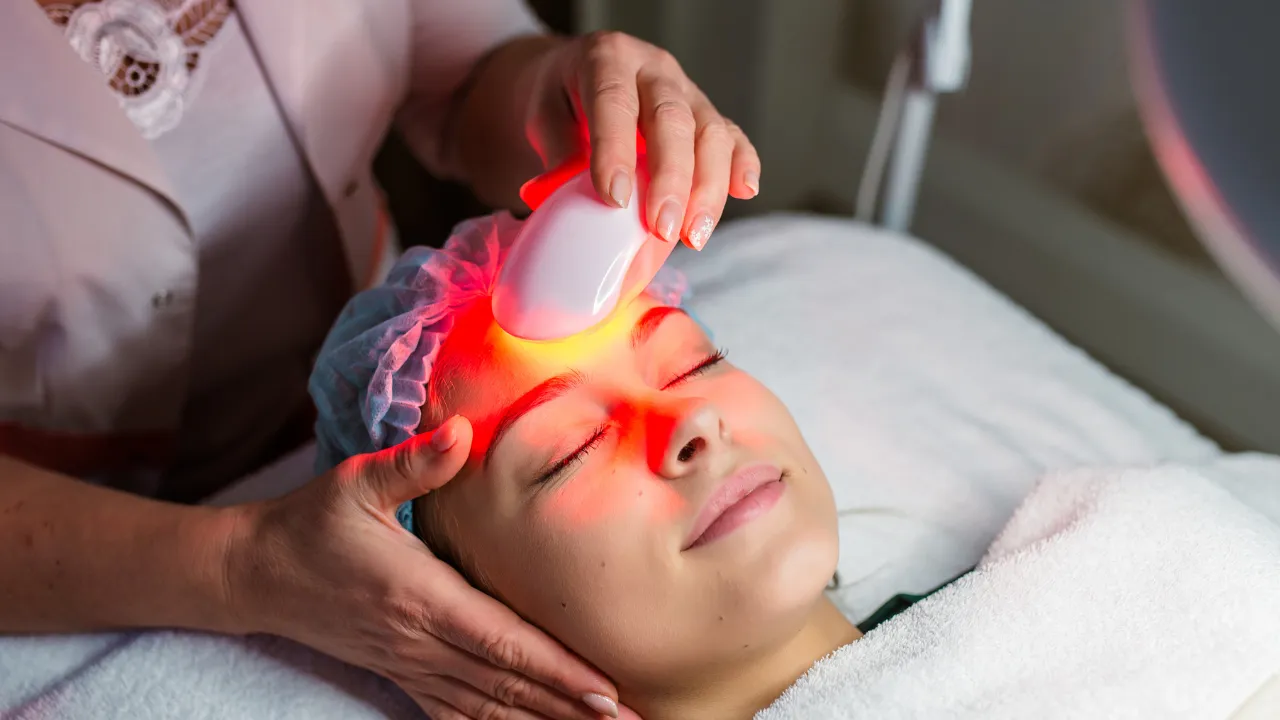
Professional non-surgical treatments can improve mild to moderate laxity by encouraging collagen remodeling or addressing specific causes of neck aging. The American Academy of Dermatology notes that these procedures generally provide more modest results than a surgical lift.
Ultherapy, Radiofrequency, and Laser
Ultherapy
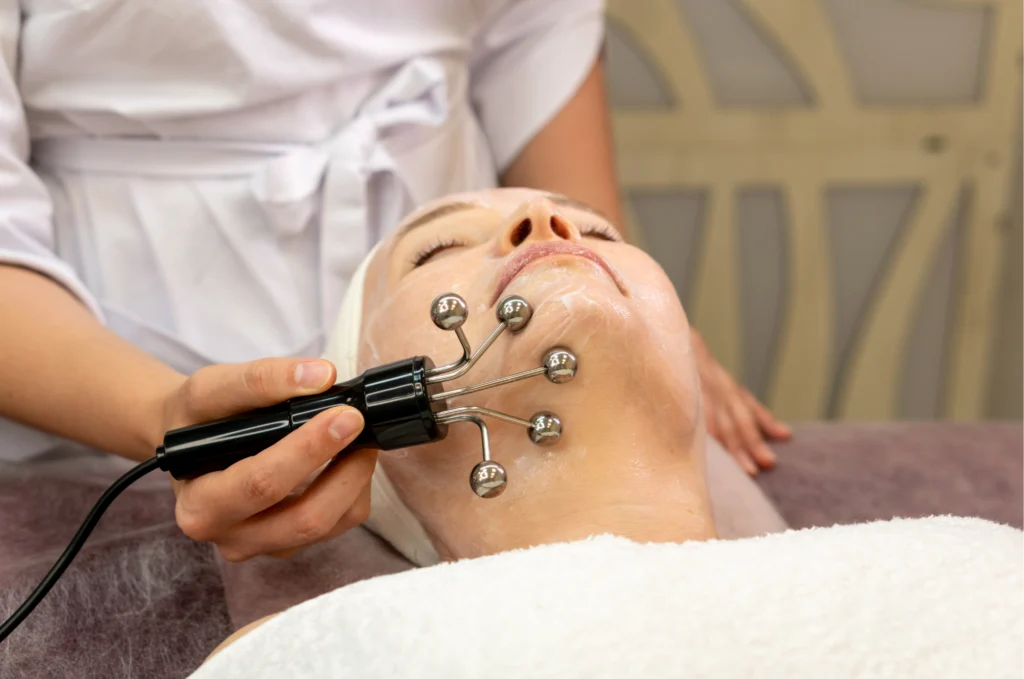
Ultherapy uses microfocused ultrasound energy to deliver controlled heat at selected tissue depths. This stimulates collagen remodeling, which may gradually improve firmness along the jawline and upper neck. Results generally develop over several months, often becoming more noticeable 2 to 6 months after treatment.
The degree of improvement depends on age, baseline elasticity, treatment settings, and laxity severity. Patients with substantial excess tissue are less likely to achieve sufficient correction with ultrasound alone. Temporary tenderness, redness, swelling, or tingling may occur.
Radiofrequency
Radiofrequency treatments heat tissue to stimulate collagen remodeling and improve firmness. Noninvasive systems may offer modest tightening without incisions. Multiple sessions may be recommended depending on the device and treatment plan.
Radiofrequency microneedling combines thermal energy with small needles that penetrate the treated area. It is more invasive than surface-based treatments and has different recovery considerations. Redness, swelling, and temporary sensitivity can occur. More significant complications, including burns, pigmentation changes, or scarring, are possible.
Laser treatments
Laser resurfacing is particularly useful when wrinkles, uneven texture, and sun damage accompany laxity. Nonablative systems generally involve less recovery but may produce subtler improvements.
Ablative lasers remove controlled portions of the outer layers to promote resurfacing. They can improve wrinkles more noticeably but involve greater downtime and risks, including pigment changes and scarring.
Patients with significant hanging tissue should not expect laser resurfacing alone to produce neck-lift results. If aging also affects the cheeks, see sagging cheeks treatment options for information on lifting and tightening related facial concerns.
For evidence on treatment mechanisms, gradual improvement, and expected downtime, see the AAD’s comparison of noninvasive skin-tightening procedures.
Chin Wrinkles Treatment: Fine Lines vs. Loose Skin
The best chin wrinkles treatment depends on whether the visible problem comes from fine lines, deeper folds, muscle movement, or excess tissue.
Fine wrinkles may improve with topical retinoids, moisturizers, and selected laser resurfacing treatments. When volume loss contributes to visible lines, fillers for neck sagging may be considered in selected patients, but they cannot remove loose tissue.
Deeper folds caused by laxity may respond modestly to ultrasound or radiofrequency, depending on their severity. Horizontal neck lines differ from vertical platysma bands. The latter involve muscle activity and may respond to targeted neuromodulator injections.
Significant hanging tissue generally requires a procedure that physically repositions or removes the excess.
Kybella Injections for Double Chin Fat
Kybella contains deoxycholic acid, an injectable medication approved by the FDA to improve moderate to severe fullness associated with submental fat in adults. The medication destroys fat cells in the treated area, gradually reducing localized fullness.
Kybella is not a direct skin-tightening treatment. It is most appropriate when unwanted fat is the main concern, and the overlying tissue has enough elasticity to adapt to the reduced volume. In patients with significant laxity, removing fat without correcting the surrounding tissue may leave visible folds.
Treatment involves multiple small injections. The FDA’s current Kybella prescribing information permits up to six sessions spaced at least one month apart. The number of sessions needed varies. Improvement usually develops gradually as the treated fat is cleared.
Common effects include swelling, tenderness, bruising, firmness, and numbness. Swelling may continue beyond the first week. Less common complications include marginal mandibular nerve injury, difficulty swallowing, ulceration, and tissue damage.
A qualified healthcare professional should evaluate whether the treatment is appropriate, particularly when excessive laxity or other anatomical concerns are present.
Botox for Turkey Neck and Platysma Bands
Botox Cosmetic is FDA-approved for temporarily improving moderate to severe platysma bands in adults, as described in the FDA’s Botox Cosmetic prescribing information. These vertical bands become prominent when the neck muscle contracts and may contribute to a less defined jawline.
Botox relaxes selected portions of the platysma, reducing visible banding and improving the appearance of the lower face and upper neck. It does not remove excess fat or hanging tissue. Results are temporary, and patients may need repeat treatment to maintain the improvement.
Possible effects include injection-site discomfort, bruising, temporary muscle weakness, and swallowing difficulties. Rare serious complications may involve the spread of toxin effects.
How to Tighten Skin Under Chin After Weight Loss
Losing weight can reduce fullness beneath the jaw, but it may also reveal excess tissue that no longer fits the smaller underlying contours.
The amount of remaining laxity depends on age, genetics, prior weight changes, sun exposure, and how much weight you lose.
Can Skin Bounce Back?
Some natural tightening may occur after weight stabilizes, especially in people with better baseline elasticity.
The improvement is unpredictable. Younger individuals may experience more natural contraction, while substantial weight loss can leave folds that do not disappear completely. Waiting until weight is stable helps distinguish temporary changes from persistent laxity.
Natural vs. Clinical Recovery
After weight loss, focus on maintaining a stable weight and giving the remaining tissue time to settle. Support general tissue health through adequate protein intake, sun protection, regular physical activity, and appropriate skincare.
If substantial folds persist, an examination can determine whether a professional treatment is likely to provide a noticeable improvement.
Best Non-Surgical Options Post-Weight Loss
Ultrasound and radiofrequency may improve mild residual laxity after weight reduction. These treatments encourage collagen remodeling but cannot remove large amounts of excess tissue.
When substantial folds remain, non-surgical procedures may not provide enough improvement to meet the patient’s goals. The following surgical options explain when tissue removal or muscle tightening may be more appropriate.
Surgical Options for Long-Lasting Results
Surgical treatments can address excess fat, loose tissue, and muscle-related changes that skincare or energy-based devices can’t correct.
They generally produce more substantial contour changes but involve longer recovery, higher cost, and greater procedural risks.
Chin Liposuction vs. Submentoplasty
Liposuction removes localized fat through small incisions using a thin suction instrument. It is most suitable when excess fat causes fullness, and the surrounding tissue has sufficient elasticity.
Liposuction does not directly remove hanging skin. In patients with poor elasticity, removing fat alone may make existing folds more noticeable. Submentoplasty addresses the area beneath the jaw through a smaller surgical approach than a full neck lift.
Depending on the patient’s anatomy, the procedure may involve fat removal and platysma tightening through an incision beneath the jaw. It may suit patients with localized contour problems or muscle separation who do not need extensive tissue removal.
Neck Lift and Platysmaplasty
Neck lift procedures can provide substantial correction for significant sagging, excess tissue, or prominent muscle bands.
The procedure may involve:
- Removing or repositioning excess tissue.
- Tightening underlying neck structures.
- Reducing unwanted fat when necessary.
- Repairing or tightening the platysma.
- Improving the transition between the jawline and neck.
Platysmaplasty specifically addresses the neck muscle and may be included as part of a neck lift. Incision placement depends on the surgical technique. Common locations include beneath the jaw and around the ears.
The resulting contour can remain improved for years, although aging continues and long-term results depend on individual factors.
Recovery, Risks, and Scars
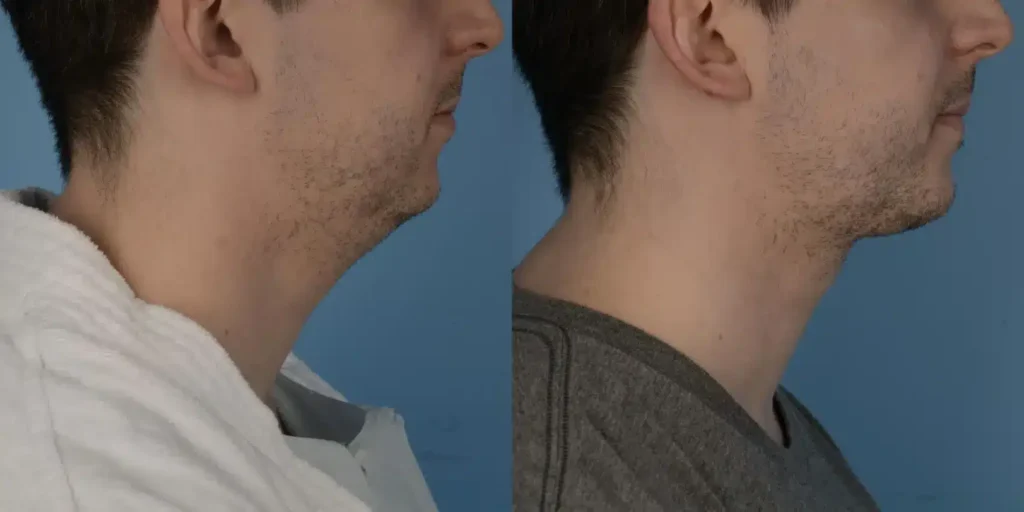
Recovery depends on the procedure’s extent, the patient’s health, and whether multiple techniques are combined. Many patients can return to desk work or other non-strenuous activities within approximately one to two weeks. This is a general estimate, not a guaranteed recovery period.
Bruising and swelling are common initially. Residual swelling can take several weeks or months to resolve fully.
Potential complications include:
- Bleeding or hematoma.
- Infection.
- Temporary or persistent numbness.
- Delayed wound healing.
- Nerve injury.
- Unfavorable scarring.
- Contour irregularities or asymmetry.
Surgeons often place incisions in less noticeable areas, but scars cannot be guaranteed to disappear.
The American Society of Plastic Surgeons’ neck lift recovery guidance explains the importance of following postoperative instructions about head elevation, bandages, medication, and activity restrictions.
Do not apply ice directly to the neck following a lift unless your surgeon specifically instructs you to do so. Ice may compromise blood flow to healing tissue.
Who Should Consider Surgery?
A surgical approach may be appropriate when:
- Excess tissue hangs visibly beneath the jaw.
- Prominent folds remain after significant weight loss.
- Vertical neck bands contribute to the contour.
- Liposuction alone would leave substantial laxity.
- Non-surgical treatments are unlikely to provide the desired improvement.
An examination should assess fat distribution, tissue quality, muscle condition, facial proportions, medical history, and recovery expectations.
A neck lift may produce more substantial correction, but it is not necessary for every patient with mild sagging.
How to Choose the Right Chin Tightening Approach
The treatment decision starts by separating three concerns: excess fat, tissue laxity, and muscle-related banding. A patient may have one of these concerns or a combination.
For information about related facial treatments, read the best skin tightening procedures for the face and body.
Assess Skin and Fat Levels
Mild laxity
Skincare, sun protection, and selected non-surgical treatments may improve texture and firmness. Changes are generally subtle.
Moderate laxity
Ultrasound or radiofrequency may provide noticeable but limited tightening over several months.
Localized fat with good elasticity
Kybella or liposuction may reduce fullness and improve the contour. Neither procedure directly removes hanging tissue.
Prominent platysma bands
Botox Cosmetic may temporarily reduce muscle-related bands. Consider surgical muscle tightening when structural changes are more significant.
Severe laxity or hanging tissue
A neck lift may be more appropriate when the primary problem is excess tissue rather than fat alone.
Compare Options
| Treatment | Main Concern | Expected Results | Recovery or Downtime | US Cost Information |
|---|---|---|---|---|
| Skincare and home care | Dryness, fine lines, prevention | Subtle improvements with ongoing maintenance | Usually none | Varies by product |
| Ultrasound or noninvasive RF | Mild to moderate laxity | Gradual, modest tightening | Usually minimal | Varies by device and sessions |
| Laser resurfacing | Wrinkles, texture, some laxity | Variable improvement depending on laser depth | Minimal to 1–2+ weeks | Varies by procedure |
| Kybella | Localized submental fat | Gradual fat reduction over treatment sessions | Swelling and tenderness, sometimes prolonged | Varies by number of sessions |
| Botox Cosmetic | Vertical neck bands | Temporary reduction in muscle-related bands | Usually minimal | Varies by treatment dose |
| Chin liposuction | Localized fat | Improved contour after swelling resolves | Several days to 2 weeks for many patients | $3,000–$5,500* |
| Neck lift | Significant laxity and muscle changes | More substantial, long-lasting contour improvement | Often 1–2 weeks before non-strenuous work | $7,500–$13,000* |
*The surgical figures represent projected US surgeon or physician fee ranges from the American Society of Plastic Surgeons' 2024 statistics report, page 28. They are not complete patient prices and may exclude anesthesia, facility charges, and other expenses.
Actual costs depend on the provider, geographic market, treatment complexity, and whether procedures are combined.
Results, Budget, and Time
Treatments differ in how quickly improvements develop, how much downtime is required, and whether maintenance is necessary. Non-surgical procedures generally involve less recovery, but their effects are more limited and may require additional sessions.
Surgical correction usually has a higher upfront cost and requires more recovery time. It may provide more substantial improvement when loose tissue is the primary concern.
When evaluating cost, compare the full treatment plan rather than individual session prices. For broader information about maintaining facial appearance, explore facial rejuvenation treatments and skin rejuvenation tips.

When to Consult a Specialist
Consider a professional evaluation when:
- Loose folds remain after weight stabilizes.
- Home care has not provided meaningful improvement.
- You cannot tell whether fullness comes from fat, laxity, or muscle changes.
- You want to compare non-surgical treatment with a neck lift.
- You need a realistic estimate of recovery, risks, and expected results.
Sudden neck swelling, a new lump, pain, or difficulty swallowing should be evaluated by a doctor rather than treated as an ordinary cosmetic concern.
A consultation can help identify the underlying cause and establish whether a particular treatment is suitable.
Still Deciding?
Start by identifying whether your main concern is mild looseness, unwanted fat, visible muscle bands, or substantial hanging tissue.
If your concern is mild, non-surgical options may be sufficient. More advanced laxity may require surgery to achieve meaningful correction.
Dr. Joel Kopelman has decades of experience in facial rejuvenation and cosmetic facial procedures.
Schedule a consultation with Dr. Kopelman today to receive a customized plan tailored to your needs and goals.