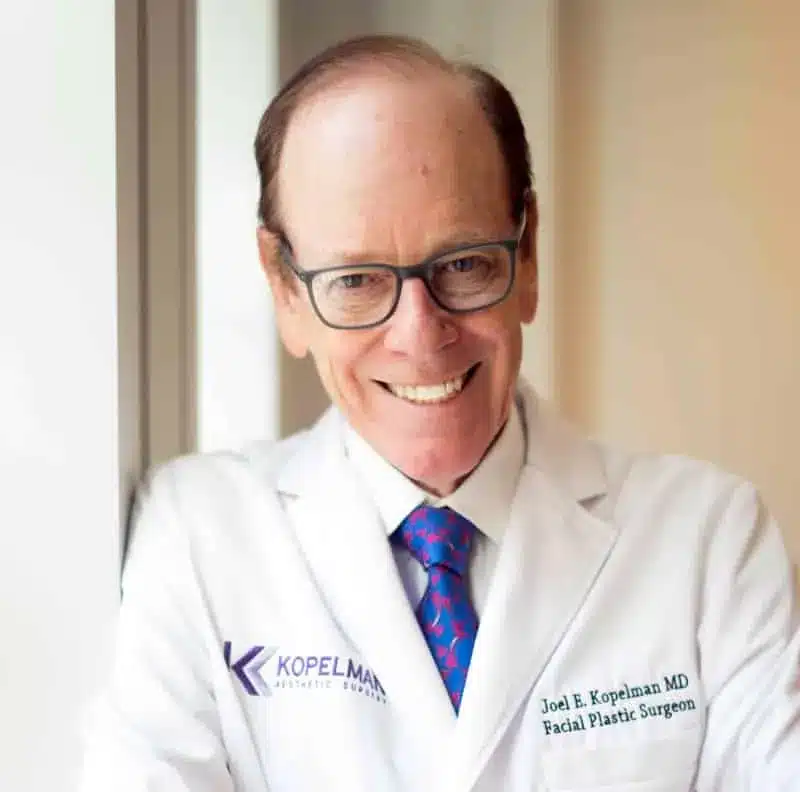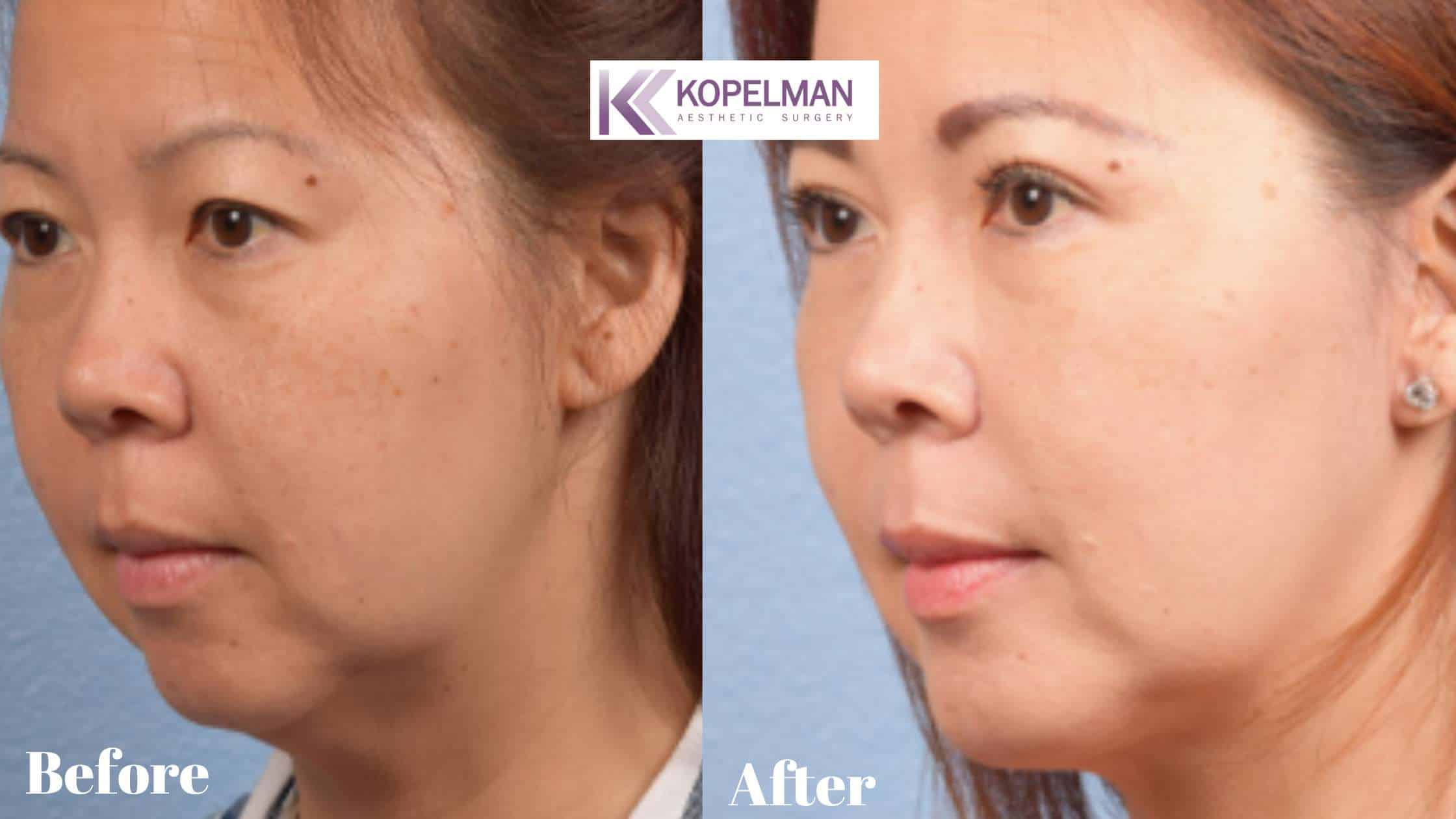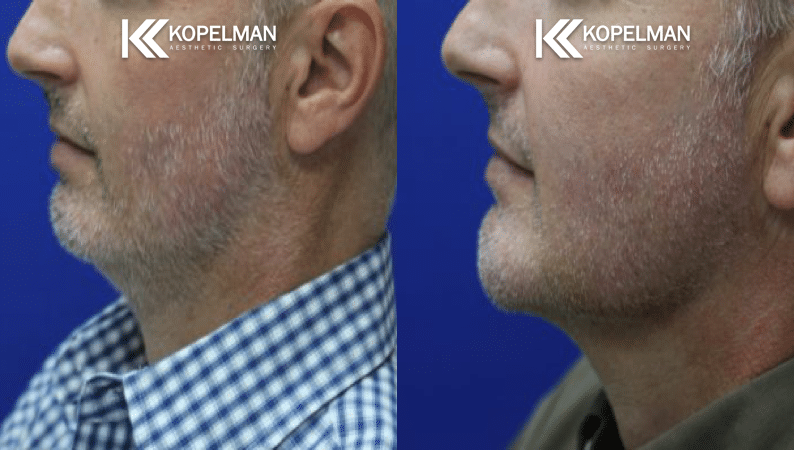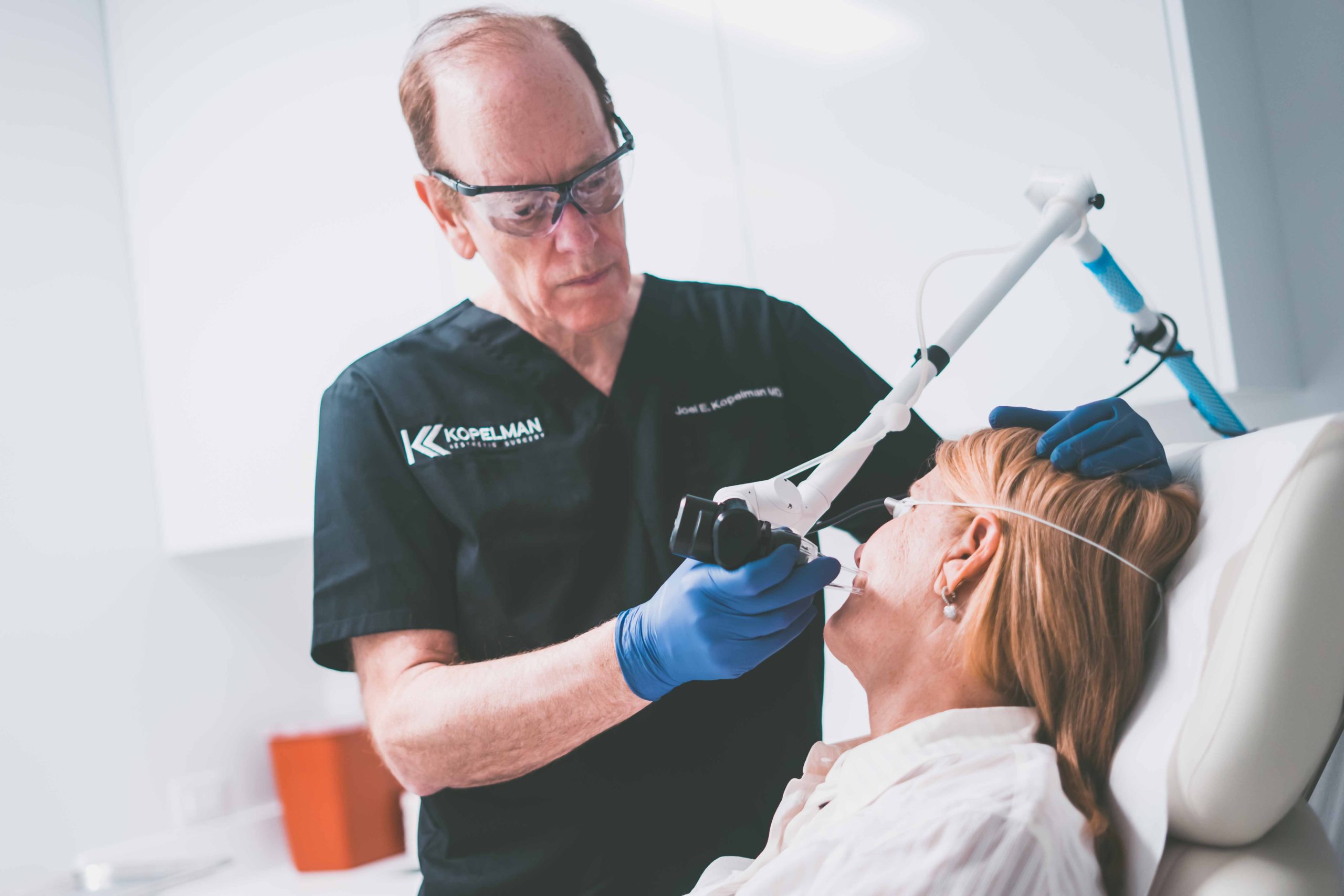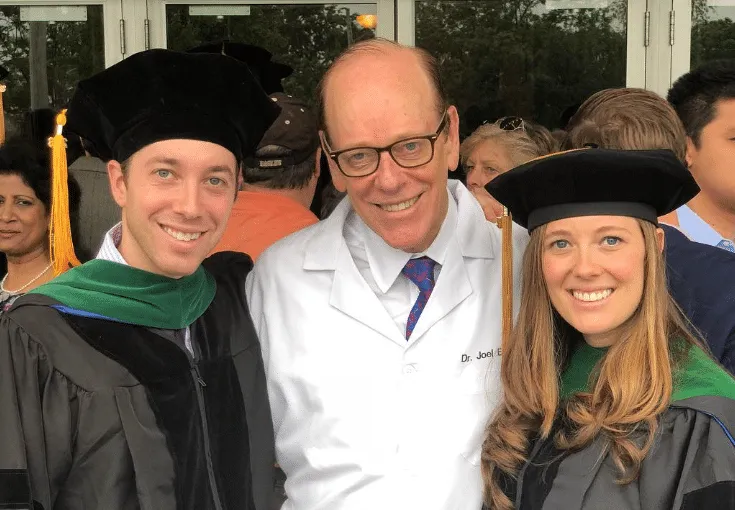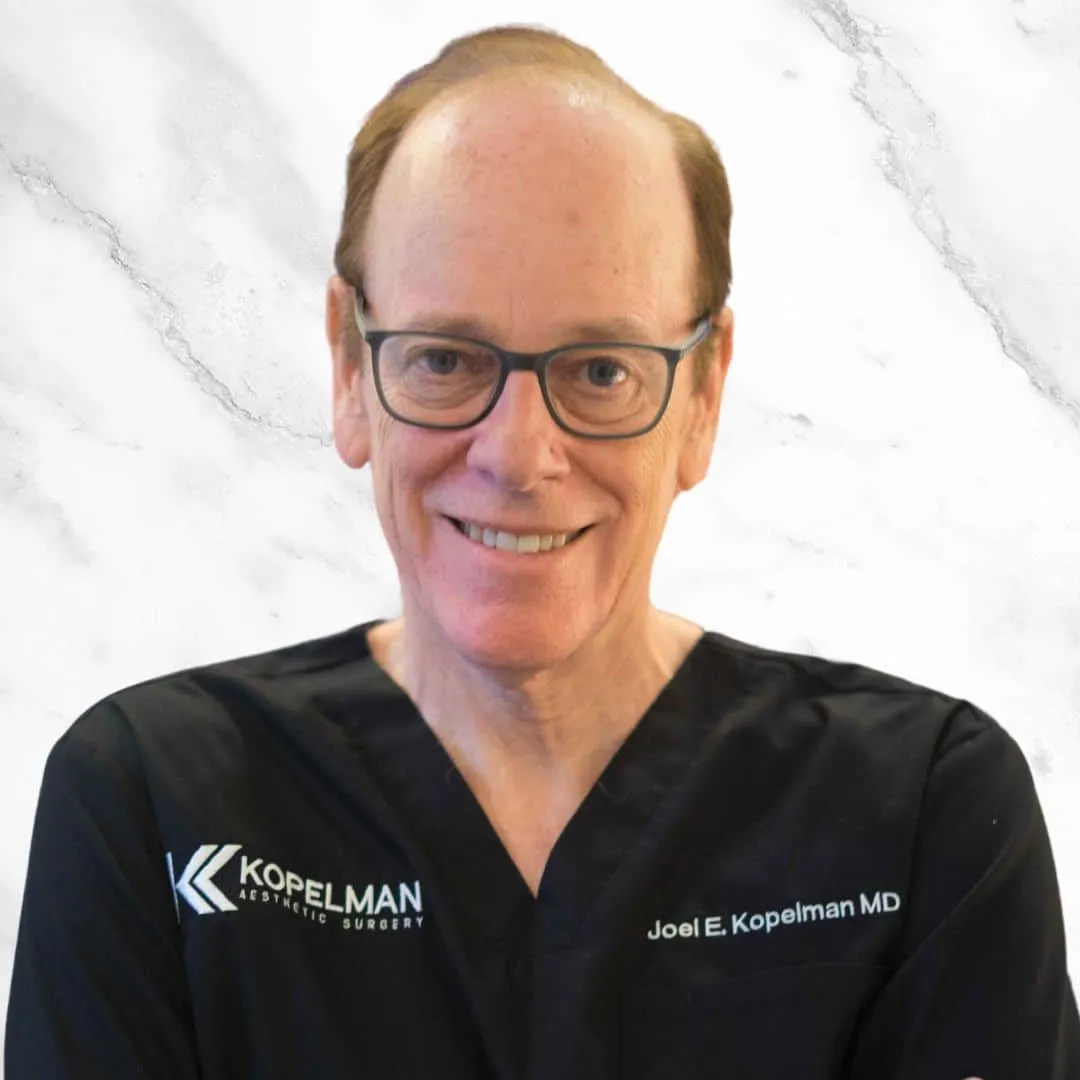

Dr. Joel Kopelman has performed laser resurfacing for more than three decades and has directed professional training courses for other physicians on the technique. He treats patients at offices in New York City, New Jersey and Palm Beach.
Results depend on the laser type, treatment depth, skin tone, healing response, and the judgment of the operator. Conservative settings and correct wavelength selection matter more than the machine’s brand name.
Laser Skin Resurfacing at a Glance
| Treats | Fine lines and wrinkles, etched lines around the mouth and eyes, acne and surgical scars, sun damage, uneven pigmentation, enlarged pores, dull texture |
|---|---|
| Procedure type | Nonsurgical, performed in office |
| Session length | 30 to 60 minutes for most facial treatments, longer for full-face ablative work |
| Anesthesia | Topical numbing cream for lighter sessions, local anesthetic injection for deeper resurfacing |
| Pain level | Mild to moderate, described as heat or a light snapping sensation |
| Downtime | None to a few days for non-ablative, one to two weeks of visible healing for full-field ablative |
| Sessions | One for heavy ablative correction, three or more for non-ablative protocols |
| Results visible | Within days for surface texture, roughly three months for the full collagen response |
| Results duration | Years, with sun protection and maintenance |
| Best season | Fall and winter, when sun exposure is easier to limit |
| Insurance | Not covered when performed for cosmetic reasons |
How Laser Resurfacing Works
A resurfacing laser delivers short, pulsating beams of light that are absorbed by water or pigment in the skin. That absorption creates controlled micro-injury, which activates the skin’s own repair and remodeling process.
Modern devices are fractional, meaning they treat microscopic columns of tissue while leaving the skin between those columns intact. Untreated tissue acts as a reservoir of healthy cells, which is why healing is faster than it was with the single-setting systems of the 1990s.
Epidermal resurfacing works at the surface. It lifts away sun-damaged cells, refines rough texture, evens out tone, and is where most pigment correction happens.
Dermal resurfacing delivers energy deeper, into the collagen layer. That deeper stimulation is what firms the skin and softens lines etched into it, rather than sitting on top of it.
Ablative vs Non-Ablative Laser Resurfacing
Almost every decision about a treatment plan comes back to this choice. Ablative devices vaporize tissue, thereby creating a controlled wound. Non-ablative devices heat tissue without removing it, so the surface stays intact.
Neither is universally better. Ablative treatment delivers greater correction per session but requires more recovery in return. Non-ablative treatment fits a schedule that cannot absorb a week of visible healing.
| Factor | Ablative | Non-ablative |
|---|---|---|
| Common wavelengths | Erbium:YAG 2940 nm, CO2 10,600 nm | 1540 nm, 1550 nm, 1927 nm thulium, Nd:YAG |
| Effect on skin | Vaporizes the epidermis and reaches the superficial dermis | Heats and coagulates tissue, surface layer stays intact |
| Correction per session | Strongest, particularly for etched lines | Moderate, builds cumulatively |
| Typical downtime | One to two weeks of visible healing | A few hours to a few days of pinkness or flaking |
| Sessions needed | Often one | Usually three or more |
| Prolonged redness | Common, can persist several weeks after heavy treatment | Uncommon and short-lived |
| Deeper skin tones | Possible with erbium and conservative settings, higher pigment risk with CO2 | Generally better tolerated, particularly thulium 1927 nm |
| Best suited to | Deep perioral and periorbital lines, significant photodamage, pronounced acne scarring | Early aging, pigment, mild texture change, maintenance |
The Lasers Used in Dr. Kopelman’s Practice
Dr. Kopelman uses erbium: YAG for full-field ablative work and a fractional erbium-glass laser for lighter sessions. He was one of the earliest adopters of erbium technology in the United States and has published on it.
He favors erbium over CO2 for two reasons. Recovery is meaningfully shorter, and the treatment endpoint is easier to read during the procedure, which reduces the risk of going deeper than intended.
For pigment, IPL is used to address diffuse discoloration, telangiectasia, and acne-related redness. For superficial wrinkles and texture, a fractionated approach through Fraxel is often the better match.
Device selection is not a preference exercise. The wavelength, energy level, and number of passes are chosen based on your skin type, your specific concern, and how much recovery time you can realistically accommodate.
What Laser Resurfacing Treats
- Fine lines and wrinkles, including etched lines around the mouth and eyes
- Acne scarring, including rolling and ice pick scars
- Surgical scars, C-section scars and thickened scars
- Sun damage, age spots and freckling
- Uneven pigmentation and melasma
- Enlarged pores and rough texture
- Loss of elasticity in eyelid skin
- Dull skin with no single obvious flaw
Some concerns belong elsewhere. Lines caused by muscle movement respond to a neuromodulator. Volume loss responds to filler or fat grafting; you can review the case for that approach in this overview of skin resurfacing alternatives.
Significant sagging is a surgical problem. No energy-based device replaces a facelift or a neck lift, and any provider who suggests otherwise is overselling the technology.
Who Is a Good Candidate
Good candidates are in reasonable general health, have realistic expectations and can commit to strict sun protection during healing. Fall and winter scheduling makes that commitment far easier to keep.
Certain factors can change the plan or delay it: recent isotretinoin use, a history of keloid scarring, an active skin infection in the treatment area, or recent sun exposure or sunless tanning within two to four weeks.
Any stubborn pigmented spot should be evaluated before a laser touches it. A lesion that is irregular in size, color, or border needs a dermatologic examination first, because treating an atypical lesion delays a diagnosis that matters.
Laser Resurfacing and Skin Tone
Skin tone is the single most important variable in device selection. All six Fitzpatrick types can be treated safely, but the settings that work well on fair skin can cause pigment problems on deeper complexions.
Deeper skin tones carry a higher risk of post-inflammatory hyperpigmentation. Managing that risk means maintaining conservative energy levels, making fewer passes, choosing wavelengths carefully, and having a longer conversation before treatment than after.
Thulium 1927 nm and erbium resurfacing are both used on darker skin types with appropriate care. CO2 carries more risk of pigment loss and is generally the wrong first choice for these patients.
Diligent sun protection after treatment is not optional for any skin tone, and it is decisive for deeper ones. A zinc or titanium sunscreen at meaningful concentration, applied properly and reapplied every two hours, protects the result.
What the Procedure Is Like
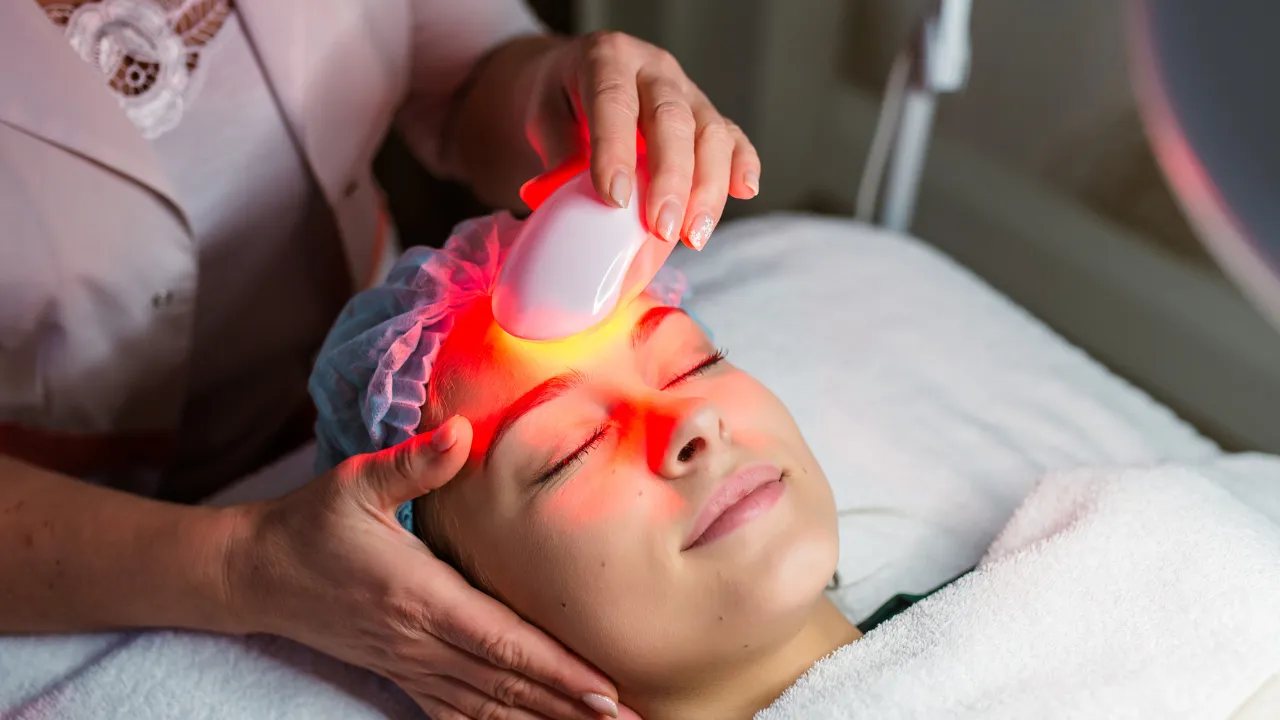
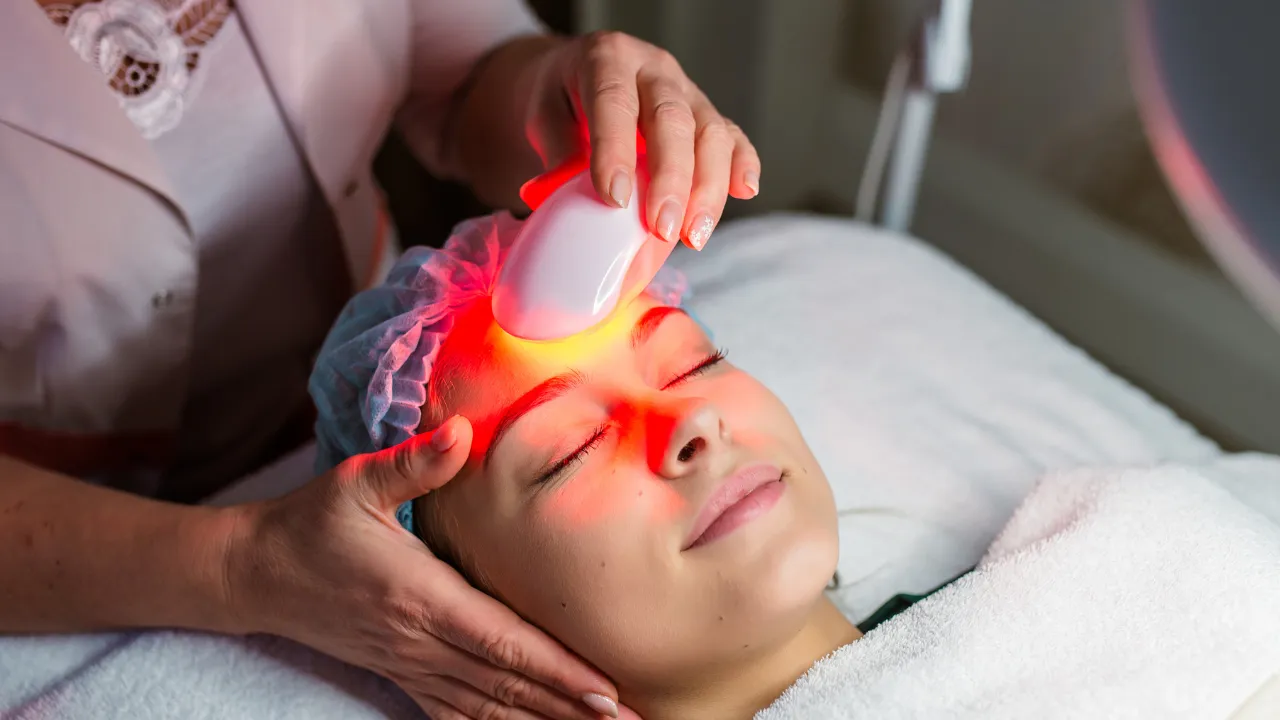
Treatment begins with cleansing and application of topical numbing cream, typically about an hour before a lighter session. Deeper ablative resurfacing uses local anesthetic injections instead.
You wear protective eye shields throughout. Dr. Kopelman passes the handpiece across the treatment area, and most patients describe heat, mild pressure or a light snapping sensation rather than sharp pain.
A single scar or a small zone such as the upper lip takes minutes. A full-face session generally runs 30 to 60 minutes, and full-field ablative work takes longer because the endpoint is assessed continuously as passes are made.
Immediately afterward, the skin is warm, pink, and slightly swollen. Written aftercare instructions, ointment, and sun protection guidance are reviewed before you leave.
Recovery Timeline
| Timeframe | Non-ablative or fractional | Full-field ablative |
|---|---|---|
| Days 1 to 2 | Pink, warm, mildly swollen, makeup usually possible | Weeping and swelling, ointment applied continuously, stay home |
| Days 3 to 7 | Fine flaking and peeling if a superficial wavelength was used | Crusting resolves, new pink skin emerges, most patients return to work near the end of this window |
| Weeks 2 to 4 | Skin normalized, brightness and smoothness apparent | Pink phase continues, camouflage makeup usually tolerated |
| Weeks 4 to 10 | Additional sessions scheduled as needed | Erythema fades gradually, longest in fair, flush-prone or rosacea-prone skin |
| Month 3 | Full collagen response visible | Full collagen response visible, final result assessed |
Post-treatment redness is an expected part of healing, not a complication. It fades on its own, and treating it aggressively with topical steroids risks interfering with the remodeling you paid for.
Combining Resurfacing With Other Procedures
Resurfacing addresses skin quality. Surgery addresses position and volume. Combining them produces a more complete result than either alone, which is why the two are frequently staged together.
It pairs naturally with eyelid surgery, where lifting the eyelid does nothing for crepey skin texture around it. It is also commonly performed alongside facelift surgery for patients whose sun damage would otherwise remain visible on newly repositioned skin.
Radiofrequency microneedling penetrates deeper than surface-level lasers and is often combined with resurfacing for acne scarring and mild laxity. Related energy-based options for the body are covered in this overview of laser surgery approaches.
Platelet-rich plasma is sometimes applied after resurfacing to support healing. If you want to discuss whether PRP fits your plan, it is worth raising during consultation.
Cost of Laser Resurfacing
Pricing is driven by the size of the treatment area, the wavelength or combination used, the number of passes performed, and the number of sessions your skin actually needs. A single scar costs considerably less than a full-face session.
Packages of non-ablative sessions are usually priced differently from a one-off treatment. Because resurfacing is cosmetic, insurance does not cover it.
| Factor | Effect on cost |
|---|---|
| Treatment area | A single scar or the perioral zone sits at the low end, full face and neck at the high end |
| Laser type | Full-field ablative erbium is priced above fractional and non-ablative sessions |
| Depth and passes | More passes and deeper settings raise both price and recovery time |
| Number of sessions | Non-ablative plans are quoted as a series rather than per visit |
| Combined procedures | Resurfacing performed with eyelid surgery or a facelift is quoted within the surgical plan |
| Price range at this practice | [CLIENT TO CONFIRM: laser resurfacing pricing by area and session] |
| Consultation | [CLIENT TO CONFIRM: consultation fee] |
Choosing Where to Have Treatment
Patients searching for laser skin resurfacing near me find medical spas, dermatology offices, and surgical practices offering similar-sounding treatments on very different equipment, operated by people with very different training.
Ask which specific device and wavelength will be used on your skin and why that one was selected for your skin type. A provider who cannot answer that precisely is not choosing settings; they are running a default protocol.
Ask to see the provider’s own before-and-after photographs rather than the manufacturer’s marketing images. Ask who physically operates the device during your session and what their credentials are.
Complications from resurfacing stem more often from settings and judgment than from the machine. That is the entire reason experience matters here.
Laser Resurfacing Questions and Answers
No. Most patients report only mild to moderate discomfort.
Most people return to light activities within 7 to 10 days.
Full facelifts involve the most discomfort due to deeper tissue work, but it remains manageable.
Sudden, severe, or spreading pain—especially with swelling or fever—should be reported to your surgeon.