
Treatment focuses on calming inflammation, repairing the protective barrier, and avoiding the trigger. Care usually starts with gentle cleansing, a fragrance-free moisturizer, cool compresses, and stopping any product that stings.
If that isn’t enough, a clinician may prescribe a short course of a low-strength topical steroid or a steroid-free anti-inflammatory cream made for delicate areas.
This common condition, sometimes called eye eczema, usually starts with red, itchy skin.
At Kopelman Aesthetic Surgery, Dr. Joel Kopelman uses decades of experience to guide patients toward safe, effective care.
Key Takeaways
- Eyelid dermatitis causes redness, itching, and swelling around the eyes. Allergens, irritants, atopic eczema, and seborrheic dermatitis are the usual causes.
- Contact dermatitis is the most common cause, and patch testing often identifies an allergen.
- A Mayo Clinic study found metals, shellac, preservatives, topical antibiotics, fragrances, acrylates, and surfactants as the top allergen groups.
- Dr. Kopelman recommends using low-strength treatments with care to avoid side effects like thinning.
- Preventive steps include avoiding known triggers, using safe cosmetic products, and seeking medical advice for persistent symptoms or signs of infection.
- See a clinician early, before symptoms get severe.
Expert Advice From Dr. Kopelman
“Eyelid dermatitis is tricky because eyelid skin is very delicate,” says Dr. Joel Kopelman. “We need to use gentle but effective treatments to calm the skin without causing more harm.”
Understanding Eyelid Dermatitis and Eczema
What Is Eyelid Dermatitis and Who Gets It?
Eyelid dermatitis, also called eyelid eczema or periocular dermatitis, is a rash caused by irritation, allergies, or underlying eczema. Can you get eczema on your eyelids? Yes.
Eyelid skin is the thinnest on the body, about 0.55 mm, and it comes into contact with many products and allergens carried on your hands (Mayo Clinic study). The rash can affect the upper lids, the lower lids, or both. It often shows up as dermatitis on the eyelids or eczema under the eyes.
Anyone can develop it, but your risk is higher if you have sensitive skin, atopic eczema, asthma, or hay fever.
About 15% to 20% of people get contact dermatitis somewhere on the body at some point, according to Cleveland Clinic, which says the share affecting the eyelids is unknown.
In a Mayo Clinic patch-test study of 215 patients with eyelid dermatitis, 85.6% were women. The authors suggest nickel in makeup may play a part.
Why Did I Suddenly Get Eyelid Eczema?
A new product, exposure to allergens like pollen or dust, or a flare of an existing condition can all cause sudden eyelid eczema. It can also come from something you’ve used for years.
Allergies develop with repeated contact, so a rash may appear 1 to several days after you use a familiar product. That delay makes the cause hard to spot.
Wondering about stress eczema on eyelids? Stress is a common eczema trigger, including on the eyelids, and it can worsen itching. Changes in the immune system can also trigger flares.
What Causes Eyelid Dermatitis? Stress, Allergens, and Other Triggers
Irritants, allergens, and underlying conditions such as atopic eczema can cause eyelid dermatitis, and stress can trigger flares. Common triggers include:
- Soaps, detergents, or preservatives.
- Makeup and perfumes.
- Atopic eczema flare-ups.
- Seborrheic dermatitis on the eyelid, which may cause oily or scaly patches.
- Stress or immune system changes.
- Weather extremes, including heat, cold, wind, and very dry air.
In the Mayo Clinic study, seven allergen groups caused the most reactions. Those patients were referred for patch testing, so the table shows allergy patterns, not eyelid dermatitis in everyone.
| Allergen Group | Top Examples (Positive Rate) | Where You'll Find It |
|---|---|---|
| Metals | Nickel (21.6%), cobalt (10.7%), gold (10.6%) | Glasses frames, eyelash curlers, jewelry, some eye shadows |
| Shellac | Shellac (16.4%) | Mascara, lipstick, tooth whitening strips |
| Preservatives | Thimerosal (13.4%), methylisothiazolinone (10.6%), BAK (4.7%) | Eye drops, shampoos, lotions; thimerosal is rarely used today |
| Topical antibiotics | Neomycin (10.7%), bacitracin (7.4%) | Antibiotic eye ointments and creams |
| Fragrances | Balsam of Peru (9.8%), propolis (4.7%) | Perfume, soap, shampoo, cosmetics |
| Acrylates | HEMA (5.9%), methyl methacrylate (3.3%) | Gel and artificial nails, nail polish |
| Surfactants | Amidoamine (4.2%), oleamidopropyl dimethylamine (4.2%) | Tear-free baby shampoo, lid scrubs, liquid soap |
Checklist: Common Triggers to Avoid
- Fragrance in skincare or cosmetic products.
- Preservatives like benzalkonium chloride (BAK), methylisothiazolinone, and formaldehyde.
- Nickel in glasses and eyelash curlers.
- Dust, pollen, and other airborne allergens.
- Irritating substances, including harsh soaps and cleaning agents.
- Shellac in mascara and acrylates in gel or artificial nails.
- False eyelashes and lash glue, contact lens solution, essential oils, and latex goggles.
Identifying Types and Symptoms
| Type | What It Looks Like | Common Triggers | First-Line Care |
|---|---|---|---|
| Atopic eczema | Dry, red, itchy; may thicken with rubbing | Weak barrier, stress, allergens | Fragrance-free moisturizer; short course of a mild steroid or steroid-free cream |
| Irritant contact | Red, scaly, stinging | Soap, chlorine, cold, rubbing | Remove the irritant; gentle care |
| Allergic contact | Red, itchy, swollen; appears one to several days after exposure | Metals, preservatives, fragrance, shellac | Patch test; lifelong allergen avoidance |
| Seborrheic | Oily, yellowish scale near lashes and brows | Yeast-related irritation on oily areas | Antifungal cream, sometimes with a low-strength steroid |
Atopic Eczema on the Eyelids
Atopic eczema on the eyelids causes red, flaky, itchy patches when a weak skin barrier meets an overactive immune system. Eczema around eyes can also extend slightly below the lower lash line.
Contact Dermatitis on the Eyelid: Irritant vs. Allergic
Contact dermatitis on the eyelid is a reaction to something that touches the skin, and it comes in two forms. The two look almost the same, so the cause matters more than the appearance.
- Irritant contact dermatitis results from direct damage to the skin barrier, not an allergic reaction. Common causes include soap, chlorine from swim goggles, cold wind, and rubbing.
- Allergic contact dermatitis is a delayed immune reaction that peaks 24 to 48 hours after exposure, according to the Mayo Clinic study. A patch test confirms the allergen.
Across the body, about 80% of contact dermatitis is irritant, according to Cleveland Clinic. Mayo Clinic researchers describe allergy as the most common cause of eyelid dermatitis.
Your lids can also react to something your hands touched first. Nail polish, gel nails, hair dye, and nickel can transfer through rubbing, even when your fingers show no rash (DermNet).
Eyelid Eczema vs Seborrheic Dermatitis
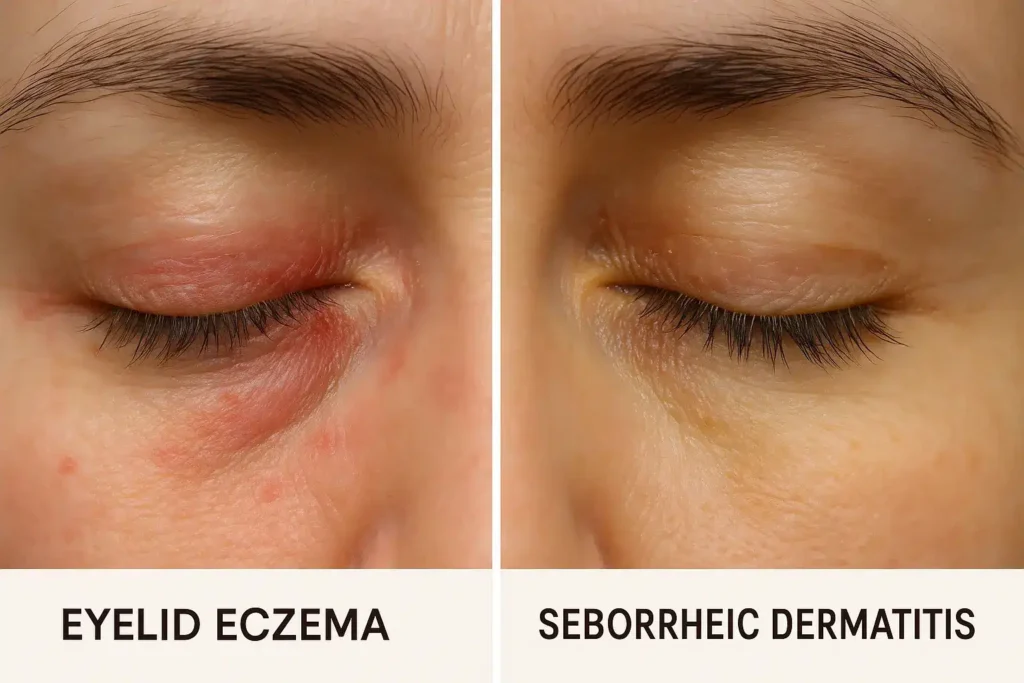
Eyelid eczema tends to be dry and itchy. Seborrheic dermatitis often looks oily, with yellowish, scaly patches, especially near the lash line; doctors may recommend antifungal treatments for eyelids in these cases.
Seborrheic Dermatitis Under the Eyes
Seborrheic dermatitis under the eyes often comes with patches on the eyebrows or beside the nose, because the rash favors oily areas. Flakes along the lashes are called seborrheic blepharitis, and eye ointments and drops for blepharitis are available for the lash line.
Look for greasy, yellow-white flakes over pink skin rather than the dry cracks of eczema. Itching is often mild.
A short course of antifungal cream, sometimes with a low-strength steroid, usually brings it under control. Because it is chronic and recurring, most people need a simple maintenance routine.
Photos of Eyelid Dermatitis: What It Looks Like
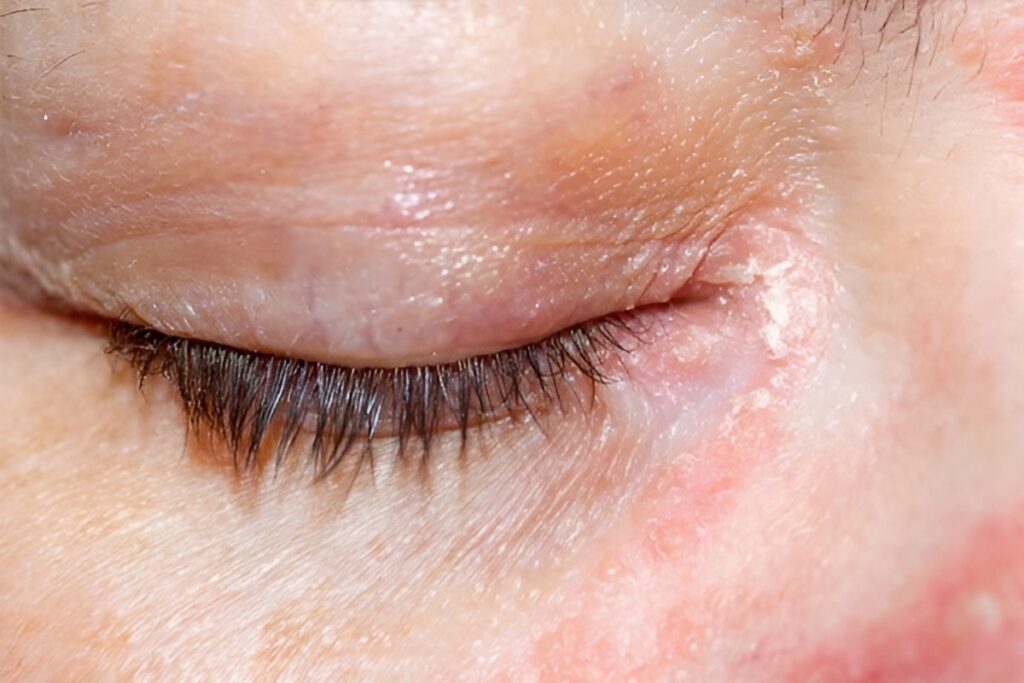
Eyelid dermatitis looks like red, swollen skin with small cracks or scaly patches. Severe cases may ooze fluid or form crusts, and long-lasting cases look thicker and more lined. Eczema near the eye corners can also happen because that area gets rubbed often.
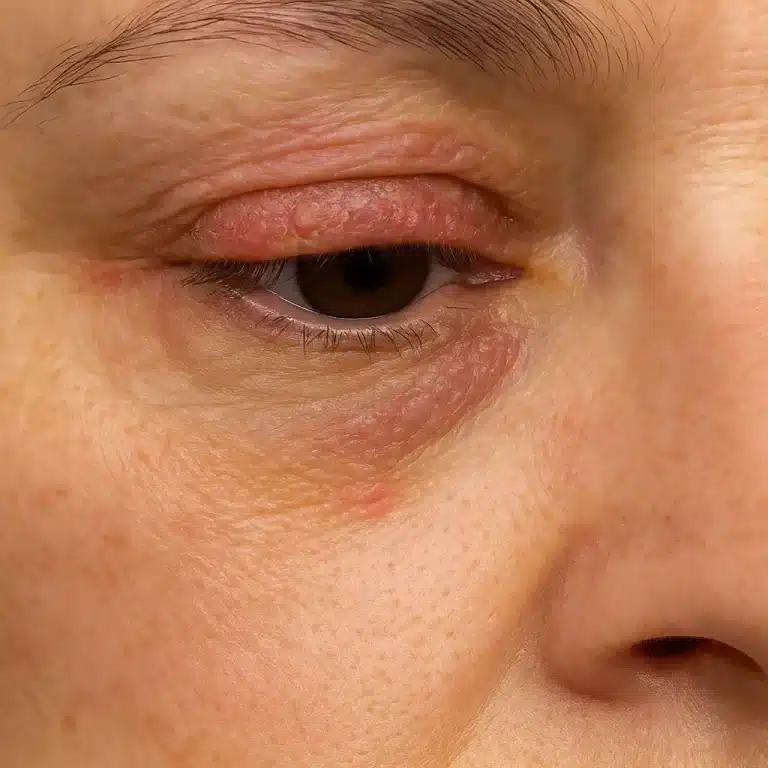
Dry Patch on Eyelid: Is It Eczema?
A dry patch on the eyelid is often eczema or irritation, especially if it itches and comes and goes.
For a dry, itchy patch, try a fragrance-free ointment and stop any new products. If it doesn’t improve in one to two weeks, or if it looks oily and yellow-scaly, get it checked.
A patch with lash loss, bleeding, or crusting that doesn’t heal needs an exam. Eyelid skin cancer, most often basal cell carcinoma, favors the lower lid and can look like a sore that won’t heal (ASOPRS).
How Long Does Eyelid Dermatitis Last?
With treatment, irritant reactions often ease in 1 to 2 days, and allergic reactions in 2 to 3 days, according to Cleveland Clinic. Learn more about how long eyelid dermatitis lasts.
Chronic forms may require long-term management to prevent flare-ups and help eyelids heal. If it lingers, the lids can thicken and develop deeper creases, and some people are left with darker patches, which can cause dark circles under the eyes.
If you want to get rid of eczema on your eyelids for good, treatment clears individual flares, but lasting control comes from identifying and avoiding your trigger.
How Do You Treat Eczema on Your Eyelids?
Most people need a mix of trigger avoidance, gentle daily care, and sometimes a short course of prescription cream.
Diagnostic Tests for Eyelid Dermatitis
Patch tests check for allergens. A dermatologist or allergist tapes small amounts of potential triggers to your back for about 48 hours, then checks the spots a few days later.
A patch test finds allergic reactions to specific substances, and a negative result can point toward an irritant cause. Ask for your own eye drops and cosmetics to be tested too.
Your primary care provider may be able to start treatment.
Medical Eyelid Dermatitis Treatments Explained
Low-strength steroid creams and calcineurin inhibitors are common treatment options for eyelid eczema. Doctors often use a mild steroid such as hydrocortisone 1% for a short course, or a steroid-free option such as tacrolimus ointment or pimecrolimus cream. Used briefly and as directed, they reduce redness and swelling.
For the lids, tacrolimus is often preferred because pimecrolimus cream contains propylene glycol, a possible allergen. Crisaborole (Eucrisa) is another steroid-free option, though it also contains propylene glycol.
Severe flares sometimes need a short course of oral steroids. Dr. Kopelman advises using any of these only as directed by a specialist.
Important Considerations for Steroid Use
Overusing steroids can thin the lids and raise the risk of glaucoma and cataracts. People on long-term steroids need regular eye exams and pressure checks.
If you react to steroid eye drops, ask about dexamethasone or rimexolone. These cause allergic reactions less often than prednisolone or fluorometholone.
Best and Safest Creams for Eyelid Eczema
Look for fragrance-free, hypoallergenic moisturizers. The American Academy of Dermatology recommends petroleum jelly for dry, flaky eyelids and notes that ointments tend to be less irritating than lotions.
Oily, yellow, scaly patches are the exception, since emollients can worsen seborrheic dermatitis.
Products tested for use near eyes are best. Patch tests may help confirm a cream won’t irritate you.
The Contact Allergen Management Program (CAMP), which dermatologists can access, does the same.
Signs of Skin Infection to Watch For
Watch for these signs of infection:
- Yellow crusts or fluid leaks.
- Swelling that gets worse.
- Pain, heat, or redness spreading beyond the eyelid.
- Tender bumps at the base of the lashes, which can signal eyelash folliculitis.
- Clusters of painful blisters, which can signal a viral infection.
Call your doctor promptly if you notice any of these.
Eyelid Dermatitis Treatment at Home
- Apply a cool compress to soothe itching.
- Use gentle cleansers or plain water, and avoid irritating substances.
- Keep the area hydrated with safe moisturizers.
- Skip eye makeup until the flare clears.
- Touch your lids only with clean hands.
These steps also support any prescription you use.
How to Treat Dermatitis Under the Eyes
Under eye dermatitis treatment follows the same rules as lid care, but concealer, eye cream, and sunscreen all land here, so check those first.
- Stop eye creams and concealers while the rash is active, then bring them back one at a time.
- Choose a fragrance-free sunscreen made for sensitive skin, since sunscreen is a known trigger.
- Apply a thin layer of bland ointment at night.
- Ask a dermatologist about a steroid-free prescription if the rash keeps returning.
If dermatitis under the eye keeps returning after product changes, ask about a patch test.
What Cream Can I Use on My Eyelids?
Only use creams approved for lid use, including prescription or gentle over-the-counter products. Add one new product at a time, so you can tell which one causes a reaction.
Preventing Flare-Ups and Protecting Sensitive Skin
Daily Care and Long-Term Prevention Tips
- Choose non-irritating skincare and makeup.
- Avoid rubbing or scratching your eyelids.
- Identify and avoid allergens or irritants. After a positive patch test, avoid them for life.
- Wear wraparound glasses in windy, cold, or dusty conditions.
- Ask for preservative-free eye drops if you use drops every day.
When to See a Specialist for Eyelid Dermatitis
See a doctor if symptoms last more than two weeks or keep coming back. A dermatologist or allergist can run patch tests and prescribe treatment.
See an experienced eyelid doctor if the rash keeps returning or affects your lashes or lid position. Dr. Kopelman emphasizes treating eyelid eczema early to prevent complications.
Makeup and Skincare Tips for Eyelid Dermatitis
Dr. Kopelman suggests avoiding perfumes, preservatives, and harsh chemicals. Mineral-based makeup is often gentler.
Some makeup pigments, such as green shades, contain chromium compounds, so check labels if you’ve tested positive for a metal allergy.
Quick Checklist for Safe Makeup Use
- Patch test all new products.
- Replace makeup every 3–6 months, as Dr. Kopelman recommends.
- Choose fragrance-free, ophthalmologist-tested brands.
- Check mascara labels for shellac.
- Restart eye makeup only after the flare clears.
Can Eyelid Dermatitis Lead to Eye Problems?
The rash itself doesn’t damage the eye, but scratching can make the eye red and sore. Left untreated, eyelid dermatitis may lead to infections or dryness. In severe cases, swelling can even affect vision.
Seek care if you notice:
- Redness or swelling that lasts more than two weeks.
- Pain or discharge from the eyes.
- Blurred vision or light sensitivity.
- Swelling so severe you can’t see. Go to the emergency room right away.
About Kopelman Aesthetic Surgery
Kopelman Aesthetic Surgery specializes in facial and eyelid treatments and has offices in New York, New Jersey, and Florida. Dr. Kopelman has decades of experience treating eyelid conditions, including contact dermatitis and atopic eczema.
If you’re struggling with eyelid dermatitis or need expert guidance on sensitive skin care, consider scheduling a consultation with Dr. Kopelman.
FAQs About Eyelid Eczema
Is eyelid dermatitis contagious?
No. It’s an inflammatory reaction, not an infection, so it can’t spread from person to person. Blepharitis is a separate issue, so see whether blepharitis is contagious if you have flakes along your lashes.
Does eyelid eczema run in families?
No, eyelid dermatitis isn’t hereditary. You can inherit a tendency toward asthma or a weaker skin barrier, which raises your risk.
Can food cause eyelid dermatitis?
Usually not. People often blame what they ate, but contact with an irritant or allergen is usually the cause.
Can I wear contact lenses if I’m allergic to acrylates?
Usually, yes. Contact lenses are made from cured acrylates, which don’t cause contact allergy the way nail products do.
Can eyelid dermatitis spread to the rest of my face?
Contact dermatitis stays where the trigger touched, so it doesn’t spread on its own. The same product can cause a rash on your cheeks or neck if it touches them.