

It’s temporary. Most cases settle within 3 to 6 weeks, and the rest fades as the toxin wears off, usually within 3 months. Small corrective injections can sometimes lift a dropped eyebrow sooner.
At Kopelman Aesthetic Surgery in New York, Dr. Joel Kopelman often sees patients worried about a dropped brow after injectable treatment. With decades of experience in facial plastic and oculoplastic surgery, he explains what causes it, how to tell it apart from a drooping eyelid, how to fix it, and how to prevent it.
“In my practice, I’ve seen patients recover from mild brow ptosis within 3–4 weeks with no intervention,” says Dr. Kopelman. “But for some, a tailored correction plan speeds up that recovery.”
What You Need to Know
- Signs usually appear 3-7 days after treatment.
- It happens when injection sites or doses over-relax the muscle that lifts the brows.
- Small corrective injections can lift a dropped brow. Eye drops only help when the eyelid itself has dropped.
- In FDA clinical trials for forehead lines, about 2% of patients developed brow ptosis.
Understanding the Issue
Why Eyebrows Drop After Botox
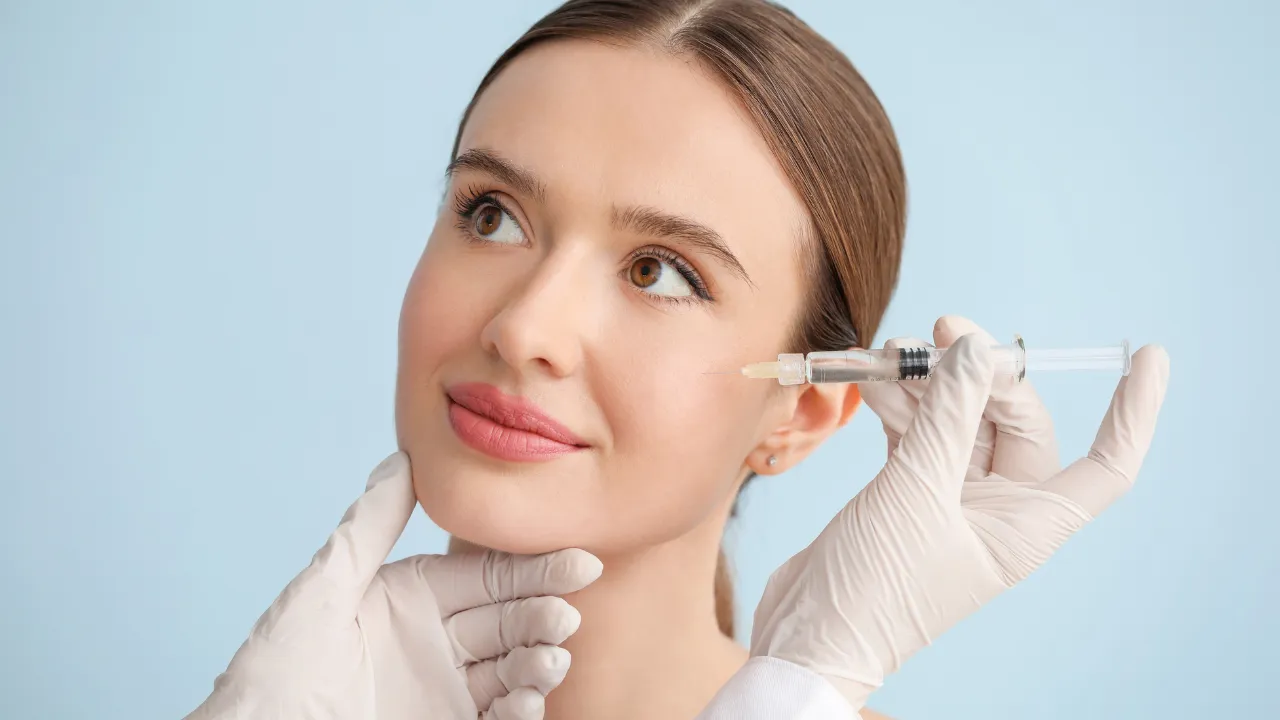
Can Botox make your eyebrows drop? Yes. A Botox eyebrow droop happens when the injection weakens the frontalis more than intended. The frontalis is the only muscle that lifts the brows, so once it’s over-relaxed, the brows sink.
Brow drop after Botox often results from:
- Injecting too low on the forehead, close to the brow
- Using a higher dose than needed
- Failing to adjust for a patient’s anatomy, such as a heavy brow or a forehead that already works hard to hold the brows up
Meanwhile, the muscles that pull the brows down, like the orbicularis oculi, corrugator, and procerus, keep working. With nothing opposing them, it can feel like Botox is pushing eyebrows down. In reality, the lifting muscle has lost the strength to hold them up.
Botulinum toxin smooths forehead wrinkles and frown lines by relaxing the muscles that create them. When it’s placed incorrectly, it can lower the brows or droop the eyelid if it spreads toward the eye. Clinicians call a lowered brow “brow ptosis,” which is a different problem from eyelid ptosis.
Even with proper technique, some patients react differently due to muscle tone, brow structure, or age.
Brow Droop or Eyelid Droop? How to Tell the Difference
These two problems look similar, but they involve different muscles and require different treatment.
- Brow droop comes from an over-relaxed frontalis. The whole eyebrow sits lower, and the forehead often feels heavy.
- Eyelid droop is true eyelid ptosis. It happens when toxin spreads to the levator, the muscle that opens the upper eyelid, which is why forehead Botox can cause droopy eyelids. The brow stays put, but the lid edge sits lower over the eye.
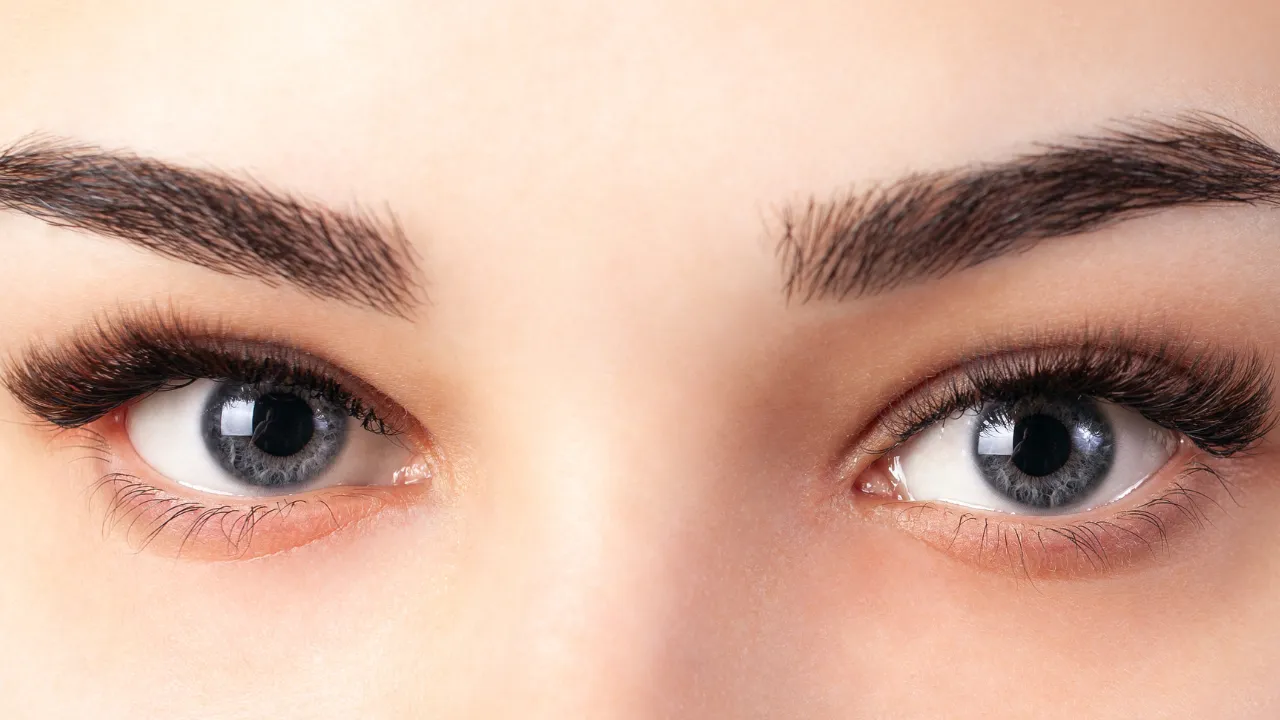
Try a quick mirror check. Look straight ahead. If more of the colored part of one eye is covered, the eyelid has likely dropped. If the lid edge looks normal but the brow and the skin above it sit lower, it’s brow droop. This is a quick check, not a diagnosis.
| Feature | Brow droop | Eyelid droop |
|---|---|---|
| Muscle affected | Frontalis, which lifts the brow | Levator, which opens the upper eyelid |
| What drops | The whole eyebrow, often with forehead heaviness | The edge of the upper eyelid |
| Mirror check | Lid edge looks normal; brow and skin above it sit lower | More of the colored part of the eye is covered |
| Usually appears | 3–7 days after treatment | 3–7 days after treatment |
| Usually settles | Within about 6 weeks | Often within 3–4 weeks |
| Do eye drops help? | No | Yes, prescription drops can lift the lid about 1 to 3 mm |
| Correction | Small injections to relax the brow depressors, or waiting | Prescription eye drops, or waiting |
Sources: Management of Ptosis, JCAD; Scheinfeld, Dermatology Online Journal.
Are Heavy or Low Eyebrows After Botox Normal?
Why do my eyebrows feel heavy after Botox? A slight heaviness is common in the first week, and a heavy brow after Botox often fades as the treatment settles.
If your forehead feels heavy after Botox but your brows look the same in the mirror, the muscle may be adjusting rather than truly drooping. If the droop is visible or uneven, it may point to overcorrection.
If low eyebrows after Botox change your appearance or affect how your eyelids work, talk to your provider. Some patients notice the heaviness builds through the day.
How It Looks and Feels
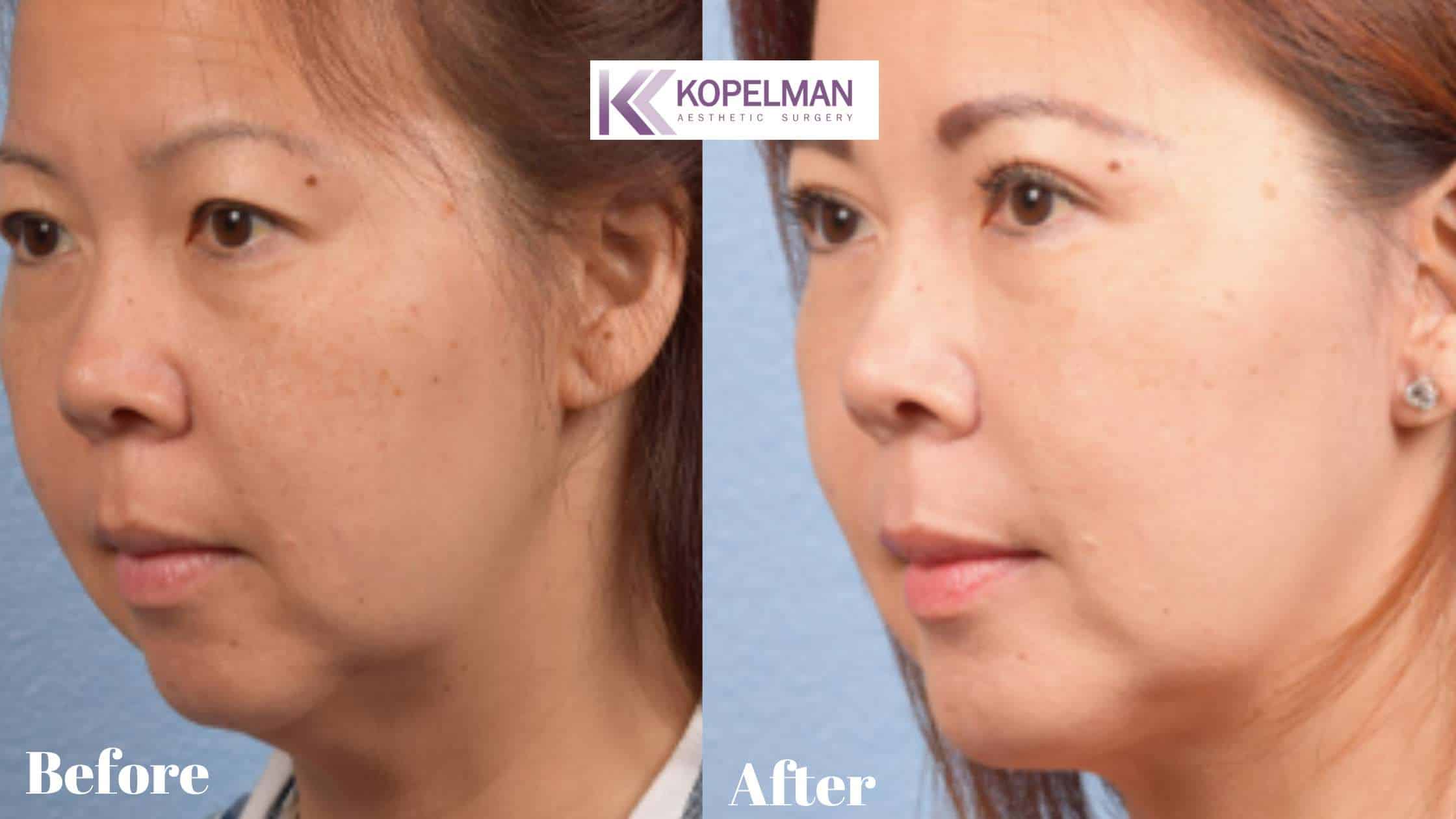
Pictures of Eyebrow Droop After Botox (Before and After)
Common signs in before-and-after photos include:
- Flattened or lowered brow arches
- Asymmetry between brows
- Hooding of the upper eyelid
The most reliable check is to compare a photo from before treatment with one taken today. Most people have some natural brow asymmetry, so a side-by-side shows what changed and what was always there.
You can review more examples in the gallery section of the Kopelman Aesthetic Surgery website.
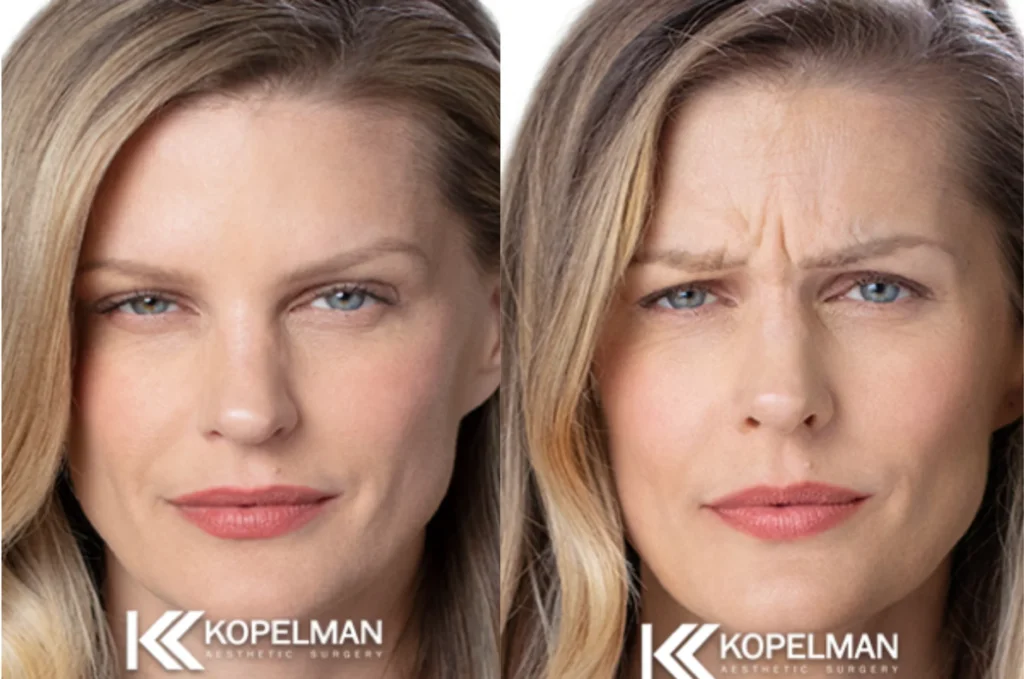
Hooded Eyes and Heavy Eyebrows After Botox
Some patients notice hooded eyes and heavy eyebrows after Botox because the lowered brow pushes extra skin onto the upper lid. This can make the eye look smaller or tired.
Treatment-related changes appear within days, which helps separate them from natural aging. If hooding was already there before treatment, a brow lift or eyelid lift may be a better fix, depending on whether the brow or eyelid skin is the main cause.
Drooping Eyebrows Without Botox
Drooping eyebrows aren’t always a side effect of treatment. With age, the forehead loses elasticity, and the brow slowly descends, often most at the outer tail. This kind of drooping brow develops over years, doesn’t shift week to week, and won’t improve on its own.
If your brows were already low before treatment, forehead injections can make it more obvious, since the frontalis was helping hold them up. For drooping brows caused by aging, a surgical brow lift offers longer-lasting correction, often 10 years or more, while a non-surgical brow lift provides only a subtle, temporary lift.
Symptoms of Botox Brow Droop
If you notice any of the following, you may be experiencing brow droop from your treatment:
- Brows that sit lower than before
- Feeling of pressure or weight on the eyelids
- Uneven facial appearance
- Trouble applying eye makeup
In rare cases, a droopy eyebrow from Botox can partly block your upper field of vision. These symptoms may be part of a broader pattern: once the forehead stops compensating for loose upper eyelid skin, the lids look heavier too. Some patients may also develop droopy eyelids if the toxin spreads to nearby muscles.
Duration and Risks
How Long Does Botox Eyebrow Droop Last?
Eyebrow droop after Botox is usually temporary and lasts 3 to 6 weeks. As the toxin wears off, the frontalis regains strength, and the brow lifts naturally. Clinical guidance in aesthetic dermatology notes that brow ptosis often settles within about six weeks.
For some, full recovery may take up to 3 months, close to the length of a typical 3 to 4 month treatment cycle. The timeline depends on dosage, muscle responsiveness, and individual metabolism.
| Stage | Timing | What you may notice | What to do |
|---|---|---|---|
| Onset | 3–7 days after treatment | Heaviness; brow sits lower | Take a photo to compare with your pre-treatment photo |
| New droop can still appear | Up to 2 weeks | Late-onset ptosis has been reported up to 2 weeks after injection | Report any change to your provider |
| Most cases settle | 3–6 weeks | Brow gradually lifts | Monitor |
| Outer limit | Up to 3 months | Remaining droop fades as the toxin wears off | Ask your provider to check for another cause if drooping persists |
Sources: Management of Ptosis, JCAD; Scheinfeld, Dermatology Online Journal.
Still Drooping 3 or 5 Weeks After Botox?
At 3 weeks, a mild droop may already be improving, and some take until week 6 to settle.
At 5 weeks after Botox, a brow may still be improving. If it worsens, becomes uneven, or affects your vision, contact your provider now. If nothing changes by week 6, ask about a small corrective injection.
If the drooping lasts beyond the usual 3 to 4 month treatment cycle, it is unlikely to come from the injections. Ask your provider to check for an underlying brow or eyelid condition.
Is Brow Ptosis from Botox Permanent?
No, brow ptosis from Botox is not permanent. It resolves as the effects wear off.
If the droop recurs or is severe, consult an experienced provider like Dr. Kopelman. Repeated issues may require adjusting injection sites or technique. If the eyelid stays low well after the toxin should have worn off, you may need an evaluation for another cause, such as ptosis treatment.
If your brows sat low before any injections, a brow lift may be the better long-term fix.
Solutions and Fixes
Can Botox Eyebrow Droop Be Fixed or Reversed?
Yes, in many cases. How to fix Botox eyebrow droop depends on how noticeable it is. If the effect is mild, you may not need treatment. For more pronounced drooping, options include:
- Small corrective injections into the muscles that pull the brow down, which can raise it by 1 to 2 mm
- Strategic injections to balance an uneven brow
- Waiting for the toxin to wear off naturally
Eye drops such as apraclonidine don’t lift the eyebrow. They act on a small muscle inside the upper eyelid, lifting a dropped lid by about 1 to 3 mm, so they only help when the eyelid itself has dropped.
Correction and Treatment Options
Treatment depends on severity and on whether the brow, the eyelid, or both have dropped.
For a dropped brow, Dr. Kopelman may use conservative injections below the outer brow and at the inner brow to relax the muscles that pull it down. When one brow can’t be raised, carefully lowering the other can restore symmetry. If the eyelid also drops, prescription drops are used only after a check of your eye history.
In many cases, reassurance and follow-up are enough. A careful review of the original injection technique also helps prevent future occurrences, especially in patients with a history of sensitive forehead muscles.
Can Botox Lift a Drooping Eyebrow?
Yes. When placed correctly, injections can lift the brow by relaxing depressor muscles, such as the corrugator and procerus, so that the frontalis can raise it. The lift is small, often 1-3 mm. See these brow lift Botox before and after photos for the effect.
If injected too low or with too much volume, it can have the opposite effect. A skilled injector, like those at Kopelman Aesthetic Surgery, can subtly shape and elevate the brow.
Can Botox Lower Eyebrows?
Yes. The same mechanism that causes an unwanted droop can lower the brows on purpose. Some people request eyebrow lowering with Botox for brows that sit too high or have a sharply peaked arch.
The injector relaxes targeted parts of the frontalis with a measured dose, so the brow settles slightly lower without looking heavy. Botox to lower eyebrows takes the same precision as a brow lift, since too much product turns a subtle change into a droop.
Prevention and Expert Advice
How to Prevent Dropped Eyebrows After Botox
Prevention starts with technique. You can reduce your risk by:
- Choosing a board-certified injector
- Avoiding pressure, massage, saunas, and sunbathing for at least 4 hours after treatment
- Sharing any past reactions, previous forehead or eyelid surgery, or brows that already feel heavy
Providers should tailor dosage and injection patterns to your facial structure. The FDA label directs injectors to place forehead injections at least 2 cm above the eyebrow and to treat frown lines in the same session as the forehead. Clinical guidance recommends placing injections at least 4 cm above the brow for older patients.
When to See a Doctor or Specialist
Seek medical advice if you notice:
- Vision changes
- Asymmetry that worsens
- Eyebrow droop that affects daily life
- Drooping that hasn’t improved after 6 weeks
Dr. Kopelman recommends scheduling a follow-up if you experience any of the above. An oculoplastic surgeon is trained in both ophthalmology and facial plastic surgery, so they can assess a lowered brow and a lowered lid.

FAQs
Will Botox eyebrow droop affect my vision?
In rare cases, a lowered brow or eyelid can partly block your upper field of vision. Contact your provider if this happens; they may suggest temporarily taping the brow or lid up while it recovers.
Can I fix it at home?
No, correction should be supervised by a trained medical professional. Avoid massaging or applying pressure to the area.
Does everyone get this reaction?
No. In the FDA, about 2% of patients treated for forehead lines developed brow ptosis. Reported ptosis rates are lower with experienced injectors.
What to Keep in Mind Moving Forward
A dropped brow after treatment is usually temporary, and your provider can tell whether the brow, the eyelid, or both are involved. If you experience symptoms, working with a qualified provider like Dr. Kopelman supports a safe, timely resolution. Book your consultation now.