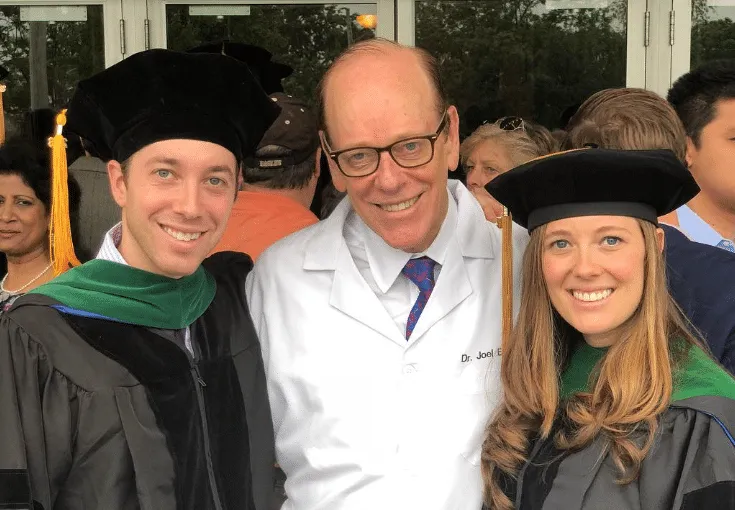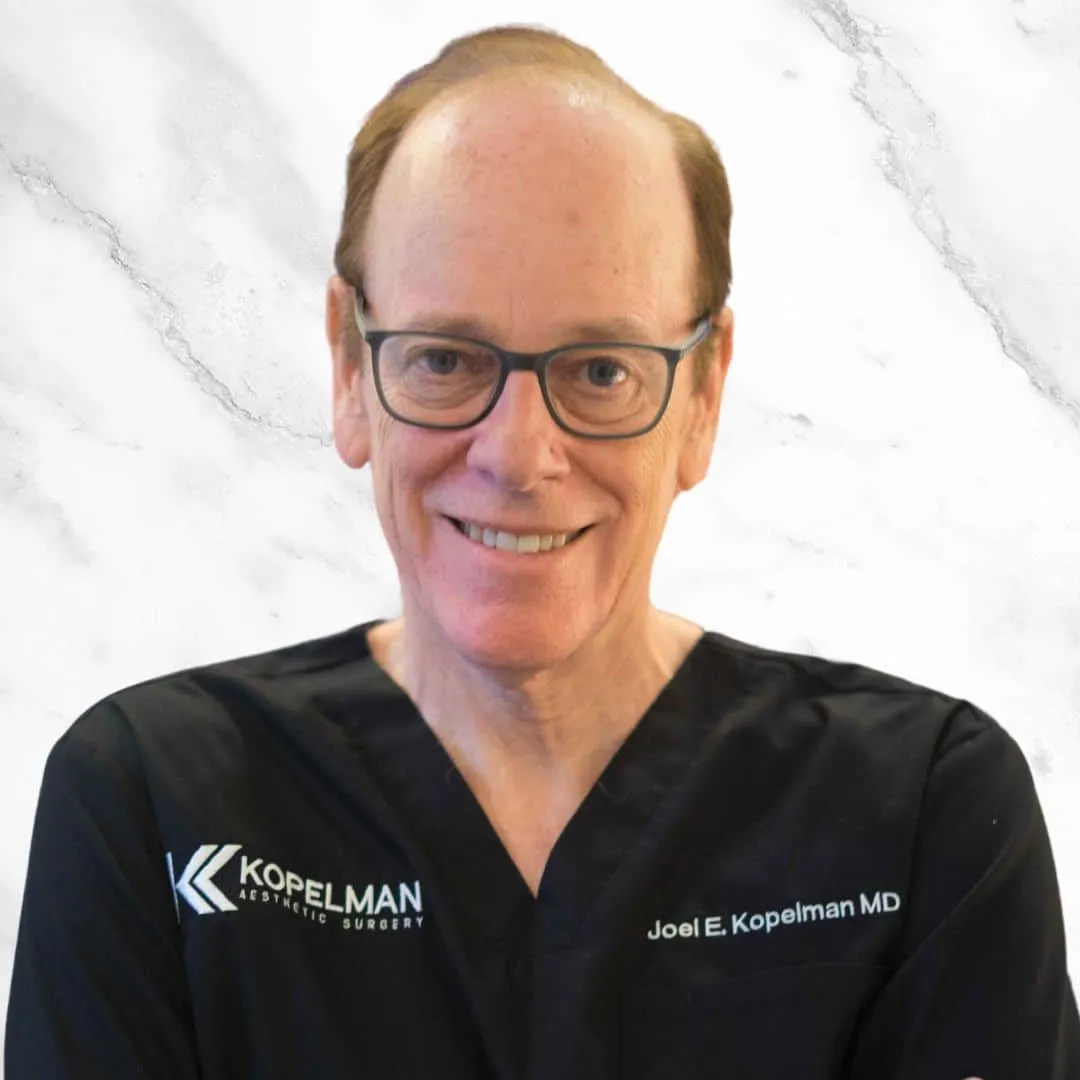

At Kopelman Aesthetic Surgery, Dr. Joel Kopelman has helped many patients across the United States understand when a lid procedure is more than a cosmetic choice.
From insurance approval to surgery and recovery, patients want clear answers. This guide explains when the operation qualifies as medical, what carriers require, and what to expect before and after treatment, drawing on Dr. Kopelman’s 35 years of plastic surgery experience.
Key Takeaways
- A medically necessary blepharoplasty is performed when excess upper eyelid skin obstructs vision and causes daily difficulties, such as trouble reading or driving.
- Insurance approval often requires visual field testing and photos showing reduced peripheral vision from excess skin and fat.
- Upper blepharoplasty is commonly covered when criteria are met, while lower eyelid surgery is often considered cosmetic.
- Recovery happens in stages, with swelling improving in weeks and full results seen in months.
- Dr. Joel Kopelman, a board-certified plastic surgeon with decades of experience, provides expert care for patients needing both medical and cosmetic eyelid surgery.
When Is Blepharoplasty Medically Necessary?
Criteria and symptoms to qualify
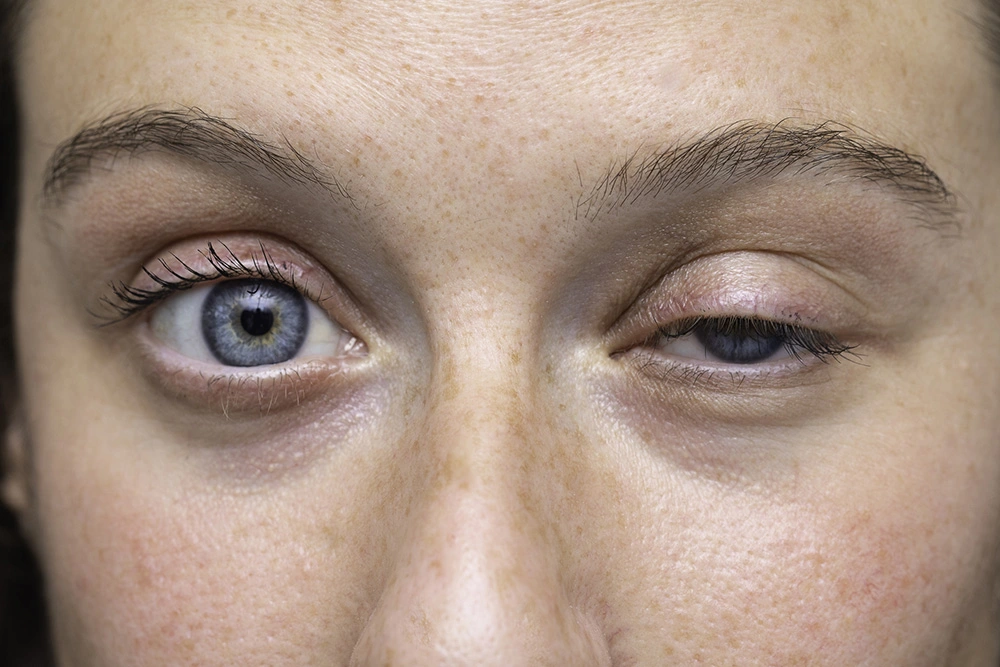
Blepharoplasty becomes medically necessary when lid skin obstructs vision. Symptoms include difficulty reading, trouble driving at night, and constant forehead strain from lifting the brows to see. Carriers generally require documented proof of these issues.
Patients also notice reduced peripheral vision from drooping upper lids. The American Academy of Ophthalmology notes that surgery on the upper lids is considered functional when sagging tissue interferes with sight rather than appearance alone.
Blepharoplasty Test for Insurance
Patients often want to see medically necessary images of covered lid procedures to understand what qualifies for approval. Physicians confirm medical need through a clinical exam and formal visual field testing.
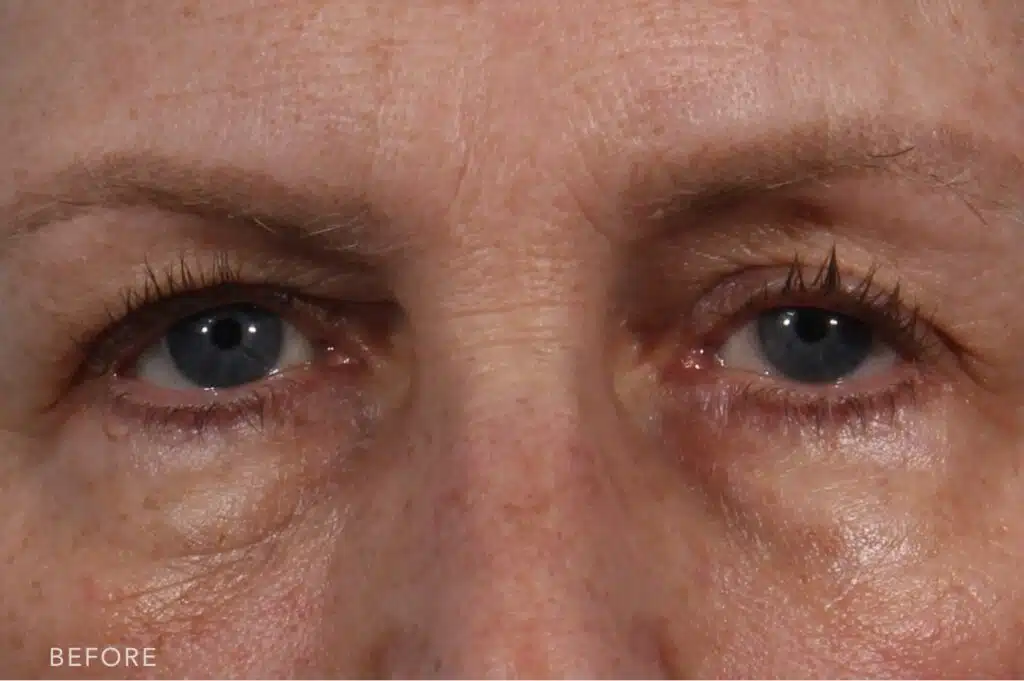
During the exam, the surgeon measures how far the skin hangs, whether it rests on the lashes, and how much of the upper field it covers. The surgeon takes photographs from several angles to support the claim.
The taping test is the key step. The lid is temporarily taped upward, and the visual field exam is repeated. If the field improves measurably once the lid is elevated, document the obstruction.
Carriers frequently require evidence of a 20 to 30 degree loss in the superior field of vision. The American Society of Ophthalmic Plastic and Reconstructive Surgery outlines this combination of exam findings, photography, and field testing as the standard record for establishing functional need.
Physicians also check for dermatochalasis (excess skin) and types of ptosis, such as upper eyelid ptosis, since treatment differs between them. In some cases, they also note brow ptosis, because heavy brows can contribute to the obstruction.
Insurance Coverage for Eyelid Surgery
How to get eyelid surgery covered by insurance
Patients should describe symptoms in plain terms, such as trouble driving at night or losing their place while reading. Approval depends on medical evidence, not appearance. Learn more about how to get insurance to pay for eyelid surgery with clear documentation and physician support.
Patients often ask common questions:
- Will this procedure help me drive at night?
- Will reading or computer use be easier?
- Can I combine cosmetic and functional goals in one operation?
The answer is yes when the need is documented. Cosmetic refinements can be added, but the carrier pays only for the functional portion.
The central test for coverage is a visual field exam that measures how much the lid blocks sight. If vision improves when the lid is elevated, approval becomes more likely. Some patients also wonder about how to fail the eye test for eyelid surgery, which highlights why honest, reproducible results matter during testing.
Beyond the field study, carriers may request photographs and documentation of headaches, brow fatigue, or safety concerns. Together, these records satisfy the procedure requirements insurers expect.
Examples of covered functional lid correction
Insurance usually covers upper blepharoplasty when there is a clear obstruction. Examples include:
- Excess upper eyelid skin pressing on lashes.
- Excess skin on eyelids pressing on lashes.
- Headaches or brow fatigue from eyelid strain.
- Visual field loss confirmed by testing.
Lower eyelid surgery is rarely covered because it does not usually block vision. Patients should prepare for different outcomes depending on the procedure.
When a Brow Lift Is Also Medically Necessary
How heavy brows add to visual obstruction
The brows deserve as much attention as the lids during a functional evaluation. When the brow sits low, a condition called brow ptosis, it pushes lid skin downward and deepens the obstruction.
There is a practical limit to how much upper lid skin can be removed before the brow is pulled further down. For that reason, correcting the lid alone sometimes fails to clear the field of vision.
During the exam, the surgeon manually elevates the brows and repeats the field assessment. If raising the brows significantly clears the superior field, a brow lift may qualify as functional and be eligible for coverage.
Cosmetic versus functional brow correction
Many patients request a brow lift purely to soften a heavy or tired look. When the goal is repositioning for appearance, the operation is classified as cosmetic and paid out of pocket.
The distinction matters because the technique differs. A functional brow procedure uses incisions within the hairline to suspend the brow tissue, unlike the crease incision used on the upper lid.
It is common to perform a brow lift and an upper lid procedure at the same time, addressing both function and appearance in a single operation. Patients weighing the two options can compare a brow lift vs eye lift before the consultation.
Visual Outcomes of Medically Necessary Blepharoplasty
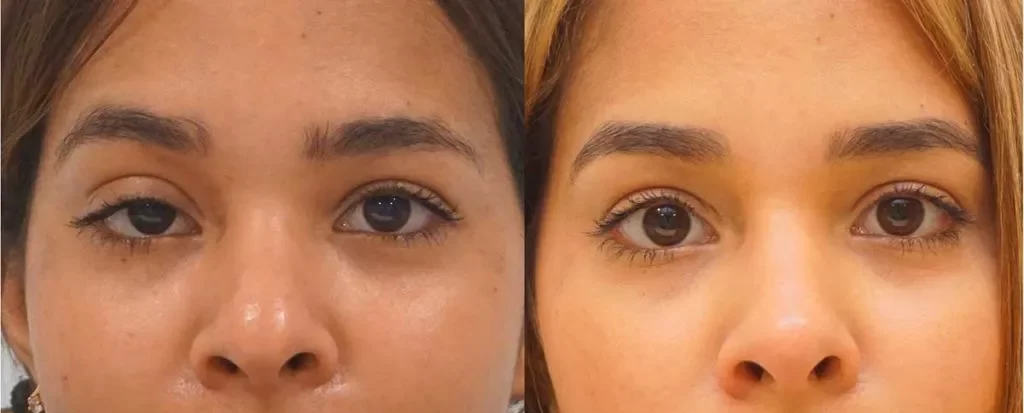
Patients want to know what results to expect. Correcting the obstruction often restores a wider visual field, which makes daily activities like reading and driving easier.
Before-and-after results typically show the lid lifted off the pupil, reducing obstructed vision and giving a more alert appearance. Although the procedure is medical, the outcome may resemble cosmetic surgery.
Medically Necessary Eyelid Surgery: Procedure and Recovery
How upper lid correction is performed
During a medically necessary eye lift, the surgeon removes excess skin and fat from the upper lids. The surgeon may reposition fat or muscle for a smoother contour. The incision is placed in the natural crease, which conceals the scar.
When the levator muscle is weak, the surgeon performs ptosis repair alongside skin removal to raise the lid margin. According to MedlinePlus, this is an outpatient operation performed with local anesthesia and sedation or, less commonly, general anesthesia. The average upper lid procedure takes one to two hours.
Recovery timeline and healing process
Swelling and bruising peak in the first two days, then improve over one to two weeks. Most patients return to light activity within a week and full activity after two weeks. Scars continue to soften for several months.