

The angular artery connects with the ophthalmic artery network, which also feeds the supraorbital and supratrochlear arteries in the brow. That link is why, in rare cases, product in a cheek vessel can affect vision, and why depth and placement decide most of the risk.
At Kopelman Aesthetic Surgery, every plan starts with your facial anatomy. Dr. Kopelman, a board-certified facial plastic and oculoplastic surgeon who also performs eye lift surgery, uses methods that protect surrounding blood vessels and nerves while creating natural results.
Knowing where the cheek filler danger zones sit tells you what to ask before any injectable treatment: which product, what depth, and what the plan is if a vessel is blocked.
Key Takeaways
- Cheek filler danger zones sit near the infraorbital, angular, and transverse facial arteries, so injection depth and placement drive most of the risk.
- Blanching, sudden pain, mottled skin, or coolness after treatment can signal a blocked vessel and needs immediate care; vision changes are an emergency.
- Hyaluronic acid gels can be dissolved with hyaluronidase, which is one reason they are the usual choice in the cheeks.
- Slow, low-pressure injection and small volumes are the main ways to lower the chance of product entering a vessel.
- Recent surgery, autoimmune conditions, or blood-thinning medications may require you to wait.
- A board-certified provider with advanced anatomical training is your strongest protection.
Is Cheek Filler Dangerous?
Is cheek filler dangerous? For most people, no. Is cheek filler safe? It is when a trained specialist places an approved product at the right depth, and the FDA approves dermal fillers for cheek augmentation in adults over 21.
Serious problems are rare, but they happen. Most trace back to product entering or pressing on a blood vessel. Reports of vision loss involve the cheek far less often than the nose or forehead, yet no area of the face is risk-free, so an experienced provider is your strongest protection.
For the wider picture beyond the cheeks, read about dermal fillers safely.
Cheek Filler Types and Why Hyaluronic Acid Is the Safer Choice
Most cheek treatments use hyaluronic acid (HA) gels. Juvéderm Voluma XC is FDA-approved for cheek volume, and both Restylane Lyft and Restylane Contour are approved for cheek augmentation and midface contour deficiencies in adults over 21.
Their biggest safety advantage is reversibility. An enzyme called hyaluronidase can dissolve HA gels if something goes wrong.
Biostimulating products such as calcium hydroxylapatite (Radiesse) and poly-L-lactic acid (Sculptra) stimulate collagen, and hyaluronidase does not dissolve them. Their approved uses differ by product and may not include cheek volume, so ask your surgeon what the label covers.
Permanent (non-absorbable) fillers are a separate group, which the FDA approves only for nasolabial folds and cheek acne scars.
Cheek Filler Side Effects to Expect
Common cheek filler side effects include mild swelling, tenderness, redness, and bruising that fade as the product settles, usually within days to a few weeks. Sensitive skin may bruise more easily.
You should notice improved cheek contour, a lifted mid-face, and less hollowing from volume loss. These changes look smooth and can be adjusted later if needed.
[Image: cheek-filler-danger-zones-2.webp]
Why Certain Facial Regions Are Risky
Filler danger zones are areas where arteries that supply the eyes, skin, and nose run close to the injection path. When product enters one of these vessels, it can restrict circulation and injure tissue.
Because these vessels sit close to the skin, only skilled injectors with careful technique should treat these areas.
What Are the Facial Danger Zones Injectors Need to Know for Filler?
The facial danger zones injectors need to know for filler are the forehead and glabella, the nose, the temples, the tear troughs, the nasolabial folds, the lips, the chin, the jawline, and the inner cheek. Each holds an artery or nerve near a common injection path.
In the 365 cases of filler-related vision loss published from 2018 to 2023, the nose (about 41% of injection sites), forehead (28%), and glabella (19%) were the most common. The cheek accounted for 1.5% of cases, and 2.1% across all cases since 1906. Many cases involved several sites at once.
The cheek ranks far lower, but the same review concludes vision loss can follow injection anywhere on the face. The table shows what each area treats and why it needs care.
| Area | Common reasons for treatment | Key vessels or nerves | Why it needs care |
|---|---|---|---|
| Cheeks | Mid-face lift, under-eye support, age-related volume loss | Infraorbital artery and nerve, angular artery, zygomaticofacial and transverse facial arteries | Risk is highest on the inner cheek near the nose and eye; the outer cheekbone carries less |
| Tear troughs | Under-eye hollows and tired-looking shadows (under-eye filler) | Angular and infraorbital arteries | Thin skin and vessels that link toward the eye |
| Nasolabial folds | Lines from the nose to the mouth corners | Facial and angular arteries | The artery runs beside the nose and connects with the eye's circulation |
| Nose | Bumps and shape in non-surgical nose reshaping | Dorsal nasal, lateral nasal, and angular arteries | Most-reported site for filler-related vision loss |
| Forehead and glabella | Deep frown lines and forehead hollows | Supratrochlear and supraorbital arteries | Direct branches of the eye's circulation; second and third most-reported vision-loss sites |
| Temples | Hollowing from fat loss in the upper face | Superficial temporal artery, middle temporal vein, deep temporal arteries | Vessels run in several layers, so depth choice matters |
| Lips and perioral lines | Volume, symmetry, vermilion border, cupid's bow, smoker's lines | Superior and inferior labial arteries | Arteries run through the lip, so depth and volume control matter |
| Marionette lines | Shadows from the mouth corners to the chin | Facial artery branches near the mouth corner | Vessels sit near the mouth corners, where product is often placed |
| Chin | Projection and profile balance | Mental artery and nerve at the mental foramen | Deep injection over the foramen can block blood flow or numb the lower lip |
| Jawline | Contour and definition | Facial artery where it crosses the jawbone | Injectors stay clear of the point where the artery crosses the bone |
The FDA lists the glabella, nose, periorbital area, and forehead as unapproved filler uses. Some products carry approvals for specific areas, such as under-eye hollows, so ask your surgeon about the labeled use of the product they plan to use. Source: FDA dermal filler guidance.
Several areas have their own guides, including dermal fillers in the temples and dermal fillers for nasolabial folds.

Additional Anatomical Considerations and Vascular Pathways
The cheek holds the infraorbital, angular, zygomaticofacial, and transverse facial arteries. Near the inner corner of the eye, the angular artery connects with the nose’s branch of the ophthalmic artery.
In the mechanism described in the 2024 review, product injected into the angular artery can travel backward into the ophthalmic artery and block blood supply to the retina. Some areas also have limited backup circulation, which raises the risk.
Vessel Variability and Individual Differences
Facial arteries do not follow the same path or depth in everyone, so a map shows where to be careful, not exactly where each vessel runs. The cheek also has several fat compartments at different depths, and each needs its own injection depth.
Your provider picks the layer that is safest for your anatomy and goals.
Cheek Filler Safety Zones and Danger Areas
Lower-risk zones are areas where major vessels are scarce or sit deeper than the layer being treated, such as the outer cheekbone. Danger zones for cheek filler include the area under the eye, the side of the nose, and the inner cheek.
If you’re weighing non-surgical options, facial fillers come in different thicknesses, each designed for specific areas of the face and levels of support.
Where Is Cheek Filler Injected?
Cheek filler is injected along the cheekbone and into the front of the cheek, often called the apple. Many injectors start on the outer cheek, where fewer large vessels cross, then add small amounts toward the front of the cheek for lift. Each site is mapped in the guide to cheek filler injection points, while cheekbone fillers cover support along the bone.
Inner cheek filler, closer to the nose, calls for the most caution. For the infraorbital region, one published technique guide advises injecting from the side, avoiding direct deep injection, and staying away from the inner eye corner.
| Cheek zone | Where it sits | Structures nearby | Relative risk and handling |
|---|---|---|---|
| Lateral cheekbone (upper cheek) | Outer cheekbone, from below the outer eye corner toward the ear | Zygomaticofacial vessels; transverse facial artery lower in the cheek | Generally the lower-risk part of the cheek |
| Anterior cheek (the "apple") | Front of the cheek, below the outer half of the eye | Infraorbital vessels and nerve along its inner edge | Moderate risk; surgeons keep deep deposits away from the infraorbital foramen |
| Infraorbital foramen | About 1 cm below the lower orbital rim, roughly in line with the pupil | Infraorbital artery and nerve | Avoid direct deep injection; nerve contact can cause numbness in the cheek and upper lip |
| Inner (medial) cheek | Between the inner cheek and the side of the nose, toward the inner eye corner | Angular artery, which connects with the ophthalmic network | Highest-risk cheek zone; technique guides advise injecting from the side and staying clear of the inner eye corner |
Where Not to Put Cheek Fillers
Providers avoid placing product near the inner eye corners, the side of the nose, or thin skin above major vessels, since injecting there raises the risk of blockage. Some also avoid aggressive filling near the nasolabial folds when the surrounding arteries sit shallow.
Ask where the product will go and why certain regions are excluded.
Additional High-Risk Micro Zones
Some small zones near the eye and the bridge of the nose carry higher risk because arteries are dense there. Injecting from the side and staying clear of the inner eye corner keeps the needle away from the angular artery.
Injectors also avoid deep bolus injections where vessels lie close to bone.
Most Dangerous Areas: Infraorbital and Arterial Zones
The infraorbital artery and nerve exit the skull through the infraorbital foramen, roughly a centimeter below the lower orbital rim and about in line with the pupil. From there, the vessels travel down into the cheek.
Product that enters these vessels can disrupt circulation and change the skin’s appearance, and the connected network can carry it toward the eye. Small volumes per pass and low plunger pressure reduce the force that can push product into a vessel.
Layer-Based Injection Risks
Depth affects both safety and appearance. Deep injections in the wrong spot may contact arteries and nerves, while placement that’s too shallow can leave visible lumps.
Providers avoid deep deposits directly over the infraorbital foramen, since nerve contact there can cause numbness in the cheek, side of the nose, and upper lip.
Risks of Cheek Filler
Cheek filler complications range from mild to serious and depend mostly on placement and depth. Mild issues include swelling, redness, tenderness, and small lumps that usually resolve with proper care.
Others relate to reduced blood supply. The FDA notes some side effects can appear weeks, months, or years after injection, so report any late lump or swelling to your injector.
Signs of Vascular Occlusion
When blood flow becomes restricted, the skin may turn pale, white, gray, or blue, or develop blotches. Pain that feels out of proportion, or skin that feels cool, needs rapid attention.
Early treatment can limit tissue damage. Call your injector right away rather than waiting to see if it improves.
Severe Complications and When to Get Emergency Help
Rare complications include tissue loss, vision problems, and stroke-like symptoms. Blurred or lost vision, eye pain, a drooping eyelid, trouble moving the eye, face drooping, or sudden weakness or trouble speaking after treatment is an emergency.
Go to the nearest emergency room and call your injector on the way. In the 2024 review, about 68% of cases that reported an outcome had no vision recovery, so treat any vision change as an emergency.
How Hyaluronidase Treats a Blocked Vessel
Hyaluronidase is an enzyme that breaks down hyaluronic acid. If an HA product blocks a vessel in the skin, your injector floods the area with repeated high doses, often hourly, until skin color, capillary refill, and comfort return.
The author of the high-dose pulsed protocol reported no skin loss in cases treated within 2 days of onset. That is one clinician’s experience, not a controlled trial.
The evidence for vision loss is weaker. In the 2024 review, about 70% of cases received hyaluronidase, yet no treatment was linked to better vision recovery. That is why prevention and fast emergency care matter most.
Any practice that injects cheeks should keep hyaluronidase on hand, so ask before you book.
What Bad Cheek Filler Looks Like and How It’s Fixed
Bad cheek filler usually shows up as overfilled, puffy cheeks, uneven sides, visible lumps, or product that has shifted from where it was placed. Swelling can mimic these problems for the first two weeks, so let the result settle before judging it. More examples are covered in face fillers gone wrong, and the broader worry is answered in do fillers ruin your face.
HA product can usually be dissolved with small doses of hyaluronidase, which is not true of permanent fillers. A surgeon can then rebuild the area with a more conservative plan. Inflamed or late-appearing lumps may need other treatment depending on the cause.
How to Avoid Arteries When Injecting Filler
Skilled injectors study vessel pathways and adjust the depth and angle for each area. They place the product slowly and check your comfort and skin color as they go.
Slow Injection Flow and Pressure Management
The FDA advises injecting slowly and with the least pressure necessary. Slow flow reduces the chance of forcing product into a vessel, and small, controlled doses settle more evenly across tissue layers.
Some injectors aspirate, or pull back on the plunger, to check for blood before injecting. It isn’t guaranteed, and the evidence is still debated.
When to Choose a Cannula
A blunt cannula is a flexible tube with a rounded tip, and many providers use one in higher-risk zones. It also tends to cause less bruising because it passes through fewer layers.
Whether it lowers vascular risk is still debated, so it does not replace detailed anatomical knowledge.
Who Should Avoid Cheek Filler?
Some people should postpone treatment. If you have an active infection or inflammation near the cheeks, an immune condition, a bleeding disorder, or a history of severe allergic reactions, talk to a healthcare professional first.
The FDA also flags allergies to bacteria, since some HA gels come from bacterial fermentation. Unrealistic expectations may point toward other options, and heavy sagging may call for sagging cheeks treatment instead of volume alone.
For a more structural improvement, a procedure such as cheek augmentation in NYC can create longer-lasting contour and balance in the mid-face.
Medical Conditions and Medications
Aspirin, ibuprofen, and other blood thinners increase bruising. Autoimmune diseases may affect healing.
Share every prescription and supplement you take, and mention steroids, chemotherapy, or autoimmune medicines, which can raise infection risk, per the manufacturer’s safety information.
Recent Surgery Considerations
If you’ve recently had facial surgery, wait, since healing tissue can distort placement. Ask your surgeon how long to wait before any filler.
Safe Aftercare and Recovery Tips
Avoid strenuous exercise and firm pressure on the cheeks for 24 hours. Avoid alcohol for the first 24 hours, since it can add to redness and swelling.
Sleeping on your back protects the treated area. Skip makeup until the redness fades.
Expected Recovery Timeline
Most people return to routine activities within days. Minor swelling may last about a week.
Results are visible within two weeks as the product settles.
How Long Does Cheek Filler Last?
How long cheek filler lasts depends on the product, the amount used, and how quickly your body breaks it down. Juvéderm Voluma XC is shown to last up to 2 years in the cheeks with optimal treatment, according to its manufacturer’s clinical study.
Restylane Lyft’s manufacturer reports up to 12 months in the midface. Labeled duration varies by product, so ask your surgeon how long the one they choose is expected to last. Dr. Kopelman’s guide to mid-cheek filler puts typical results at about 12 to 18 months, and touch-ups can maintain the result.
How to Manage Swelling and Bruising
Cold compresses reduce swelling. Elevating the head supports circulation.
Some people use gentle products like arnica with their provider’s approval. Bruising usually fades within days to a few weeks.
Risks Near the Parotid and Masseter Regions
Deeper injection near the parotid gland may cause swelling or disrupt its ducts. Providers avoid deep placement there, and you should mention any past gland problems or sensitivity during your consultation.
The facial artery runs near the front edge of the masseter, the main chewing muscle. Deep injection there may cause temporary numbness or uneven volume, so injectors check muscle and vessel position before treating the lower cheek.
Cheek Filler Before and After: What Realistic Results Look Like
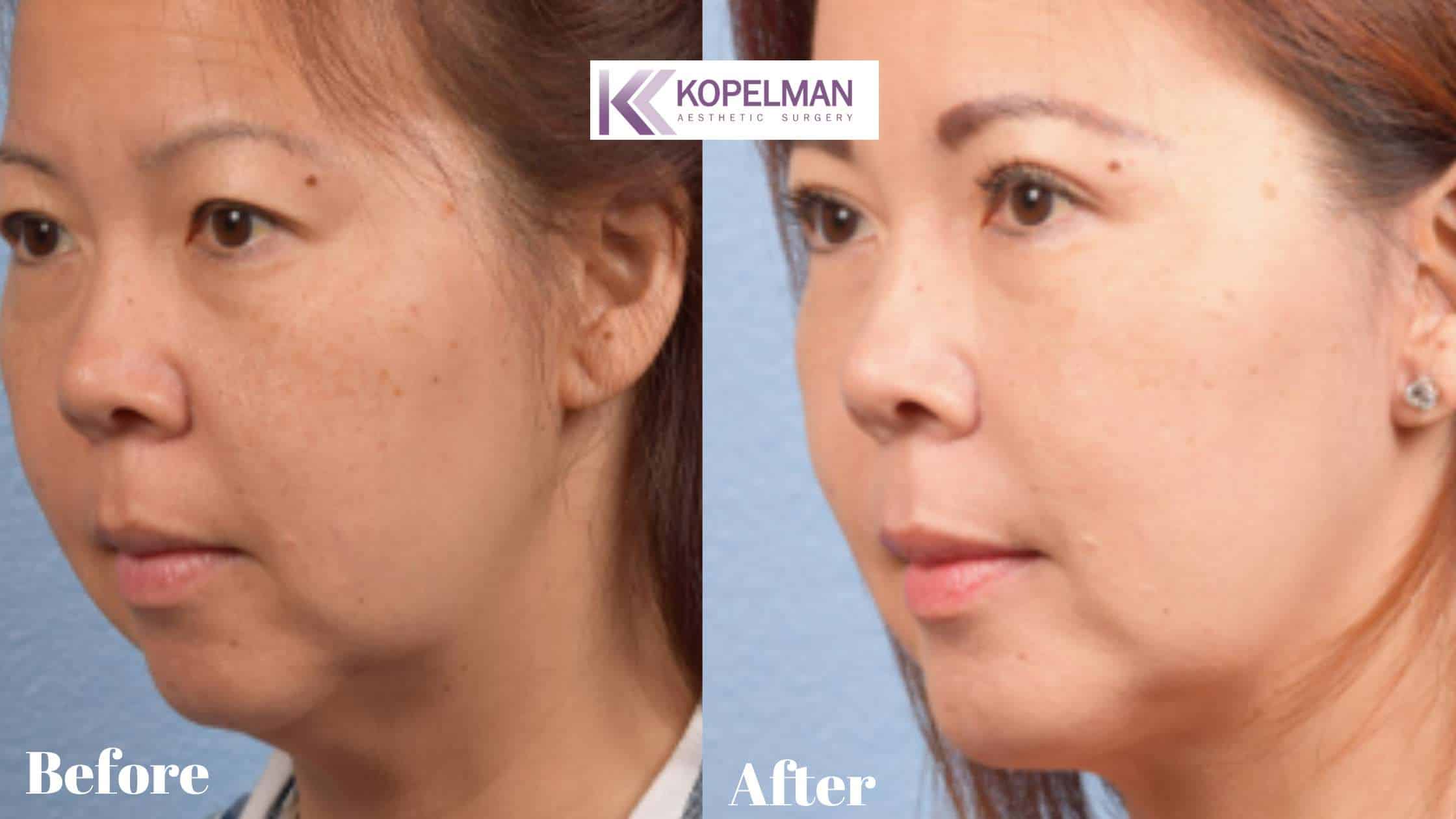
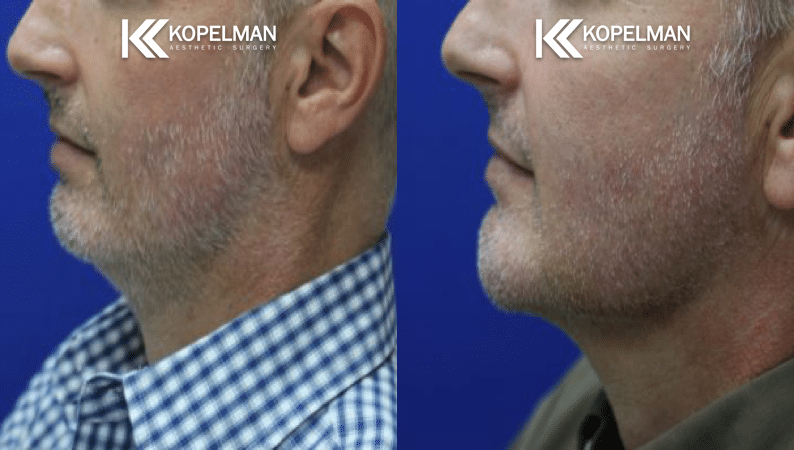
Cheek filler before and after photos should show a lifted mid-face, softer under-eye shadows, and a smoother transition from cheek to lower lid, not a dramatically rounder face. Look for photos taken in matching light and angles, at least two weeks after treatment.
Ask whether the photos show the provider’s own work, and which product and amount were used. See real patient results on the face fillers before and after page.
For a surgical comparison, see these cheek implants before and after photos.

Choosing a Qualified Provider
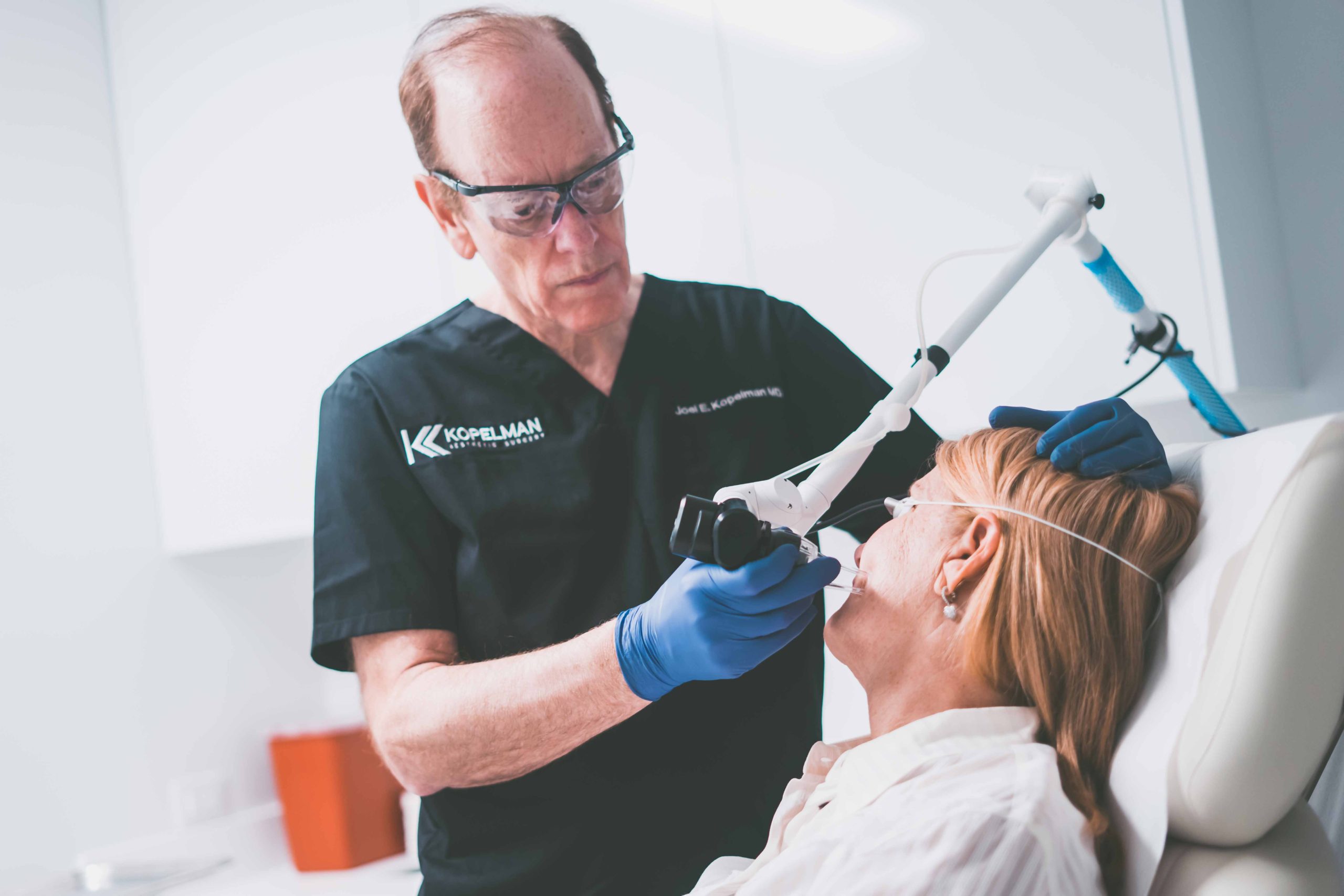
Choose an injector with advanced anatomical knowledge. Surgeons trained in facial plastic surgery, like Dr. Joel Kopelman, know where cheek filler danger zones sit and how to manage a complication if one occurs.
In the 2024 review, 14 of 35 cases (40%) involved a nonphysician. Ask to see before and after photos of cheek work, and ask what the plan is if a vessel is blocked. This guide on finding a good plastic surgeon lists more questions to ask.
Credentials and Training to Look For
Look for board certification in facial plastic surgery, plastic surgery, dermatology, or oculoplastic surgery. The FDA recommends a licensed provider with experience in dermatology or plastic surgery.
Ask which board certifications they hold and how often they treat the cheeks. You should never feel rushed.
Warning Signs to Avoid
Avoid providers who skip your medical history or promise instant perfection. The FDA also warns against buying fillers online or injecting yourself.
Reliable providers explain their emergency plan up front, before any product goes in.
Disclaimer and Medical Safety Guidance
This information supports informed decisions but does not replace a medical evaluation. Consult a trained specialist before any injectable treatment. At Kopelman Aesthetic Surgery, Dr. Kopelman provides precise assessments to help you reach your aesthetic goals safely.
Follow your surgeon’s aftercare instructions and know the warning signs of a blocked vessel; those two habits protect you most after treatment. Contact Kopelman Aesthetic Surgery to schedule an appointment and receive a personalized plan.