

Chin fillers for a round face are used to improve facial proportion by increasing chin projection and balancing the lower face. They do not change overall facial shape, but they can help the face appear longer and more defined when anatomy allows. At Kopelman Aesthetic Surgery, this topic is discussed in an educational context, and Dr. Joel Kopelman approaches treatment as a structural assessment focused on proportion and safety.
Key Takeaways
- Chin fillers can help improve proportion in a round face by increasing chin projection and supporting overall facial balance rather than adding bulk.
- Effectiveness depends on anatomy, precise placement, and fillers that provide structure rather than excess volume.
- Results are usually subtle and focus on improving overall facial harmony rather than dramatic change.
- Safety, candidacy, and realistic expectations are essential for informed decision-making.
Is Chin Filler Suitable For a Round Face?
Chin filler can be appropriate for a round face when the goal is to improve facial proportion. A round face often has softer angles and reduced chin projection, which can affect profile balance. By adding forward support, fillers injected into the chin may help improve facial definition in the lower third. Suitability depends on bone structure, soft tissue thickness, and existing volume loss.
People often explore chin fillers because a round face can appear shorter or less defined. Chin filler is evaluated as a structural option rather than a cosmetic enhancement. This approach focuses on balance rather than changing facial identity. Not every round face benefits from additional projection.
How Chin Fillers Can Reshape a Round Face
Chin fillers reshape a round face by increasing forward projection and vertical support in the lower third of the face. In some cases, chin fillers are considered part of full face contouring fillers to support overall balance. In many round faces, the chin is short or slightly set back, which can make the face appear shorter and broader.

Placing fillers injected along the center of the chin can help the lower face appear longer. This change affects proportion rather than surface volume. The goal is to improve facial balance from both frontal and profile views. Avoiding added width is especially important in round faces. Outcomes depend more on technique than filler quantity.
Does Chin Filler Help With Chubby Cheeks?
Chin filler does not directly reduce cheek volume. Increased chin definition can make the face appear longer and less compact, potentially reducing the appearance of fullness. This shift can improve facial proportions without treating the cheeks. The effect is structural rather than volumizing.
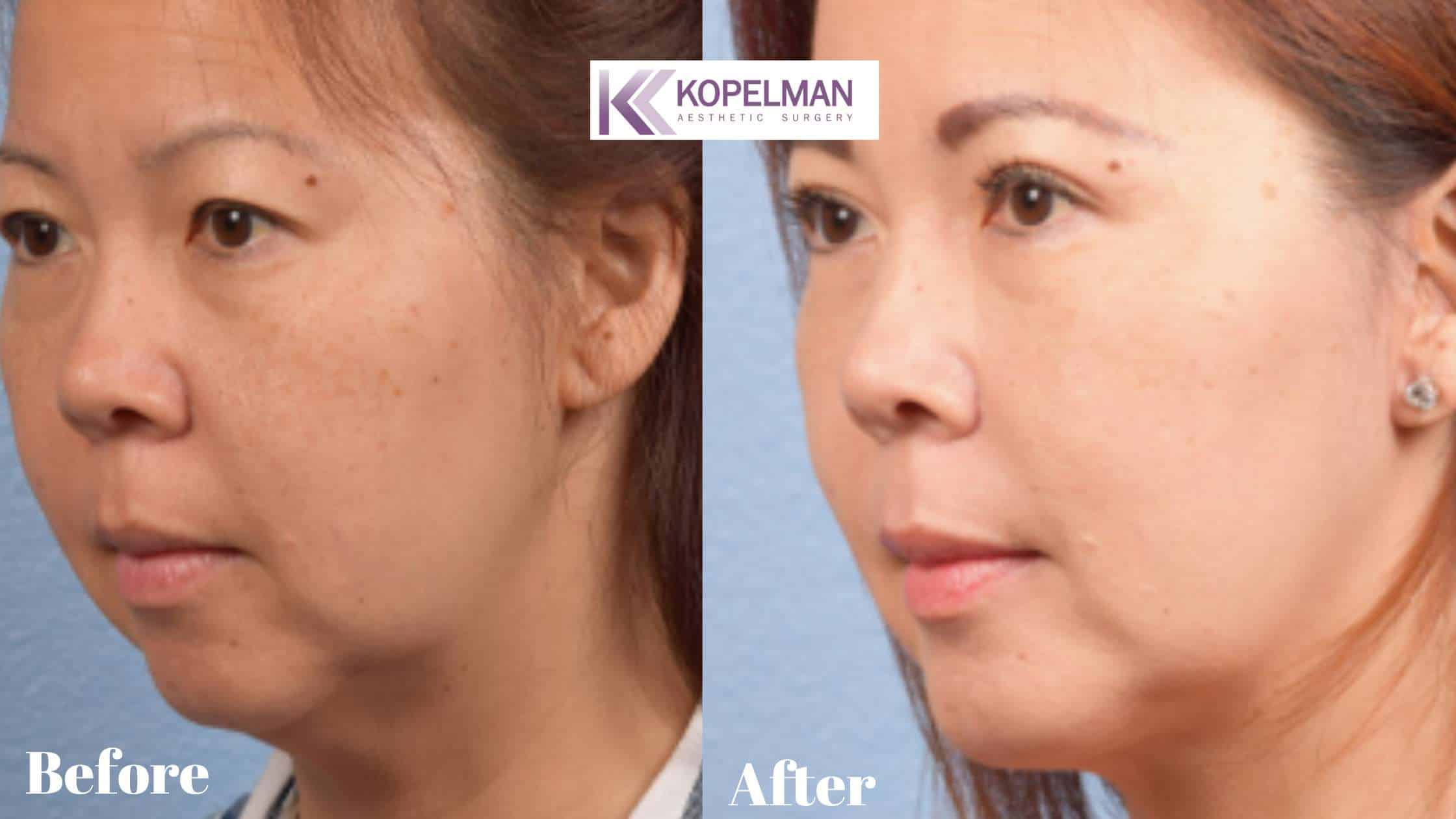
Chin Filler For a Round Face Before and After
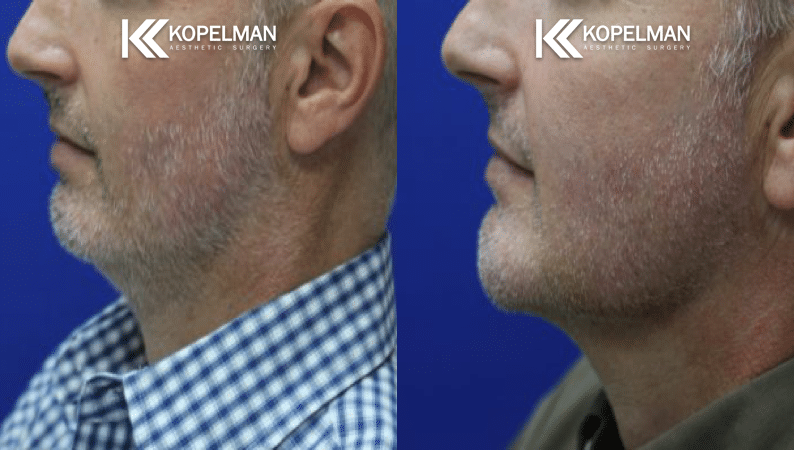
Before-and-after comparisons, including chin implant before and after, help illustrate typical changes rather than predict exact results. Most changes involve improved chin projection and clearer lower facial contours. Outcomes vary based on anatomy, filler type, and injection depth. Adjustments are often subtle.
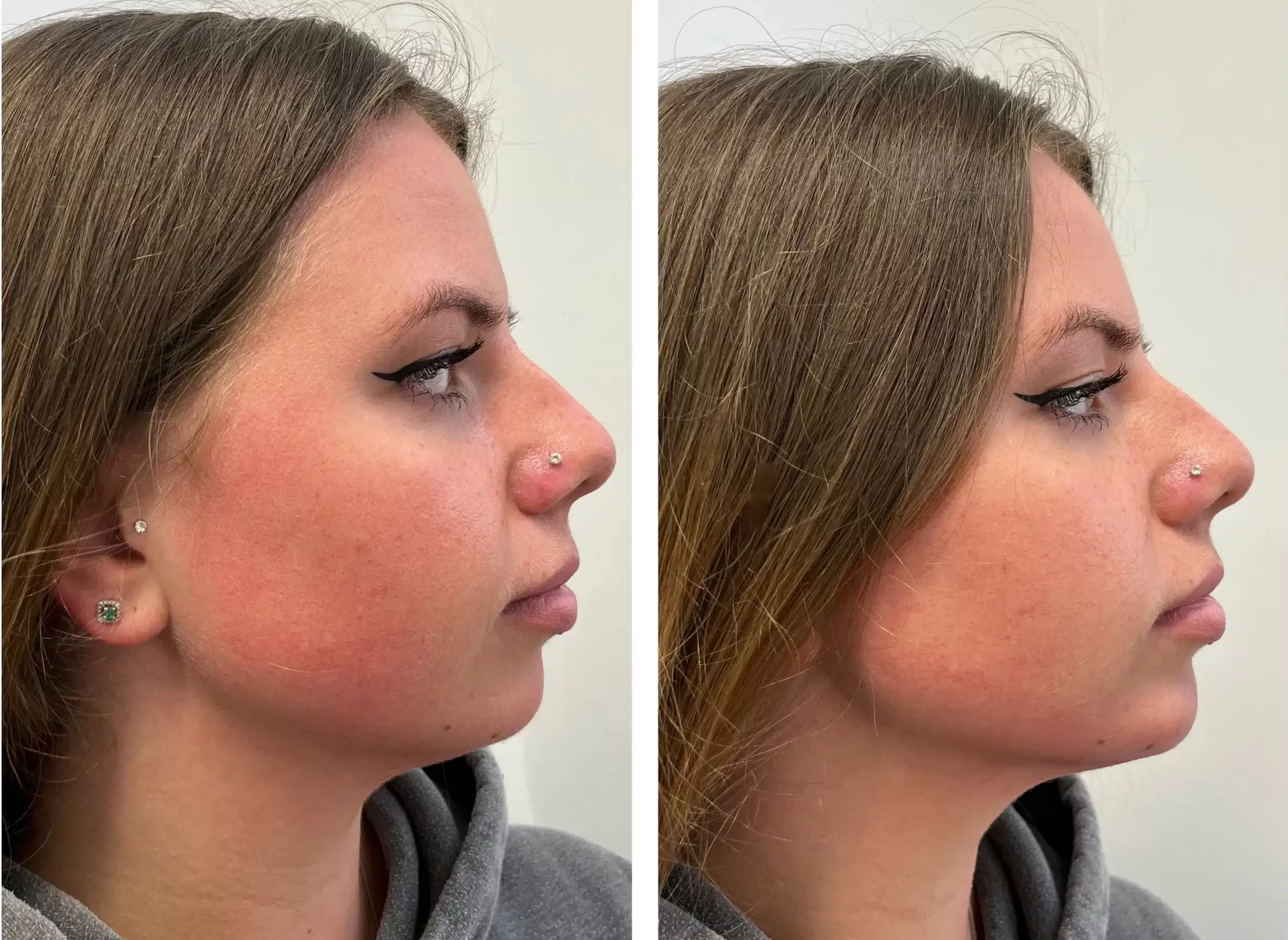
Initial results are visible shortly after treatment, though mild swelling may occur. Fillers typically settle within one to two weeks. Longevity often ranges from 9 to 18 months. Maintenance depends on the selected product and metabolism.
Best Chin Fillers for a Round Face
Hyaluronic acid fillers are generally considered the best option for chin fillers in a round face. They provide firm structural support while allowing precise placement and control. This is important because the goal is to increase projection and vertical length without adding width. Hyaluronic acid also allows adjustments if needed, which adds a margin of safety.
Many of the most popular fillers used for chin contouring are FDA-approved for chin augmentation. Dr. Joel Kopelman considers approval status, filler behavior, and anatomy when evaluating options. Individual facial structure remains the key factor.
Treatment Process and Recovery
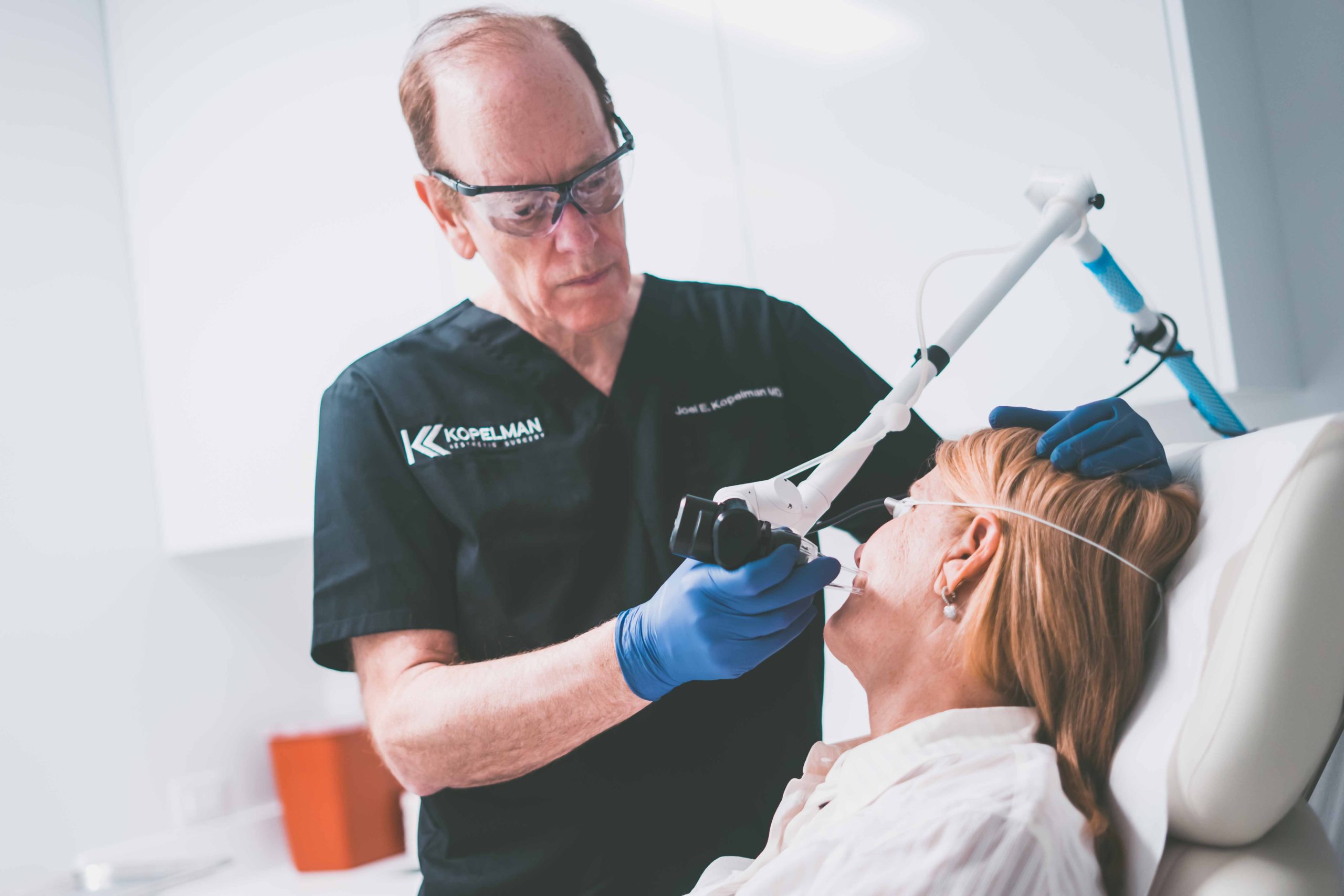
Chin filler treatment starts with an assessment of chin shape, projection, and facial balance. The skin is cleansed, and fillers are injected into the chin at planned points to support structure. Injections are usually performed at a deep level using a needle or cannula. The procedure typically takes less than 30 minutes.
Mild swelling or tenderness may occur for a few days. Most patients return to normal activities the same day while avoiding pressure on the chin. The filler usually settles within one to two weeks. Recovery is generally brief when proper technique is used.
Chin Filler Cost
Chin filler cost typically ranges from $700 to $1,100 per syringe, depending on the filler used and the clinical setting. The total cost depends on the anatomy, the degree of volume loss, and the amount of product needed to support projection. Final pricing is determined after an individualized treatment plan is established.
Provider expertise, product quality, and location can affect pricing. One or two syringes may be recommended, but this varies by patient. The treatment plan prioritizes structure rather than filler quantity.
Safety, Risks, and Candidacy
Chin fillers are generally safe when performed by trained medical professionals. Risks include swelling, bruising, asymmetry, or vascular complications. Understanding facial anatomy is essential. Conservative planning reduces risk.
Good candidates are adults with stable health and realistic expectations: medical history and facial structure guide eligibility. Chin fillers are not suitable for every round face. Careful evaluation supports safe outcomes.
If you are considering chin fillers for a round face, an evaluation can help determine whether this option is a good fit for your anatomy and goals. Scheduling a consultation allows for personalized guidance and an appropriate treatment plan.