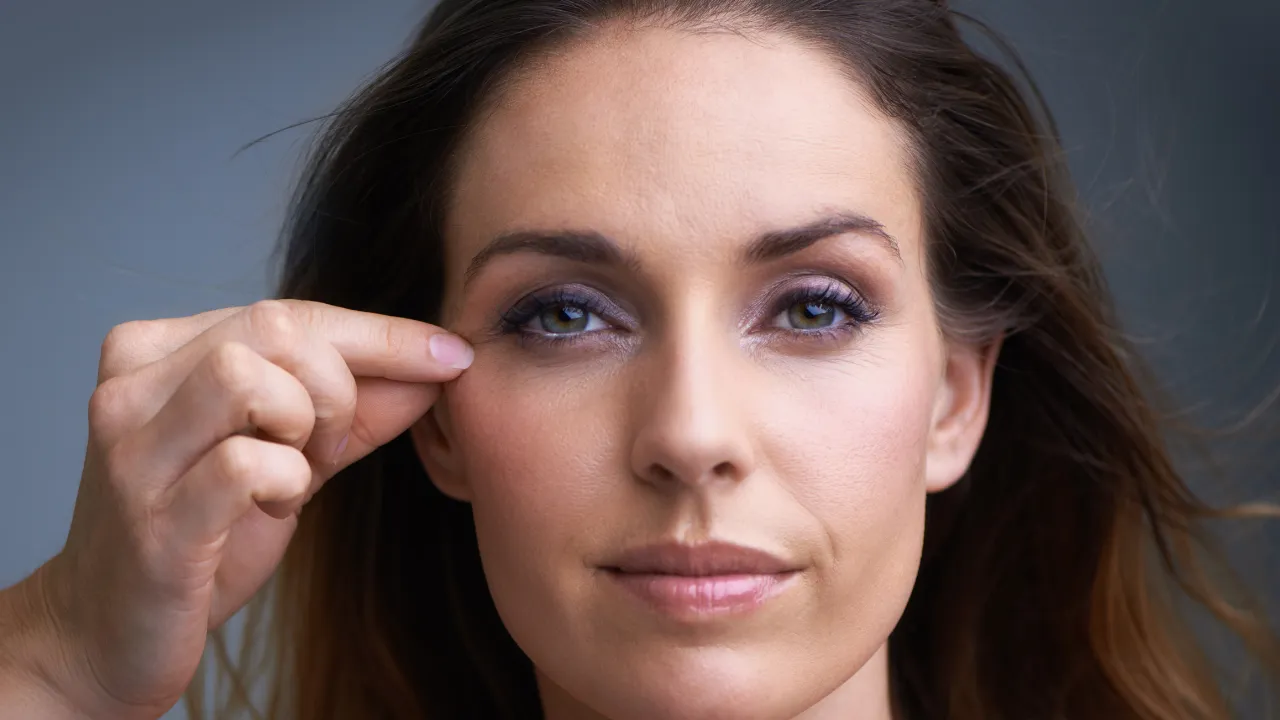
Deep Plane Facelift in New York City: Best Surgeon in NYC

A deep plane facelift lifts the face at the level of the muscle and ligament rather than the skin. Dr. Joel Kopelman releases the retaining ligaments that anchor the midface, then repositions the cheek, jawline, and neck tissues as one unit.

Because the lift is supported from underneath, the skin is closed without tension. That is what produces a result that reads as rested rather than pulled, and it is the reason this technique holds for roughly 10 to 15 years.

The approach is best suited to patients with moderate-to-advanced midface descent, jowling, or neck laxity. Patients with mild, early laxity are often better served by a less extensive option.

Dr. Kopelman performs this surgery at the practice’s Park Avenue location in Manhattan, and also sees patients at the New Jersey and Palm Beach offices. Everything below covers the technique, candidacy, recovery, risks, and cost.

Deep Plane Facelift in Manhattan Procedure

Dr. Joel Kopelman’s approach to the deep plane facelift involves repositioning the deeper layers of facial tissue, including the muscles and fat. This method specifically targets the malar fat pad and the deep facial ligaments.

During surgery, he dissects beneath the SMAS layer to reach and release the ligaments that tether the facial tissues. Releasing these anchor points allows the midface to move as a composite unit rather than be stretched.

By repositioning those deeper tissues, Dr. Kopelman lifts and smooths the midface, cheeks, and jawline. This softens nasolabial folds and marionette lines while improving the overall facial contour.

The lift also restores volume that has descended with age, which is why many patients need less filler or fat grafting than they expected. Results typically hold for 10 to 15 years.

Because the elevation happens beneath the muscle, there is minimal pull on the incision line. That tension-free closure reduces the risk of widened scars and of earlobe distortion after surgery.

Incisions are placed along the temple hairline, tucked inside the tragus, and continued behind the ear. Once healed, they sit within natural contours and creases.

Deep Plane Facelift vs. SMAS and Traditional Facelifts

Most facelifts performed in the United States use the SMAS technique, in which the surgeon separates the skin from the underlying muscle and tightens the SMAS layer with sutures. That works, but it treats the lower third of the face and does little for fallen cheeks.

The deeper technique keeps the skin, muscle, and fat moving as a single layer. Nothing is separated, so nothing has to be stretched to compensate. Dr. Kopelman explains the distinction in more detail on his deep plane facelift comparison page.

How facelift techniques compare
Technique What Is Lifted Typical Longevity Best Suited For
Deep plane lift Skin, SMAS, and malar fat repositioned as one unit after ligament release 10 to 15 years Moderate to advanced midface descent, jowling, and neck laxity
SMAS facelift SMAS tightened with sutures after skin is separated from muscle Generally shorter than a deep plane lift Lower face and jawline laxity with good skin elasticity
Mini or short scar lift Limited SMAS elevation through shorter incisions Shortest of the three Early jawline laxity without significant neck involvement
Skin-only lift Skin alone, with no work on the deeper layers Briefest result of any technique Rarely recommended today; higher risk of a pulled appearance

Lifting the skin alone creates the distorted look people associate with bad surgery. The corners of the mouth and the outer eyelid can appear windswept, because the tension has nowhere else to go.

Patients focused mainly on the neck may be better candidates for a necklift, and those with early laxity often do well with a mini-facelift. Dr. Kopelman will tell you directly if a smaller procedure would serve you better.

Who Is a Good Candidate?

Strong candidates have descended cheeks, visible jowls, deepening nasolabial folds, or loose skin along the jawline and neck. Most patients are in their late 40s through their 60s, though there is no fixed age requirement.

Candidates should be in good general health, be non-smokers or willing to stop well before surgery, and hold realistic expectations. Surgery restores position and contour; it does not change skin texture or pigmentation.

Certain conditions raise surgical risk and may make you a poor candidate. These include uncontrolled diabetes, bleeding or clotting disorders, unmanaged high blood pressure, and active heart disease.

Smoking is the single largest modifiable risk factor, because nicotine constricts the small vessels that supply the healing skin flap. Dr. Kopelman requires patients to stop well in advance of the procedure.

If facial aging is concentrated around the eyes or brows rather than the midface, a blepharoplasty or brow lift may address your concern more directly. Many patients combine procedures in a single session.

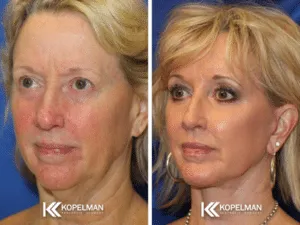
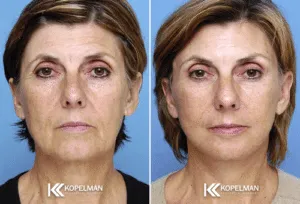
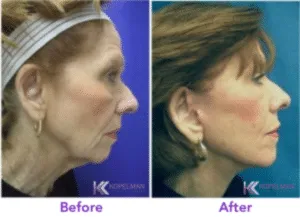
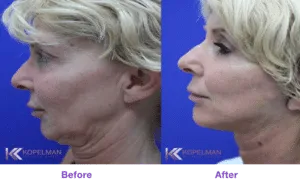
Deep Plane Facelift in New York Before & After

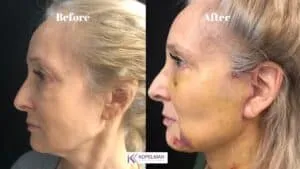
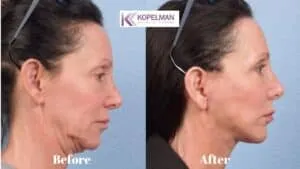
These Facelift before and after pictures represent actual patients from Dr. Kopelman. They will help you to set realistic goals for your own surgical outcome. Click on a patient to learn more about their Deep Plane Facelift.

“I recently had a deep plane facelift with Dr. Kopelman, and the results are incredible. My face looks naturally lifted and more youthful. The recovery was manageable, and the care I received was exceptional. I couldn’t be happier

~ Megan M. ~

Best deep plane facelift Surgeon NYC: Dr. Joel Kopelman

Recovery and Downtime After Facelift Surgery in NYC

Recovery is generally more comfortable than patients anticipate. Because the lift is supported beneath the muscle and the blood supply between skin and muscle is preserved, bruising is often less pronounced than with techniques that separate those layers.

Swelling and bruising peak in the first few days, then decline steadily. Most patients feel presentable enough for private social settings well before they feel ready for photographs.

Typical recovery timeline
Timeframe What to Expect Activity Level
Days 1 to 3 Peak swelling and bruising; tightness and mild discomfort managed with prescribed medication Rest with the head elevated; short walks indoors
Days 4 to 7 Swelling begins to settle; sutures typically removed during this window Light activity around the home; no bending or lifting
Weeks 2 to 3 Bruising largely resolved and easily covered with makeup Most patients return to desk-based work
Weeks 4 to 6 Residual swelling continues to fade; contour becomes clearly visible Gradual return to exercise once cleared by Dr. Kopelman
Months 6 to 12 Final refinement; incision lines continue to soften and fade No restrictions

Numbness along the cheeks and in front of the ears is normal and resolves over weeks to months as the small sensory nerves recover. A feeling of tightness in the first weeks is expected and eases as swelling drops.

Sleeping with the head elevated, applying cold compresses early, and avoiding strenuous activity all shorten the swelling phase. Following the post-operative instructions closely has a real effect on the final result.

Risks, Safety, and How Complications Are Reduced

Facelift surgery is safe in experienced hands, but it is surgery, and every patient should understand the risks before consenting. Dr. Kopelman reviews these individually during consultation.

Potential complications include hematoma, infection, delayed wound healing, asymmetry, changes in skin sensation, and unfavorable scarring. Temporary or, rarely, lasting facial nerve weakness is also possible.

Serious nerve injury is uncommon when the procedure is performed by a surgeon trained in this dissection, since the technique follows a natural anatomical plane rather than cutting across it. Hematoma is the most common early complication and is more likely in patients with elevated blood pressure.

Risk is reduced by careful patient selection, blood pressure control before and after surgery, smoking cessation, an accredited surgical setting, and close follow-up. General background on facelift surgery is available from the American Society of Plastic Surgeons and in the peer-reviewed StatPearls clinical review.

A facelift aims to enhance your natural facial contours and, when done well, will improve your facial symmetry.

Cost of a Deep Plane Facelift in NYC

Fees depend on the extent of the lift, whether the neck is addressed, and whether additional procedures are performed in the same session. The figures below reflect the practice’s current ranges and are confirmed during consultation.

Kopelman Aesthetic Surgery fee ranges
Procedure Fee Range Notes
Deep plane facelift $45,000 to $60,000 Varies with the extent of dissection and whether the neck is included
Neck lift $40,000 to $50,000 Frequently combined with a facelift in a single session
Upper eyelid surgery $8,500 Commonly paired with facial lifting for upper face balance
Lower eyelid surgery $8,500 Addresses under-eye bags and lower lid laxity
Consultation $350 Includes full facial assessment and a customized surgical plan

Combining procedures into a single operation typically costs less than staging them separately, since anesthesia and facility time are shared. Dr. Kopelman will outline exactly which procedures your goals require.

Be cautious with quotes that sit far below the market for this technique. A true deep plane dissection takes significant operative time and specialized training, and pricing that does not reflect that usually signals a different, more superficial procedure.

Best Deep Plane Facelift Surgeon NYC: Dr. Joel Kopelman

During your facial consultation, Dr. Joel Kopelman will focus on the areas that concern you the most and also assess other aspects of facial aging that may be present. Specializing in deep-plane facelifts, Dr. Kopelman addresses sagging cheeks, jowls, and loose neck skin by repositioning deeper facial tissues to achieve a more natural, long-lasting result.

His comprehensive approach ensures that all relevant aspects of facial aging are considered, providing you with a balanced and rejuvenated appearance. A facelift aims to enhance your natural facial contours and, when done well, will improve your facial symmetry.

Oculoplastic training centers on the eyelids and the delicate periorbital tissues, the area where facial surgery most often goes visibly wrong. Surgeons with this background are attuned to how a midface lift affects lower eyelid position and shape.

He is affiliated with the American Academy of Facial Plastic and Reconstructive Surgery, the American Academy of Ophthalmology, the American College of Surgeons, and the American Society of Ophthalmic Plastic and Reconstructive Surgery.

FAQ about Deep Plane lift in NYC

Frequently asked questions
about a Facelift

The ultimate goal of your face lift surgery is to “turn back the clock” by tightening and lifting the skin and muscle of the neck and mid-facial soft tissue to redistribute skin and muscle and recreate lost facial volume. At the time of the initial consultation Dr. Kopelman will provide a precise assessment of your facial features.This will allow him to outline a detailed plan to restore balanced and harmonious facial features. If you decide that a facelift is the right option for you you can be sure that Dr. Kopelman’s artistic eye, skilled hands and attention to detail will leave you looking years younger without obvious signs that you underwent a facelift procedure. Dr. Kopelman will individualize his face lifting techniques to match your unique features. One facelift technique cannot be applied to all patients.

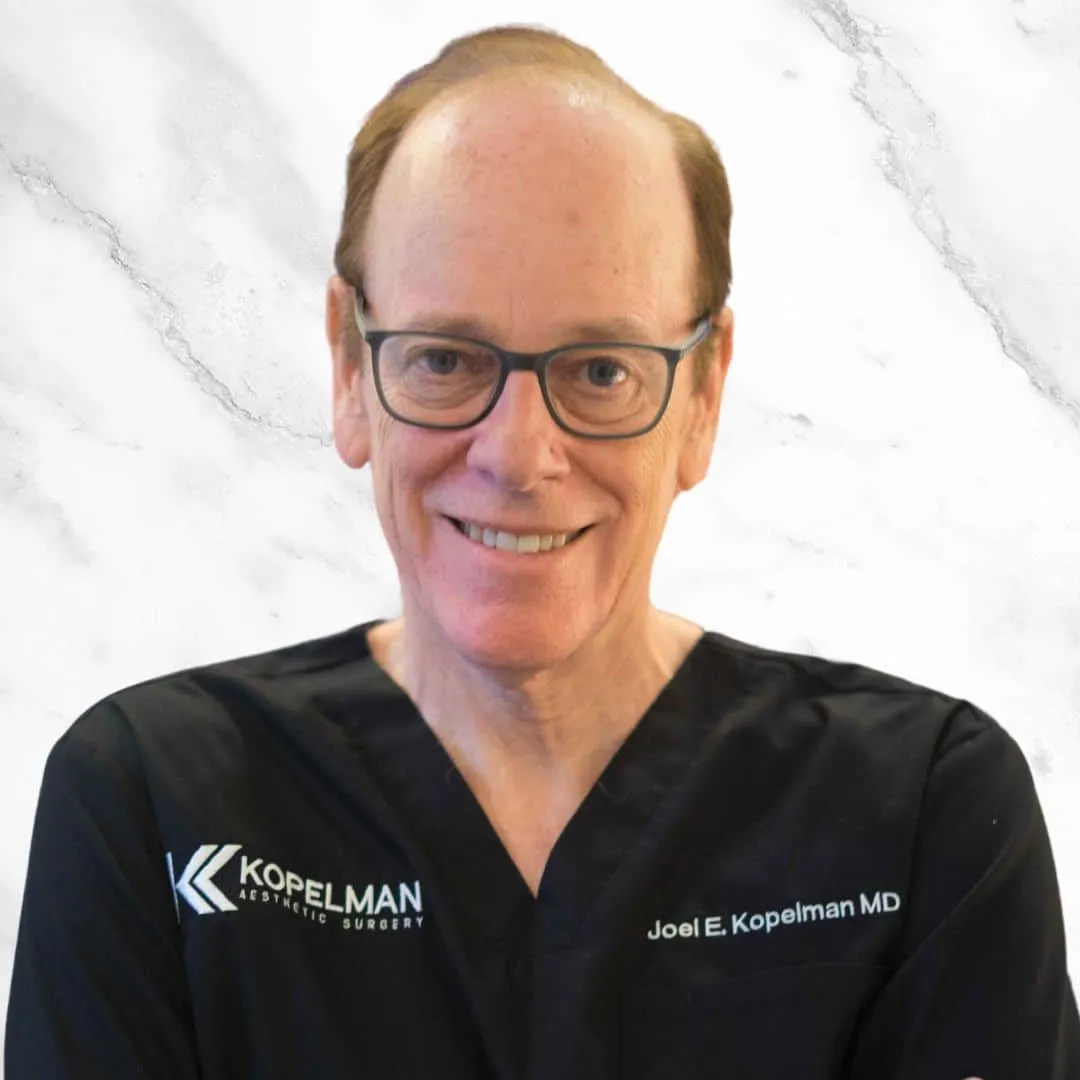
Dr. Joel E. Kopelman is a both a facial plastic and oculoplastic surgeon with over 35 years of experience in cosmetic rejuvenation of the face, neck, and eyes. Renowned for his innovative techniques and meticulous approach, Dr. Kopelman has built a reputation as a trusted expert among patients seeking transformative results that are both beautiful and natural.
Dr. Kopelman’s commitment to excellence extends beyond surgery; his warm and compassionate approach provides patients with a sense of comfort and trust throughout their treatment journey. Supported by a team of first-class professionals, Dr. Kopelman continuously strives to exceed patient expectations, fostering a reputation for delivering unparalleled satisfaction and long-lasting results.
Page Updated on [last_updated_date] by Dr. Joel Kopelman (Facial Plastic Surgeon) of Kopelman Aesthetic Surgery.

Schedule a Consultation

For a Deep Plane Facelift

To schedule a private consultation with Dr. Kopelman, please call the office or request an appointment online.

Add Your Heading Text Here

Lorem ipsum dolor sit amet, consectetur adipiscing elit. Ut elit tellus, luctus nec ullamcorper mattis, pulvinar dapibus leo.