
For nighttime dryness, thicker preservative-free ointments such as GenTeal PM or Refresh PM may help keep the eyes moist during sleep. These products can blur vision, so patients should use them only as directed. Dr Kopelman may adjust the plan based on swelling, eyelid closure, symptoms, and any prescription drops used during recovery, especially if a patient also has dry eyes after surgery.
Key Takeaways
- Preservative-free artificial tears are often the first choice after eyelid surgery because they provide moisture with a lower risk of irritation.
- Thicker gel drops or night ointments may help when dryness is more pronounced or persists overnight, but they can blur vision.
- Prescription drops may help reduce swelling or lower the risk of infection, but they are different from lubricating drops.
- Patients should avoid redness-relief drops, old bottles, expired products, and any medication not approved by their surgeon.
- Call the surgeon if pain gets worse, vision changes, swelling increases, discharge appears, or dryness does not improve.
Best Eye Drops After Blepharoplasty
The safest choice depends on dryness, tear quality, the medication schedule, and the surgeon’s instructions. Common options include preservative-free artificial tears, thicker gel drops, and night ointments. Prescription drops may also be used as needed to reduce swelling or prevent infection.
Artificial Tears
Artificial tears such as Refresh Plus, Refresh Celluvisc, Systane Ultra, Blink Tears, and TheraTears may help with daytime dryness, burning, or a gritty feeling, while eye ointments and blepharitis drops may be used depending on the presence of eyelid inflammation. Preservative-free options are often preferred when drops are used often.
Thick Gel Drops
Thick gel drops such as GenTeal Gel, TheraTears Liquid Gel, and Refresh Liquigel may last longer than regular artificial tears. They can blur vision for a short time, so patients may prefer them when they do not need clear vision right away.
Night Ointments
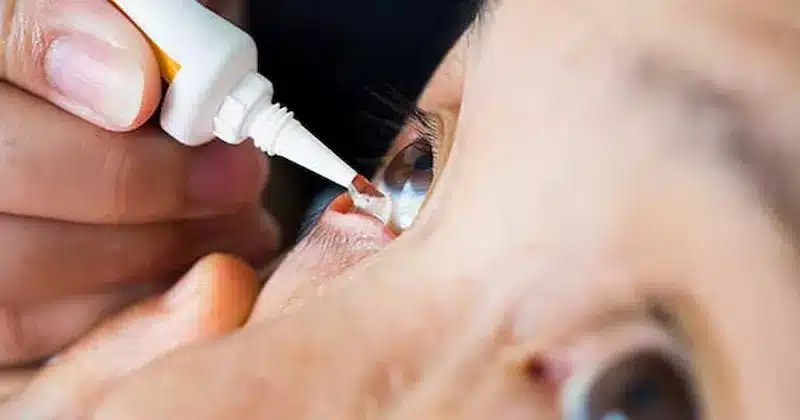
Night ointments such as GenTeal PM Ointment, Systane Nighttime Ointment, and Refresh PM Ointment may help prevent dryness during sleep. These products are thicker, can blur vision, and should usually be used at night if approved by the surgeon.
Can I Use Eye Drops After Blepharoplasty?
Most patients can use eye drops after the surgery if their surgeon approves them. Lubricating drops can help with dryness caused by swelling, short-term changes in blinking, or increased exposure of the eye surface. Prescription drops should not be replaced with over-the-counter drops unless the surgeon says to do so.
Drops to Avoid
Avoid redness-relief drops labelled “redness reliever” or “gets the red out” unless your surgeon says they are safe. These drops can constrict blood vessels, irritate healing tissue, and mask redness that your surgeon may need to assess.
Patients using drops for drooping lids should also understand that over-the-counter eye drops for ptosis are not the same as post-surgical lubricating drops and should not be used to replace the recovery plan.
Blepharoplasty Post-Op Instructions
Blepharoplasty post-op instructions often include lubricating drops, cold compresses, ointment, and activity limits. Follow the schedule your surgeon gives you, especially if you use more than one product.
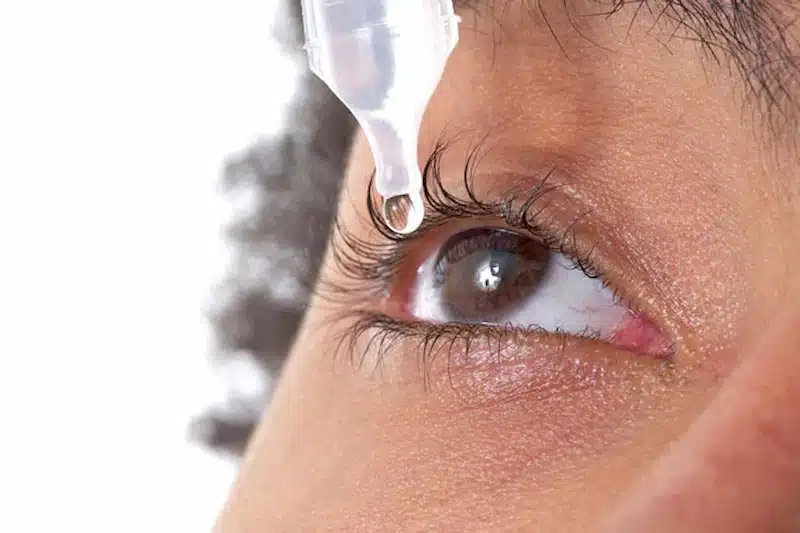
- Wash your hands before touching any bottle, vial, or ointment.
- Pull down the lower lid and place one drop into the small pocket.
- Keep the bottle tip away from the eye, skin, and lashes.
- Wait between different drops unless your surgeon gives different instructions.
- Use the ointment last if both drops and ointment are part of your plan.
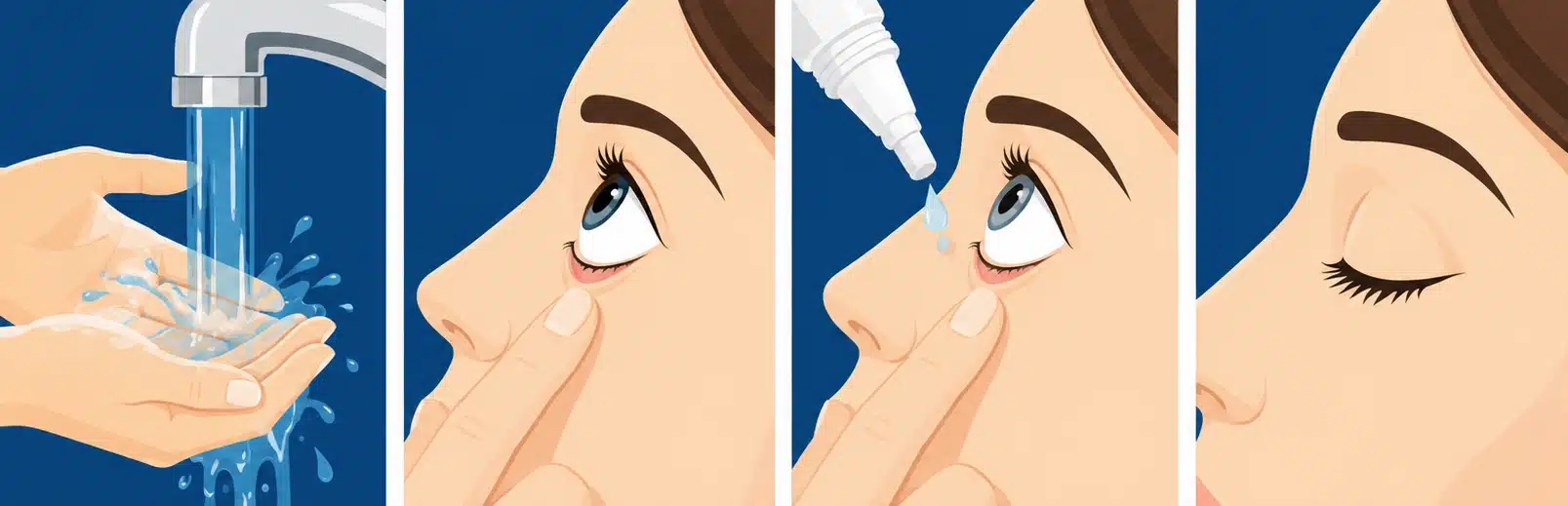
How Long to Use Eye Drops After Blepharoplasty
Some patients use lubricating drops for the first few days after surgery. Others may need them for 1–2 weeks or longer if dryness, burning, or a gritty feeling continues. In early recovery, preservative-free drops may be used every 2–4 hours during the day if approved.
Prescription drops should be administered according to the exact schedule provided by the surgeon. Do not stop them early, extend them, or use them more often unless your surgeon tells you to.
When to Call Your Surgeon
Call the surgeon if pain worsens, redness increases, swelling becomes severe or one-sided, discharge appears, or vision changes suddenly after eyelid surgery. Trouble opening or closing the eyelid should also be checked. Dr Kopelman reviews these symptoms in light of the procedure, anatomy, and healing stage.
If you have ongoing dryness, irritation, or questions about your recovery, schedule a consultation with Kopelman Aesthetic Surgery for a clinical evaluation.