Blepharoplasty in NYC with Personalized Surgical Planning

Look Refreshed, Not Overdone
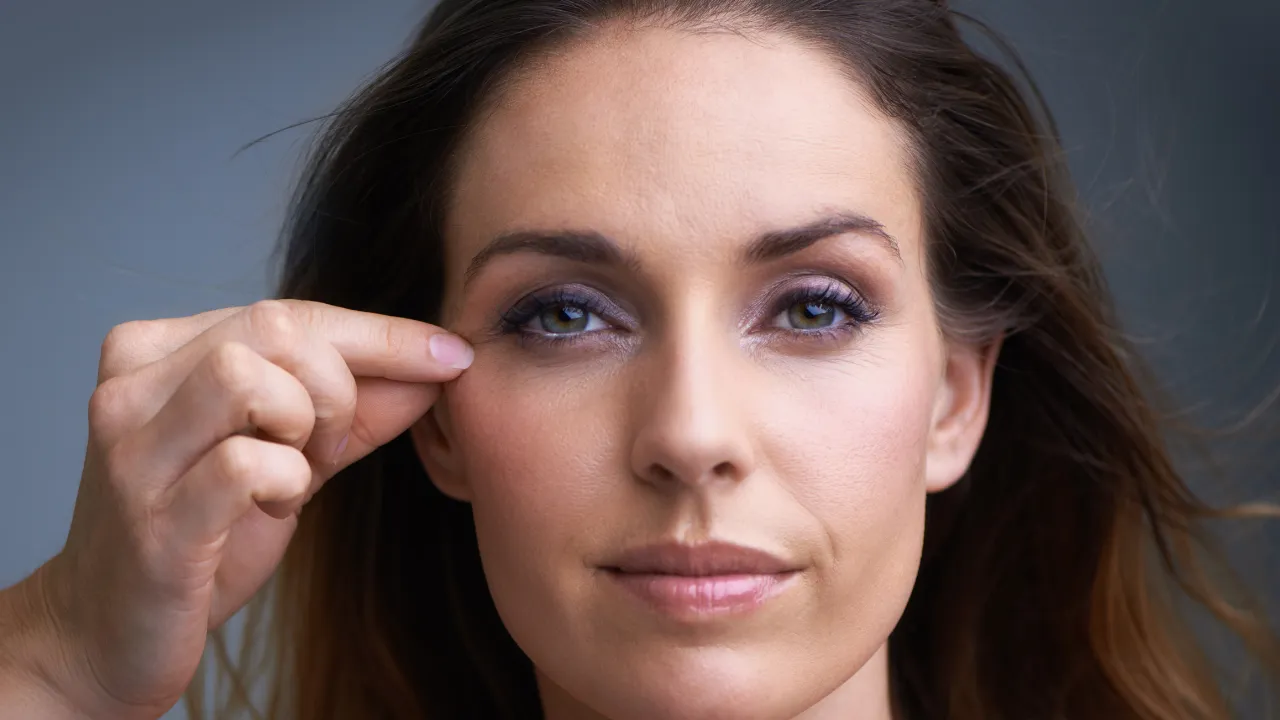
Excess skin on the upper lids can create hooding that makes the eyes look smaller or even narrows your field of vision, while loose skin and herniated fat on the lower lids create puffiness and under-eye bags. Eyelid correction restores balance to the eye area while keeping it recognizably yours.
Dr. Kopelman favors a tissue-preserving philosophy. Rather than aggressively removing skin and fat, which can leave a hollow, gaunt, or surprised look, his technique conserves tissue and repositions it where possible. The result is a rested, natural refresh that holds up both in-person and on camera.
Blepharoplasty is often one part of a broader facial rejuvenation plan. Because the eyes are the first place aging tends to show, improving this area can soften shadows, reduce heaviness, and make the whole upper face look more youthful, freshed,and alert.
Why Choose Kopelman Aesthetic Surgery for Blepharoplasty in NYC
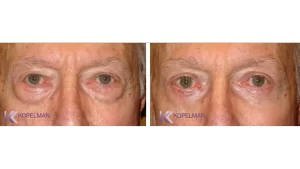
Patients consistently value this continuity when comparing blepharoplasty clinics, because it supports clear communication and accountable, reliable outcomes. The practice is located on Park Avenue in Carnegie Hill, a few blocks from Central Park and the Museum Mile.
How to Choose the Best Blepharoplasty Surgeon in NYC
Oculoplastic surgeons
General ophthalmologists
Upper and Lower Eyelid Surgery Options
Upper Blepharoplasty
Lower Blepharoplasty
Combined Procedures
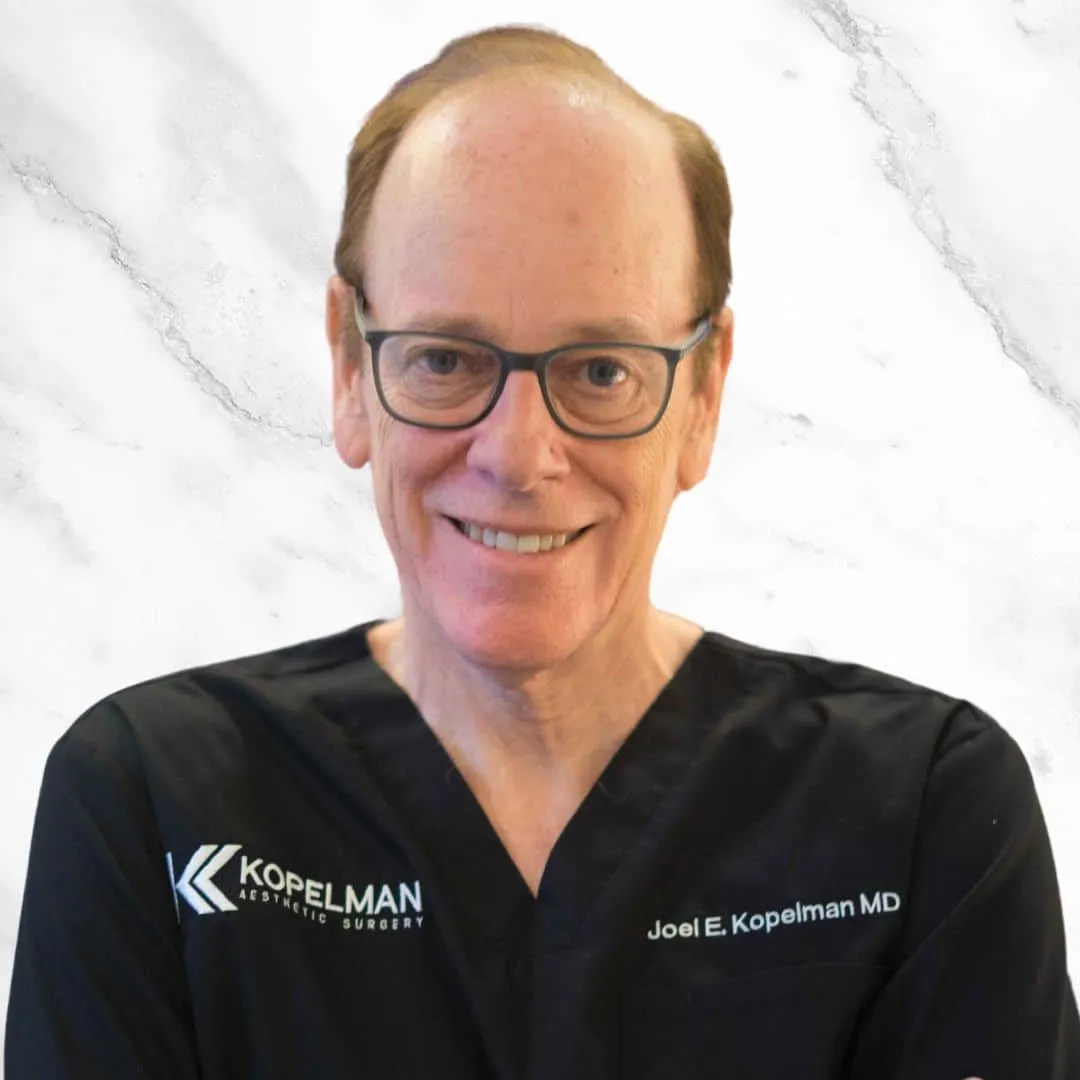
Dr. Joel Kopelman
Dr. Joel Kopelman: Best Blepharoplasty Surgeon in NYC
Schedule a Consultation for a Blepharoplasty.
Upper Blepharoplasty NYC: Before & After.
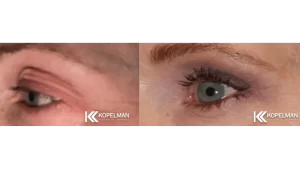
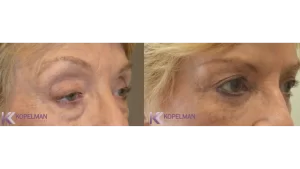
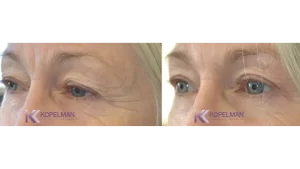
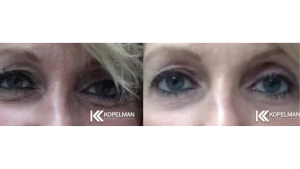
Surgical Techniques: Laser, Suture, and Tissue-Preserving Approaches
There is no single way to perform blepharoplasty, and matching the technique to the patient is what produces natural results. In most cases Dr. Kopelman performs a suture blepharoplasty technique with carefully placed closures.He prefers non-absorbable suture closure in the upper eyelid blepharoplasty because they produce the least amount of evidence that you had eyelid surgery.The upper eyelid sutures are removed in 5-7 days and usually takes only a few minutes at a short follow-up visit.As the incisions mature over several months eyelid surgery scars become difficult to see. Following your aftercare instructions closely supports the smoothest possible scar healing.
Non-Surgical Alternatives
Results You Can Evaluate
Safety, Risks, and Tradeoffs
Blepharoplasty is generally low risk when performed by an experienced eyelid surgeon, but every surgery has tradeoffs, and understanding them upfront is part of informed planning. Temporary swelling, bruising, and tightness are normal during healing.
Less common issues are worth understanding too:
Who is a Good Candidate
A common question is whether the surgery alters your appearance: does blepharoplasty change eye shape is something Dr. Kopelman discusses directly, and the goal is always to refresh, not to restructure, your natural eyes.
Medically Necessary vs. Cosmetic Blepharoplasty
Blepharoplasty in NYC Cost
- Upper blepharoplasty: $10,000
- Lower blepharoplasty: $10,000
- Double eyelid surgery: $15,000
- Ptosis treatment (per eye): $8,000
Final cost can vary based on your anatomy, the surgical approach, and whether eyelid surgery is combined with a brow lift, fat transfer, or other facial treatments. If you are comparing options, it helps to understand the typical cost of blepharoplasty near me before you decide. A consultation confirms the exact plan, pricing, and timeline before you move forward.
Recovery and Downtime
Testimonials of the Best Blepharoplasty Surgeon in New York City
Trustindex verifies that the original source of the review is Google. Fine in my opinion.Posted on GoogleTrustindex verifies that the original source of the review is Google. Excellent straight forward consult. Looking forward to booking Dr. Kopelman for fat transfer and upper blephPosted on GoogleTrustindex verifies that the original source of the review is Google. Had a consultation visit with Dr Kopelman yesterday to discuss possible upper & lower eyelid surgery. Had a good consult and felt the Doctor was quite knowledgeable. He listened to my concerns and goals and was quite upfront about what he could do and what my expectations were. This was an initial consultation and I have seen a few other surgeons prior to this consult and have one more to go next week. So I haven't made any final decisions yet. Only downside for me personally is that the ambulatory center he uses is in Bergen County, NJ - I live in Queens and that might be a bit cumbersome to get to and from for me. I found his proposal a bit higher then the others I secured insofar as price but that is neither here nor there His demeanor, manners and knowledge were very good and I enjoyed the consultation experience with Dr Kopelman I have no further experience to share at this point Robert SPosted on GoogleTrustindex verifies that the original source of the review is Google. Dr kopelman and his son worked on my eye lids and eye area and did a really wonderful job. Very family oriented decent people. The mother was incredibly kind, thoughtfull and always answered my calls. The daughter is also very kind.Posted on GoogleTrustindex verifies that the original source of the review is Google. I cannot express how grateful I am to have found Dr. Kopelman. After countless failed attempts at getting real help for my scalp and hair thinning, I felt defeated. I live in an area that doesn’t truly cater to ethnic or textured hair, so finding someone who understood my concerns felt almost impossible. After doing extensive research on specialists experienced with African American hair, I discovered Dr. Kopelman and I’m so glad I did. From the moment I met him, he provided a clear, thorough, and compassionate explanation of what was happening with my hair. For the first time, I felt seen, understood, and taken seriously. He created a personalized treatment plan specifically tailored to my needs and even prescribed medications to address the root cause. Walking out of his office, I felt genuine relief. Instead of hearing the usual “there’s nothing we can do,” I finally had answers, a plan, and hope. If you’re struggling with hair loss or scalp issues and want a doctor who truly understands ethnic hair and takes the time to guide you, I highly recommend Dr. Kopelman. His expertise, kindness, and clarity make all the difference.Posted on GoogleTrustindex verifies that the original source of the review is Google. Dr Kopelman is incredible. He knew I was worried about a scar forming & in less than a month he cured me with topical cream. He is the real deal! I’m so happy I found him.Posted on GoogleTrustindex verifies that the original source of the review is Google. Dr. Kopelman 10/10: I was seeing an ophthalmologist weekly for months to take care of an eye issue I was having. When they couldn’t help me anymore, they told me to find an ocular plastic surgeon. After doing my research, I found Dr. Kopelman who is not only a top plastic surgeon, but has the ocular speciality I was looking for. Right when he saw me at our consultation, he immediately knew I needed a CT scan. He couldn’t believe any other doctor let this situation go on for this long. Dr Kopelman sat there for hours finding me the proper place to get my CT scan, along with making dozens of calls to my insurance company arguing with them on my behalf. He went above and beyond. Not even a week later, I was in his chair getting an orbital tumor removed! He made me so comfortable and the process was seriously so quick and painless. I did not bruise or swell at all. I went back a week later to get my stitches removed, which was also extremely quick and painless. It looked as if I scratched myself- not that anyone performed surgery on my face. There isn’t even a scar. That being said- Dr. Kopelman (and Kiki) had the best bedside manner, where so attentive, and just all around amazing. If I ever need a surgeon again, this is where you will find me. I truly can not thank this office enough.Posted on GoogleTrustindex verifies that the original source of the review is Google. Hey! Let me start by saying Doctor kopleman was amazing! He listened to the things I said and understood everything. He was soooo nice and patient and gave me all the time I needed to explain exactly what I wanted and my results are amazing! Thank Doctor kopelman and staff.Posted on Google
— COMMON QUESTIONS
Frequently Asked Questions
No. Standard blepharoplasty removes excess skin and fat but does not alter the eyelid’s underlying structure or your eye’s natural contour. Procedures that intentionally reshape the eye, such as a canthoplasty or a double-eyelid crease, are separate operations discussed on their own.
Most patients are between their late 30s and 60s, but heavy upper-lid skin can run in families and show up in the 20s or 30s, while others wait until their 70s. Anatomy and skin quality, not age, determine candidacy.
Many patients need it only once, since results often last a decade or longer. A repeat procedure is possible if aging brings back excess skin, though there is a limit to how much skin can be removed before it affects how the lids close. See more on how many times you can have upper blepharoplasty.
Serious complications are rare. The risks specific to the lower lid are mostly temporary swelling, brief dryness, and, uncommonly, a change in lid position, all of which are minimized by conservative, fat-preserving technique and surgeon experience.
An over-done result usually traces to too much skin or fat being removed, which can create a hollow or pulled appearance. It is largely preventable, which is why a tissue-conserving approach avoids aggressive removal.
Early asymmetry is normal. One side often swells or bruises more depending on sleep position and individual healing, and it typically evens out over the first few weeks. Asymmetry that persists past a few months is worth a follow-up visit.
Mild, temporary dryness or grittiness can occur because the lids are briefly less able to spread tears fully. Lubricating drops usually manage it, and it generally settles within a few weeks as the eyelids relax.
A lower lid that pulls down or shows white below the iris is most often temporary, caused by early swelling. Lasting malposition is uncommon and is minimized by preserving the lower lid’s natural support during surgery.
Incisions sit in the upper-lid crease, just under the lower lash line, or entirely inside the lid, so they mature into thin, well-hidden lines. Most patients can camouflage any residual redness with makeup within about two weeks.
For mild concerns, Botox, fillers, and energy-based skin tightening can soften heaviness or fine lines without downtime, but they cannot remove excess skin or fat. They suit early or minor changes rather than significant hooding or under-eye bags.
Sometimes. When upper-lid skin droops far enough to obstruct your upper field of vision, an insurer may cover the functional portion of the procedure. You will typically need a documented eye exam and visual field test; purely cosmetic work is not covered.
Still have questions?
To schedule a private consultation with the best blepharoplasty surgeon in NYC, please call the office or request an appointment online.