
Upper blepharoplasty is a common procedure designed to remove excess skin and fat to create a more youthful appearance. However, when a botched upper eyelid surgery occurs, the results can be both aesthetically disappointing and functionally harmful.
Patients may experience a wide range of complications, including lid closure issues, visible asymmetry, and a hollow or unnatural appearance. These issues can be corrected through specialized revision procedures performed by a qualified oculofacial plastic surgeon.
Common Complications of Botched Blepharoplasty
Patients who have experienced eye bag surgery gone wrong or a failed upper lid procedure often deal with a combination of aesthetic and functional problems. These include:
- Dry, irritated eyes due to over-aggressive skin removal, which may also worsen bright ocular sensitivity to light and sunlight.
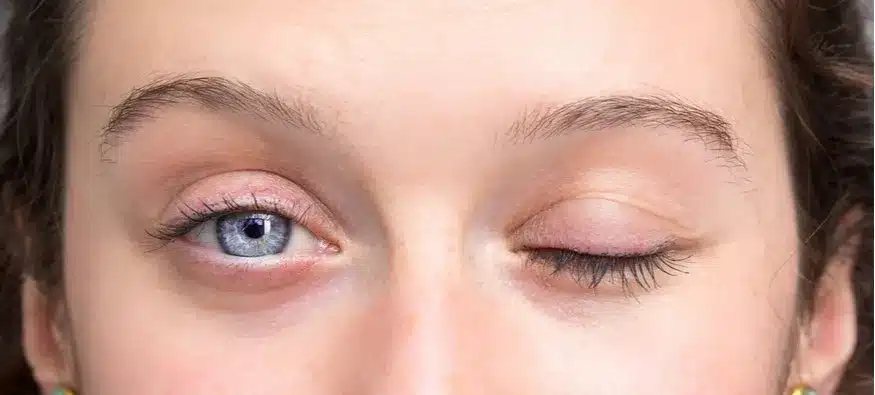
- Inability to fully close the eyes, requiring constant use of artificial tears and potentially risking corneal damage.
- Round eye appearance, where over-excision of lower lid skin pulls the lid down unnaturally, creating visible scleral show.
- A hollow, cadaver-like appearance due to excessive removal of fat pockets is one of the most recognizable signs of a poor outcome, which often worsens with age.
- Residual puffiness if not enough fat is removed, making the procedure seem incomplete.
- Drooping upper eyelids are often caused by untreated ptosis or accidental injury to the eyelid-opening muscles during the initial operation.
- Puckering after blepharoplasty, which can result from uneven wound closure, overcorrection, suture placement, or the way the skin reacts during healing.
- Scarring and irregularities, including uneven eyelid creases, lumps under the skin, or a visibly high or low crease.
- Persistent bruising that darkens the skin long after the procedure, sometimes creating discoloration that mimics the tired look patients hoped to correct.
- Drooping brows or cheeks that were not addressed during the initial procedure, resulting in a hollowed or skeletonized look.
- Festoons, which are bags or swellings on the cheek that may develop after the procedure due to inflammation or may have gone untreated during the original operation.
- Complications from thyroid eye disease, which can worsen after cosmetic procedures if not properly assessed beforehand.
Recognizing these problems early is important. Timely intervention, whether through revision blepharoplasty or a non-surgical approach, can prevent further damage and restore a more natural appearance.
What Causes a Botched Eye Lift?
Several factors can contribute to a poor outcome from upper or lower lid procedures. Understanding these causes helps both in preventing complications and in planning effective correction.
- Poor pre-operative planning is one of the most common causes. When the patient’s lid anatomy, brow position, skin laxity, or existing conditions like ptosis are not thoroughly evaluated, the surgeon may remove too much or too little tissue.
- Improper surgical technique is another frequent factor. Over-removal of skin from the upper lid is among the most serious errors because it cannot simply be replaced. A conservative “less is more” approach is essential, since a small amount of additional tissue can always be addressed later, whereas adding tissue back is far more complex.
- Failure to address adjacent issues such as low brow position, cheek descent, or festoons can leave the patient looking worse overall, even if the lid procedure itself was technically adequate.
- Patient healing tendencies also play a role. Some individuals develop excessive scarring, react poorly to sutures, or experience prolonged inflammation. A thorough medical history, including any healing complications from prior procedures, can help surgeons anticipate these challenges.
- Outdated methods may produce results that look unnatural by modern standards. Techniques in blepharoplasty have evolved significantly, with current best practices emphasizing fat preservation and repositioning rather than aggressive removal.
Signs You May Need Revision Blepharoplasty
Identifying the need for a revision procedure is an important first step. Key signs include:
- Visible or asymmetric scarring along the lid crease
- Lumps, uneven surfaces, or puckering after blepharoplasty
- Difficulty closing your eyes fully, especially during sleep
- Residual fat pockets or persistent puffiness
- A hollow, sunken look around the eye socket
- Upper lids that continue to droop or obstruct vision
- Bright ocular sensitivity or chronic dryness that was not present before the original procedure
If any of these issues persist beyond the normal healing window, a consultation with a revision specialist is the appropriate next step.
Physical and Psychological Impact
The physical effects of a failed blepharoplasty can extend well beyond the eye area. Chronic dryness, irritation, light sensitivity, and impaired lid closure can affect daily comfort and even compromise vision over time.
Beyond the physical problems, there is a significant psychological toll. Many patients experience a drop in self-esteem and confidence after seeing an unnatural or aged appearance in the mirror. This can affect both personal relationships and professional life, making correction not just a cosmetic concern but a quality-of-life priority.
How Corrective Procedures Can Help
Corrective blepharoplasty, also known as revision blepharoplasty, offers a path forward for those dealing with complications from a previous operation. The specific approach depends entirely on the nature of the problem, the patient’s anatomy, and the amount of tissue available to work with.
- Scar revision addresses uneven, thickened, or visible incision lines. The existing scar is carefully excised, and the wound is reclosed using precise techniques to minimize tension and promote better healing.
- Fat grafting and repositioning restore volume to areas where too much fat was removed during the initial procedure. Fat is harvested from another area of the body, purified, and injected into the hollow areas around the orbit. This is especially important for reversing a sunken, skeletonized appearance.
- Canthoplasty and canthopexy tighten the lower lid at its outer corner, correcting ectropion, scleral show, or a rounded lower lid shape caused by over-excision.
- Skin grafting may be required when too much skin is removed from the upper lid, leaving the patient unable to close the eyes fully. Skin is typically harvested from behind the ear or the opposite upper lid to match color and texture as closely as possible.
- Ptosis repair corrects a drooping upper lid by tightening the levator muscle or its aponeurosis, restoring a natural and symmetrical lid height.
For patients with less severe complications, non-surgical treatments such as hyaluronic acid fillers, CO2 laser resurfacing, or radiofrequency tightening may help improve minor irregularities, skin texture concerns, or shallow hollowing without the need for a second operation.
How Long Should You Wait Before Revision?
Patience is critical after a disappointing outcome. Most specialists recommend waiting at least six to twelve months before pursuing corrective work. This allows the tissues to fully heal, swelling to resolve, and scars to mature.
During this waiting period, the appearance of the eyelids can continue to change. Swelling, skin tightness, and subtle tissue settling may improve the result naturally over several months. Pursuing revision too early can increase the risk of additional scarring, compromise the blood supply to already-stressed tissues, and lead to poorer long-term results.
That said, some complications require earlier intervention. If you are unable to close your eyes fully, experience significant corneal exposure, or develop signs of infection, seek evaluation promptly rather than waiting.
Your revision surgeon will assess the current state of the tissues, determine whether enough time has passed for safe correction, and develop a staged plan if needed.
What Does Revision Blepharoplasty Cost?
Revision blepharoplasty typically starts at around $8,500, though the final cost depends on the complexity of the case, the specific techniques required, and whether additional procedures such as fat grafting or skin grafting are needed. Revision cases cost more than primary procedures because the surgeon is working with scar tissue, altered anatomy, and tissues already compromised by a prior operation.
Total costs generally include the surgeon’s fee, anesthesia, facility charges, and any postoperative care. When functional issues such as impaired lid closure or obstructed vision are involved, a portion of the procedure may qualify for insurance coverage. A visual field test can help determine whether your case meets the criteria for medical necessity.
For reference on national cost averages for primary procedures, the American Society of Plastic Surgeons publishes annual blepharoplasty cost data. During your consultation, ask for a detailed breakdown of all anticipated costs so there are no surprises.
How to Choose the Right Surgeon for Revision
Choosing the right surgeon for a corrective procedure is the single most important decision in this process. Revision work is significantly more complex than a primary operation because the tissues have already been altered, scarred, and potentially compromised.
Look for a surgeon who is board-certified and has specific, documented experience with revision blepharoplasty. Oculofacial plastic surgeons and oculoplastic surgeons have fellowship training focused exclusively on the anatomy and function of the eyelids and orbit, which is particularly relevant for complex corrective cases.
Review before-and-after photos of actual revision patients, not just primary cases. Ask about the surgeon’s approach to complications similar to yours, how many revision procedures they perform annually, and whether they prioritize conservative correction over aggressive intervention.
Patient reviews and testimonials can provide insight into the experiences and outcomes of other revision patients. Pay attention to feedback about communication, follow-up care, and whether the surgeon set realistic expectations.
Your Goals
A botched eye lift can be life-altering, causing both physical discomfort and emotional distress. However, many of these complications can be addressed with appropriate corrective measures and the expertise of an experienced revision specialist. Whether through revision blepharoplasty or non-surgical treatments, it is possible to restore your eyes’ natural look and function.
If you’ve experienced complications from a previous procedure, seeking help from a skilled surgeon can help you regain both your confidence and comfort.
Are you seeking a highly skilled, experienced, board-certified plastic surgeon for your blepharoplasty or other corrective eyelid procedure? Dr. Kopelman, a 30+-year oculofacial plastic surgeon, is an exceptional choice.
To start the process, please call the office closest to you to schedule a consultation or fill out the form below.
Botched Blepharoplasty FAQs
The most common visible signs include drooping upper lids that still obstruct vision, a hollow or sunken appearance caused by excessive fat removal, uneven lid creases, visible scarring outside the natural fold, and a rounded or pulled-down lower lid.
In more severe cases, patients may have difficulty fully closing their eyes, resulting in a visibly strained expression and chronic dryness.
Puckering is a gathering or wrinkling of the skin along the incision line that can develop as the tissues heal. It may result from the way sutures were placed, overcorrection during the procedure, or the skin’s natural reaction to the incision. In many cases, mild puckering improves on its own within the first few months.
If it persists beyond the normal healing timeline, treatments such as scar revision, laser resurfacing, or steroid injections may help smooth the area.
Yes. Revision blepharoplasty can correct issues such as asymmetric creases, over-removed tissue, persistent ptosis, and visible scarring. The complexity depends on what went wrong during the initial procedure and how much tissue is available for correction. In cases where too much skin was removed, a skin graft may be necessary.
}An experienced oculofacial surgeon will evaluate your specific anatomy and create a detailed plan for correction.
Most patients see meaningful improvement within the first four to six weeks, but final results from revision blepharoplasty can take three to six months or longer. Swelling, scar maturation, and tissue settling continue gradually throughout this period.
Your surgeon will schedule follow-up appointments to monitor progress and determine whether any additional refinement is needed.
Most patients are satisfied with their results after a well-performed procedure. Some people experience mild anxiety or even temporary regret during the first week or two due to bruising, swelling, and the unfamiliar appearance of the healing eyes.
This is common and typically resolves as the swelling subsides and the final contour emerges. Choosing a qualified, experienced surgeon and maintaining realistic expectations are the most effective ways to reduce the risk of long-term dissatisfaction.
Potential risks include dry eyes, irritation, temporary blurred vision, bruising, and mild asymmetry during healing. More serious but rare risks include excessive skin removal leading to difficulty closing the eyes, infection, hematoma, and bright ocular sensitivity. Choosing a board-certified surgeon with extensive experience in eyelid anatomy helps minimize these risks.
A thorough pre-operative evaluation should screen for conditions such as dry eye syndrome, ptosis, and thyroid eye disease before any procedure is performed.
Yes. When lower lid procedures result in complications such as ectropion, excessive hollowing, visible scarring, or persistent puffiness, revision procedures can address these issues.
Techniques such as fat transfer, canthoplasty, or scar revision are commonly used depending on the specific problem. An in-person evaluation is essential to determine the best corrective approach.
Revision procedures typically start at around $8,500 due to the added complexity of correcting a prior operation. Total costs include anesthesia, facility fees, and postoperative care.
If the procedure addresses functional concerns like impaired lid closure, insurance may cover part of the cost. Ask for a complete cost breakdown during your consultation.