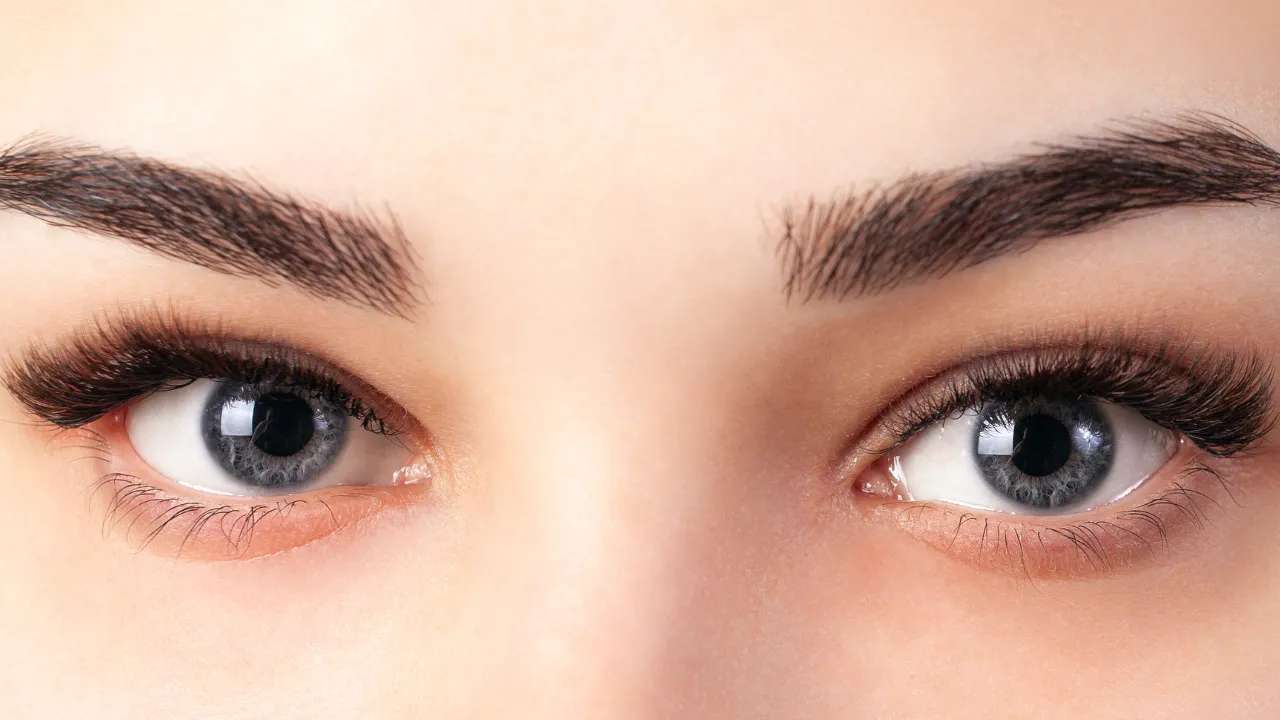

Symptoms such as pain, redness, swelling, vision changes, growths, or bumps that last for months can help identify the cause and guide treatment. Some eyelid bumps need only conservative care, while others may require prescription medication, drainage, removal, or biopsy.
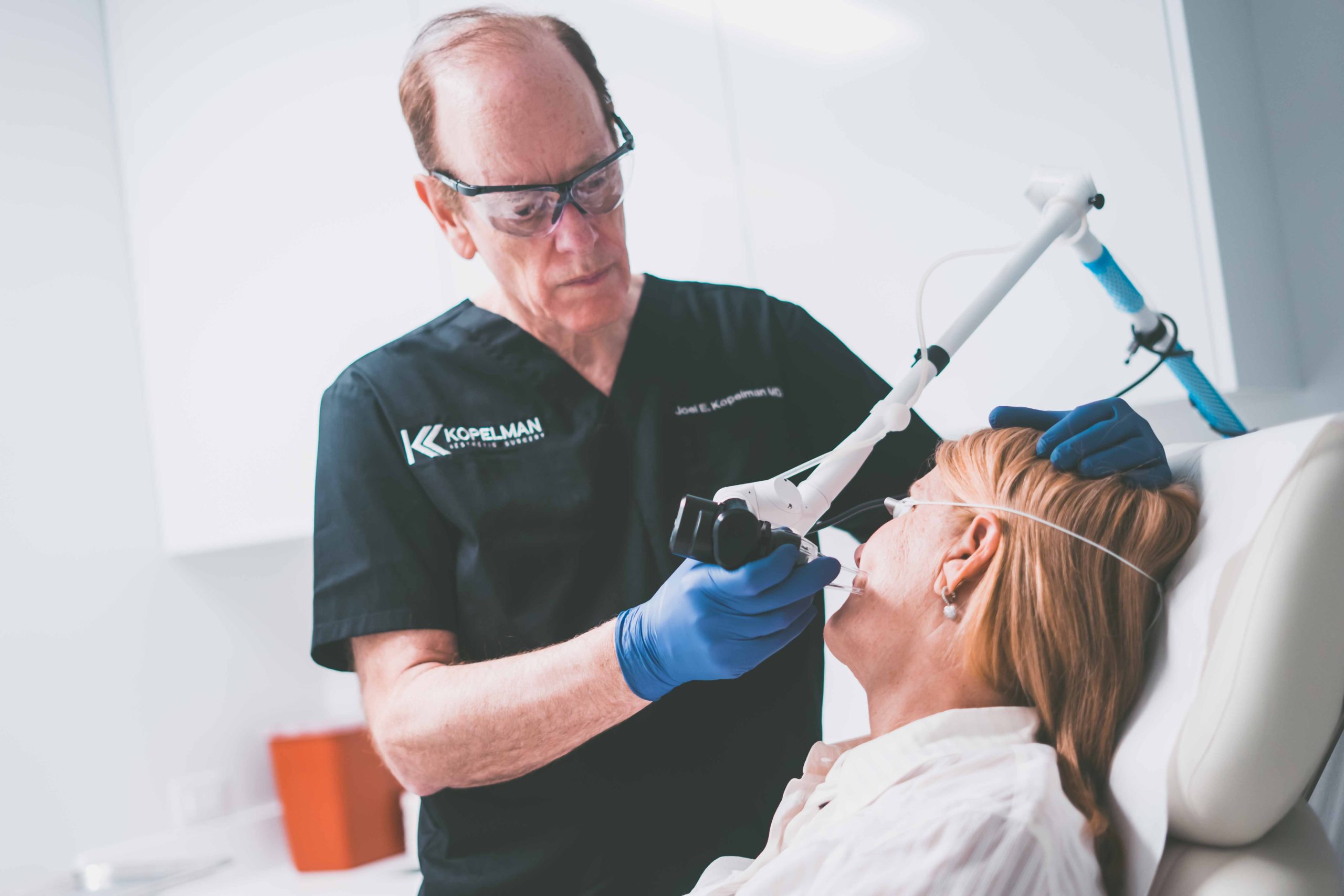
Dr. Joel Kopelman evaluates eyelid bumps by reviewing their location, duration, appearance, and effect on eye comfort or function.
Key Takeaways
- A white bump on the eyelid is often caused by milia, a stye, a chalazion, or a blocked oil gland.
- Pain, redness, swelling, location, and duration can help identify the likely cause.
- Do not pop, squeeze, or cut a raised spot at home because this can worsen irritation, infection, or scarring.
- Warm compresses and eyelid hygiene may help some lesions, but persistent or changing growths need medical evaluation.
- Seek specialist care if the area affects vision, grows, bleeds, crusts, causes lash loss, or keeps returning.
Common Causes
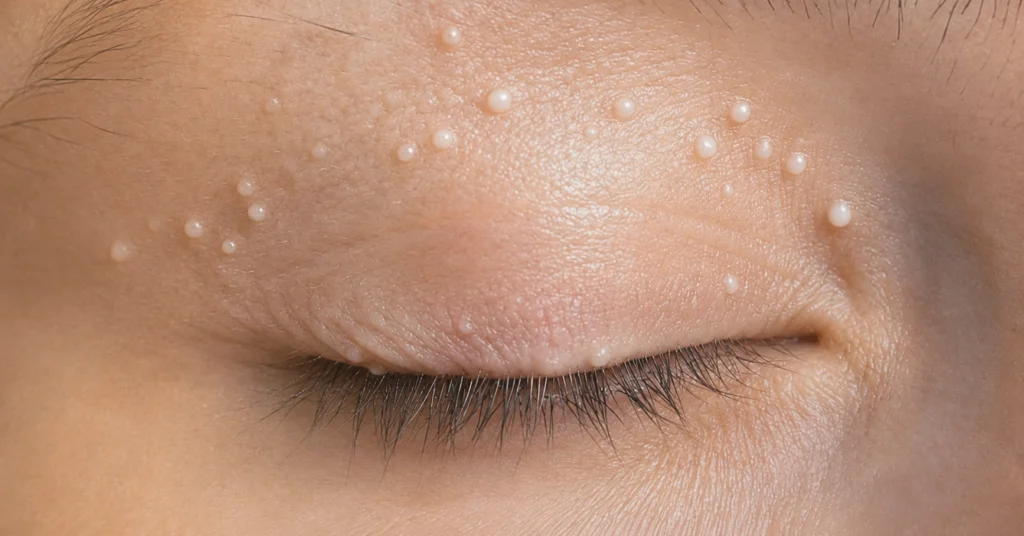
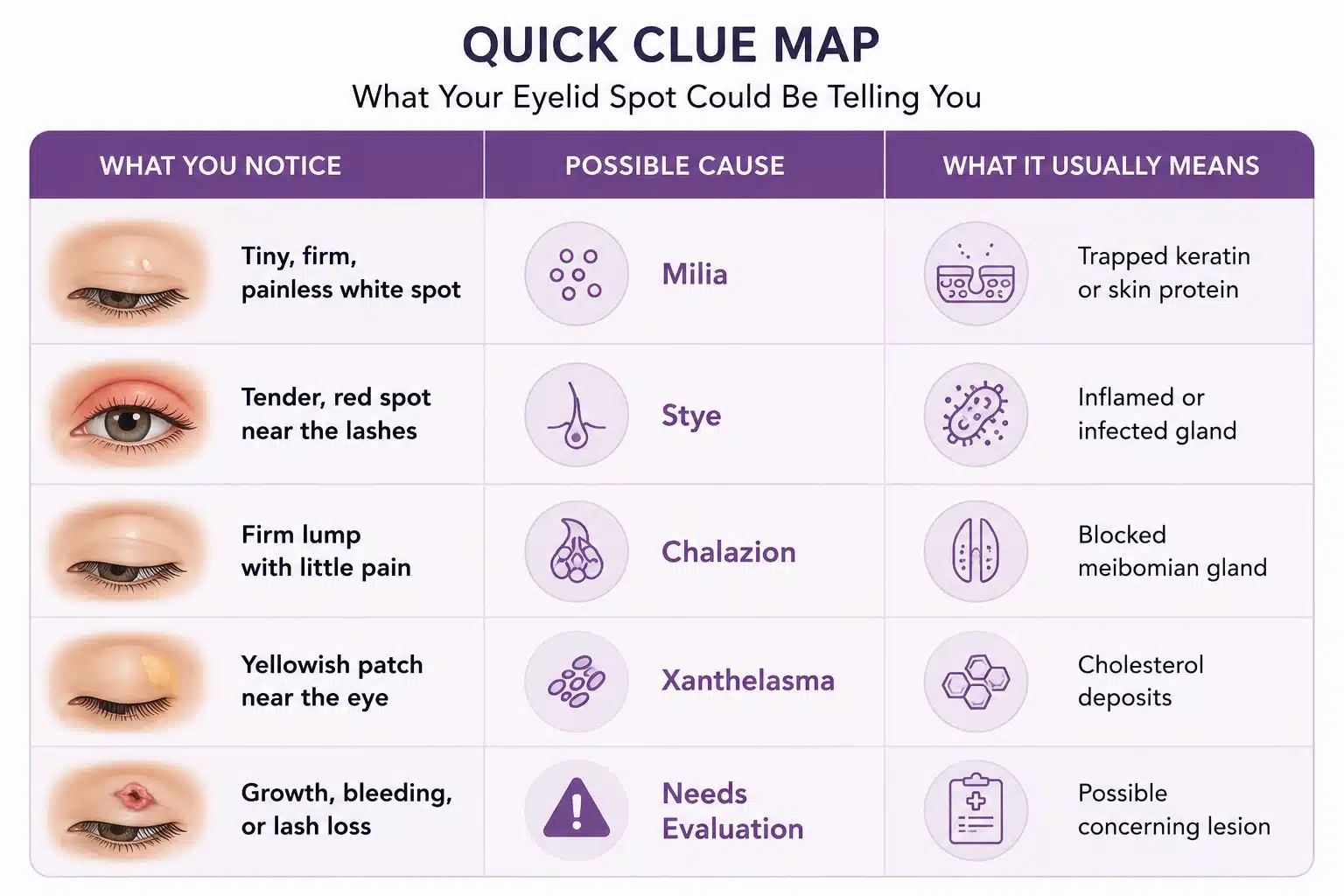
Several types of eyelid bumps can form on the eyelids when oil, keratin, inflammation, or infection affects the eyelid skin. Milia are small white cysts that can develop when dead skin cells or keratin become trapped under the surface. Styes often begin when oil glands, glands, or hair follicles become inflamed or infected near the lashes.
Milia, Styes, and Chalazia
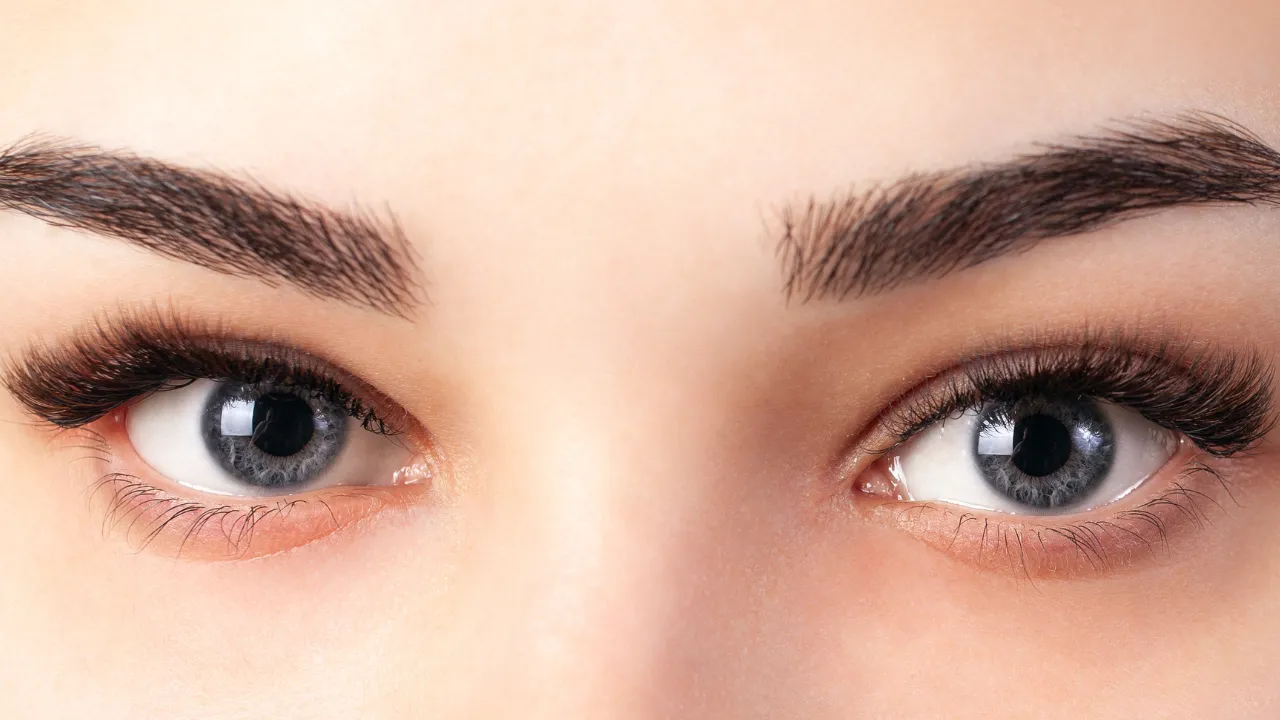
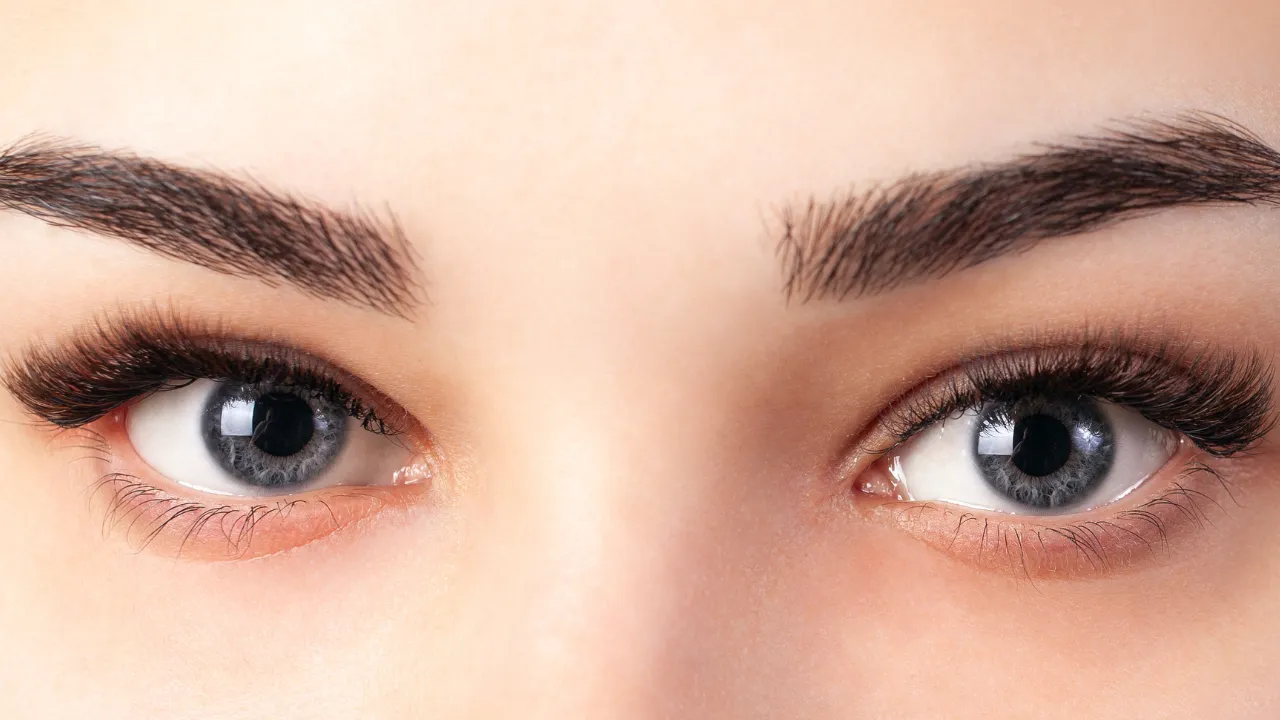
Milia usually do not hurt and may look like tiny white dots. Styes are often red, swollen, and tender. Chalazia usually form when meibomian glands become blocked, and larger ones may press on the eye or cause blurred vision.
Other Lesions
Xanthelasma can look like soft yellow or pale plaques near the eyes. These are cholesterol deposits, not pimples or cysts. Other eyelid lesions may include benign growths, cysts, or less common conditions that need an exam.
Is It a White Pimple on the Eyelid?
A white pimple on the eyelid is not always acne. The area around the eye contains delicate skin, lashes, tear-film structures, and glands, so raised spots can have different causes. Treating every lesion like a pimple can irritate the eye and delay proper care.
What Can Be Mistaken for Milia?
A milia-like spot may actually be a stye, a chalazion, a clogged pore, a cyst, or a xanthelasma. These conditions can look similar because they are often small and light in color. A clinical exam can identify the source more accurately than appearance alone.
Should You Pop It?
Do not pop, squeeze, or cut a lash line lesion at home. This can spread bacteria, damage the eye surface, or cause scarring. Touching the area with unwashed hands may also increase the risk of irritation or infection.
Symptoms and Location Clues
Location can help narrow the cause. A basic eyelid anatomy diagram can help explain the lid margin, lash line, and waterline mentioned throughout this guide.
A rim or lash line lesion may involve a stye or blocked gland, while a waterline spot may irritate the eye surface. A mark on thinner surrounding skin may suggest milia or another surface-level concern.
Painful or Painless Spots
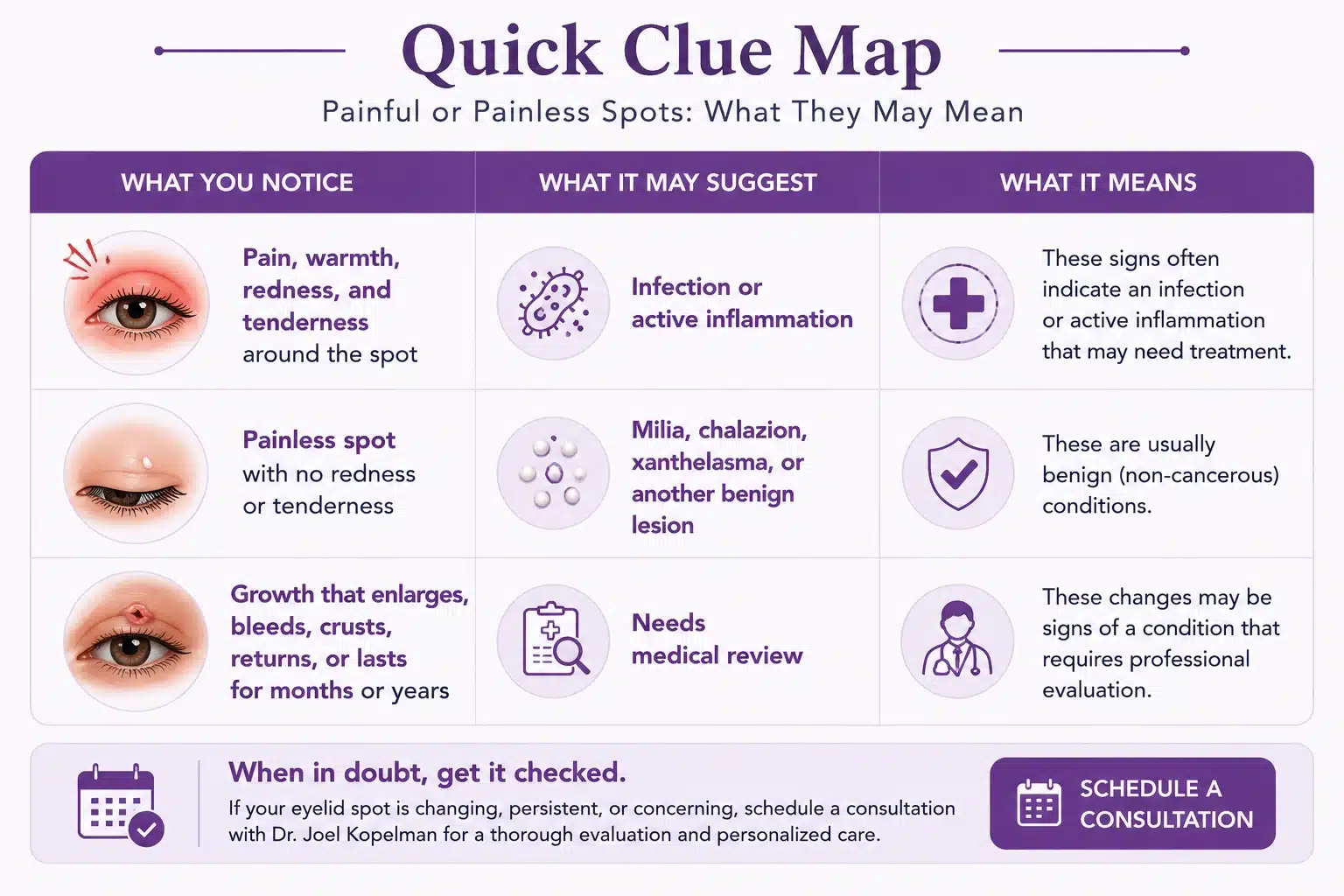
Symptoms can help show whether the spot is more likely to be inflamed, blocked, or benign:
- Pain, warmth, redness, and tenderness may suggest infection or active inflammation.
- A painless spot may be milia, a chalazion, xanthelasma, or another benign lesion.
- A growth that enlarges, bleeds, crusts, returns, or lasts for months or years needs medical review.
Safe Treatment Options
Treatment depends on the cause. Warm compresses may help styes and chalazia drain by loosening blocked oil, and eyelid hygiene can reduce debris and irritation along the lashes. Avoid harsh scrubbing because the surrounding tissue is thin and sensitive.
Medical Treatment
Milia often improve without treatment, but some persist. Professional care may include sterile extraction, medication, drainage, biopsy, or surgical removal, depending on the diagnosis. Proper treatment helps protect the eye surface and the surrounding skin cell structure.
When to See a Specialist
A specialist should evaluate any lesion that persists, grows, causes marked pain, or changes in color or texture, especially when it overlaps with other eyelid problems. Seek care sooner if there is spreading redness, discharge, bleeding, swelling that limits eye opening, or a growth that affects vision. Most concerns in this area are not cancer; a non-healing sore, a distorted lid margin, missing lashes, or repeated recurrence should be checked.
How Dr. Kopelman Evaluates These Concerns
Dr. Joel Kopelman examines the lid margin, lash line, waterline, and surrounding skin to identify the likely cause. He considers symptoms, duration, growth pattern, risk factors, and whether the lesion affects comfort or function. This helps separate common benign causes from conditions that need treatment, monitoring, or further testing.
To better understand a persistent, changing, painful, or recurring eyelid lesion, schedule a consultation with Kopelman Aesthetic Surgery for a clinical evaluation.