Eyelid Bumps: Causes, Types, Symptoms, and Treatment

I hope you’re enjoying reading this blog post if you want a consultation with Dr. Kopelman, click here.

Dr. Joel Kopelman

May 12, 2026

Most eyelid bumps are harmless, but they can come from several different causes, including a stye, chalazion, cyst, milia, xanthelasma, or benign skin growth. A stye is usually a painful, infected bump near the lash line, while a chalazion is often a firmer, painless swelling caused by a blocked oil gland.

Eyelid bumps may look red, white, yellow, swollen, or skin-colored, and treatment depends on the cause, symptoms, location, and whether the lesion is improving or changing.

Basic care may include warm compresses, lid hygiene, and avoiding eye makeup or contact lenses during periods of irritation, but persistent, painful, bleeding, fast-growing, or vision-related lesions require medical evaluation. Dr. Joel Kopelman, an oculoplastic and facial plastic surgeon in New York City, evaluates eyelid lesions by considering eyelid anatomy, eye surface health, and whether medical treatment, observation, drainage, or removal is appropriate.

Key Takeaways

  • A painful red lump near the lash line is often a stye, while a firmer painless lump may be a chalazion.
  • White, yellow, red, or skin-colored lesions can suggest milia, xanthelasma, cysts, papillomas, infection, or inflammation.
  • Warm compresses and clean lid hygiene may help some blocked-gland lesions improve.
  • Medical evaluation is important if the lesion affects vision, grows quickly, bleeds, causes severe pain, or lasts more than one to two weeks.

What Is an Eyelid Bump?

An eyelid bump is any raised area on or near the upper or lower lid. It may come from infection, gland blockage, trapped skin material, inflammation, or a small growth. Most cases are not dangerous, but diagnosis matters because similar-looking lesions can need different care.

Are Eye Bumps and Lid Lesions Different?

People often use “eye bumps” to refer to lumps around the eye, but most visible lesions occur on the lid. A true eye surface lesion may involve the conjunctiva, cornea, or deeper tissue. The location helps clinicians decide whether the problem involves the eye surface, lash line, or eyelid skin.

Common Types

Stye

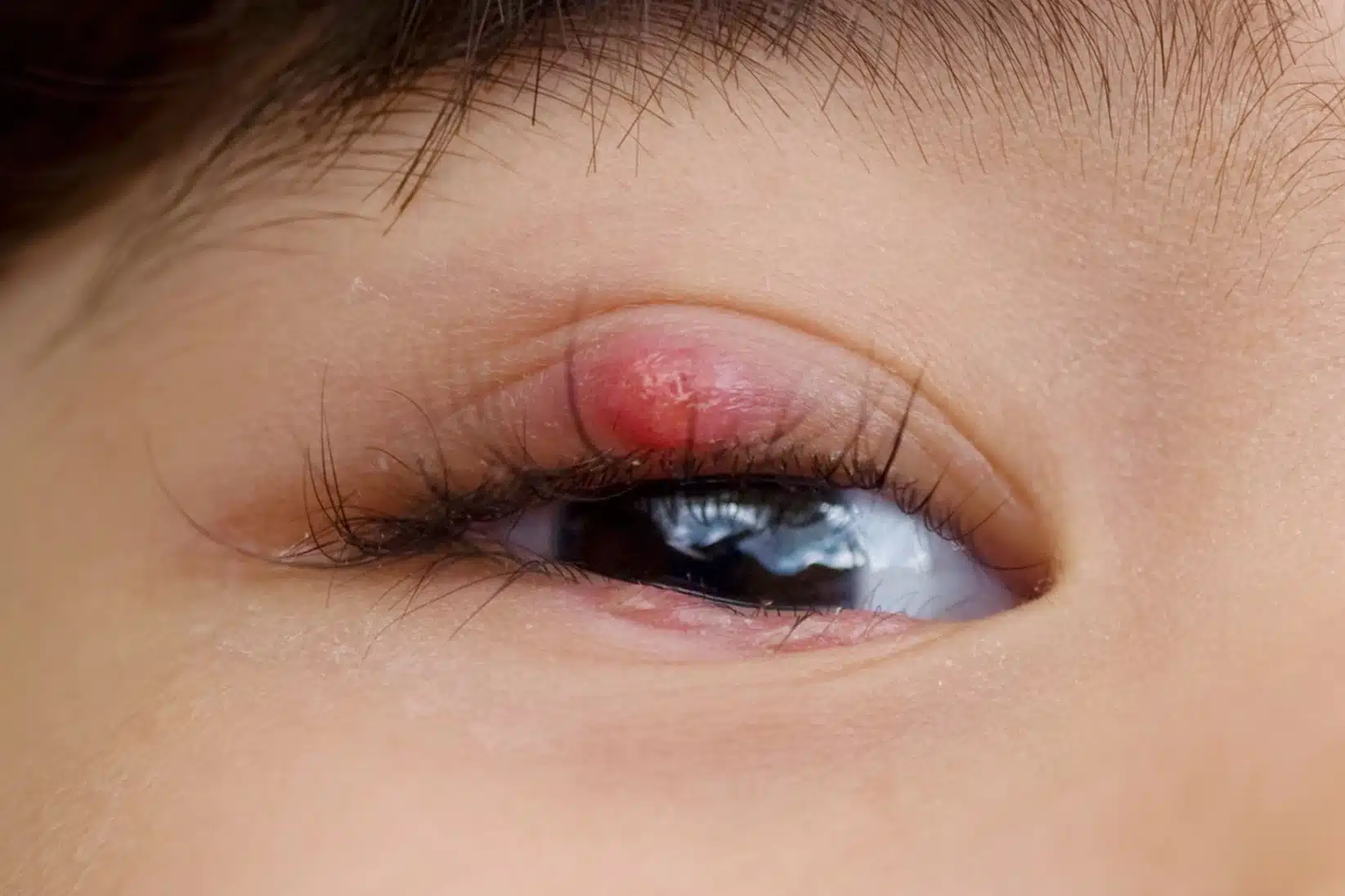
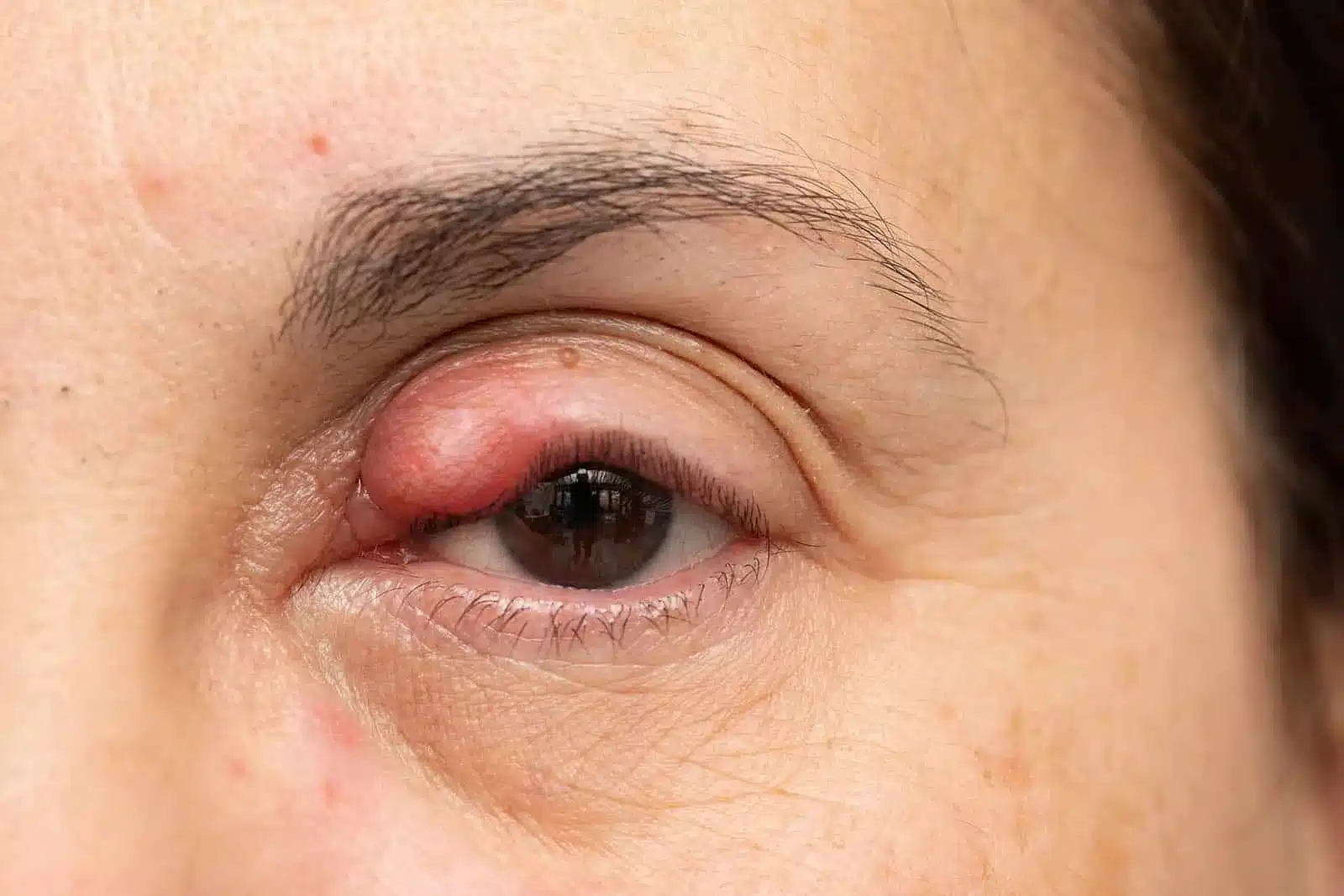
A stye is usually a tender red lump near the lash line. It often forms when bacteria infect an oil gland or hair follicle. It can develop over a few days, drain on its own, or later become a chalazion if the gland stays blocked.
Chalazion

A chalazion is often a firmer, less painful swelling caused by a blocked oil gland. It can start after inflammation in the meibomian glands. Some improve with warm compresses, while persistent cases may need medical review.
Milia, Cysts, and Papillomas

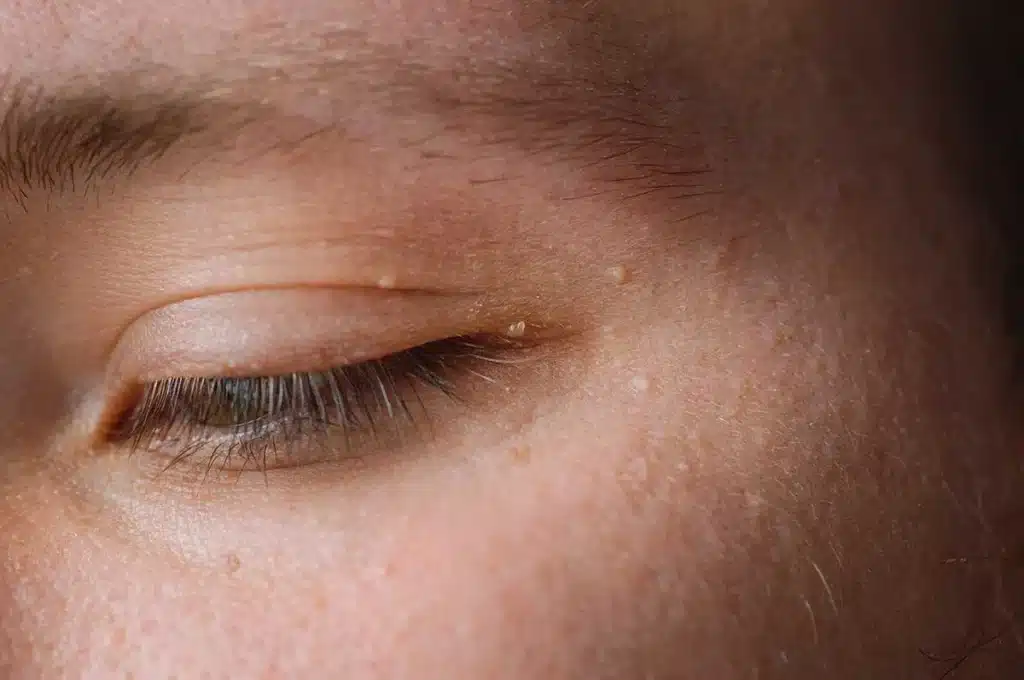
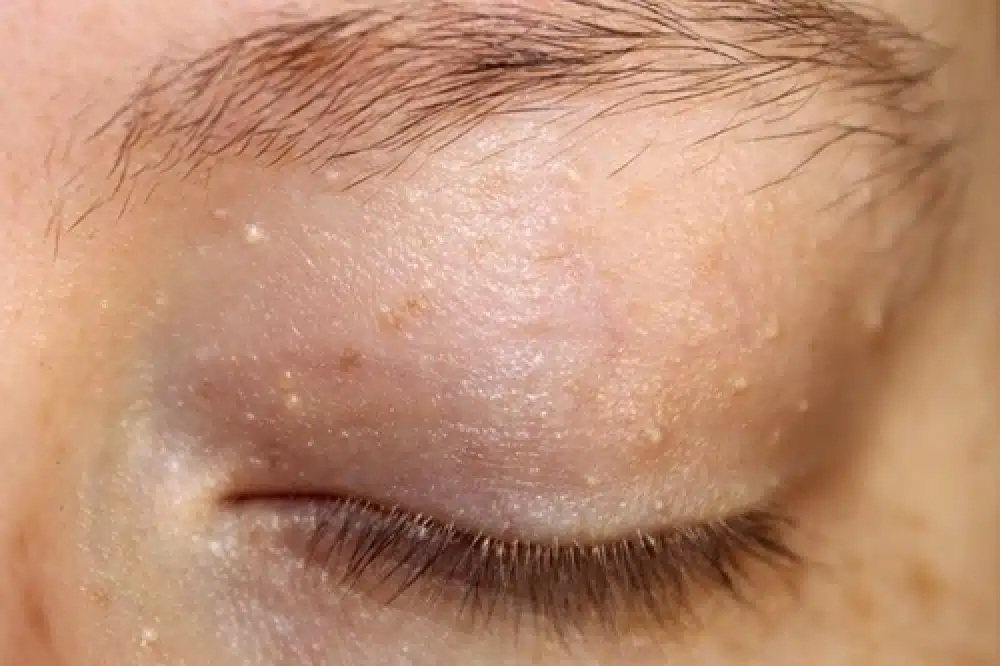
Milia are tiny white spots that form when keratin becomes trapped under thin skin near the eyes. A cyst may feel round, smooth, or firm, while a papilloma may look like a skin-colored tag or raised growth. Any lesion that is changing, bleeding, or growing should be examined before treatment.
Xanthelasma

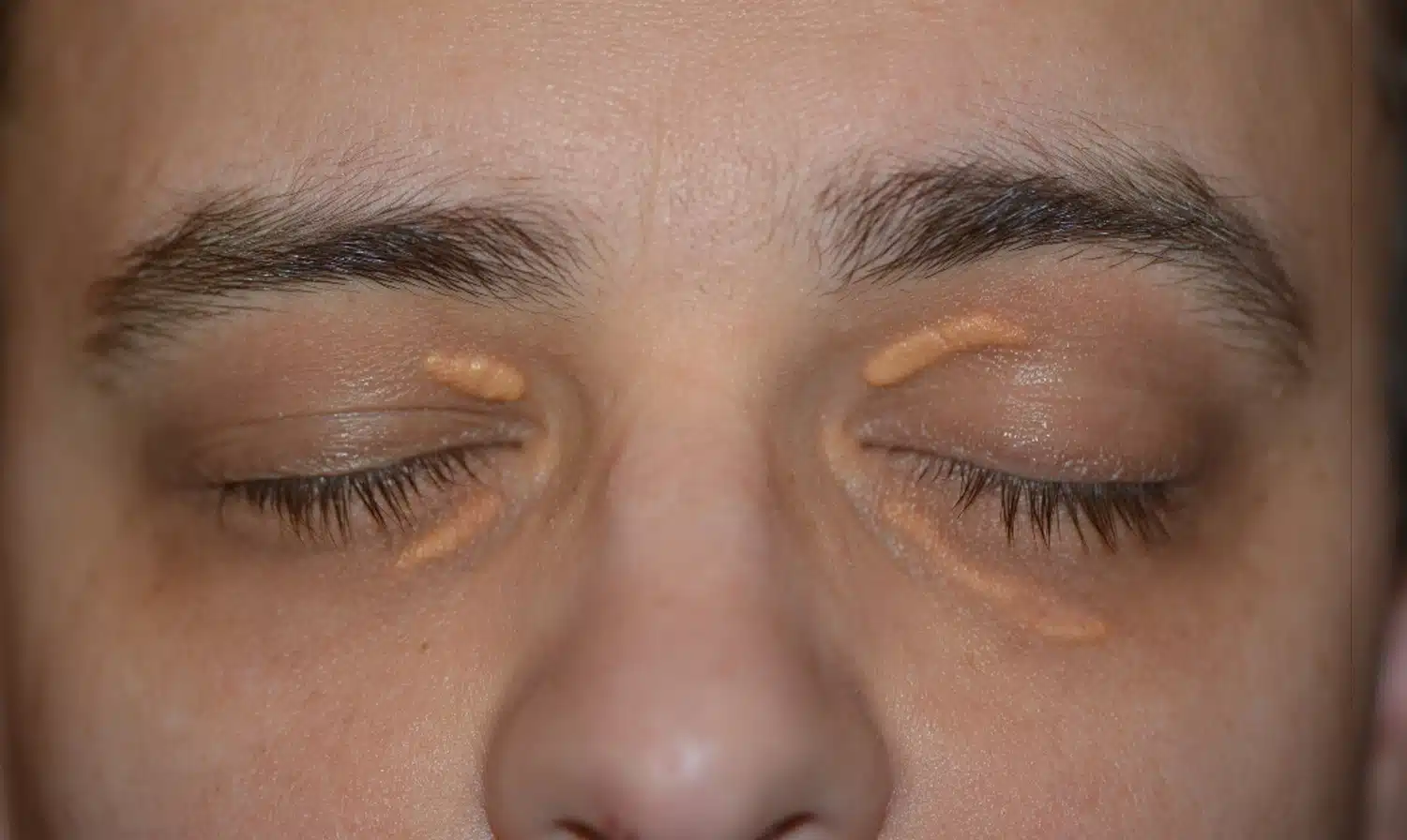
Xanthelasma often appears as a flat or slightly raised yellow patch near the inner lids. It may relate to cholesterol levels, although it can occur with normal blood work. This is different from eyelid fat, which usually refers to fullness or fat pads around the upper or lower lids rather than a small surface lesion.

Cholesterol testing may be helpful when yellow plaques appear alongside other risk factors.
Stye vs. Chalazion

A stye is often red, painful, and close to the lash line. A chalazion is usually deeper, firmer, and less painful. Both are common, so styes and chalazia are often compared during evaluation.

Color and Pain Clues

A painless bump on the eyelid skin may be a chalazion, a cyst, a milia, or a papilloma. White spots or a white bump on the eyelid often suggest milia or small cysts, while yellow plaques may suggest xanthelasma.

Redness, tenderness, warmth, or swelling may point to infection or inflammation.

Type Common Look Pain Level Common Cause Usual Next Step
Stye Red swollen lump near the lash line Often painful Bacterial infection or blocked gland Warm compresses, lid hygiene, medical care if worsening
Chalazion Firm deeper lump on the lid Often painless Blocked oil gland Warm compresses, exam if persistent
Milia Tiny white or skin-colored spot Usually painless Trapped keratin under thin skin Observation or professional removal if bothersome
Xanthelasma Yellow flat or raised patch Usually painless Lipid deposit, sometimes linked to cholesterol Medical review and possible cholesterol testing
Cyst Round smooth or firm lesion Usually painless unless irritated Fluid, oil, or skin material under the surface Exam if growing, changing, or irritating the eye
Papilloma Skin-colored tag-like or raised growth Usually painless Benign skin growth Exam if growing, bleeding, affecting vision, or cosmetic concern

Causes and Risk Factors

Common causes include blocked glands, bacteria, skin inflammation, contact lens irritation, and chronic lid conditions. Blepharitis, rosacea, dermatitis, and Demodex mites may contribute to repeated swelling. These risk factors can affect eye care, as recurrence often requires more than short-term treatment.

Blocked Glands and Infection

Blocked oil glands can trap oil, creating a firm lump. Bacteria can infect follicles or glands along the lash line, causing a stye. Hand hygiene helps reduce irritation and lower the risk of bacterial spread.

Contacts, Makeup, and Irritation

Contact lenses can irritate the eye area if they are worn too long, cleaned poorly, or handled with unwashed hands. Old makeup, shared products, and rubbing can also worsen inflammation. Avoid wearing lenses or makeup when the eye is red, painful, or draining.

Diagnosis

Diagnosis usually starts with a visual exam and a review of symptoms. Eye doctors may check the lid margin, lashes, oil gland openings, tear film, and surrounding skin with bright light or magnification. They may ask about pain, discharge, recurrence, contact lens use, and how long the lesion has been present.

Treatment Options

Treatment depends on the cause, size, symptoms, and duration. Warm compresses for 10 to 15 minutes, three to four times daily, may help soften blocked-gland lesions, while proper eyelid hygiene can reduce irritation and buildup. Do not press hard on the lesion, squeeze it, cut it at home, or touch your eyes frequently.

A clinician may recommend different treatment paths depending on the diagnosis:

  • Observation may be appropriate for small, stable lesions without pain or vision changes.
  • Prescription medication may help when an infection or inflammation is present.
  • Drainage may be considered when a blocked gland does not improve with conservative care.
  • Removal may be needed when a cyst, papilloma, or other growth affects vision, irritates the eye, grows, or changes the lid margin.

Some growths can be surgically removed when appropriate, but the decision depends on the diagnosis, location, risk of scarring, and eye-surface safety.

Possible Complications

Most small lesions do not cause serious problems, but complications can occur when inflammation spreads or affects the eye surface. Some types of eyelid bumps, such as a larger chalazion, can press on the cornea, causing blurry vision or visual distortion.

Infection can sometimes spread across the lid, especially when bacterial infections worsen, so early evaluation can help prevent complications.

Possible issues may include:

  • Vision changes from pressure on the eye surface.
  • Worsening swelling that spreads beyond the original area.
  • Increased pain, redness, warmth, or drainage.
  • Recurring lesions linked to blepharitis, rosacea, or gland dysfunction.
  • Lid margin changes that affect normal blinking or eye comfort.

When to See a Doctor

Seeking professional care is appropriate if the lesion causes vision changes, severe pain, spreading redness, fever, drainage, bleeding, rapid growth, or light sensitivity.

A lesion with crusting, scaling, blistering, or redness across the whole lid may overlap with other eyelid problems and should also be reviewed. Seek care if you notice:

  • No improvement after one to two weeks of self-care.
  • Repeated lesions in the same area.
  • Drainage, crusting, scaling, or blistering.
  • Light sensitivity or excessive tearing.
  • Redness across the whole lid or the eye itself.
  • Any fast change in size, color, shape, or comfort.

A medical evaluation is also advisable if the problem keeps returning or does not improve within 1 to 2 weeks.

If a lesion near your eye is painful, changing, affecting vision, or not improving, a clinical exam can help identify the cause and the safest next step. To have an eyelid concern evaluated by Dr. Joel Kopelman, schedule a consultation with Kopelman Aesthetic Surgery.

About the doctor

Dr. Joel Kopelman

Facial Plastic Surgeon & Oculoplastic Specialist
Dr. Joel Kopelman is a highly experienced facial plastic and oculoplastic surgeon known for his refined surgical technique and meticulous attention to detail. With decades of expertise in facelifts, eyelid surgery, and cosmetic facial procedures, he has built a reputation for delivering natural, elegant outcomes tailored to each patient’s anatomy and goals. He sees patients in both New York City and Palm Beach, Florida, and also offers virtual consultations for patients across the United States and internationally.
Follow the specialist:

Ready to See Results?

Dr. Kopelman offers personalized consultations for eyelid surgery and facelifts in New York, New Jersey, and Palm Beach.

In this Article

Before & After Results

Kopelman Aesthetic Surgery

With over 40 years of combined experience, Kopelman Aesthetic Surgery provides advanced facial rejuvenation for men and women in New York City, New Jersey, and Palm Beach. The practice specializes in eyelid surgery, facelifts, and minimally invasive treatments that deliver natural, lasting results.

40+

Years Combined Experience

10K+

Procedures Performed

5.0★

Patient Rating

3

Locations

Stay in the loop

Get the latest on eyelid surgery, facelifts, and rejuvenation tips from Dr. Kopelman.
Photofacial IPL NYC

Dr. Joel Kopelman

Dr. Kopelman is a board-certified facial plastic and oculoplastic surgeon with over 40 years of experience delivering natural, elegant results in eyelid surgery, facelifts, and facial rejuvenation. He sees patients in New York City, New Jersey, assnd Palm Beach.

Schedule Appointment

Add Your Heading Text Here

Lorem ipsum dolor sit amet, consectetur adipiscing elit. Ut elit tellus, luctus nec ullamcorper mattis, pulvinar dapibus leo.