
At Kopelman Aesthetic Surgery, Dr. Kopelman helps patients understand the normal healing process, reduce the risk of bruising, and recognize signs that may require medical attention.
Key Takeaways
- Lip filler bruising is common and usually improves within one to two weeks.
- Bruising happens when injections affect small blood vessels near the treatment area.
- Cold compresses, elevating the head, hydration, and avoiding alcohol or strenuous exercise can support recovery.
- Severe pain, pale skin, spreading discoloration, or worsening symptoms need prompt medical evaluation.
- Final lip filler results are easier to judge after swelling and bruising have settled.
How Long Does Bruising Last After Lip Filler?
Most filler bruising improves within a few days and fades within one to two weeks. The exact timeline depends on your skin, the injection sites, the product used, and how your body heals. Mild bruising after fillers can appear as purple, red, blue, or yellow discoloration. For a broader recovery timeline, you can also review how long lip fillers take to settle.
Bruising from lip fillers usually does not mean the treatment went wrong. It often happens because filler injections can affect small blood vessels under the skin. The lips have a rich blood supply, so bruising can happen even with careful injection technique.
Bruising Stages Day by Day
During the first day, the lips may look swollen, tender, and slightly bruised. An ice pack may help reduce early swelling when used gently and for short periods. Bruising may look darker during the first 24 to 48 hours because blood under the skin becomes more visible.
By days three to five, swelling often starts to improve. The bruise may change from red or purple to green, yellow, or brown as the body clears it. By two weeks, most bruising should be mostly gone, and the final shape should be easier to judge.
Is Bruising After Lip Filler Normal?
Yes, bruising after fillers is usually normal. The lips are delicate, and even careful injection technique can disturb small blood vessels. Normal bruising should improve over time and should not cause severe pain, skin breakdown, or spreading discoloration.
Bruising and swelling often happen together. Swelling results from the body’s tissue response, while bruising results from blood leaking from small blood vessels. The treated areas may feel firm or tender at first, but this usually improves as the hyaluronic acid filler settles.
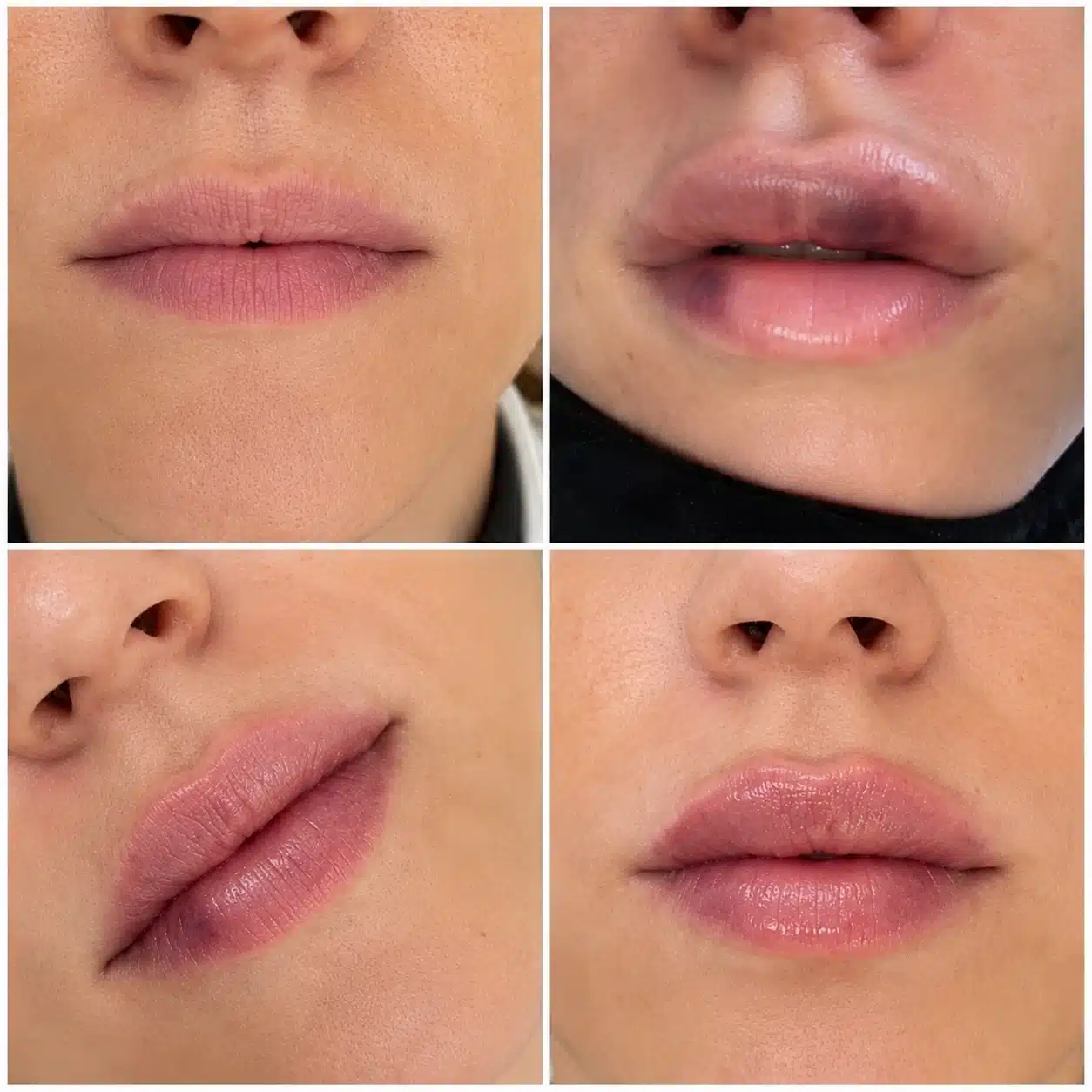
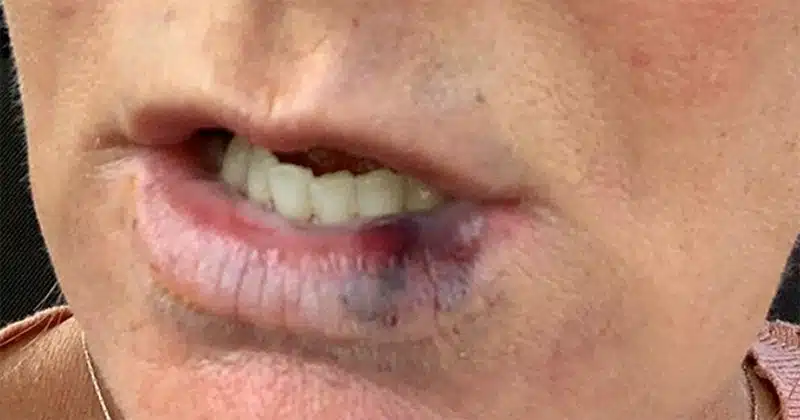
Pictures of Bruising After Lip Fillers
Pictures can help patients understand the range of normal healing. Mild bruising may appear as small spots, while more severe bruising may cover a larger area of the lip or border. Photos can show normal color changes, but they should not replace a medical evaluation.
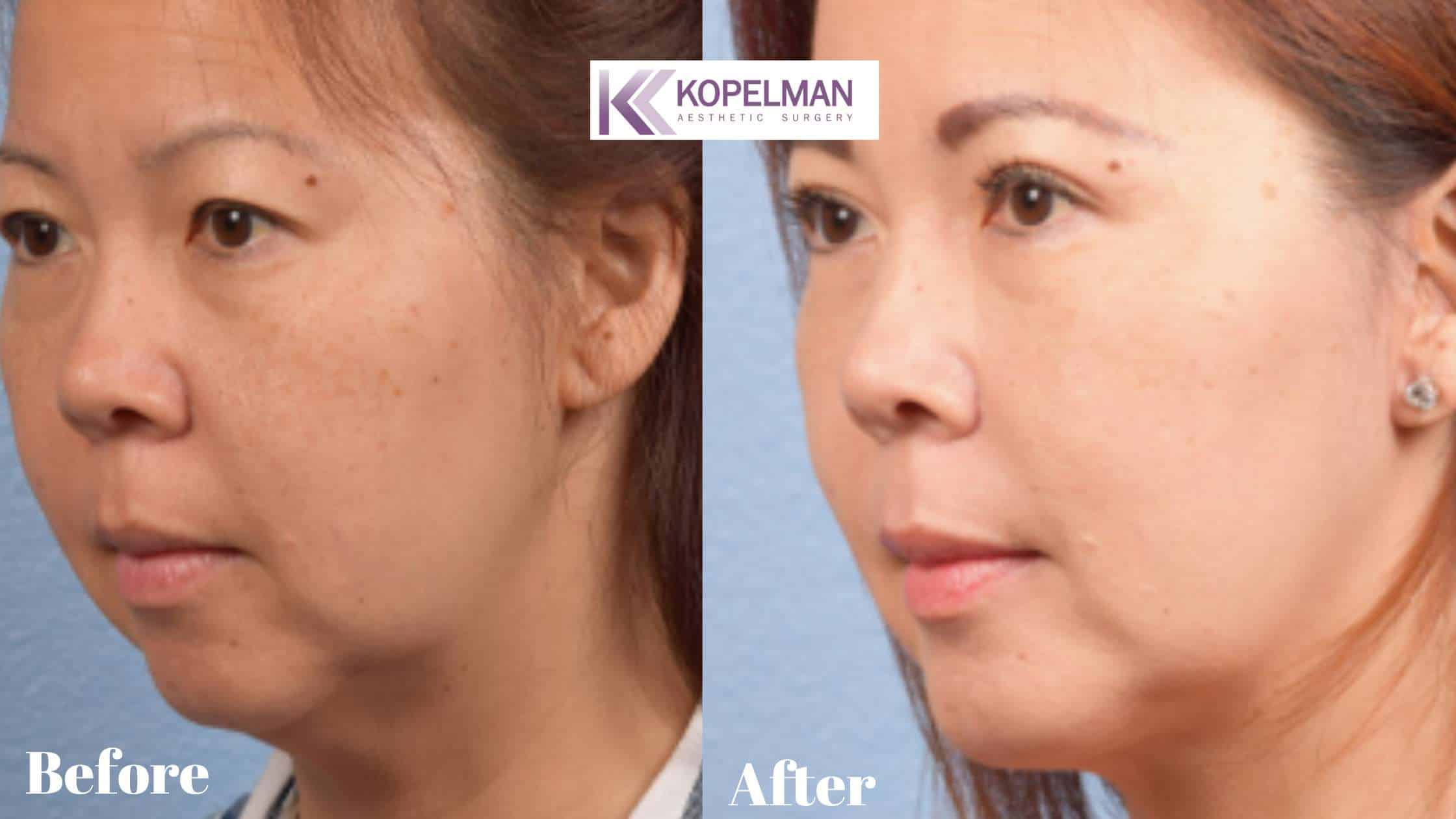
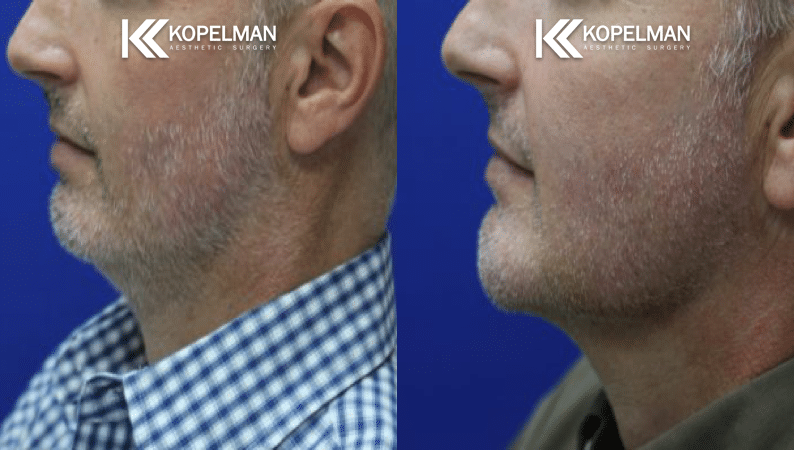
Reviewing lip filler before-and-after photos can also help patients see how swelling, bruising, and the final shape may change over time.
What Can Increase Your Risk of Bruising?
Some patients bruise more easily than others. The risk of bruising can increase if you have thin skin, sensitive lips, a history of easy bruising, or have recently used products that affect normal clotting. Alcohol, intense exercise, fish oil, aspirin, ibuprofen, and certain supplements may also make bruising more likely.
Patients concerned about prolonged swelling or discoloration can also learn more about bruising with dermal fillers.
Your provider should review your medical history before the treatment. Do not stop prescribed medication unless your doctor tells you to do so. A safe plan can help reduce the risk while protecting your overall health.
How to Reduce Lip Filler Bruising
You can minimize bruising by following clear aftercare steps. Keep your lips clean, avoid pressure, and give the tissue time to recover. Use a cold compress or ice pack gently during the first day, but do not press hard on the treated areas.

Avoid alcohol for at least 24 to 48 hours if your provider recommends it. Alcohol increases blood flow, which may make swelling or bruising worse. You should also avoid intense exercise, heat, saunas, and rubbing or massaging the lips unless your injector tells you to do so.
Hydration can also support the recovery process. Drink enough water before and after treatment, and sleep with your head slightly elevated during the first night. These steps can help the healing process feel more comfortable.
Does Pineapple Juice Help With Bruising?
Pineapple contains bromelain, an enzyme often discussed for its support of swelling and bruising. Some people use pineapple juice or bromelain supplements after cosmetic treatments. Evidence is limited, so ask your provider before using supplements, especially if you take medication or bruise easily.
Before Your Lip Filler Appointment
Good preparation can help reduce the risk of bruising before treatment begins. Ask your provider if you should avoid alcohol, fish oil, aspirin, ibuprofen, or other blood-thinning products before your visit. These steps may help lower the chance of visible bruising.
Tell your provider about medications, supplements, allergies, and prior reactions to dermal fillers. This helps the injector plan a safer treatment approach. A skilled provider uses careful placement, controlled pressure, and proper injection technique to help avoid bruising when possible.
Bruising vs. Serious Complications
Most bruising is harmless and improves with time. Serious complications are rare, but patients should know the difference between normal healing and warning signs. Normal bruising usually fades, changes color, and becomes less tender.
Lip filler bruising vs vascular occlusion is an important distinction. Vascular occlusion occurs when a filler blocks blood flow in a vessel and requires urgent care. Warning signs may include severe pain, blanching, dusky or cool skin, or a net-like pattern.
Bruising or necrosis should not be self-diagnosed from photos alone. The first signs of lip fillers gone wrong may include severe pain, uneven coloration, increasing swelling, skin breakdown, or vision changes. A qualified provider should evaluate the lips in person when symptoms seem unusual.
When to Call Your Provider
Call your provider if bruising gets worse after several days, pain increases, or the skin looks pale, gray, or blotchy. You should also call if swelling affects speech, breathing, or eating. Early advice can help protect your results and your safety.