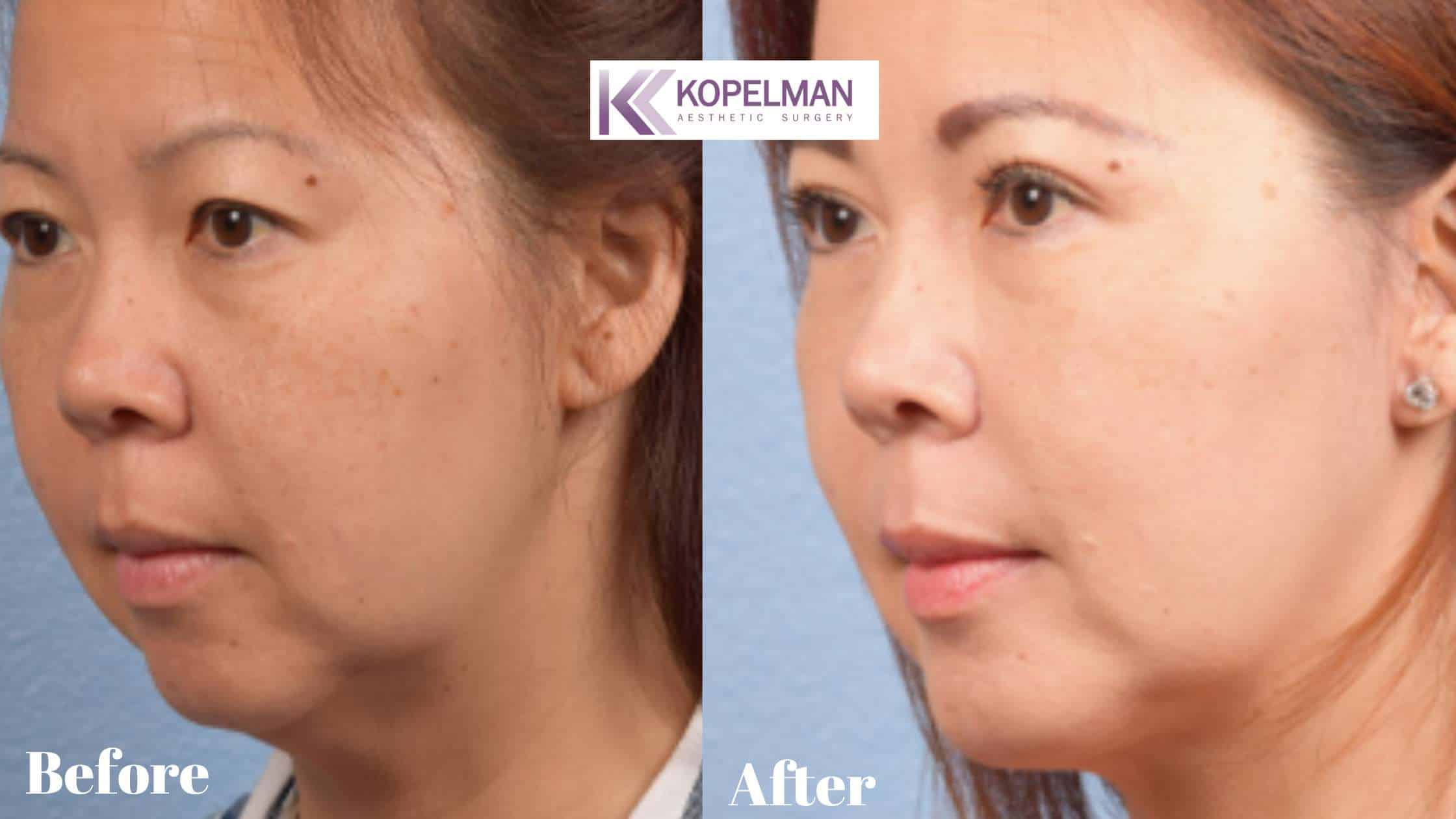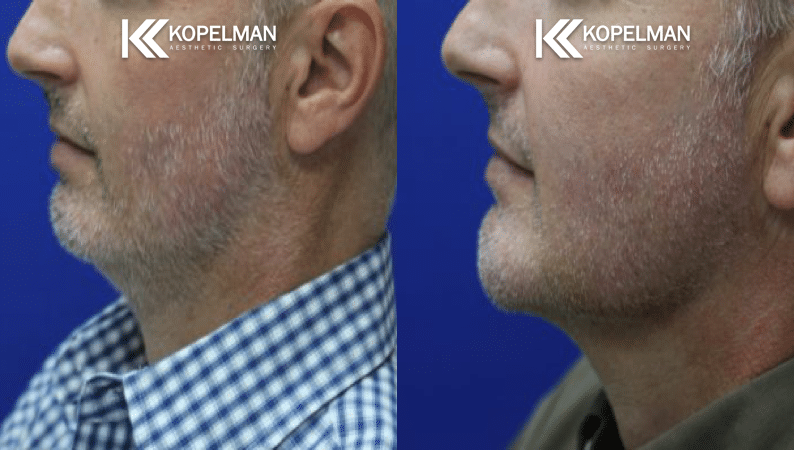


At Kopelman Aesthetic Surgery, Dr. Joel Kopelman evaluates skin quality, neck anatomy, jawline definition, and aging pattern before recommending filler treatment or surgical care.
Key Takeaways
- Fillers for neck laxity can improve mild to moderate laxity by restoring lost volume beneath the skin, but they do not remove excess skin or replace a neck lift.
- Dermal fillers for the neck are most effective for early signs of aging and for patients seeking a minimally invasive option to smooth fine lines and wrinkles.
- Product selection depends on skin thickness and anatomy, and careful technique is essential given the thin skin and blood vessels in the treated area.
- Results are temporary, often lasting 9 to 18 months, and more advanced sagging may require surgical neck rejuvenation.
Do Fillers for Neck Sagging Really Work?
Yes, dermal fillers for the neck can improve mild-to-moderate laxity, but they do not replace a surgical neck lift.
Rather than tightening loose skin, fillers restore structural support beneath the surface. This added support can improve contour and soften horizontal neck lines in patients with early volume loss.
They do not tighten the skin in the same way as a neck lift. When properly placed, they do not permanently stretch the skin, a concern addressed in detail in our article on whether fillers can stretch your skin. Instead, they restore support in areas that have lost volume. A medical evaluation helps determine whether filler alone is appropriate.
When Fillers Improve Mild Sagging
Fillers are most effective in the early stages of aging. They can soften lines and wrinkles and improve mild contour changes caused by sagging skin. Many patients seek treatment for a visible neck line that becomes deeper over time. Improvement is usually subtle and natural.
When Fillers Are Not Enough
Fillers cannot remove excess skin or correct strong muscle banding. In advanced cases, sagging reflects bigger structural change. A surgical neck lift may provide more complete correction. Understanding these limits helps patients choose the right treatment.
Combining Fillers With Other Treatments
Fillers do not tighten loose tissue. For some patients, combining treatments may enhance neck rejuvenation. Options may include energy-based devices or neuromodulators that address muscle tension. Each approach targets a different cause of visible aging.
A staged plan may improve contour and balance. Fillers restore lost volume, whereas certain devices stimulate collagen production. Careful planning supports safety and predictable outcomes.
How Filler for Sagging Neck Skin Works
Dermal fillers for the neck add volume beneath the skin. This support can help smooth out fine lines and improve contour in the treated area. Dermal fillers for the neck restore structural support and improve mild contour irregularities caused by aging. They do not shrink tissue or remove excess skin. Instead, they address volume loss as one part of aging.
Neck Anatomy and Injection Considerations
The neck has thin skin and important blood vessels. It also contains the platysma muscle, which influences contour and banding. Because the dermis is thin, precise placement is essential. Incorrect injection depth may lead to uneven texture or vascular complications.
Some fillers also work by stimulating collagen production over time. This gradual effect strengthens skin structure. Product choice depends on tissue quality and treatment goals.
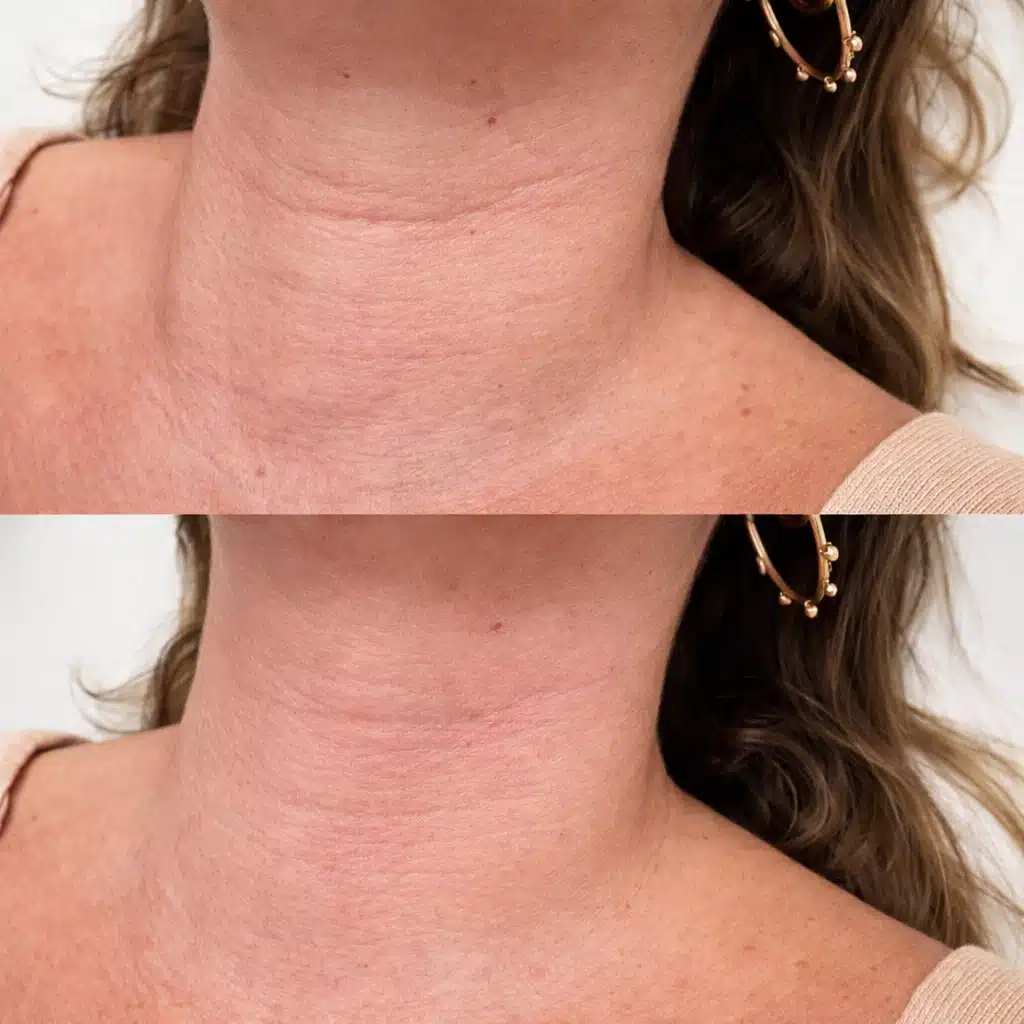
Fillers for Neck Sagging Before and After
Before-and-after photographs help set realistic expectations and show how subtle improvement may help patients feel more confident after fillers. Most patients see a smoother texture and mild contour improvement in the treated area. Dramatic lifting is uncommon without surgery. Results vary with the degree of volume loss and skin elasticity.
How Long Do Results Last?
Hyaluronic acid fillers often last 9 to 18 months. Other products may last longer by stimulating collagen production. Maintenance sessions are usually required because filler is not permanent. A neck lift offers longer-lasting structural correction than filler alone.
Best Filler for Neck Sagging
There is no single best filler for every patient, and understanding the most commonly used fillers can clarify product differences. The appropriate option depends on skin thickness, the severity of skin sagging, and the location of the lost volume. Dr. Joel Kopelman evaluates these factors during consultation. Treatment planning focuses on safety and anatomical precision.
Hyaluronic Acid vs. Biostimulatory Fillers
Hyaluronic acid fillers provide immediate volume and are reversible. They are often used on thinner skin for smoother integration. Biostimulatory fillers gradually improve firmness by stimulating collagen production. Product selection depends on the treated area and structural needs.
Who Is a Good Candidate for Neck Fillers?
Ideal candidates have mild-to-moderate laxity and reasonable skin elasticity. They often seek a minimally invasive approach before surgery. Patients with severe sagging skin or significant excess tissue may benefit more from a neck lift. A personalized evaluation clarifies suitability.
How Much Does a Neck Filler Cost?
The cost of a neck filler treatment is approximately $1,800 per syringe. The total may vary depending on the amount of product used and the complexity of the treated area. Most patients require one to three syringes to restore lost volume and improve contour. A consultation confirms the exact treatment plan and cost.
Risks and Safety Considerations
Neck injections require skill and careful planning. Mild swelling, bruising, and other side effects are common in the treated area after injection. These side effects usually resolve within several days. Rare but serious complications can occur if a blood vessel is affected.

The neck contains complex vascular structures. Early recognition of unusual pain or skin discoloration is important. Prompt evaluation reduces long-term risk. Clear discussion of risks supports informed medical decisions.
If you are considering a neck filler treatment, scheduling a consultation can help determine whether it is appropriate for your concerns. Dr. Joel Kopelman will evaluate your anatomy and discuss safe treatment options tailored to your goals.