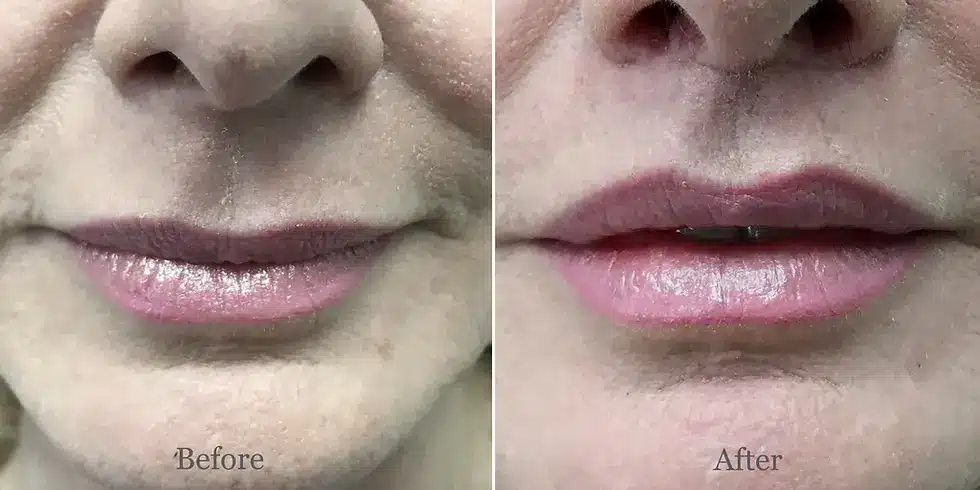
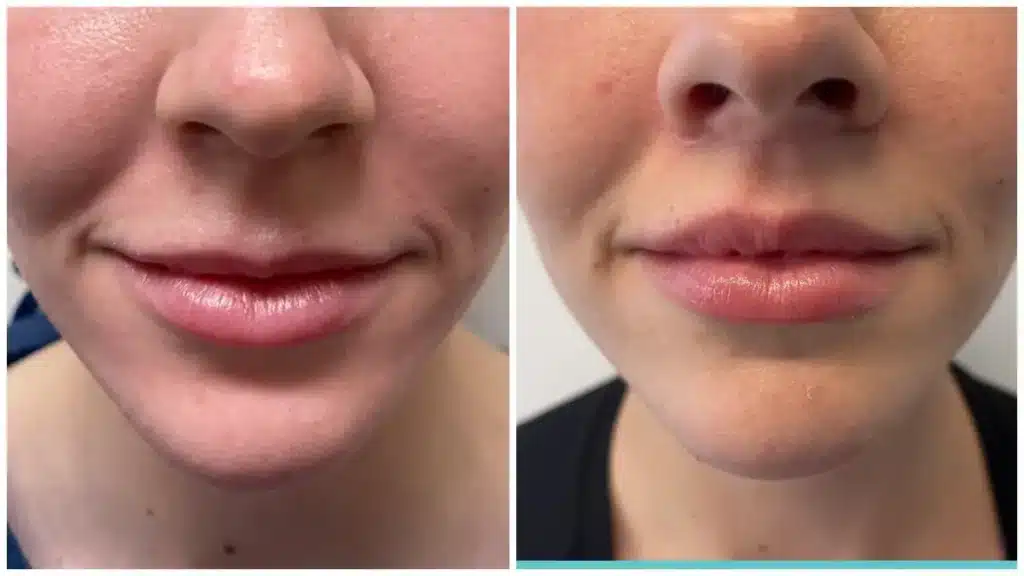
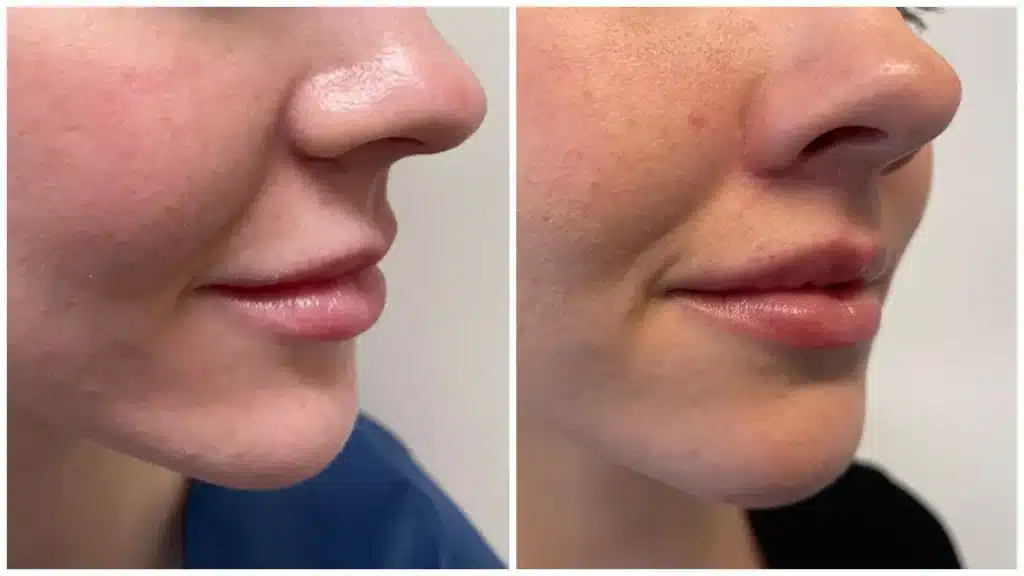
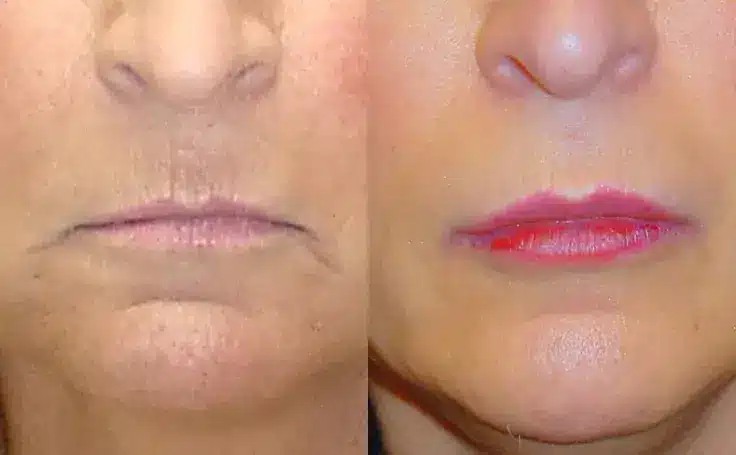
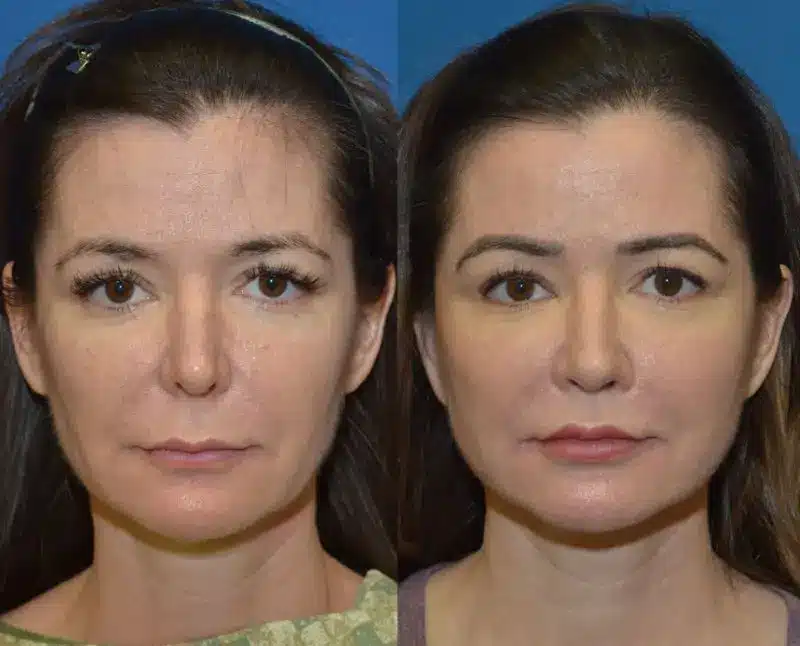
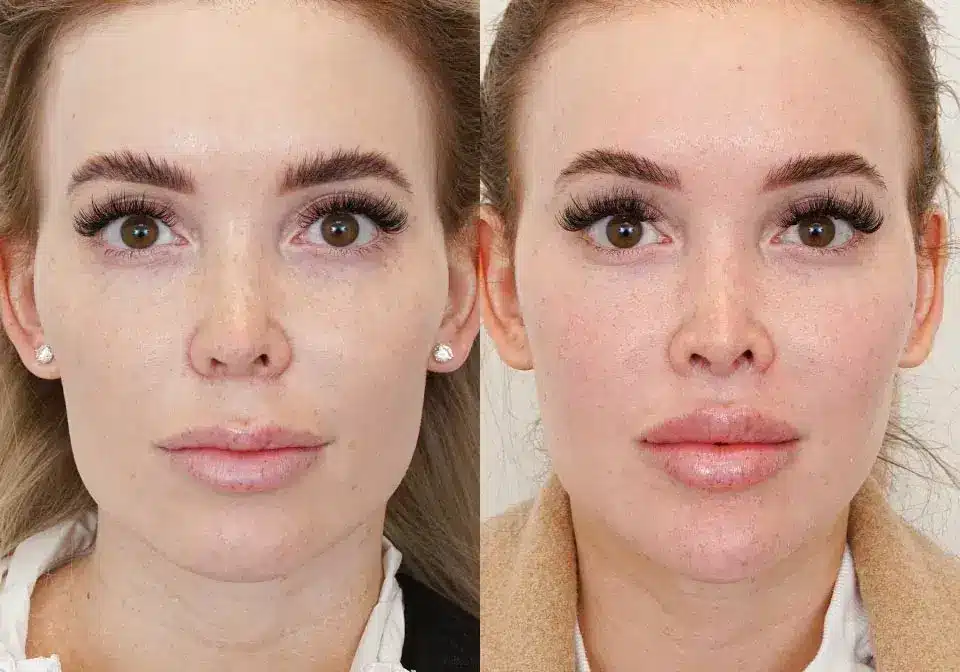
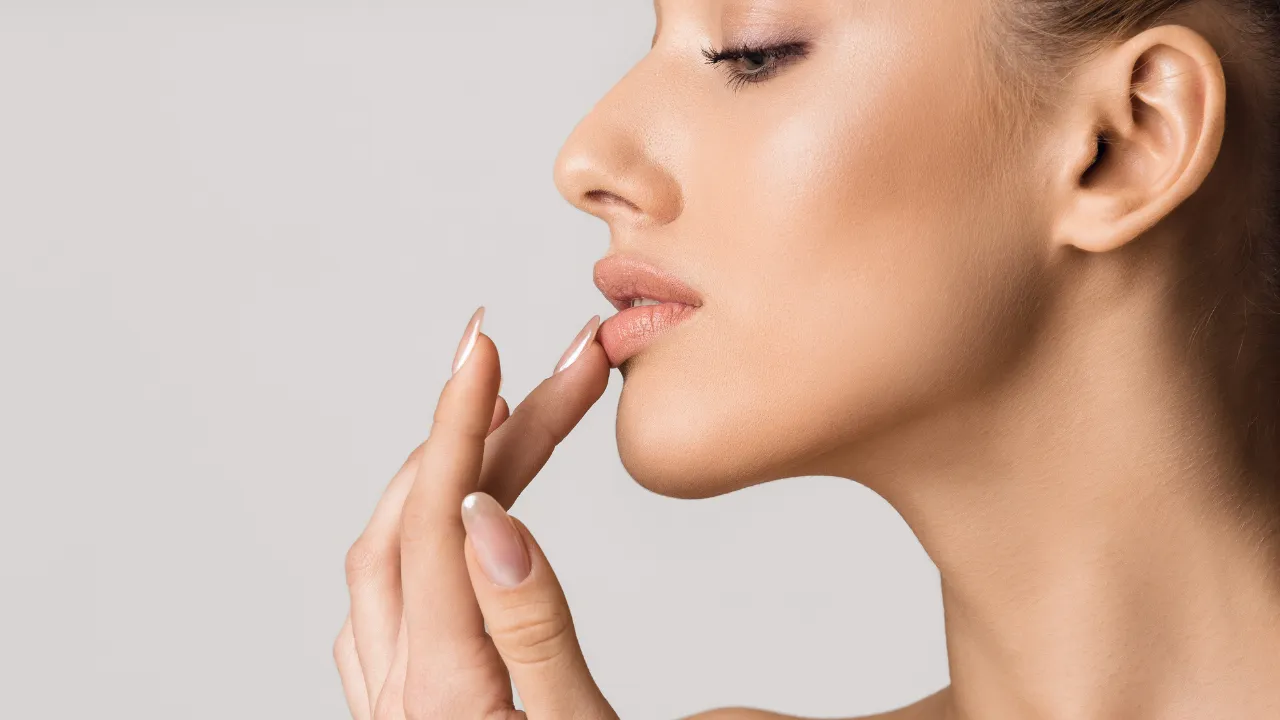
A lip lift is a brief surgical procedure that shortens the distance between the base of the nose and the upper lip, known as the philtrum. Removing a small, precisely measured strip of skin raises the lip, exposes more of the pink vermilion, and increases upper tooth show at rest.
Unlike injectable fillers, the change is structural and permanent. Most patients searching for a lip lift in New Jersey are looking for exactly that: a result that does not fade, does not migrate, and does not require repeat appointments twice a year.
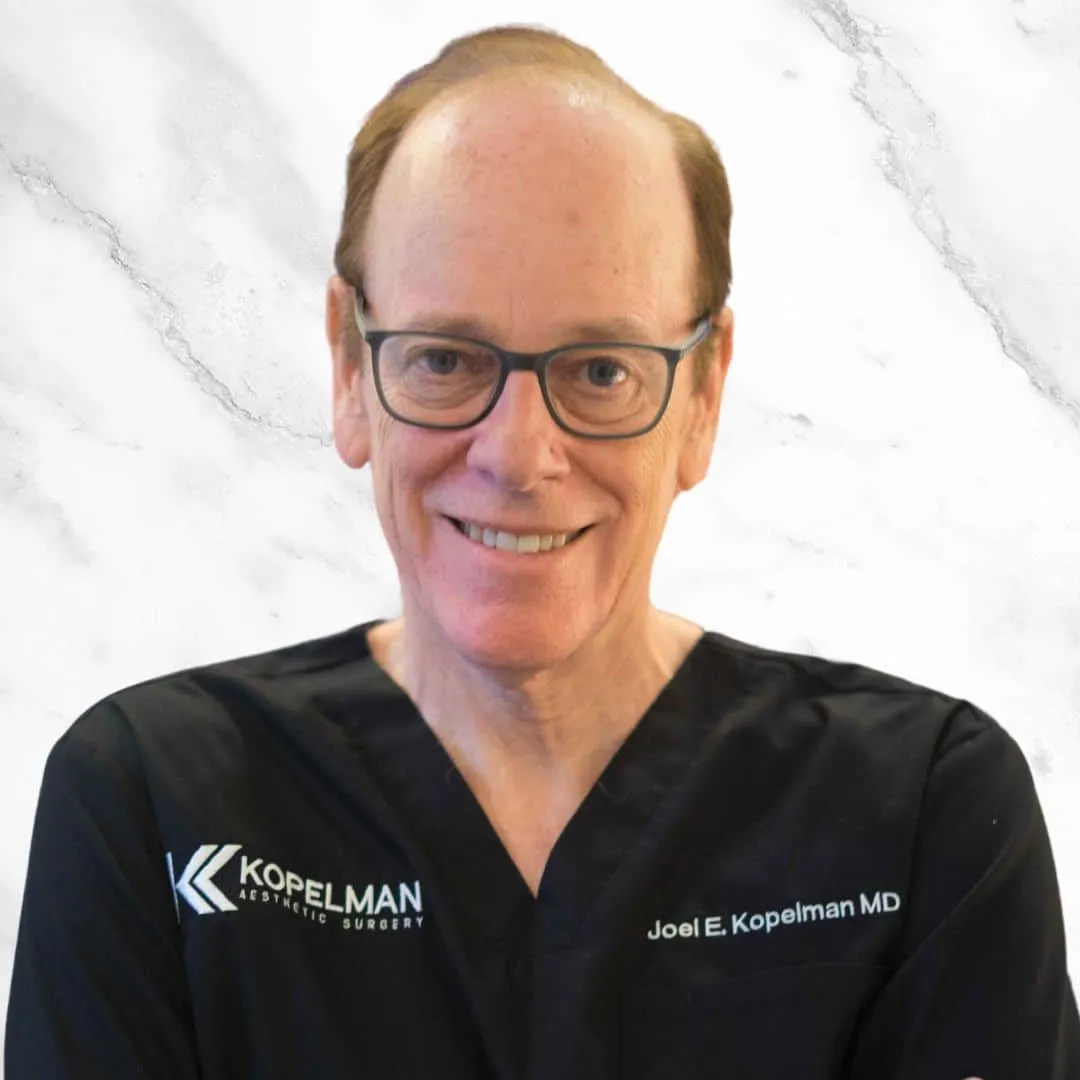
The procedure takes roughly one hour, is performed under local anesthesia or intravenous sedation, and does not require an overnight stay. Dr. Joel Kopelman performs upper lip surgery at the Paramus, NJ office for patients across northern New Jersey and the greater New York metro area.
Who benefits most: men and women born with thin lips, patients whose upper lip has lengthened and deflated with age, and longtime filler patients who want a permanent alternative. Depending on anatomy, this procedure suits both genders, younger and older patients, and different ethnicities.
An upper lip lift restores facial balance in relation to the nose, cheeks, and chin. Reversing a deflated, thin upper lip creates a more youthful, sensuous appearance. Patients seeking a more permanent option may consider a surgical lip lift after trying temporary treatments.


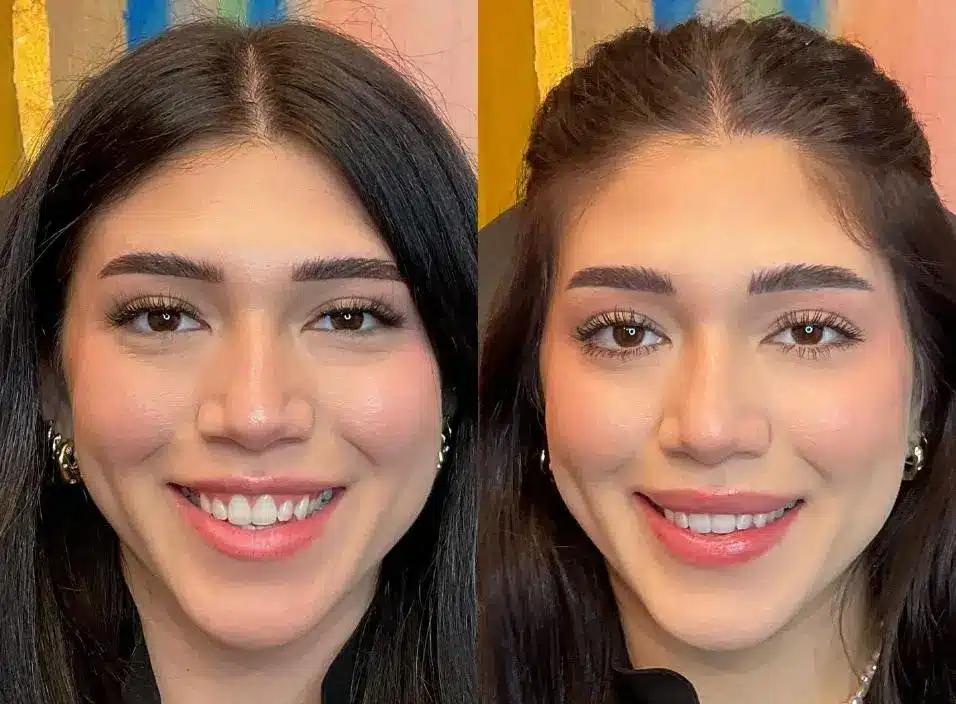
These lip lift before-and-after pictures are of actual patients from Dr. Kopelman. They will help you to set realistic goals for your own surgical outcome. Click on a patient to learn more about their lip lift surgery.
Not every patient needs the same incision. The right approach depends on where the length or descent sits: in the philtrum itself, at the corners of the mouth, or along the vermilion border.
The subnasal approach, sometimes called the bullhorn technique, is the foundation of upper lip shortening and the technique used in the majority of cases. Corner lifts and direct lifts address different anatomical concerns and can be combined with a subnasal lift in a single session.
| Technique | What It Addresses | Incision Placement | Result |
|---|---|---|---|
| Subnasal (bullhorn) | A long philtrum and a low-sitting upper lip; the most common presentation | At the base of the nose, following the natural crease of the nostril sills | Shortens the philtrum, elevates the central lip, increases tooth show at rest |
| Corner lift | Downturned mouth corners that create a resting frown regardless of mood | Small triangles of skin at each oral commissure | Neutralizes the downturn and softens a sad resting expression |
| Direct (vermilion border) | Thin vermilion where subnasal lifting alone will not add enough visible pink | Along the junction of the red and white lip | Increases vermilion show directly; less commonly used due to scar position |
| Combined approach | Both philtrum length and downturned corners in the same patient | Subnasal plus commissure incisions in one session | Addresses central and lateral concerns together with no meaningful added downtime |
Combining a subnasal lift with a corner lift adds only a short amount of operative time and does not meaningfully extend recovery. Which combination fits your anatomy is determined at consultation, not in advance.
Hyaluronic acid fillers are a good temporary solution that will help enhance lip aesthetics but must be repeated every 6 months to maintain the cosmetic improvement. Not all patients will benefit from lip injections.
The reason is anatomical. Fillers add volume, but volume alone cannot shorten a long philtrum, increase tooth show at rest, or rebuild a flattened Cupid’s bow. Adding more product to a structurally long upper lip often produces heaviness rather than definition.
Surgery and injectables are complementary rather than competing. Many patients continue using small amounts of filler after surgery for fine contouring. The American Society of Plastic Surgeons notes that surgical lifting continues to grow alongside injectable options rather than replacing them.
If you are weighing non-surgical options first, our overview of lip augmentation explains what fillers can and cannot achieve for the perioral area.
| Factor | Surgical Upper Lip Lift | Dermal Filler |
|---|---|---|
| Type | Surgical, one hour, local anesthesia or IV sedation | Non-surgical injection, minutes, topical numbing |
| Philtrum length | Permanently shortened by a measured excision | Unchanged; volume is added but length is not reduced |
| Tooth show at rest | Increases | No meaningful change |
| Cupid's bow definition | Restored structurally | Can be softened or blurred if overfilled |
| Duration | Permanent structural change | Approximately 6 to 12 months, then repeated |
| Downtime | About one week of visible swelling; three weeks before major events | Minimal; bruising possible for a few days |
| Best suited to | Long philtrum, little tooth show, thin flat upper lip | Normal philtrum length with volume loss only |
Candidacy is assessed on anatomy rather than age. The evaluation looks at philtrum length in millimeters, the extent of upper incisor exposure at rest, the definition of the Cupid’s bow, and the overall proportion of the lower face.
Strong candidates typically have:
Benefits patients report most often:
Patients with a pronounced gummy smile, a very short philtrum, or significant dental show already require more conservative planning and sometimes a different approach entirely. This is assessed individually before any surgical plan is finalized.
A lip lift will help enhance your facial proportions.
The nasal base and upper lip are unforgiving. Small changes produce visible results, and small errors are equally visible, which is why choosing an experienced facial plastic surgeon matters more here than in many larger procedures.
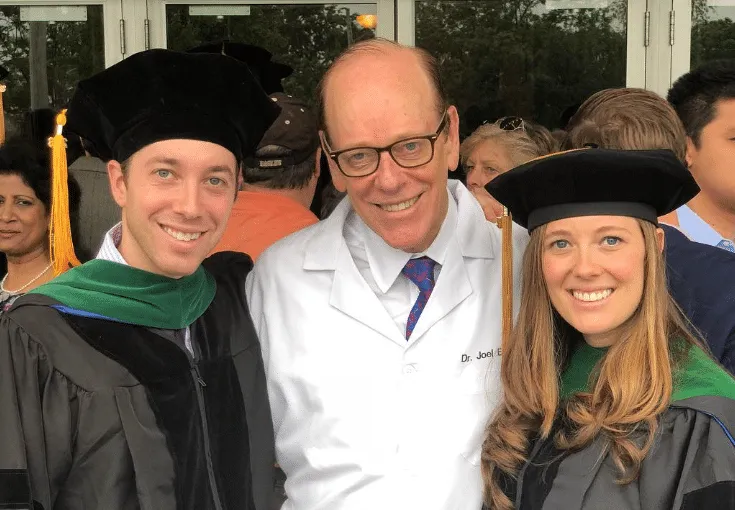
Dr. Joel Kopelman is both a facial plastic surgeon and an oculoplastic surgeon with more than three decades of experience in cosmetic rejuvenation of the face, neck, and eyes. That dual background is directly relevant to perioral work, where millimeter-level tissue handling determines whether a result reads as natural.
What to look for when comparing surgeons:
Rather than applying a single template, the incision is planned against each patient’s nasal base configuration, and the amount of skin to be removed is measured and reviewed with the patient before surgery is scheduled.
Dr. Kopelman’s commitment to excellence extends beyond surgery; his warm and compassionate approach provides patients with comfort and trust throughout their treatment journey. Supported by a team of first-class professionals, the practice continuously strives to exceed patient expectations.
An upper lip lift is a one-hour procedure performed under local anesthesia or intravenous sedation. There is no general anesthesia and no overnight stay for an isolated case.
The incision is placed directly at the base of the nose, where the scar will be less visible. The technique starts with a bullhorn subnasal incision, followed by release of deep upper-lip tension.
The soft tissue layers over the muscle are lifted, not just the outer skin layer. Releasing all the tissue layers is necessary to relieve the tension that restricts lifting, followed by a deep-plane advancement flap.
This deep-plane approach is what permanently creates a fuller lip and vertically shortens the upper lip. Lifting skin alone tends to relapse and places tension across the incision, which is the most common cause of a widened or visible scar.
Swelling from this procedure can take several weeks to resolve, so you must anticipate curtailing social and professional engagements for approximately three weeks or more. The structural result becomes clearly visible well before the scar has finished maturing.

| Stage | What Is Happening | What to Do |
|---|---|---|
| Days 1 to 5 | Swelling and tightness around the mouth; incision is red and slightly raised | Keep the head elevated, apply gentle cold compresses, eat soft foods, avoid wide mouth opening |
| Week 1 to 2 | Sutures removed at about day 7; swelling begins to settle and the new lip position appears | Return to desk work as comfortable; avoid strenuous activity, alcohol, and full smiling |
| Weeks 2 to 4 | Most swelling resolves; the structural result is clearly visible | Resume light exercise around two weeks; begin daily SPF 30 or higher on the incision |
| Months 2 to 6 | Scar continues to flatten and fade; early raised ridges usually settle | Continue daily sun protection; report any thickening at follow-up |
| Months 6 to 12 | Final scar appearance; incision blends into the shadow at the nasal base | Maintain sun protection through the first year |
Daily broad-spectrum SPF 30 or higher on the healing incision is the single most impactful thing patients control after surgery. Ultraviolet exposure is the leading cause of permanent scar darkening.

Scarring and “spider veins” can occur but can be treated with lasers and injections. Because the perioral area has an excellent blood supply, healing is generally reliable and serious complications are uncommon.
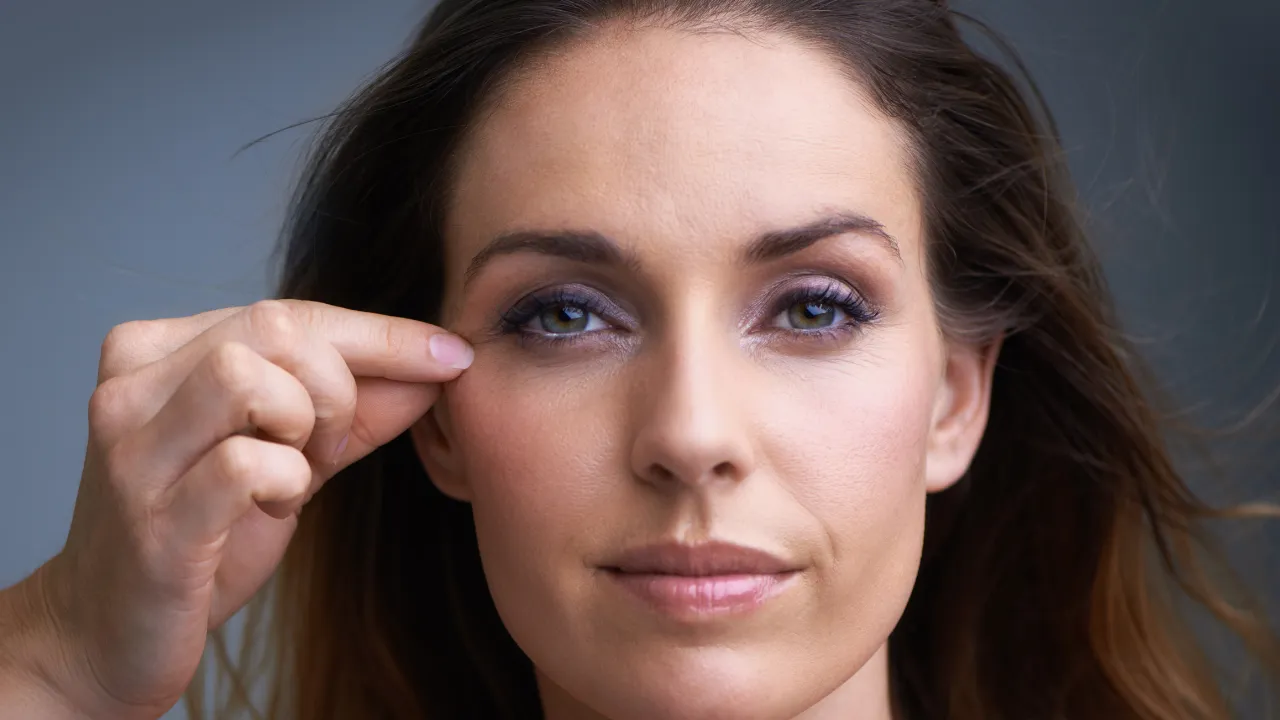
Other risks discussed at consultation include temporary numbness of the upper lip, mild asymmetry, a raised or hypertrophic scar during early healing, and over-correction or under-correction of the philtrum. Most raised scars settle on their own or respond to a single in-office steroid injection.
The most effective way to reduce risk is to use conservative measurements, mark the excision with the patient seated upright rather than reclined, and never exceed a plan the patient has reviewed and approved.
Cost depends on the technique used, whether a corner lift is combined with a subnasal lift, the anesthesia selected, and whether the procedure is performed alone or alongside another facial surgery. Cosmetic procedures are not covered by insurance.
| Treatment | Cost | Duration of Result | Notes |
|---|---|---|---|
| Surgical upper lip lift | Quoted at consultation | Permanent | Priced after in-person measurement, since the plan depends on philtrum length and technique |
| Subnasal plus corner lift | Quoted at consultation | Permanent | Each component is quoted and reviewed separately at the same visit |
| Restylane | $2,500 | 6 to 12 months | Used for lips, cheeks, or under-eye depending on the type selected |
| Juvederm Ultra | $1,800 | 6 to 12 months | Commonly used for lips and fine lines |
| Juvederm Voluma | $1,800 | 6 to 12 months | Cheek and mid-face contouring; supports perioral balance |
| Sculptra (per vial) | $2,500 | Multi-session, gradual | Collagen-stimulating rather than volume-filling |
| Botox (lip flip) | $1,800 | 8 to 12 weeks | Priced per session, not per unit |
| Consultation | $350 | n/a | Consultation or medical management visit |
Cosmetic procedures are not covered by insurance. Injectable treatments require repeat sessions to maintain results, while surgical shortening of the philtrum is a one-time structural change.
The economics of surgery versus injectables are worth considering over a multi-year horizon. Filler maintenance, repeated twice a year, continues indefinitely, whereas a surgical lift is a one-time cost for a permanent structural change.
An exact figure for your case is provided after an in-person evaluation, since the plan depends on measurement rather than an averaged estimate.
Patients searching for a lip lift near me in northern New Jersey are typically a short drive from the Paramus office at 1 W Ridgewood Ave. The location is accessible from Bergen, Essex, Passaic, Morris, and Hudson counties.
Patients also travel from Manhattan, Hoboken, and Jersey City. Because an isolated case is performed under local anesthesia, most patients return home the same day, though you will need someone to drive you.
For patients traveling from further away, virtual consultations are available before scheduling an in-person visit. If you are coming from out of the area, plan to remain nearby for the one-week suture removal appointment.
Frequently asked questions
about Lip Lifts
Lip Lift Recovery
The swelling from a lip lift can take several weeks to resolve so you must anticipate that you will have to curtail social and professional engagements for approximately three weeks or more.
Complications of a Lip Lift
Scarring and “spider veins” can occur but can be treated with lasers and injections.
To schedule a private consultation with Dr. Kopelman, please call the office or request an appointment online.
Lorem ipsum dolor sit amet, consectetur adipiscing elit. Ut elit tellus, luctus nec ullamcorper mattis, pulvinar dapibus leo.