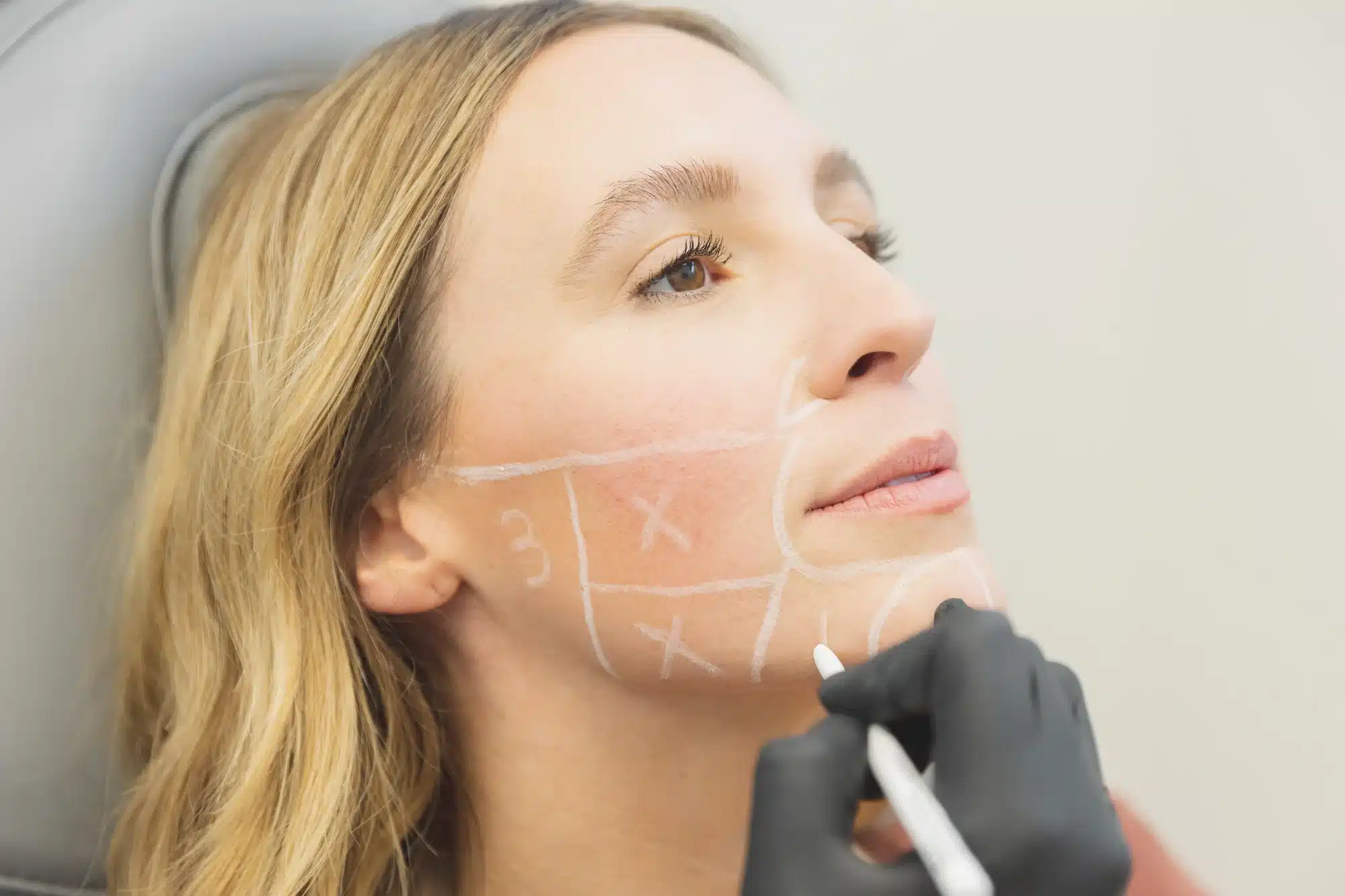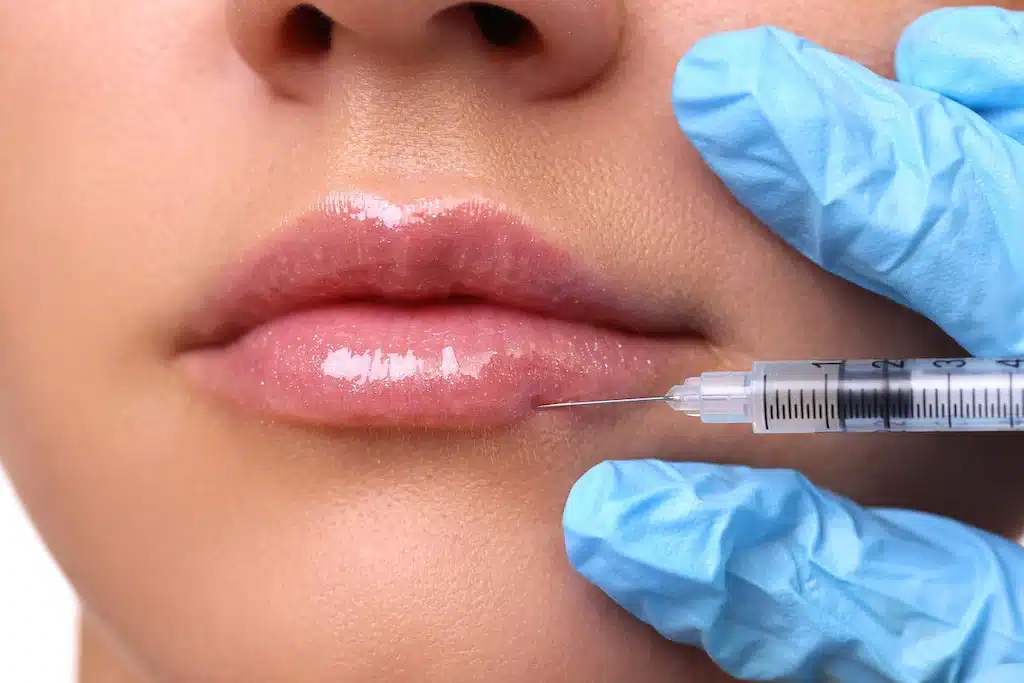

Dermal fillers for a weak chin are a non-surgical option used to add volume and structural support, helping improve facial balance between the chin, jawline, and surrounding facial features. This article explains how the treatment works, who may benefit, and its limits and risks, following an educational approach similar to that used by Dr. Joel Kopelman at Kopelman Aesthetic Surgery.
Key Takeaways
- Dermal fillers can help add volume and support to a weak chin, contributing to better balance among facial features, facial contours, and the chin and jawline.
- Treatment planning depends on anatomy, including bone position, muscle movement, skin thickness, and the effects of fat cells and soft tissue on shape.
- Chin filler is a short, in-office injectable treatment with temporary results that become clearer as swelling resolves.
- Safety depends on precise technique, correct injection sites, and anatomical knowledge, since the chin contains important blood vessels and nerves.
Can Fillers Help a Weak Chin?
Yes, fillers can help a weak chin when the concern relates to limited projection or volume rather than bone structure alone. Injectable fillers add volume and support in front of the chin, which can help create a more defined lower face and improve balance between the chin, nose, and jawline. This type of chin enhancement focuses on proportion rather than size alone.
Chin fillers for a recessed chin may help when volume loss contributes to imbalance. Results vary based on facial anatomy and skin characteristics. Fillers cannot replace bone or correct severe skeletal conditions, so evaluation is essential before treatment.
Best Treatment for a Weak Chin
The best treatment depends on the cause and degree of chin weakness, as well as how it affects overall facial harmony, much as proportions are evaluated in cases like cheek fillers for a long face. Chin filler is often considered when the chin sits too far back, but still has sufficient structural support for filler placement.
In more severe cases, surgical options, such as a chin implant, may be considered. Surgical chin augmentation is one of several surgical procedures that alter the underlying structure and may be more appropriate when filler cannot provide stable support.
These decisions are typically guided by a plastic surgeon after reviewing anatomy and long-term considerations, as in the planning for cheek augmentation in NYC.
Chin Filler Treatment Explained
Chin filler treatment involves placing hyaluronic acid filler at specific injection sites along the front or lower edge of the chin.
Among the various types of fillers, firmer products are typically selected to add volume and provide structural support.
Placement depth and angle are planned to support chin and jawline contour while maintaining natural movement, similar to how cheek filler injection points are selected based on facial anatomy.
The procedure usually takes less than 30 minutes. Patients often describe pressure rather than sharp pain during injection, as a local anesthetic is included in the filler, similar to what patients ask when wondering if cheek fillers hurt. Mild swelling or firmness may occur and typically improves over several days.
Weak Chin Filler Before and After
Changes after treatment focus on proportion and balance rather than dramatic enlargement, similar to the goals seen with cheekbone fillers. As swelling subsides, patients often notice smoother transitions between the chin, lips, and jawline, which can help create a more defined appearance. Results appear gradually over the first week.
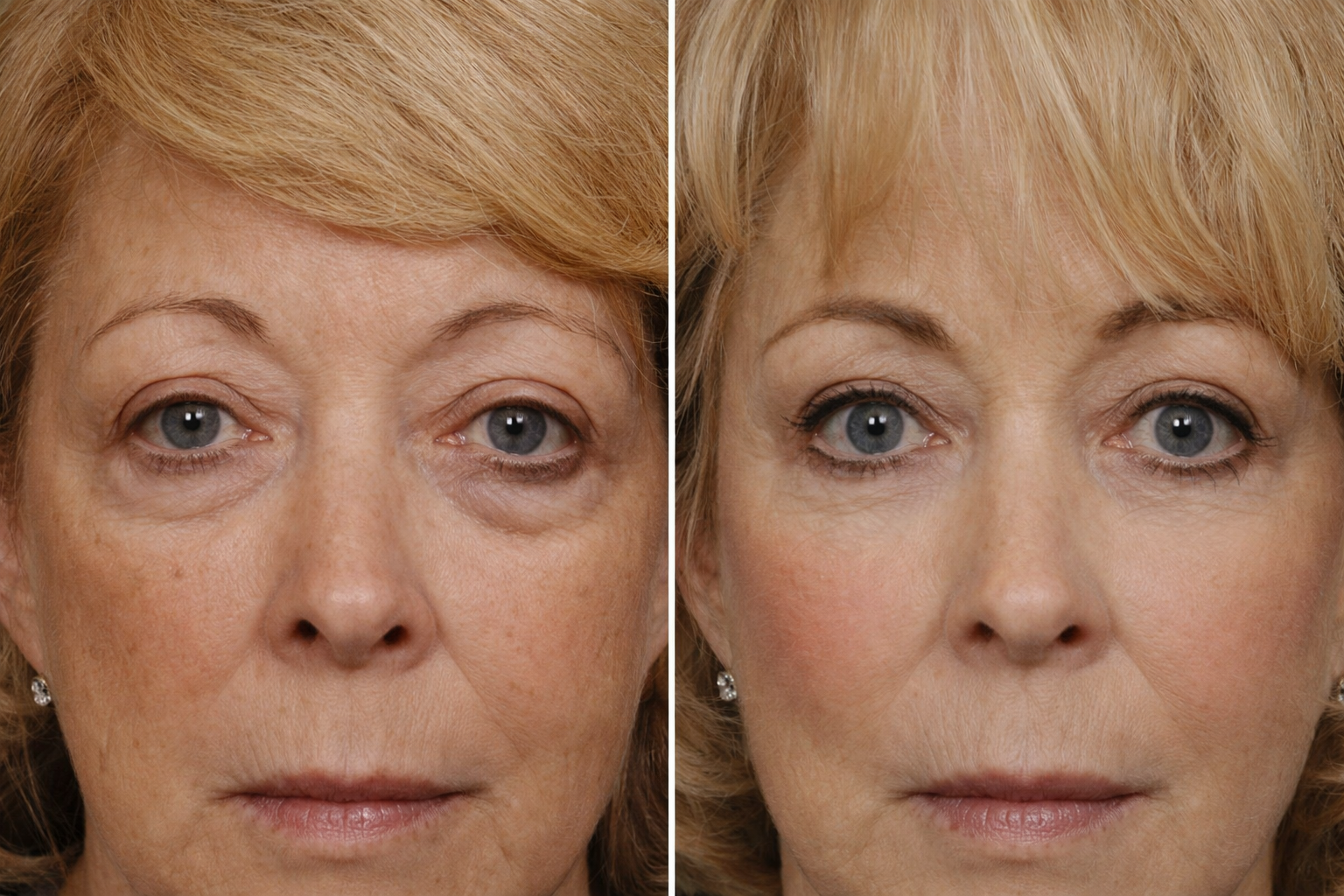
Fillers do not change bone structure or stop aging. Results are temporary and fade as the product is absorbed.
Chin Filler Safety and Side Effects
The chin contains important blood vessels and nerves, which makes the technique critical. Common side effects include swelling, bruising, and tenderness, which usually resolve within days. More serious complications are rare but possible if filler enters a blood vessel.

Anatomical knowledge and careful injection help reduce risk. Treatment performed by board-certified providers and expert injectors supports safer outcomes. Dr. Joel Kopelman approaches chin filler planning conservatively, based on individual structure and proportion.
Who Should and Should Not Get Chin Filler
Good candidates include adults with mild to moderate chin weakness, healthy skin, and realistic expectations. Patients should understand that results are temporary and that fillers have defined limits. Bite alignment and jaw position are also reviewed during evaluation.
In cases of significant skeletal retrusion, filler alone may not provide adequate support or a defined jawline. Adding volume cannot correct jaw position or replace surgical procedures aimed at structural correction. A clear discussion of these limits helps patients make informed decisions.
If you want to learn whether chin filler or another option is appropriate for your facial structure, scheduling a consultation allows for a personalized medical evaluation and a clear discussion of next steps.