

Dermal fillers for neck wrinkles are injections that help soften horizontal lines and fine creases, common signs of aging, by adding light support under the skin. They are often used as part of neck rejuvenating care for early wrinkles caused by movement or posture, but they do not tighten loose skin or replace surgery.
Dr. Joel Kopelman, a facial plastic and oculoplastic surgeon at Kopelman Aesthetic Surgery, approaches treatment with an anatomical and safety-first approach.
Key Takeaways
- Dermal fillers for neck wrinkles can improve horizontal lines and early creases, but they do not tighten loose skin or replace surgical procedures.
- Neck fillers require a conservative technique because the neck has thin skin, important blood vessels, and constant movement.
- Filler selection depends on anatomy and wrinkle depth; not all facial fillers are suitable for the neck.
- Results are subtle and temporary, with gradual improvement and short-term swelling possible.
- A medical evaluation is essential to determine candidacy and manage risk.
Do Dermal Fillers Get Rid of Neck Wrinkles?
Yes, dermal fillers can soften certain neck wrinkles, especially horizontal lines caused by volume loss or repeated skin folding. These changes are often linked to posture-related habits, such as tech neck, in which frequent downward head positioning contributes to early creasing.
Fillers are commonly used to smooth fine lines rather than correct advanced skin laxity. Results are intended to improve texture rather than dramatically alter the neck.
These treatments are considered non-surgical options for mild to moderate concerns, but they do not replace procedures such as plastic surgery for turkey neck. They do not correct loose skin or prominent muscle banding. Understanding these limits supports realistic expectations. A clinical assessment helps determine appropriateness.
Can You Put Filler in Neck Wrinkles?
Yes, filler can be placed in select neck wrinkles, but careful technique is required. The neck contains thin skin, underlying muscles, and important blood vessels. For this reason, injections for the neck must be planned conservatively by an experienced medical professional. Patient safety depends on product choice and placement depth.
How Neck Fillers Work
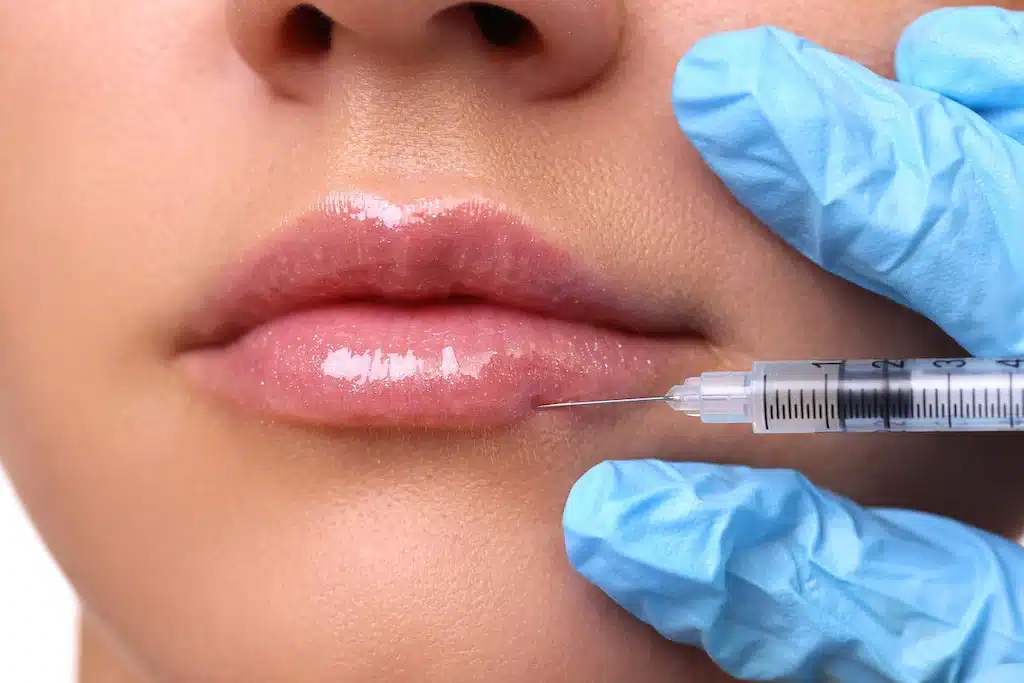
Neck fillers add volume beneath the skin to reduce the appearance of lines and shallow folds. Products used in the neck are designed to integrate smoothly with the surrounding tissue. They support the skin rather than stretch it. The effect develops gradually as the filler settles.
The neck responds differently from the face due to thinner skin and constant motion. Small placement errors can be more noticeable. This is why neck fillers require a restrained approach. Conservative dosing helps maintain natural movement.
Patients often describe the injections as mildly uncomfortable rather than painful. Sensations may include brief pressure at the injection site, which typically resolves quickly. Local anesthetics, or topical numbing agents, are commonly used to provide pain relief. Most appointments are completed within 30 minutes, depending on the extent of treatment.
Dermal Fillers for Horizontal Neck Lines
Horizontal neck lines are among the most common concerns treated with fillers. These lines often form due to posture, repetitive motion, and skin thinning over time. Dermal fillers for horizontal neck lines and fillers for neck lines are used to soften creases without adding bulk. Treatment focuses on blending the line into the surrounding skin.
Deep or etched lines may only partially improve. Some cases may benefit from a combination of care, such as posture correction or physical therapy, to address contributing factors. Clinical judgment guides whether fillers are appropriate. Not all lines should be filled.
Best Dermal Fillers for Neck Wrinkles
The neck needs soft, flexible fillers because the skin is thin and moves often. Fillers used in areas like the cheeks, often discussed when reviewing the best facial fillers, are often too firm and may look uneven in the neck. Choosing the wrong product can make lines more visible instead of smoother.
Hyaluronic acid fillers are most often used for neck wrinkles, and understanding the difference between filler and hyaluronic acid helps explain why they are commonly chosen for this area. They blend well under the skin, help smooth out fine lines, and allow natural movement. In some cases, collagen-stimulating fillers may be used in small amounts, but only when skin thickness allows.
Filler choice depends on anatomy, wrinkle depth, and neck movement.
Neck Filler Results: Before and After
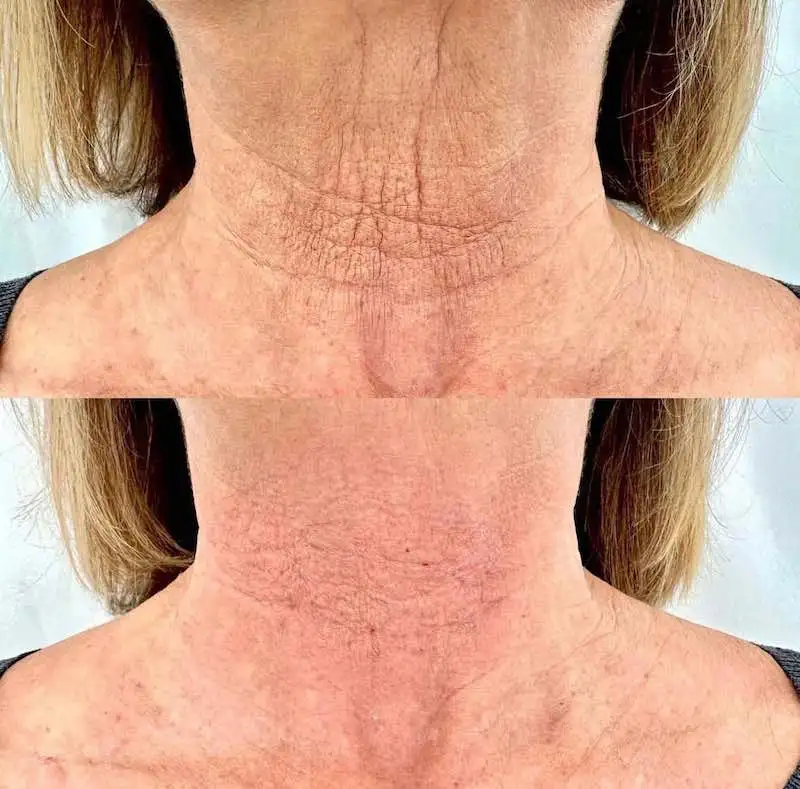
Changes before and after neck filler treatment are usually modest. Most patients notice softening of lines rather than a dramatic change. Filler swelling may temporarily affect appearance in the first few days. Final results become clearer as the filler settles.
Neck filler results often appear subtler than those of facial treatments. Thin skin and constant movement limit the effectiveness of dramatic correction. Fillers are used to soften lines, not add volume. This distinction helps set expectations for long-term maintenance rather than permanent change.
Botox vs Fillers for Neck Wrinkles
Botox and fillers address different causes of neck aging. Botox relaxes muscle activity and can reduce vertical banding. Fillers address volume loss and surface creases. In some cases, both may be used together.
Choosing between them depends on whether wrinkles are caused by muscle movement or skin structure. Dr. Kopelman evaluates this distinction during consultation. Using the wrong approach can limit improvement. Accurate diagnosis is essential.
Safety, Risks, and Side Effects
The neck contains blood vessels located closer to the skin than in many facial areas. This anatomy increases the need for careful injection depth and technique. Dermal fillers are cosmetic injections and are not placed in the epidural space, unlike spine-related procedures such as a cervical epidural steroid injection. They are also unrelated to treatments like facet joint injection or conditions such as spinal stenosis.
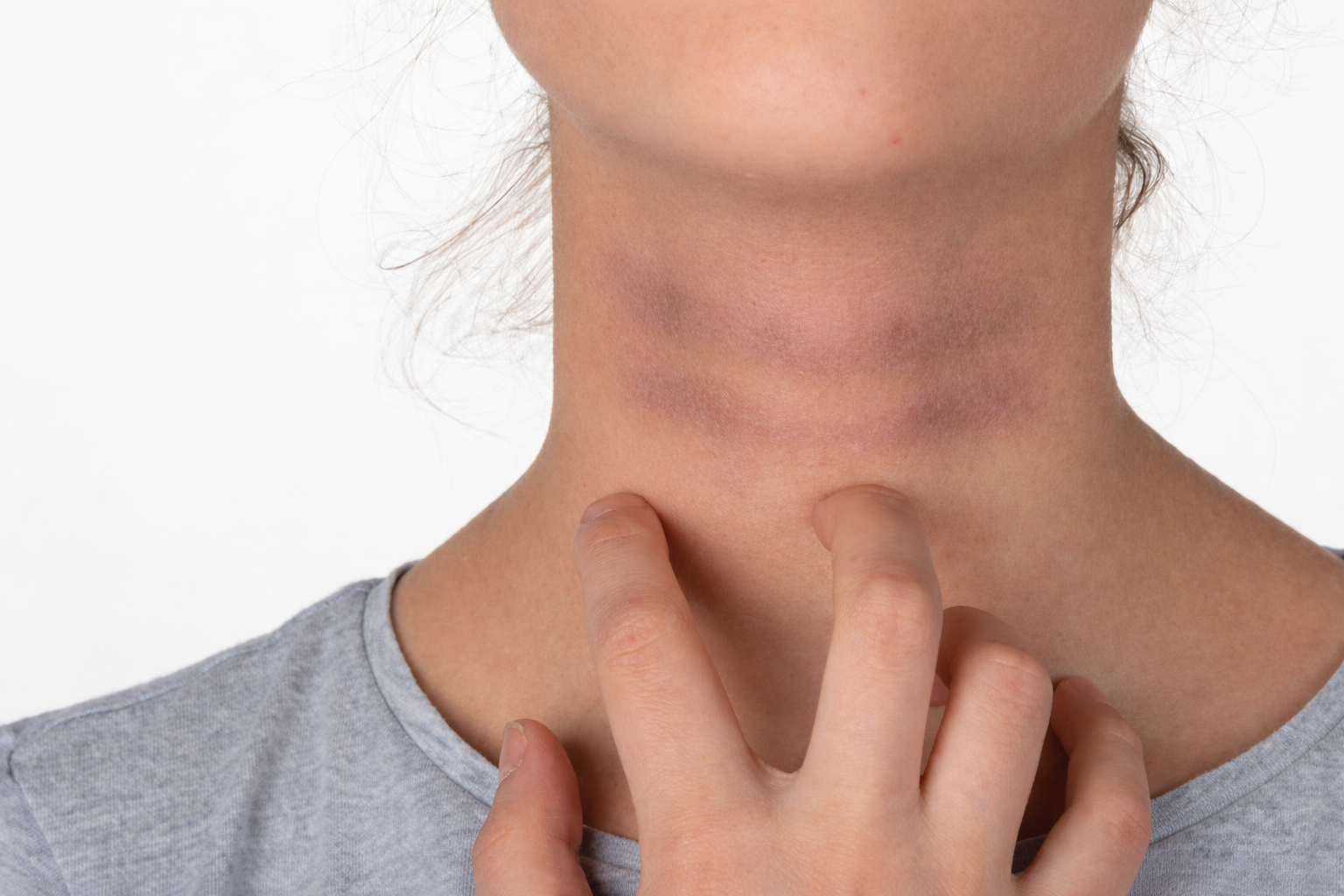
Common side effects include swelling, bruising, and tenderness. These effects usually resolve within days. Some patients use anti-inflammatory measures such as cold compresses to reduce discomfort. Serious complications are uncommon but possible.
Who Is a Good Candidate?
Good candidates for neck fillers have mild to moderate wrinkles and good skin elasticity. They should not be seeking treatment for chronic neck pain or conditions requiring pain management. Overall health and medical history are considered. A physical exam determines suitability.
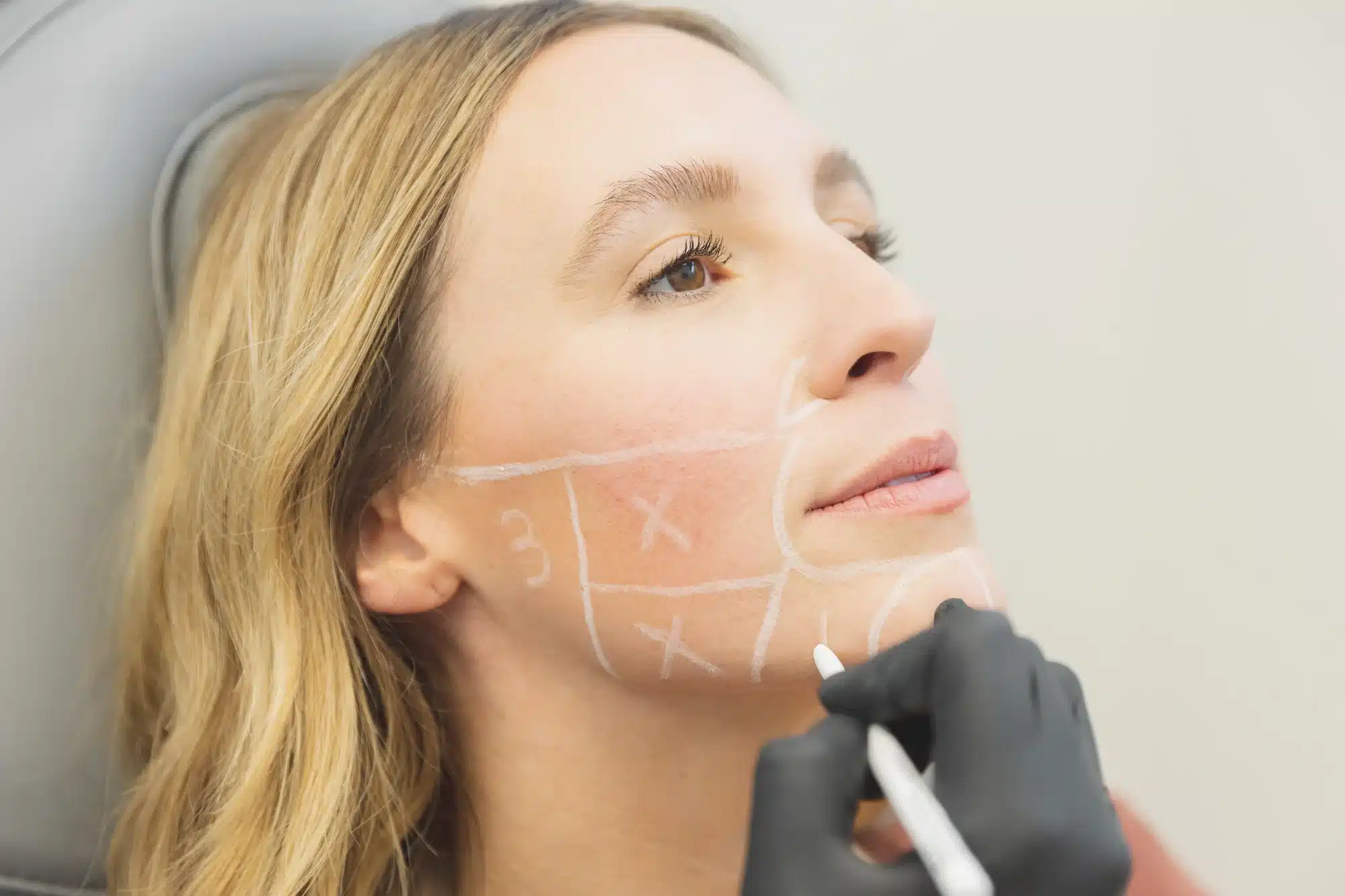
Providers assess skin thickness, elasticity, wrinkle depth, and neck movement. These factors guide treatment decisions. Candidacy is based on anatomy, not age. Individual evaluation supports safe care.
Professional Evaluation and Treatment Planning
A professional evaluation helps determine whether dermal fillers for neck wrinkles are appropriate. This includes assessing skin quality, movement, and underlying anatomy. Dr. Kopelman emphasizes individualized planning rather than standardized treatment. Each neck presents unique considerations.
Treatment planning prioritizes safety, subtle improvement, and informed decision-making. Fillers are a cosmetic treatment option and do not replace care such as physical therapy, pain management strategies, or spine-related procedures.
Medical judgment guides product choice and technique. Careful planning supports responsible aesthetic treatment. Scheduling an evaluation allows for a personalized, medically guided discussion.