Lip filler typically takes about two to four weeks to fully settle, although visible changes occur earlier. Many patients experience noticeable swelling in the first few days, followed by gradual improvement as inflammation decreases.
Subtle changes can continue as the filler integrates with surrounding tissue at the injection sites, which is a normal part of the healing process.
Understanding how long lip filler takes to settle helps patients develop realistic expectations after a lip filler treatment. This article explains the settling timeline, common post-treatment changes, and factors that influence healing using standard clinical guidance applied at Kopelman Aesthetic Surgery.
The information is educational and non-promotional. Clinical context is informed by the work of Joel Kopelman, a facial plastic and oculoplastic surgeon.
Key Takeaways
- Lip filler usually settles over two to four weeks, with noticeable swelling improving within the first 5 to 7 days.
- Swelling peaks between 24 and 48 hours and then gradually declines as part of the healing process.
- Early firmness, unevenness, and sensitivity are common and typically resolve as swelling decreases.
- Individual healing response, filler type, and aftercare influence how quickly lips settle.
- Worsening pain, skin changes, or prolonged swelling should be evaluated by a medical professional.
How Long Until Lip Filler Settles
In most cases, lip filler settles within two to four weeks, although visible swelling improves much sooner. Many patients notice improvement within the first 5 to 7 days, but this is not the final result.
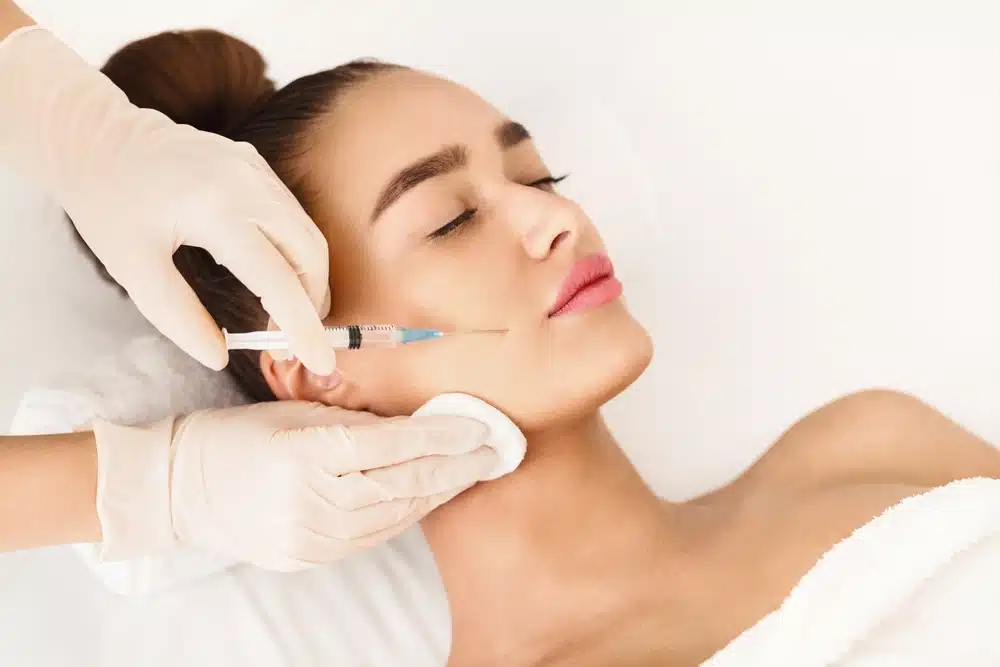
Early changes happen quickly, while deeper tissue adaptation occurs more gradually. Swelling and firmness are expected after lip fillers are placed through lip filler injections.
Full settling occurs once inflammation has resolved and the filler no longer shifts with movement. Understanding this timeline helps patients maintain realistic expectations during recovery.
When Lips Start to Look Normal
Lips often begin to look more balanced within the first week. Swelling has decreased enough to assess shape and proportion, though some firmness may remain. Mild swelling and bruising can still be present and are considered normal at this stage.
This phase reflects improvement rather than the final outcome. Continued healing refines the result.
What Day Lip Filler Swelling Is Worst
Swelling peaks between 24 hours and 48 hours after filler treatments. This inflammatory response reflects the body reacting to lip filler injections at multiple injection sites. Tenderness and firmness are common side effects during this period.
This level of swelling is expected and does not suggest a problem. In most cases, it improves on its own without medical intervention.
When Results Fully Settle
When lip fillers fully settle, it’s typically around 2 to 4 weeks. During this time, dermal fillers soften and integrate into surrounding tissue, answering the question of how long it takes lip filler to settle in, in practical terms.
Settling means swelling and tissue response have stabilized. Changes after this stage are usually subtle.
Lip Filler Healing Process Day by Day
A day-by-day overview helps explain how long lip filler takes to settle in real terms. Healing follows a predictable pattern, although individual variation is normal.
First 24 Hours After Injection
During the first 24 hours post treatment, swelling and sensitivity are common. Lips may feel firm due to inflammation at the injection sites. Patients are often advised to keep their heads elevated, stay hydrated, and avoid alcohol during this early phase.
Proper positioning and hydration support circulation and recovery.
Days 2 to 4 Swelling Stages
Between days two and four, noticeable swelling remains but gradually improves. Bruising may appear as blood thinning effects resolve. Cold compresses can help reduce swelling and bruising.
Some providers may advise patients to gently massage their lips if appropriate, but only when specifically instructed. This guidance depends on filler placement and technique.
Healing Process at One Week
By the end of the first week, most surface swelling has subsided. Lips feel softer, and the shape appears more even. While filler injections are not fully settled, most daily activities are comfortable.
These changes reflect normal inflammatory healing. The final evaluation should be delayed until later stages.
Lip Filler Swelling Stages
Swelling occurs in stages as part of the body’s natural healing. Understanding these stages helps manage expectations and reduce unnecessary concern.
Upper Lip Filler Swelling Stages
The upper lip often swells more due to thinner skin and constant movement. A temporary imbalance is common and typically resolves as the inflammation resolves.
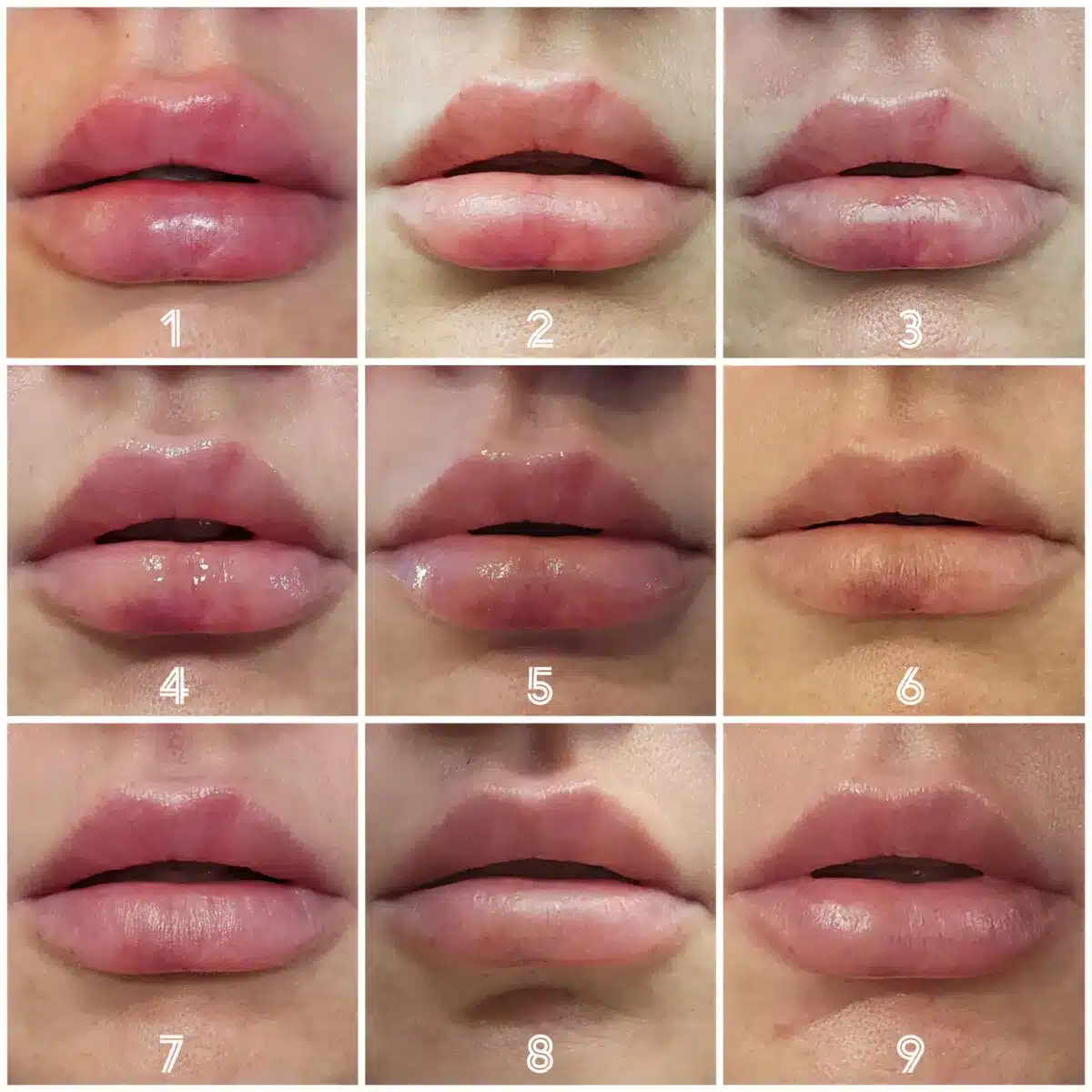
Lip Filler Swelling Stages Photos
Photos show how early fullness differs from later results. Early images often exaggerate volume from swelling rather than from the amount of filler. The final appearance should be judged only after swelling has subsided.
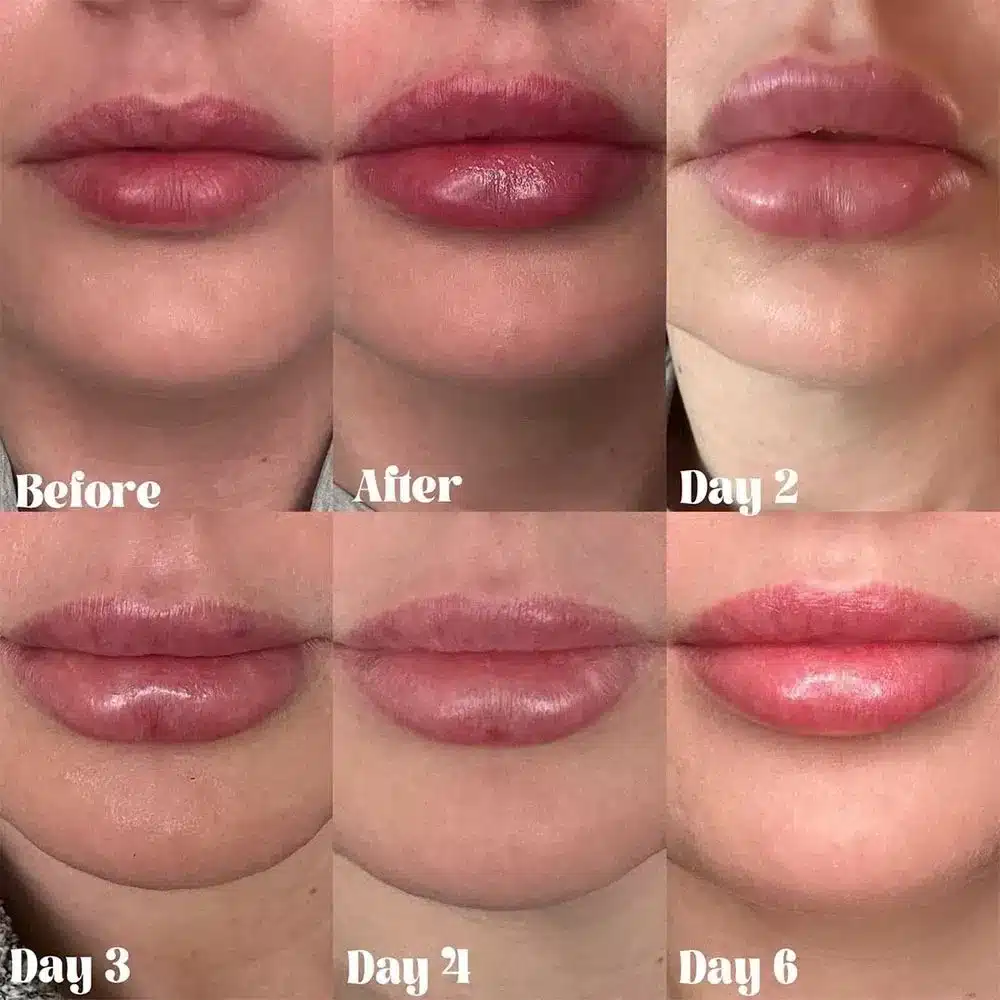
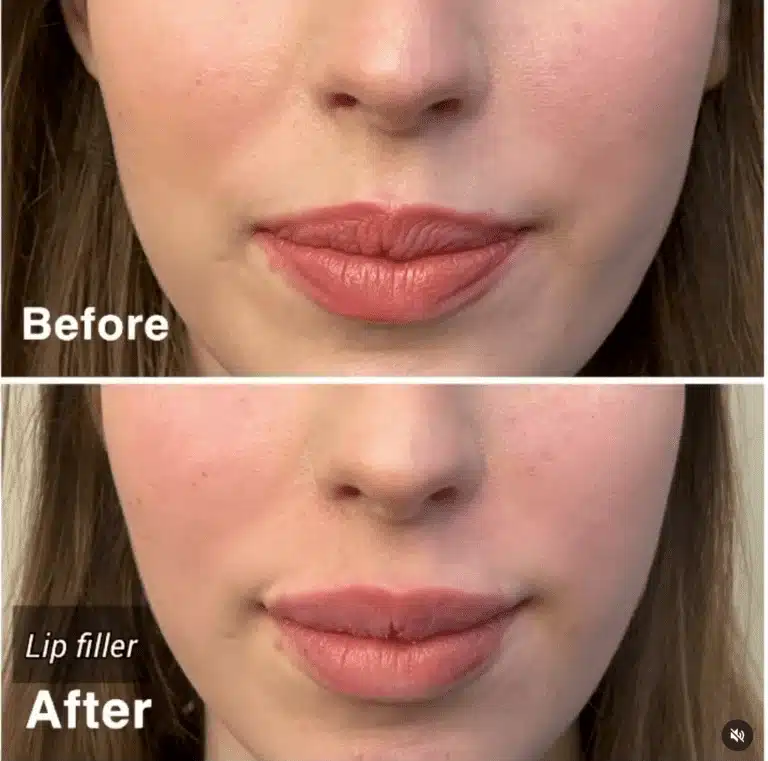
Lip Fillers Before and After Settling
Before settling, lips may appear firm or uneven, sometimes raising concerns about duck lips after filler. After settling, the contours look smoother and more proportional. This contrast shows how long it takes lip fillers to visually settle.
What to Expect During Healing
Healing includes temporary changes in texture, sensitivity, and appearance. These changes are expected and usually resolve with time.
What to Expect 5 Days After Lip Fillers
Around day five, swelling continues to decrease, and firmness softens. Mild tenderness may remain, especially in areas treated with higher filler volume. Shape is more apparent but still developing.
Does Lip Filler Look Uneven at First
Uneven appearance early on is common. Swelling and muscle movement affect how filler treatments settle initially. Balance typically improves as inflammation decreases.
Patience during this phase supports accurate assessment.
What Affects How Long Lip Fillers Settle
Several factors influence how long lip filler takes to settle. These vary between patients and treatments.
Type of Filler Used
Most modern lip fillers are hyaluronic acid fillers, which attract water and integrate gradually. Softer formulations may settle faster, while firmer products take longer to soften.
Injection Technique
Technique and placement depth affect swelling and bruising. Careful technique helps limit tissue trauma and supports predictable recovery.
Individual Healing Response
Each body heals differently. Circulation, hydration level, metabolism, and the body’s natural healing all influence recovery speed.
How to Reduce Lip Filler Swelling
Swelling cannot be eliminated, but steps may help reduce swelling safely. These measures support healing without changing results.
Can Antihistamine Reduce Lip Filler Swelling
Short-term use of an anti-inflammatory or antihistamine may be considered in select cases. This approach should follow provider guidance.
What Helps Swelling Go Down Faster
Helpful steps include:
- Stay hydrated and drink plenty of water
- Keep the head elevated, especially during sleep
- Avoid alcohol and blood thinners such as fish oil
- Use cold compresses intermittently
- Follow guidance on working out after lip fillers
These steps support recovery during a lip filler treatment without interfering with results.
Signs Swelling Is Not Normal
Increasing pain, skin color changes, or blistering are not expected. Patients with a history of cold sores may experience reactivation in treated areas. Persistent swelling beyond expected timelines should be evaluated.
Swelling that worsens rather than improves after several days may indicate a problem. Firm areas that do not soften or undergo temperature changes also require assessment.
When to Contact Your Provider
Contact a provider if swelling worsens, pain increases, or unusual side effects appear. Early evaluation helps rule out complications and ensures proper healing.
This approach reflects standard guidance used by surgeons such as Dr. Kopelman, particularly when symptoms fall outside the expected recovery pattern.
Normal swelling improves steadily over time. If symptoms persist or raise concern, scheduling a consultation with Dr. Kopelman allows for a focused medical assessment and personalized guidance based on your treatment and healing response.