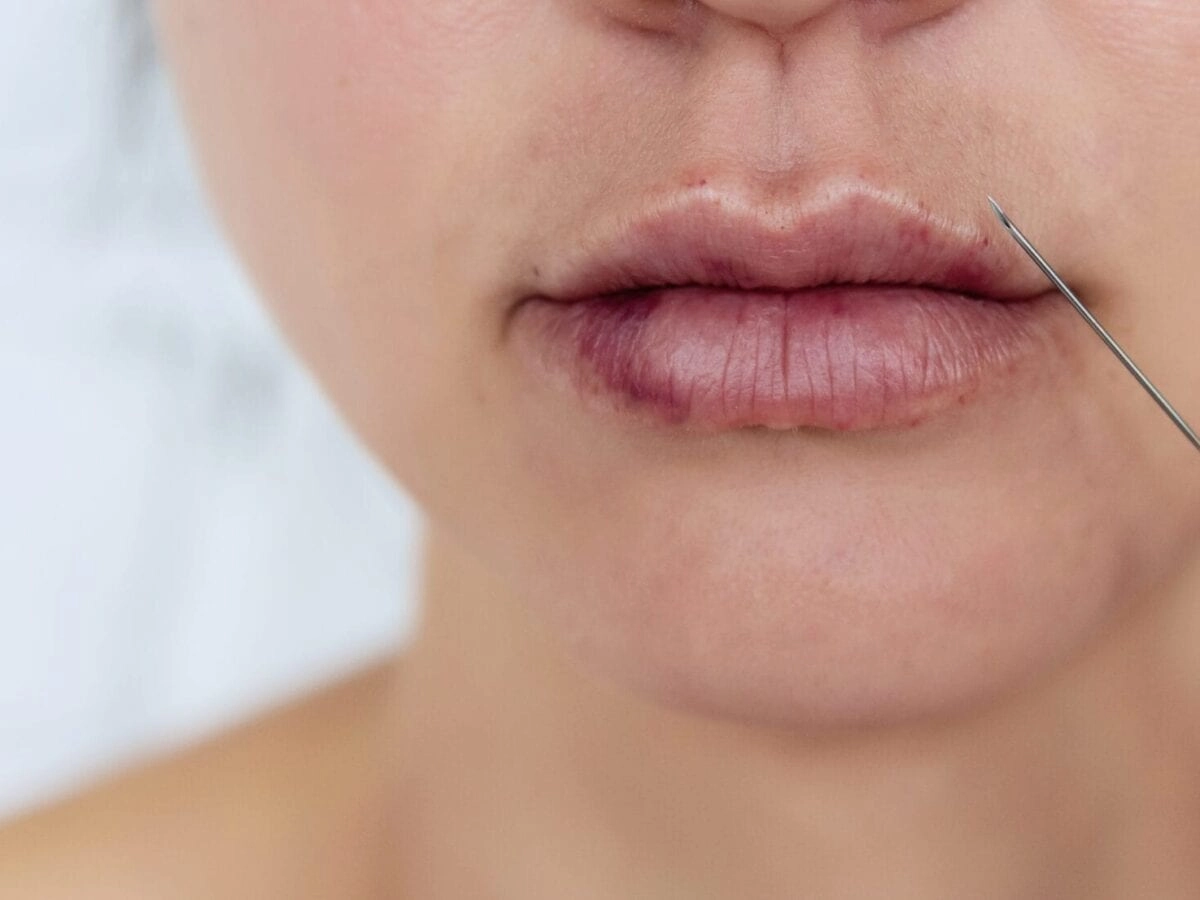


Nose fillers typically last 12–18 months for most patients, depending on filler type, placement depth, and individual metabolism. Nose fillers are a non-surgical method for adjusting nasal shape by injecting fillers at precise points along the nose.
This article explains what affects longevity, recovery time, and how this option compares with plastic surgery, reflecting standard clinical practice commonly discussed by facial plastic surgeons such as Dr. Joel Kopelman at Kopelman Aesthetic Surgery.
Key Takeaways
- Nose fillers typically last about 12-18 months, with duration influenced by filler type, placement depth, and individual metabolism.
- Recovery time is usually brief, but final shape and filler results should be evaluated after two to three weeks once swelling resolves and the filler settles.
- Nose fillers use hyaluronic acid fillers that dissolve naturally, with migration being uncommon when a conservative technique is used.
- Repeat treatments may last longer than first-time injections due to improved tissue support.
- Nose fillers address minor contour concerns and do not replace a surgical rhinoplasty procedure or permanently change nasal structure.
How long do nose fillers last?
Nose fillers generally last between 12 and 18 months for most patients. Treatments typically rely on hyaluronic acid fillers, which are among the most popular fillers and are gradually broken down by the body over time. Because the nose moves less than other facial areas, filler results often last longer than fillers placed in the lips or mouth.
Longevity also depends on how the filler interacts with nasal anatomy. Firmer tissue and lower movement help maintain shape, while blood flow and metabolism influence how quickly the product dissolves. These factors explain why er results and overall filler results can vary between individuals.
How long does a non-surgical nose job last?
When patients ask how long a non-surgical nose job lasts, they often mean a liquid nose job, or liquid rhinoplasty. In most cases, visible contour improvement lasts about one year or longer. Some patients maintain results closer to 18 months when the filler is placed for structural support.
First-time treatments may fade slightly sooner as tissue adapts to the filler. Repeat treatments often last longer because the previous filler provides a stable base within the nose. This does not usually require a larger amount of filler.
Healing and settling timeline
During treatment, small amounts of injectable filler are placed along defined anatomical planes near bone or cartilage. This technique is widely used for filler around the nose to smooth bumps, refine the nasal tip, or improve balance with surrounding facial features.
Precision and conservative volume are essential because the nose has limited space and a complex blood supply.
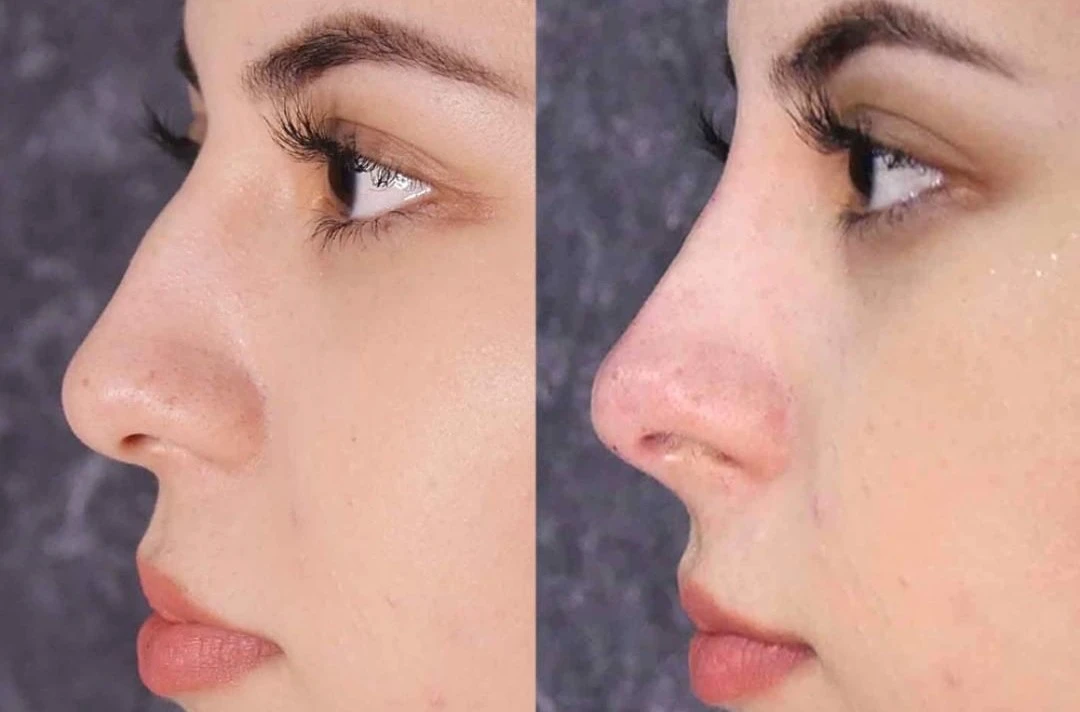
Recovery time after nose fillers is typically 24 to 72 hours, with mild pressure sensitivity lasting up to 7 days. Most patients resume normal activities the same day or within 24 hours.
How long does a nose filler take to settle?
Nose filler typically settles within two to three weeks. During this period, swelling decreases and the dermal fillers integrate with the surrounding tissue. Minor shape changes during this phase are normal.
Final filler results should be assessed only after the filler has fully settled. Early evaluation may not reflect the final contour.
Do nose fillers dissolve or migrate?
Hyaluronic acid fillers dissolve naturally as the body metabolizes them. This process occurs gradually and predictably, preventing sudden changes in appearance. Complete absorption depends on filler density, placement depth, and individual metabolism.
Migration refers to filler shifting from its original position. In the nose, migration is uncommon when injections are performed correctly, and a conservative amount of filler is used. Firm tissue planes help maintain stability.
Can nose fillers be permanent?
Nose fillers are not permanent. Even long-lasting dermal fillers eventually break down and are absorbed by the body. Permanent fillers are not recommended for nasal use due to a higher risk of complications.
Temporary fillers allow adjustment and reversibility. This is important for patients who may later choose a traditional rhinoplasty for structural or functional correction.
What affects how long nose fillers last?
Longevity depends on both biological and technical factors. Age, metabolism, and tissue quality influence how quickly filler breaks down. Lifestyle factors such as smoking may shorten the duration.
The nose behaves differently from other areas of the face. Reduced movement and underlying bone and cartilage support help fillers last longer than in more mobile regions. Injection depth and filler density remain critical.
Side effects and risks
Short-term effects include swelling, redness, or tenderness, which usually resolve within days. Serious complications are uncommon but possible due to the nose’s complex vascular anatomy.

Prompt evaluation is essential if pain, discoloration, or asymmetry occurs. Using reversible hyaluronic acid fillers adds margin of safety.
Is a nose filler a good idea?
Nose filler may be appropriate for patients seeking minor contour refinement or improved balance among facial features. It does not reduce nose size or replace traditional rhinoplasty, which can change your entire face. Understanding these limits helps set realistic expectations.
Unlike a surgical rhinoplasty procedure, nose fillers do not require general anesthesia. Evaluation by a board-certified plastic surgeon helps ensure that non-surgical treatment is appropriate and safe.
Cost and maintenance
The cost of nose fillers typically ranges from $1,200 to $1,500, depending on the type of filler used and the provider’s expertise. Maintenance is usually infrequent because fillers tend to last longer in the nose, and touch-ups are typically conservative and spaced well apart.
Spacing treatments helps avoid overfilling and reduces risk. Conservative maintenance supports safer outcomes and natural contours.
If you are considering nose fillers, scheduling a consultation can help you understand whether a non-surgical approach is appropriate for your goals and anatomy.