Hair Loss Before and After: What Real Results Look Like
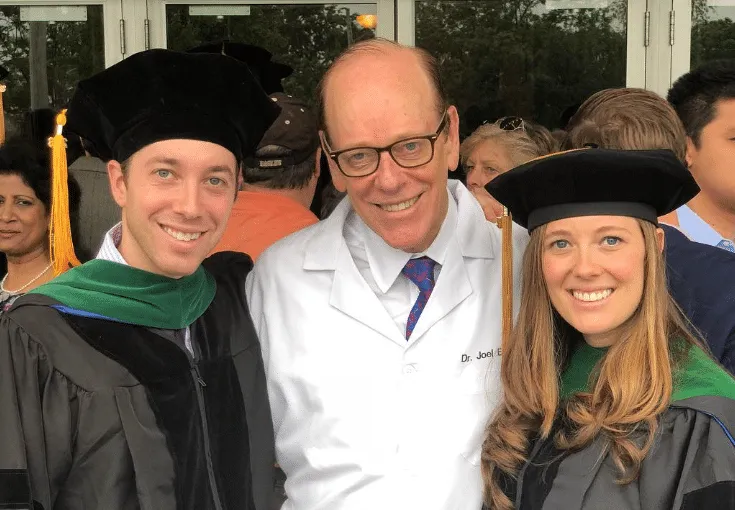
Reviewed by Dr. Joel Kopelman, MD, FACS, board-certified facial plastic surgeon with over 30 years of experience in hair restoration, oculoplastic surgery, and aesthetic procedures across New York, New Jersey, and Palm Beach.
At Kopelman Hair, we specialize in personalized solutions that deliver visible, lasting outcomes. In this guide, we explore real cases of hair loss before and after, showing how the right treatment can restore confidence and appearance. You’ll see exactly what to expect, backed by expert insights and real patient results.
Real Patient Case – Finasteride + PRP Results
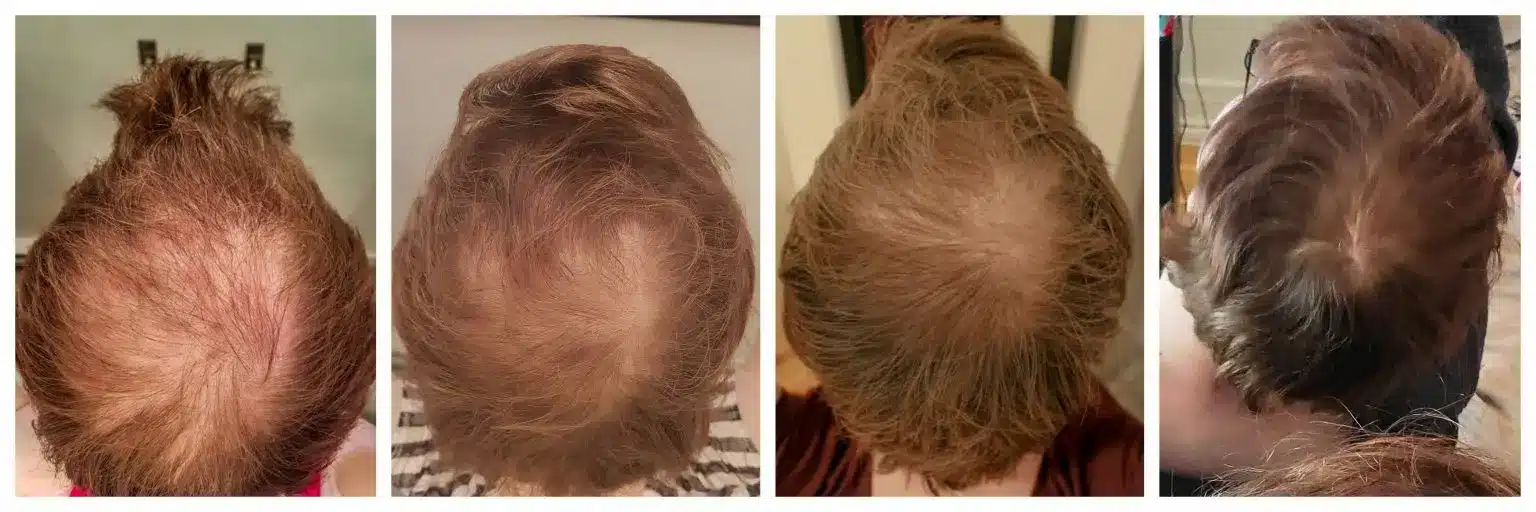
One of Dr. Kopelman’s patients, Daniel (age 32), experienced moderate hair thinning at the crown and temples. After a consultation, he began a combined treatment of finasteride and PRP therapy.
At the 3-month mark, shedding had slowed significantly. By month 6, Daniel reported visible thickening at the crown. After 12 months, he regained strong density and a natural-looking hairline.
This case reflects a typical response timeline for combination therapies, especially when initiated early. Patients with similar patterns often see comparable results under Dr. Kopelman’s care.
Before and After Pictures by Treatment Type
Finasteride
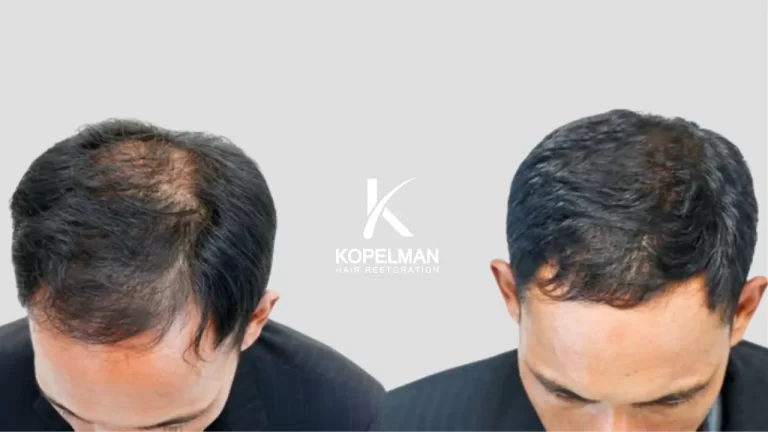
Finasteride helps reduce DHT levels, a hormone linked to pattern hair loss in men. It works by blocking the enzyme 5-alpha reductase, which converts testosterone into DHT. Many patients begin to notice reduced shedding within 3 months. By 6 months, thicker coverage at the crown and frontal hairline is often visible on clinical photos.
The finasteride timeline varies by individual. Early responders may see visible changes within 8 to 12 weeks, while others need a full 12 months before results peak. Finasteride crown regrowth tends to be the most responsive area, with the vertex showing greater density gains than the temples. Consistent daily use is critical; results reverse if the medication is stopped.
PRP
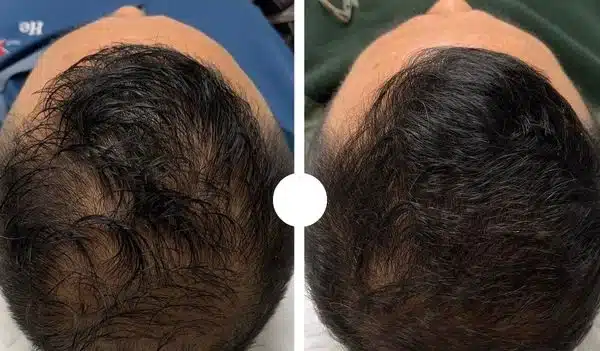
Platelet-Rich Plasma (PRP) uses the patient’s own blood to stimulate hair follicles. A small sample is drawn, processed to concentrate growth factors, and injected into thinning areas of the scalp. Photos typically show better volume and less shedding after 2 to 4 sessions spaced about a month apart.
PRP is commonly used alongside other treatments for enhanced results. It is particularly well-suited for patients who want a non-surgical, drug-free option or who are looking to complement finasteride or minoxidil.
Minoxidil
Minoxidil improves blood flow to the scalp and is widely used for both men and women. It works by opening potassium channels in the scalp, which enhances follicular activity and nutrient delivery. This effect helps dormant follicles re-enter the growth phase and supports regrowth from weakened roots.
Before-and-after images usually show improved hair thickness and reduced hairline recession with consistent daily use. Most patients apply minoxidil twice daily (topical) or take a low oral dose. Visible improvement typically appears within 4 to 6 months, though some patients report reduced shedding within weeks of starting treatment.
Hair Transplant
Surgical transplants relocate follicles from dense donor areas (typically the back and sides of the head) to thinning or balding zones. Two primary techniques are used: Follicular Unit Transplantation (FUT) and Follicular Unit Extraction (FUE). Both produce natural-looking results when performed by an experienced surgeon.
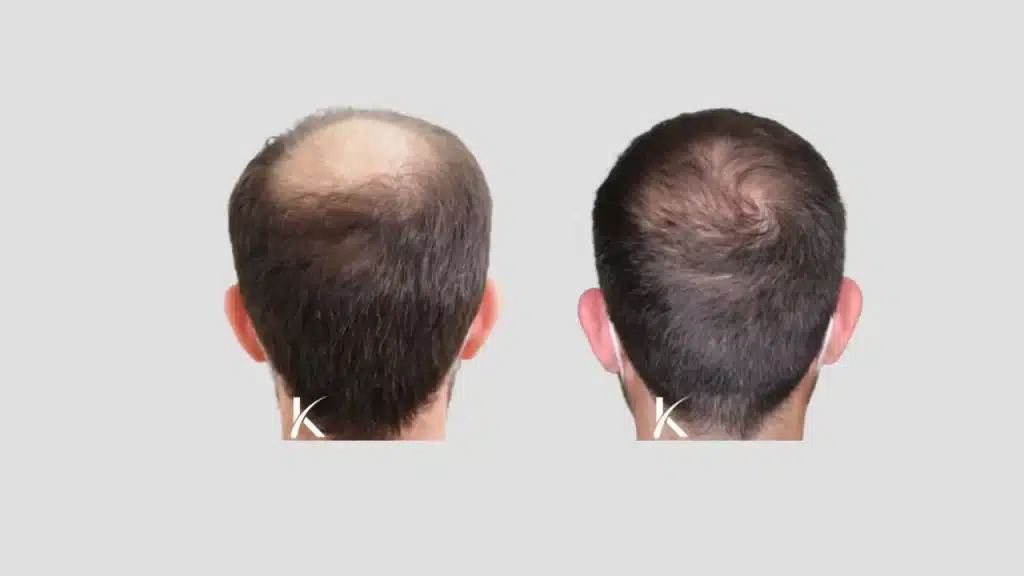
Results are dramatic and long-lasting. Within 6 to 12 months, photos reveal a fuller, reshaped hairline with permanent coverage. Transplanted hairs are genetically resistant to DHT, meaning they continue to grow in their new location for life. The procedure is best suited for patients with stable hair loss patterns and sufficient donor density.
Creatine
Creatine is not a hair loss treatment. It is a supplement used for athletic performance that some men have linked to increased hair thinning. A small 2009 study found that creatine supplementation increased DHT levels by up to 56% in college-age rugby players, drawing attention to a possible connection with androgenetic alopecia.
However, the evidence remains limited and inconclusive. No large-scale clinical trials have confirmed that creatine directly causes hair loss. If you use creatine and notice thinning, it is worth discussing with a hair restoration specialist who can evaluate whether DHT-related shedding is a factor.
Combination Therapy Results
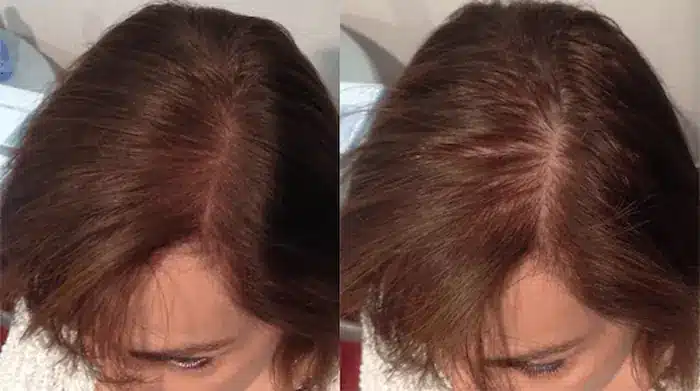
Many of the strongest before-and-after hair loss results come from patients who combine two or more treatments. For example, pairing finasteride with PRP therapy addresses hair loss from both hormonal and regenerative angles. Adding minoxidil to that protocol further boosts follicular activity.
These combination photos help patients visualize realistic progress and set expectations for each stage of regrowth. Dr. Kopelman tailors each regimen to the patient’s hair type, loss pattern, and goals.


Before and After Results by Gender and Hair Type
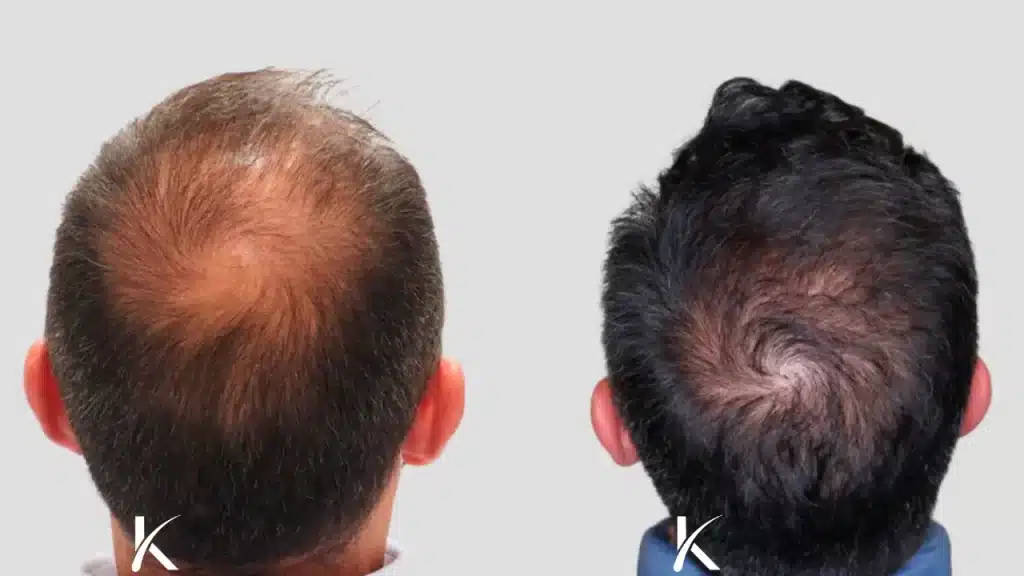
Men
Men often show early improvement at the temples and crown. Treatments like finasteride or transplants provide the most noticeable changes, particularly in patients between Norwood Stages 2 and 4. Finasteride crown regrowth is especially well documented in clinical studies, with roughly two-thirds of men experiencing measurable improvement at the vertex after 12 months of daily use.
For men with more advanced loss (Norwood 5 and above), hair transplant surgery typically delivers the most dramatic transformation. Combining a transplant with medical therapy helps preserve native hair and extend the overall result.
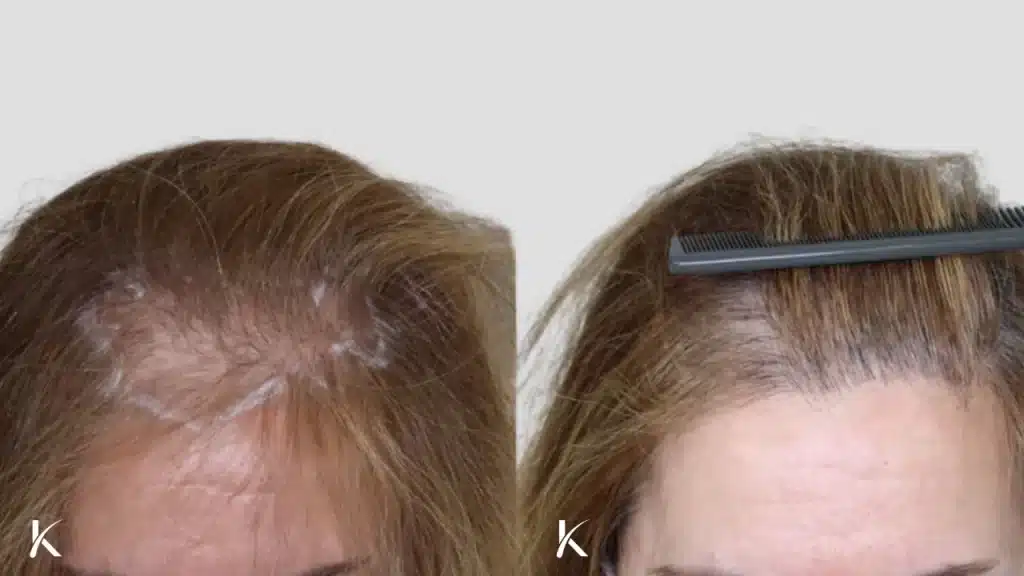
Women
Hair loss in women tends to be more diffuse than in men, with thinning spread across the top of the scalp rather than concentrated at the hairline or crown. This pattern, classified using the Ludwig Scale, affects an estimated 40% of women by age 50.
Before-and-after photos for women typically show increased scalp density, especially after minoxidil or PRP. Because hormonal factors like menopause, thyroid conditions, and iron deficiency can contribute to female thinning, a thorough medical evaluation is an important first step.
Non-surgical options are often the preferred starting point, with many women responding well to oral or topical minoxidil combined with PRP.
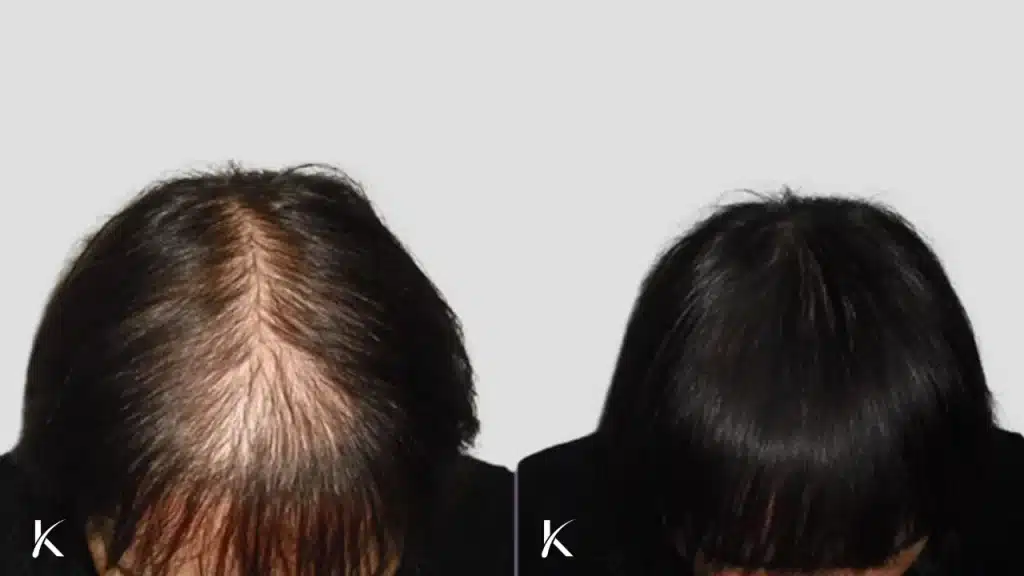
Black Hair
Hair restoration for Black patients requires specialized attention to hair texture, curl pattern, and hairline design. Curly and coily hair types (classified as Types 3 and 4 on the Andre Walker system) present unique considerations for both surgical and non-surgical treatments.
During transplant procedures, the curved follicle shape means extraction and placement must be performed with modified angles to avoid transection (cutting through the follicle during removal). A skilled surgeon adjusts the punch size and angle for each graft to preserve follicle integrity.
Before-and-after photos of Black patients show improved density while preserving natural hairline patterns. PRP and transplants are often adapted to suit curly hair types, and results are best evaluated with dry, styled hair rather than wet or straightened hair, which can mask true density gains.

Hair Thinning Before and After: What to Expect
First Visible Improvements
Early signs of success include less shedding and a thicker feel when styling. These changes can appear within weeks of starting treatment, well before new growth is visible. Patients often notice fewer hairs on the pillow, in the shower drain, or on their brush.
Actual regrowth takes longer. New hairs start as fine, short vellus hairs that gradually thicken into terminal hairs over several months. This is why before-and-after hair loss photos taken 6 to 12 months apart tend to show the most striking differences.
Commonly Affected Areas
Thinning typically starts at the crown, temples, or part line. In men, the hairline recedes at the temples first, followed by thinning at the vertex. In women, the part line widens gradually. Recognizing where your thinning is most pronounced helps your doctor choose the right treatment approach and set realistic expectations about which areas will respond best.
| Treatment | Best For | Typical Timeline | How It Works |
|---|---|---|---|
| Finasteride | Men with crown or vertex thinning (Norwood 2 to 5) | 3 to 6 months for visible change; 12 months for peak results | Blocks DHT production by inhibiting 5-alpha reductase |
| PRP | Men and women seeking a non-surgical boost | Improvement after 2 to 4 sessions; maintenance every 6 to 12 months | Concentrated growth factors injected into the scalp stimulate follicular activity |
| Minoxidil | Men and women with diffuse thinning | 4 to 6 months for visible results | Increases blood flow and extends the hair growth cycle |
| Hair Transplant | Patients with stable loss and sufficient donor hair | 6 to 12 months for full growth from transplanted follicles | Permanently relocates DHT-resistant follicles from donor to recipient areas |
| Combination Therapy | Patients seeking maximum regrowth | Varies by protocol; often faster than single-treatment approaches | Addresses hair loss through multiple mechanisms simultaneously |
Understanding Your Hair Loss Stage
Before choosing a treatment, it helps to know how far hair loss has progressed. Two widely used classification systems help doctors and patients communicate about severity and plan treatment accordingly.
The Norwood Scale (Men)
The Norwood scale is the standard classification system for male pattern baldness. It ranges from Stage 1 (no significant hair loss) to Stage 7 (extensive loss across the top of the scalp with only a band of hair remaining around the sides and back).
Stages 1 to 2 involve minor recession at the temples. At Stage 3, the recession deepens and may include early thinning at the crown. Stages 4 and 5 show significant thinning on top with a shrinking bridge of hair between the front and crown. By Stages 6 and 7, the bald areas merge into one large region.
Treatment response tends to be strongest at Stages 2 through 4, when follicles are miniaturized but still alive. Patients at Stage 5 or beyond may benefit most from surgical transplants.
The Ludwig Scale (Women)
The Ludwig scale classifies female pattern hair loss into three grades. Grade I involves mild thinning across the top of the scalp, often noticeable as a widening part line. Grade II shows more pronounced thinning with visible scalp showing through. Grade III represents extensive thinning over the entire crown area.
Unlike men, women rarely develop a receding hairline. Instead, thinning is diffuse and centered on the midline. PRP, minoxidil, and combination protocols tend to produce the best results for women, especially at Ludwig Grades I and II.
Yes, if the follicles are still alive and capable of producing hair. Miniaturized follicles (those producing thin, short vellus hairs) can often be revived with the right treatment. Once a follicle is completely scarred or destroyed, regrowth from that follicle is no longer possible. That is why early intervention produces better results.
Sometimes. Temporary shedding caused by stress, childbirth, illness, or nutritional deficiency (known as telogen effluvium) often resolves on its own once the underlying cause is addressed. However, androgenetic alopecia, the most common form of pattern hair loss, is progressive and usually requires ongoing treatment to slow or reverse.
There is no single cure for hair loss today, but proven treatments can produce significant, lasting improvement. Research into hair cloning, stem cell therapy, and gene-based treatments continues to advance.
In the meantime, Dr. Kopelman uses evidence-based methods with strong clinical track records, including finasteride, minoxidil, PRP, and surgical transplantation.
Most patients notice reduced shedding within 4 to 8 weeks. Visible regrowth and thickening typically appear between 4 and 6 months. Full results from medical treatments are usually evident by 12 months.
For hair transplants, the transplanted hairs shed within the first few weeks (a normal part of the process), then begin regrowing around month 3 to 4, with full density reached by month 12.
Being consistent with your treatment plan is key. Stopping medication or skipping PRP sessions can reverse progress.
What to Expect From Hair Loss Treatment
Can Lost Hair Grow Back?
Yes, if the follicles are still alive. Early care gives better results.
Can Hair Loss Stop Naturally?
Sometimes, like after stress or childbirth. But long-term hair loss usually needs help.
Will Hair Loss Ever Be Cured?
There’s no one cure, but proven treatments do work. Dr. Kopelman uses safe and science-backed methods.
How Long Until You See Results?
Most people notice a change in 4–6 months. Being consistent is key.
Your Next Step
Get a plan built for your hair type, goals, and timeline. Schedule a consultation with Dr. Kopelman today. Start your path to visible, lasting change.
Schedule a Consultation
For Hair Loss Treatment
To schedule a private consultation with Dr. Kopelman, please call the office or request an appointment online.