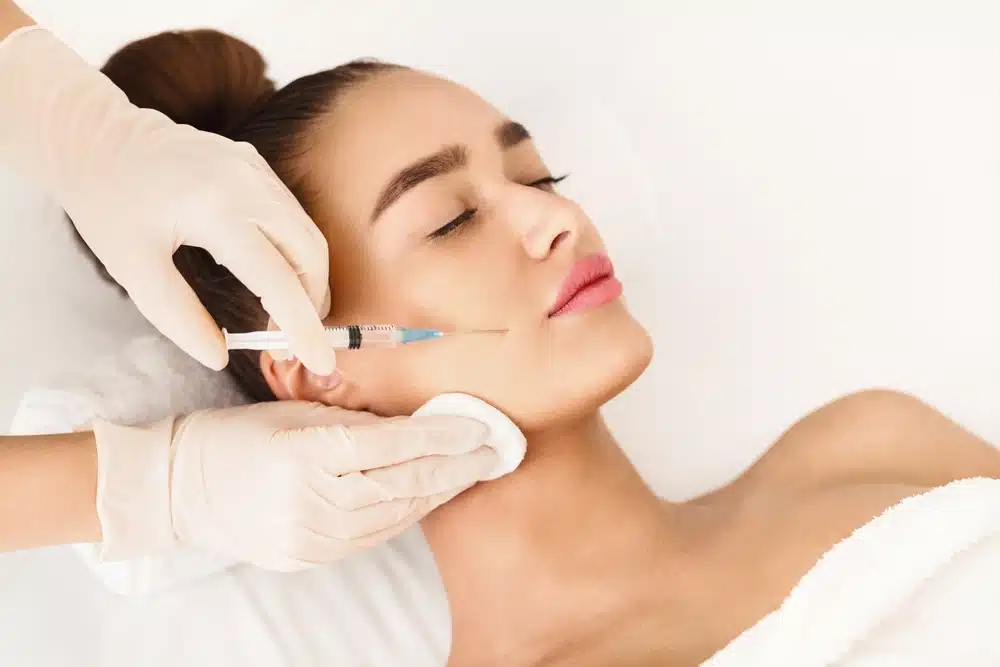
Duck lips after fillers occur when lip injections cause the upper lip to project forward unnaturally, usually due to excessive amounts of filler, poor injection technique, or incorrect placement. While swelling is common in the first 24 hours, true duck lips persist after healing and reflect overfilling rather than normal recovery.
This article explains how the issue develops, how to distinguish swelling from overcorrection, and how to prevent or address it when using dermal fillers for lip enhancement, based on clinical guidance from Dr. Joel Kopelman, a board-certified surgeon at Kopelman Aesthetic Surgery.
Key Takeaways
- Duck lips after fillers usually result from excess volume, poor injection technique, or product migration rather than the filler itself.
- Early swelling within the first 24 hours can exaggerate lip shape, so final results should be assessed after one to two weeks, once inflammation has resolved.
- Persistent forward projection or stiffness after healing often indicates overfilling and may require professional evaluation.
- Using conservative amounts of filler, respecting lip proportions, and planning treatment carefully help patients achieve naturally balanced lips with natural-looking results.
- Non-medical methods cannot correct true overfilling, and timely assessment by qualified plastic surgeons supports safer outcomes.
What Are Duck Lips After Fillers?
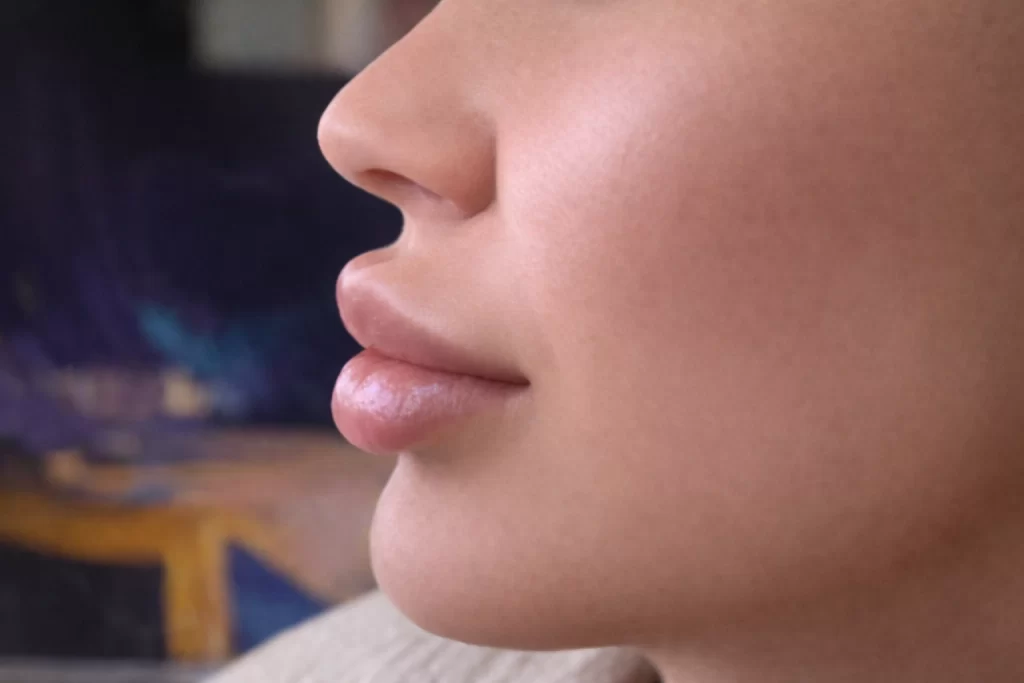
Duck lips refer to a forward-projecting upper lip that disrupts natural balance. The lip may appear stiff, overly rounded, or pushed outward rather than softly contoured. This look is often more noticeable when speaking or viewed from the side.
The appearance usually results from filler placement that does not follow natural lip anatomy. In many cases, the issue relates to how and where the filler sits rather than the specific product used for lip injections. Understanding this distinction helps set realistic expectations.
Duck Lips After Fillers: Myths vs Reality
Many patients assume exaggerated fullness always means something went wrong. Early swelling can temporarily distort lip shape, especially during the first 24 hours after treatment. This does not always indicate overfilling.
Another common belief is that duck lips only occur when too much filler is used. Placement, anatomy, and injector experience often matter more than volume alone. Clarifying these points helps reduce unnecessary concern.
Common misconceptions include:
- Swelling always means overfilling
- More filler guarantees a better shape
- Duck lips always resolve on their own
Why Duck Lips Happen
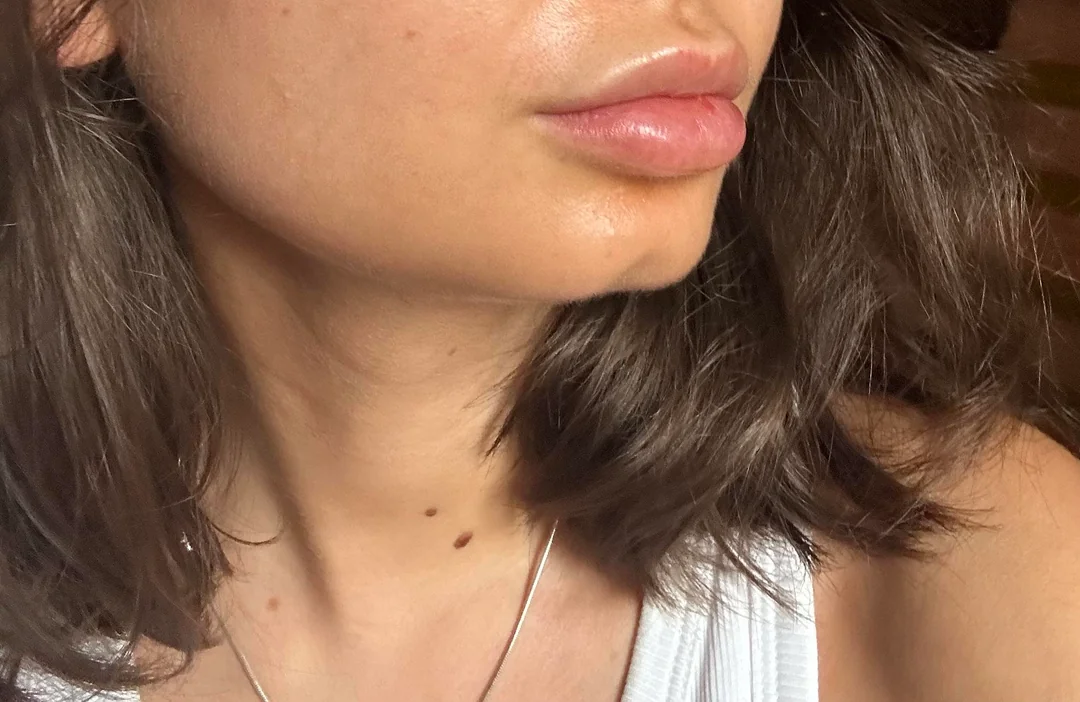
Duck lips often occur when too much filler is injected in a single session. Excess volume can overwhelm lip tissue and force it forward beyond its natural contour. This is more likely when aesthetic goals exceed the lip structure’s capacity.
Technical factors during injection also play a role. These factors affect how hyaluronic acid fillers behave within lip tissue and how they spread after placement.
Common contributors include:
- Large amounts of filler are placed at once
- Injection above the natural lip border
- Migration into the unsupported tissue
Placement above the vermilion border can blur the lip line and create forward projection. Migration over time can worsen this effect if the filler moves out of its intended plane.
Duck Lips After Fillers: Temporary or Permanent?
Swelling is common after lip injections and can mimic overfilling. This early fullness often settles as inflammation decreases. Most patients see clearer results within one to two weeks.
During the first week, tightness or uneven fullness may occur. By the second week, swelling usually subsides enough to assess the true lip shape. Persistent projection after this point suggests overcorrection.
How to Tell If Your Lips Look Overfilled
Signs of overfilling are easier to identify once swelling resolves. A common indicator is an upper lip that projects forward more than before treatment. This is often more noticeable during speech or smiling.
Texture and movement also matter. Lips that feel firm or resist natural motion may indicate a structural issue rather than swelling.
Signs include:
- Upper lip protrusion in side profile
- Loss of cupid’s bow definition
- Stiffness with facial movement
How to Identify Duck Lips
Excessive forward projection is a common sign, especially in profile. The upper lip may extend farther than the lower lip, creating an imbalance. Definition along the lip border may also be reduced.
Stiffness when smiling or speaking can occur. Lips may feel heavy or appear tense rather than flexible. These features suggest filler-related issues.
Duck Lips Fillers Before and After
Immediately after treatment, lips often appear fuller due to inflammation. This stage does not reflect the final outcome. Early photo comparisons can be misleading.
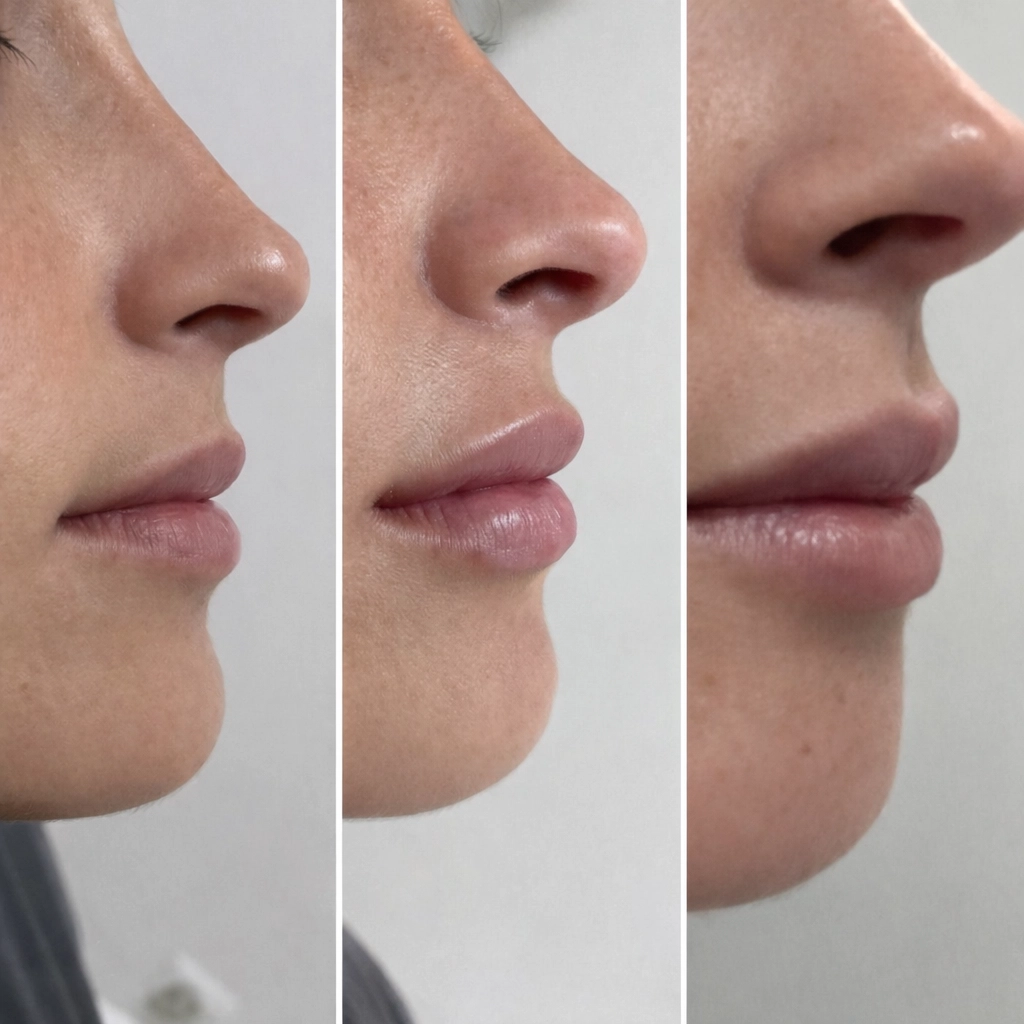
Before-and-after assessments are most accurate after healing, especially when reviewing lip filler before and after photos. Results are usually smoother and more balanced when lip enhancement is done conservatively. Persistent duck lips become more noticeable over time.
What to Do If You Notice These Changes
If signs appear within the first week, observation is usually appropriate, especially while following guidance on activities such as working out after lip fillers. Swelling can distort lip shape before tissues settle. Time allows clearer evaluation.
If features remain after two weeks, evaluation is recommended. At that point, filler behavior is more stable. This waiting period is typical for lip augmentation before reassessment.
How to Avoid Duck Lips With Lip Fillers
Prevention starts with careful planning and technique. Providers assess anatomy, facial balance, and tissue limits before adding volume. Gradual treatment supports safer refinement.
Key principles include:
- Using a small amount of filler per session
- Respecting natural borders and proportions
- Avoiding upper lip overcorrection
These steps reduce risk and support natural-looking results aligned with a long-term natural result rather than short-term overfilling.
How to Fix Duck Lip Fillers
Correction depends on the cause and severity. In some cases, waiting for swelling to resolve is enough. When excess lip filler remains, hyaluronidase may be used.
Revisions focus on restoring balance rather than adding volume. Careful reassessment guides decisions. The goal is proportionate with minimal tissue disruption.
How to Get Rid of Duck Lips Naturally
Natural improvement is limited once the filler settles. Mild swelling may decrease with time, hydration, and rest. Massage should only be done if advised.
True overfilling does not resolve on its own. Non-medical methods cannot remove filler, including misplaced products. Understanding limits prevents delays in care.
When to See a Specialist
Persistent protrusion after healing warrants evaluation. Changes affecting comfort, speech, or balance should not be ignored. Early assessment can prevent complications.
Sudden swelling, pain, or redness should be checked to rule out an allergic reaction, which is uncommon but possible. A specialist can determine whether observation, dissolution, or revision is appropriate.
If you would like a professional assessment of your lip concerns, you can schedule a consultation with Kopelman Aesthetic Surgery.