

Dermal fillers for hollow cheeks replace lost volume in the midface and restore structural support where fat has diminished over time. By adding volume to specific facial fat compartments, these injectable treatments help rebalance facial contours and soften the appearance of sunken cheeks.
This article explains why cheek hollowing occurs, how fillers are used, safety considerations, costs, and how clinicians plan treatment based on facial anatomy.
Key Takeaways
- Dermal fillers can help correct hollow and sunken cheeks by restoring lost volume in targeted facial areas.
- Cheek hollowing is commonly caused by age-related volume loss, bone changes, weight loss, and genetics, so treatment must be individualized.
- Filler selection and safety depend on anatomy, injection depth, and clinician experience, as the cheek contains essential blood vessels.
- Results, cost, and long-term maintenance vary by filler type, making careful planning an essential part of treatment.
Can Dermal Fillers Fix Hollow Cheeks?
Dermal fillers can help address hollow cheeks by replacing lost volume in specific fat compartments. When placed correctly, fillers support the midface, improve facial contours, and reduce the appearance of sunken cheeks. The goal is structural balance rather than added fullness. In cases where volume loss contributes to laxity, dermal fillers may be considered as part of a broader sagging cheeks treatment approach.
A filler for hollow cheeks is selected based on tissue needs and facial anatomy. Some patients benefit from immediate correction, while others need gradual support. A clinical exam helps determine whether to inject filler and which areas require support.
Why Cheeks Become Hollow or Sunken
Cheek hollowness develops as deep and superficial fat pads thin over time. Bone remodeling with age also reduces support for overlying tissues. These changes are a common result of age-related volume loss and contribute to sunken cheeks.
Weight loss and genetics also play a role. Rapid fat loss can exaggerate hollowing, even in younger adults. Genetics influence fat distribution and the timing of these changes.
Best Dermal Fillers for Hollow Cheeks
Different fillers address different needs in the midface. Selection depends on tissue quality, degree of volume loss, and desired pacing of change. Not every cosmetic procedure or cheek augmentation plan uses the same filler approach.
Hyaluronic Acid Fillers
Hyaluronic acid fillers add immediate volume and can be adjusted or dissolved if needed. They integrate smoothly into tissue and allow controlled correction. These dermal filler injections are commonly used when flexibility is important.
One example is Juvéderm Voluma XC, which is designed for deeper cheek support. It is often selected when cheek filler injections are used to rebuild structure rather than soften surface texture.
Radiesse for Structure
Radiesse provides firmer support and can stimulate collagen production over time. It is often used when deeper structural support is needed or when cheek augmentation is part of a broader facial plan. Proper depth and technique remain essential.
How Fillers Restore Cheek Volume
Fillers restore volume by supporting the cheek at precise depths. Deep placement near bone rebuilds structure, while superficial placement smooths transitions and supports facial contours. Understanding cheek anatomy helps avoid surface irregularities.
Injection Depth and Clinical Technique
Cheek filler injections are planned around specific anatomical planes to restore support safely. Structural volume is typically placed deep, close to the bone, to rebuild midface support without adding surface bulk. This deep support can also reduce downward tension that contributes to nasolabial folds.
Superficial placement is used more selectively to refine contour and blend transitions. Careful technique helps avoid overfilling, which can worsen wrinkles and fine lines rather than soften them. Clinicians inject small amounts slowly, reassessing symmetry and facial movement throughout the process to maintain balance and safety during dermal filler treatments.
You can learn more about how clinicians plan safe placement by reviewing common cheek filler injection points.
Dermal Fillers for Hollow Cheeks Before and After
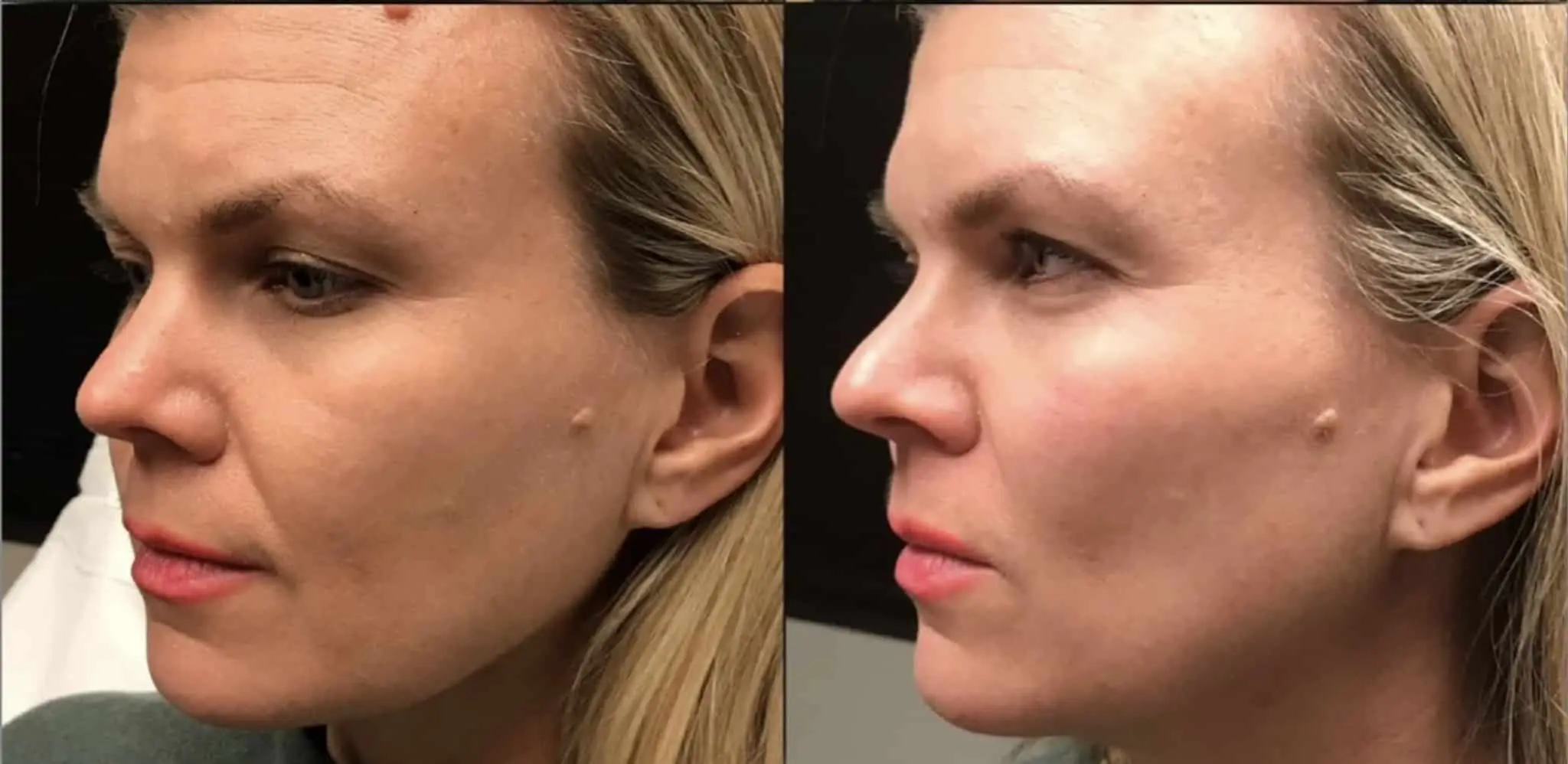
Changes are often visible soon after treatment, though swelling can affect early appearance. The final contour usually settles over several weeks. Results depend on filler type and placement depth.
Longevity varies by product and metabolism. Hyaluronic acid fillers often last 9 to 18 months, while biostimulatory options may last longer. Maintenance planning helps preserve balance over the long term.
Are Cheek Fillers Dangerous?
When performed by trained clinicians, cheek fillers have a defined safety profile. Common reactions include swelling, bruising, and tenderness that resolve within days. These effects are temporary.
Why Cheek Anatomy Matters for Safety
The cheek area contains important blood vessels. If filler enters a vessel, it can disrupt blood flow and cause tissue injury. Anatomical knowledge reduces this risk during injectable filler procedures.
Slow injection, small volumes, and depth control lower complication rates. Discussing the side effects of dermal fillers for hollow cheeks supports informed consent.
Who Should Not Get Cheek Fillers?
Some patients should avoid cheek fillers or delay treatment. Active skin infections, certain autoimmune conditions, or bleeding disorders may increase risk. Pregnancy and breastfeeding are also typical reasons to postpone treatment.
Unrealistic expectations are another concern. Fillers improve structure but do not stop aging. Some patients may need alternatives instead of cheek augmentation.
Treatment Planning and Provider Selection
Effective planning starts with a full facial assessment. Clinicians evaluate bone structure, fat loss, skin quality, and symmetry. This guides filler choice and placement strategy.
Injector experience matters for safety and outcome. Surgeons trained in facial anatomy, such as Dr. Kopelman, emphasize conservative dosing and precise technique. This supports informed decision-making and predictable care.
If you are considering dermal fillers for hollow cheeks, scheduling a consultation can help determine whether this option is suitable for your anatomy and goals.