
Fraxel laser NYC treatment is a non-ablative fractional resurfacing procedure that improves tone, texture, sun damage, acne scars, and fine lines with roughly 3 to 7 days of visible downtime. Most patients need a short series of sessions rather than a single visit, and pricing varies by the size of the treatment area, the wavelength used, and whether sessions are booked individually or as a package.
The Fraxel Dual platform used at our Park Avenue practice on the Upper East Side of Manhattan serves patients from across New York City and the surrounding tri-state area. Patients searching for Fraxel near me travel to the Carnegie Hill office from Midtown, Downtown, the Upper West Side, Brooklyn, Queens, Westchester, and northern New Jersey. The device offers two wavelengths, so treatment can be matched to pigment concerns, texture concerns, or both.
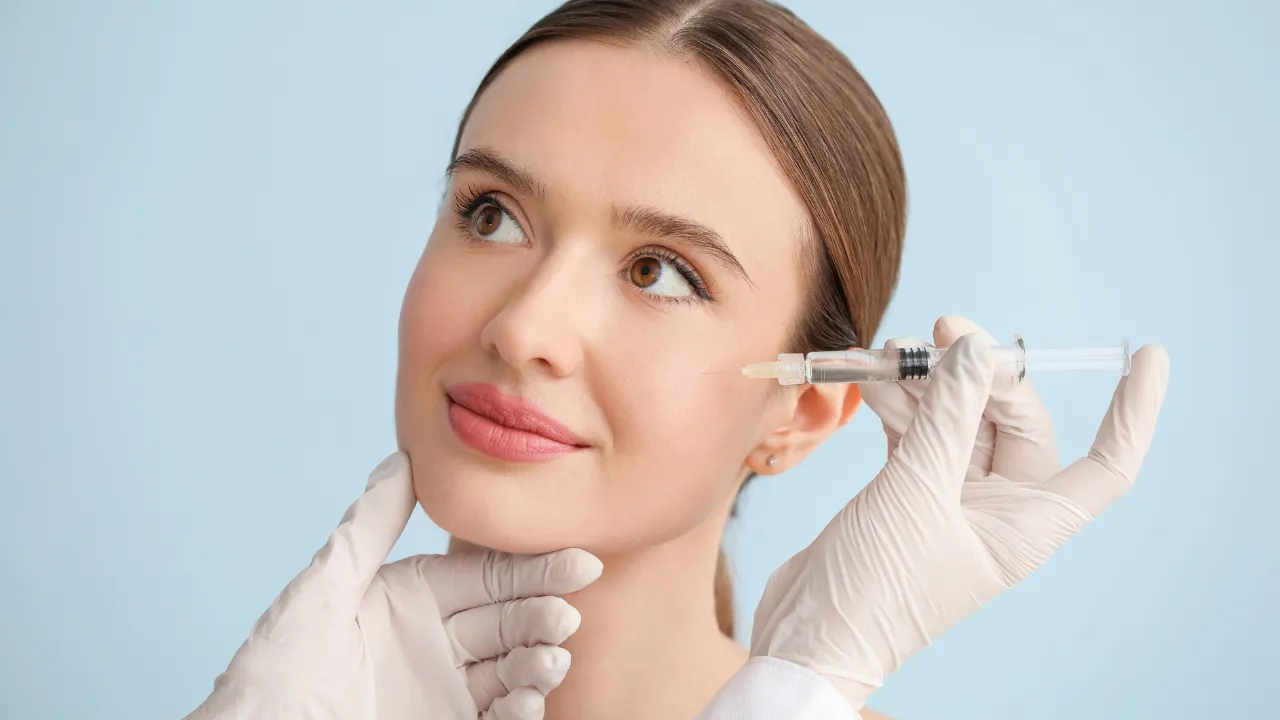
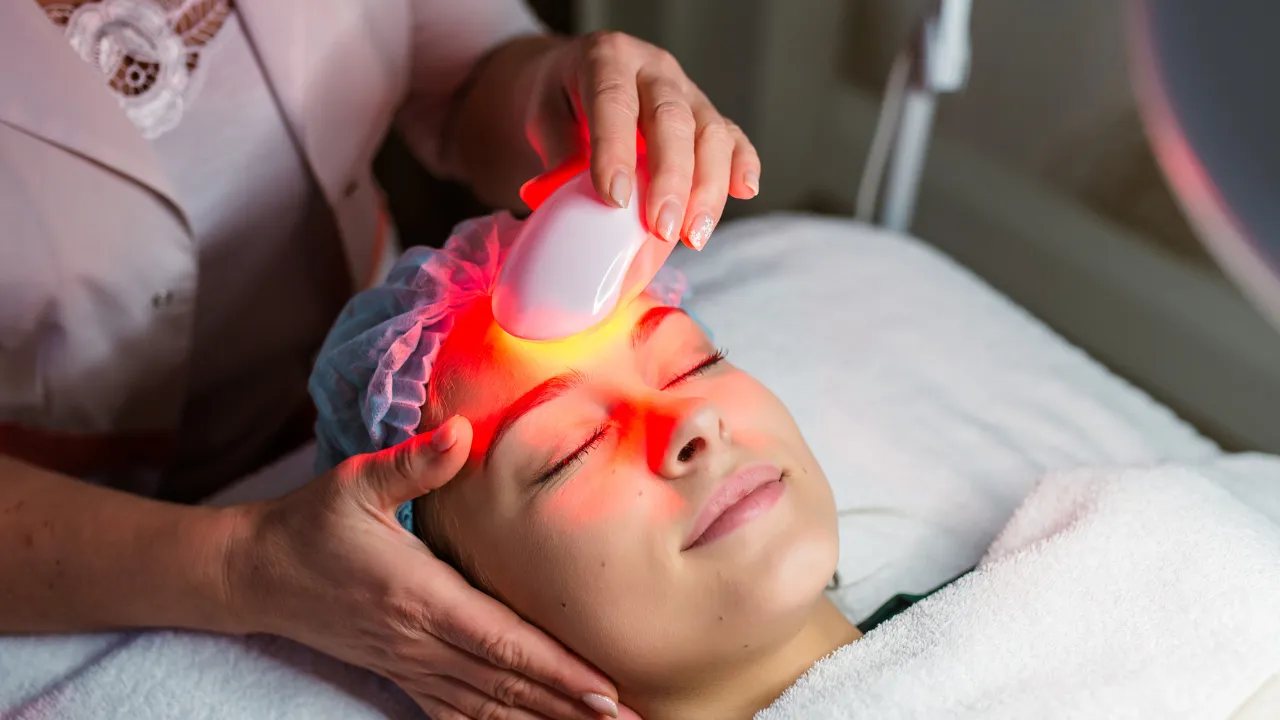
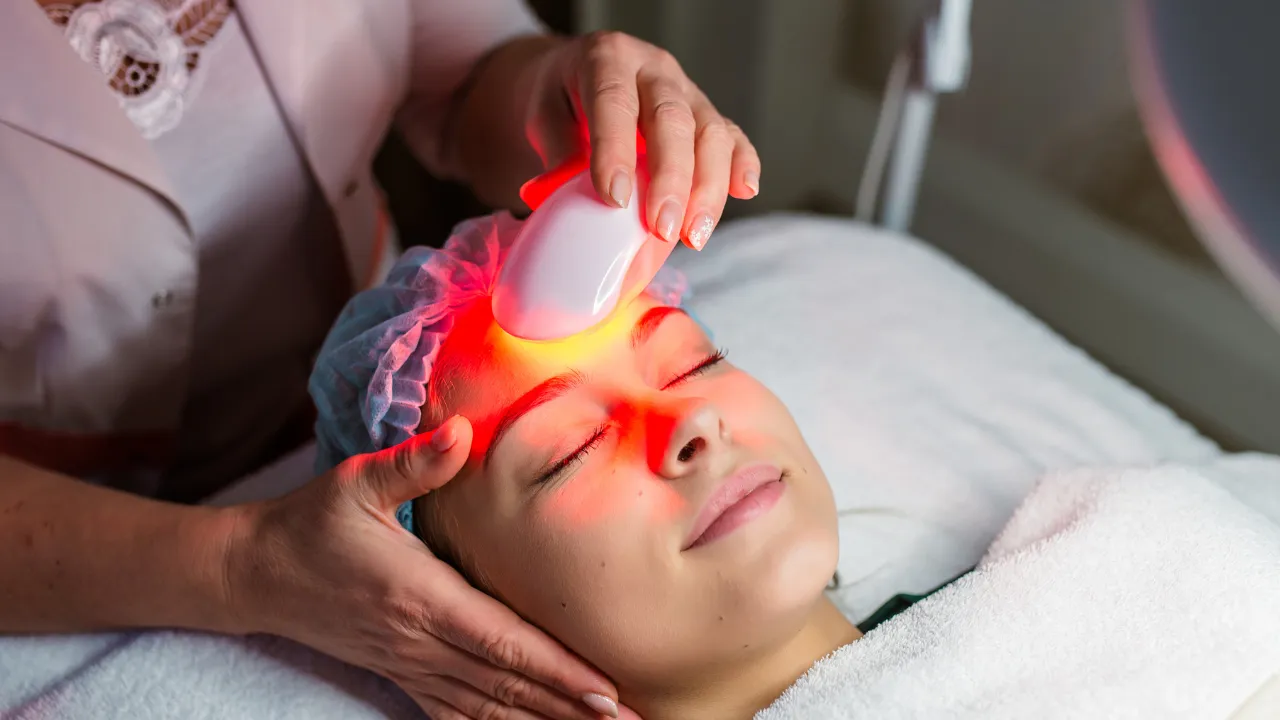
Fraxel is a non-ablative, fractionated laser that stimulates collagen production in the skin’s dermis. The energy emitted by the Fraxel laser triggers a wound-healing response that clears away sun-damaged and wrinkled tissue. The removal of the older skin layer allows a fresh layer to regenerate.
The replacement skin layer carries fewer pigmented cells, forms with improved collagen architecture, and over time shows measurably better tone and texture than the tissue it replaced. Fractionated lasers split the laser light beam into thousands of microscopic beams, treating narrow columns of tissue known as microscopic treatment zones. The untreated columns of skin left in between act as a reservoir of healthy cells that speed regeneration of the treated columns.
Because the device reaches into the dermis and stimulates fibroblasts to produce new collagen, the skin thickens over time. Unlike many other laser resurfacing options available in NYC, Fraxel is safe and effective both on and off the face. Wrinkles and sun damage on the neck and chest respond well, as do stretch marks on the abdomen that follow pregnancy or rapid weight change.
This form of skin resurfacing can also address hyperpigmentation and acne scars. Dr. Kopelman uses Fraxel for superficial wrinkles and an erbium/YAG laser for deeper wrinkles. Fractional laser treatment is also commonly combined with eyelid surgery to address loss of elasticity in eyelid skin and to improve skin quality alongside facelift surgery.
| Detail | What to Expect |
|---|---|
| Procedure type | Non-ablative fractional laser resurfacing |
| Treats | Fine lines, wrinkles, sun damage, hyperpigmentation, acne scars, surgical scars, enlarged pores, stretch marks |
| Treatment areas | Face, neck, chest, hands, abdomen |
| Session length | About 20 to 30 minutes of laser time, plus 45 to 60 minutes for topical numbing |
| Anesthesia | Topical numbing cream; cooling used during treatment |
| Discomfort level | Mild; most patients describe a warm, sunburn-like sensation |
| Typical downtime | 3 to 7 days of redness, swelling, and light peeling depending on wavelength and settings |
| Number of sessions | Commonly a series of treatments spaced several weeks apart; determined at consultation |
| When results appear | Initial brightening within 1 to 2 weeks; collagen-driven results continue over 2 to 3 months |
| Cost | [Insert practice-verified Fraxel pricing or price range by treatment area] |
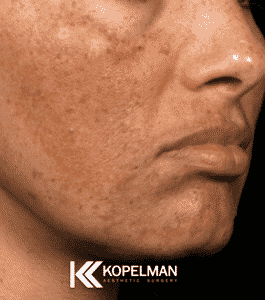
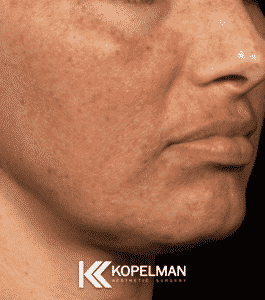
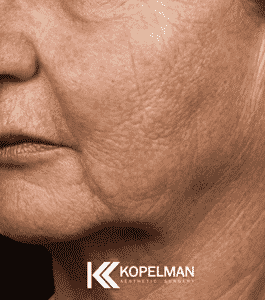
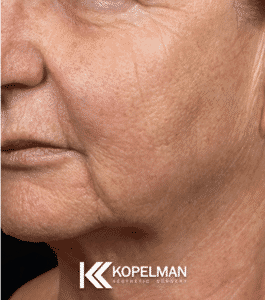
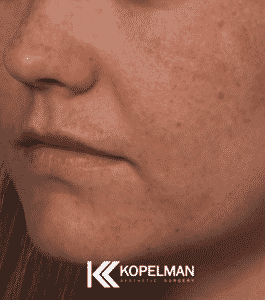
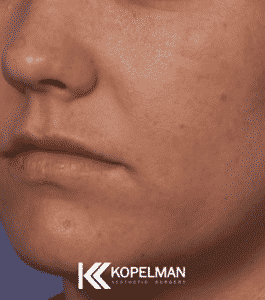
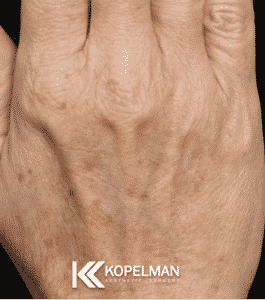
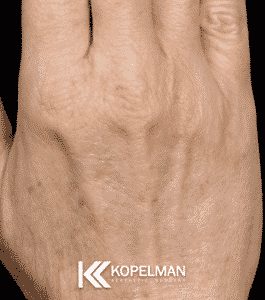
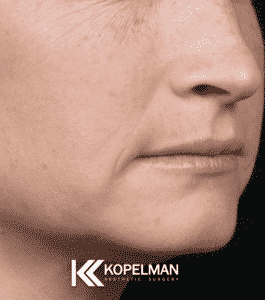
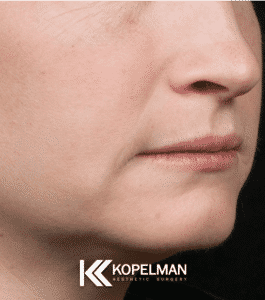
These Fraxel Dual Laser before and after pictures represent actual patients from Dr. Kopelman. They will help you to set realistic goals for your own treatment outcome.
“I decided to have Fraxel laser resurfacing with Dr. Kopelman. He is a very kind and compassionate doctor who spends a great deal of time with his patients. My skin looks fabulous and I am extremely pleased with my results. My husband was so impressed with the results that he also had Fraxel and fillers done. I was so pleased with my youthful skin I decided to have a second Fraxel treatment. Dr. Kopelman and his warm inviting staff are in a league of their own.”
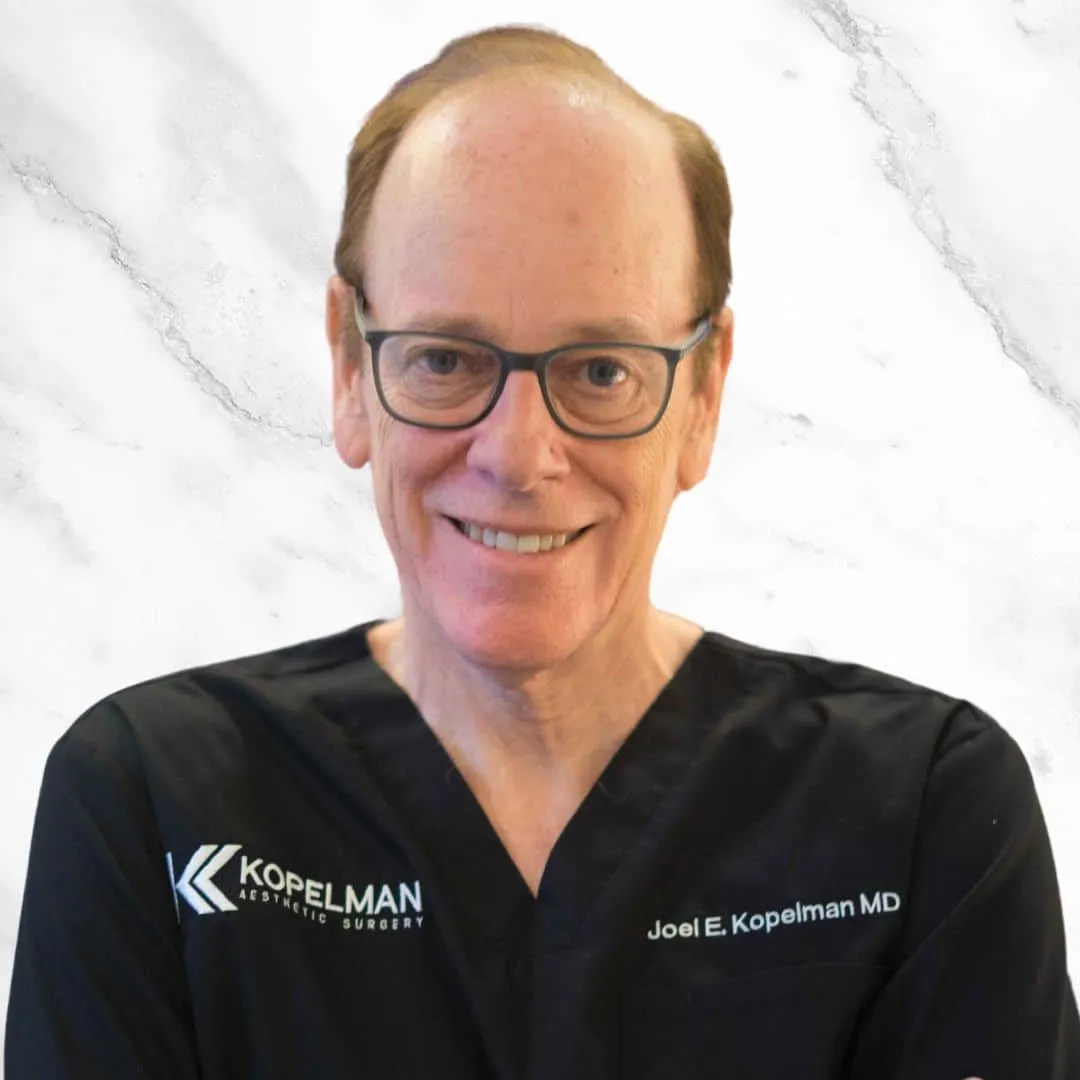
Fraxel at our practice is a physician-guided procedure planned and performed under Dr. Joel Kopelman’s direct oversight. Dr. Kopelman is a fellowship-trained oculoplastic and facial plastic surgeon with more than 35 years of experience in cosmetic rejuvenation of the face, neck, and eyes. He is a Fellow of the American College of Surgeons (FACS) and a member of the American Academy of Facial Plastic and Reconstructive Surgery (AAFPRS), the American Society of Ophthalmic Plastic and Reconstructive Surgery (ASOPRS), and the American Academy of Ophthalmology (AAO).
His clinical focus on periocular and facial anatomy is particularly relevant for laser resurfacing near the eyes, where safety margins are tight and provider experience is a meaningful factor in outcomes. Dr. Kopelman has lectured widely on cosmetic and reconstructive techniques and continues to teach within the aesthetic surgery community.
The Manhattan office at 1112 Park Avenue sits in Carnegie Hill on the Upper East Side, easily reached from Midtown, Downtown, and neighboring boroughs. Patients travel to the program from across Brooklyn, Queens, the Upper West Side, and Westchester, and from northern New Jersey and Fairfield County. Patients closer to New Jersey can also be seen at the Paramus office.
Every Fraxel plan begins with an in-person skin evaluation. The number of sessions, the wavelengths selected, and the intensity used are calibrated to your Fitzpatrick skin type, your history with lasers, and the concerns you want addressed. That is why treatment courses are individualized rather than delivered on a fixed protocol.
The word “Dual” refers to the two laser wavelengths the device delivers. Each wavelength travels to a different depth in the skin, so each one solves a different problem. Understanding the difference is the clearest way to know what your own treatment plan will involve.
The 1927 nm wavelength is a superficial thulium wavelength that targets pigment: sunspots, brown patches, melasma-type discoloration, and dull surface tone. The 1550 nm wavelength is an erbium-doped wavelength that penetrates deeper to remodel collagen, making it a better tool for acne scars, surgical scars, texture, and fine lines.
Many patients benefit from a plan that uses both wavelengths, either in the same session or across a series. This is one of the main reasons a Fraxel laser treatment plan in NYC is customized rather than standardized.
Our practice uses the Fraxel Dual platform. Some patients search for “Fraxel Repair,” which is a separate, fully ablative CO2 device in the Fraxel family that produces more aggressive resurfacing with a longer recovery. Fraxel Repair is not offered at this office; patients interested in stronger ablative correction can be evaluated for alternative approaches during consultation.
Patients researching Fraxel in NYC often weigh it against CO2 laser, chemical peels, and microneedling. The decision between them comes down to how much downtime you can accept, how significant the skin concern is, and whether your skin type limits the options.
CO2 laser is a fully ablative device that removes the epidermis and heats the deeper dermis, producing stronger wrinkle and scar improvement in a single session. Recovery is longer, typically 7 to 14 days, and it is generally reserved for patients with lighter skin who want significant one-time correction rather than a progressive series.
Chemical peels remove the outer skin through a controlled chemical injury rather than laser energy. Superficial and medium-depth peels can improve tone, mild pigmentation, and texture with less downtime than Fraxel, though results are typically less pronounced on scars and deeper wrinkles. Fraxel and chemical peels are sometimes staged across a treatment plan rather than used as substitutes.
Microneedling creates small mechanical channels in the skin to trigger collagen remodeling without laser energy. It is a good option for patients seeking a gentler introduction to resurfacing or for those whose skin type limits laser candidacy. Fraxel generally produces stronger single-session results, but with more visible downtime.
Ideal candidates are adults with fine lines, sun damage, uneven pigmentation, acne, surgical scars, or textural roughness who are generally in good health and can commit to a short recovery window. The procedure can be adjusted for a range of skin types and tones, with settings tailored to your Fitzpatrick classification at consultation.
Timing matters. Fraxel is often best scheduled in the fall or winter, when direct sun exposure is easier to avoid. UV exposure during the healing period can worsen pigmentation and slow recovery, so a consistent sun-protection routine is part of every treatment plan.
Patients with active cold sores, current isotretinoin use, or recent tanning may be asked to delay treatment. Pregnancy and certain autoimmune conditions are also reviewed at consultation. Darker skin tones can be treated, but require careful settings and provider experience to minimize the risk of post-inflammatory hyperpigmentation. Physician-performed sessions are preferred over technician-only care for patients with Fitzpatrick IV to VI skin.
Candidacy is confirmed at an in-person evaluation, where realistic outcomes and any needed pre-treatment steps are reviewed with you.
| Feature | 1927 nm (Superficial) | 1550 nm (Deep) |
|---|---|---|
| Primary target | Pigment and surface tone | Texture, scarring, and collagen |
| Best for | Sun spots, brown spots, freckles, dull or uneven tone, actinic damage | Acne scars, surgical scars, fine lines, enlarged pores, crepey texture |
| Depth reached | Upper epidermis and superficial dermis | Deeper dermis, below the epidermal surface |
| What recovery looks like | Sunburn-like flush, then visible flaking and shedding around days 3 to 5 | Redness and mild swelling, with minimal surface peeling |
| Typical downtime | About 5 to 7 days | About 3 to 5 days |
| When results show | Within 1 to 2 weeks as the treated pigment sheds | Gradually over 1 to 3 months as new collagen forms |
Fraxel laser treatments are ideal for targeting fine lines and wrinkles, including crow’s feet and brow lines. The device is also used for:
Fraxel technology holds FDA clearance for skin resurfacing indications including periorbital wrinkles, pigmented lesions, acne scars, and surgical scars. You can review general guidance on laser resurfacing safety through the American Academy of Dermatology and the American Society of Plastic Surgeons.
Fraxel laser NYC pricing depends on the size of the treatment area, the wavelength or combination of wavelengths used, the number of passes performed, and the number of sessions your skin needs. A single scar or a small area costs considerably less than a full-face session, and a package of sessions is usually priced differently than a one-off treatment.
Across Manhattan, published and patient-reported figures for a single Fraxel session vary widely, from a few hundred dollars for a small, targeted area up to the low thousands for full-face treatment with an experienced physician. Wide gaps in price usually reflect real differences in who is holding the handpiece, how many passes are performed, and what aftercare is included.
| Cost Factor | Why It Changes the Price | Reported NYC Range |
|---|---|---|
| Small or targeted area (single scar, spot) | A single scar or small patch requires far less laser time than a full face | From roughly $325 per session |
| Full-face session | The largest standard treatment area, and the most common request | Roughly $900 to $2,200 per session, depending on the practice |
| Wavelength used | Single-wavelength sessions are priced differently than combined 1927 nm and 1550 nm treatment | Varies by plan; confirmed at consultation |
| Number of passes and intensity | Lower-intensity, fewer-pass sessions cost less per visit but generally require more visits to reach the same endpoint | Reduced-intensity sessions are commonly sold in packages, with 3-session packages reported near $1,500 |
| Number of sessions | Most concerns need a series; packages are typically priced below the per-session rate | Packages priced below the sum of individual sessions |
| Provider performing treatment | Physician-performed treatment is priced differently than technician-delivered treatment | Physician-performed sessions sit at the higher end of the ranges above |
| Included aftercare | Post-treatment skincare, recovery visits, and adjunct treatments may be bundled or billed separately | Some higher-priced sessions include follow-up recovery care in the quoted fee |
Ranges reflect publicly reported and patient-reported NYC pricing and are provided for orientation only. They are not quotes from this practice. For current pricing, please contact the office.
Most patients describe the sensation as mild and comparable to a warm sunburn during and shortly after the session. A topical numbing cream is applied for 45 to 60 minutes before treatment, and cooling air is used on the skin throughout the procedure to minimize discomfort. Warmth and mild tenderness usually settle within one to three hours.
Fraxel can be used across a range of Fitzpatrick skin types, including deeper tones, when settings are chosen carefully. Because pigment-targeting wavelengths carry a higher risk of post-inflammatory hyperpigmentation in darker skin, treatment for these patients is planned conservatively, often using lower energies, fewer passes, or the 1550 nm wavelength preferentially. Candidacy is confirmed after an in-person skin assessment.
“Baby Fraxel” is an informal term for a lighter, lower-energy version of the treatment that trades some per-session correction for reduced downtime and a gentler recovery. It is typically the same device, run at reduced intensity and often spread across a longer series of visits. This approach suits patients who want to maintain skin quality without visible peeling after each session.
Fraxel is a non-ablative fractional laser: it delivers heat energy in narrow columns into the dermis while leaving most of the skin surface intact. Microneedling triggers collagen remodeling mechanically with fine needles, offering a gentler result with less downtime. CO2 laser is fully ablative and removes the top layer of skin, producing stronger single-session correction but with a longer recovery of typically 7 to 14 days.
Fraxel uses laser energy delivered in narrow columns to stimulate collagen and clear damaged cells, while chemical peels use a controlled chemical injury to lift the outer skin. Fraxel typically produces stronger improvement on scars, deeper texture, and fine lines, while superficial and medium peels can be a lower-cost option for surface tone and mild pigmentation. The two are sometimes staged across a treatment plan rather than used as substitutes.
Initial brightening is often visible within one to two weeks, while the collagen-driven improvements build gradually over two to three months. Results are long-lasting but not permanent, since ongoing sun exposure, natural aging, and skin biology continue over time. A maintenance session every 12 to 24 months is common for patients who want to preserve their outcome.
Most patients return to work within 3 to 7 days, depending on the wavelength and intensity used. The 1550 nm wavelength typically produces redness and mild swelling that settles within 3 to 5 days, while the 1927 nm wavelength commonly causes visible flaking around days 3 to 5 that resolves by the end of the first week. Makeup can usually be applied once initial peeling has completed.
After a series of treatments wrinkles, fine lines and sun damage will diminish. The silvery sheen of mature stretch marks will improve and the skin tone will appear more like normal skin. When Fraxel laser skin therapy is used in combination with IPL (intense pulsed light) treatments, the red discoloration of new stretch marks can also be diminished. In order to obtain the best results, usually a series of Fraxel laser and IPL treatments are necessary. The exact number of treatments will be determined based on your response to the procedure. Some patients will get excellent improvement in as little as two treatments but others may require additional sessions depending upon their reaction. The reduced downtime following a Fraxel laser treatment is a big advantage compared to ablative lasers.
Fraxel laser treatments are ideal for targeting fine lines and wrinkles, such as crow’s feet and brow lines. Fraxel targets: acne scars, pigmentation, sun damage, and pores.
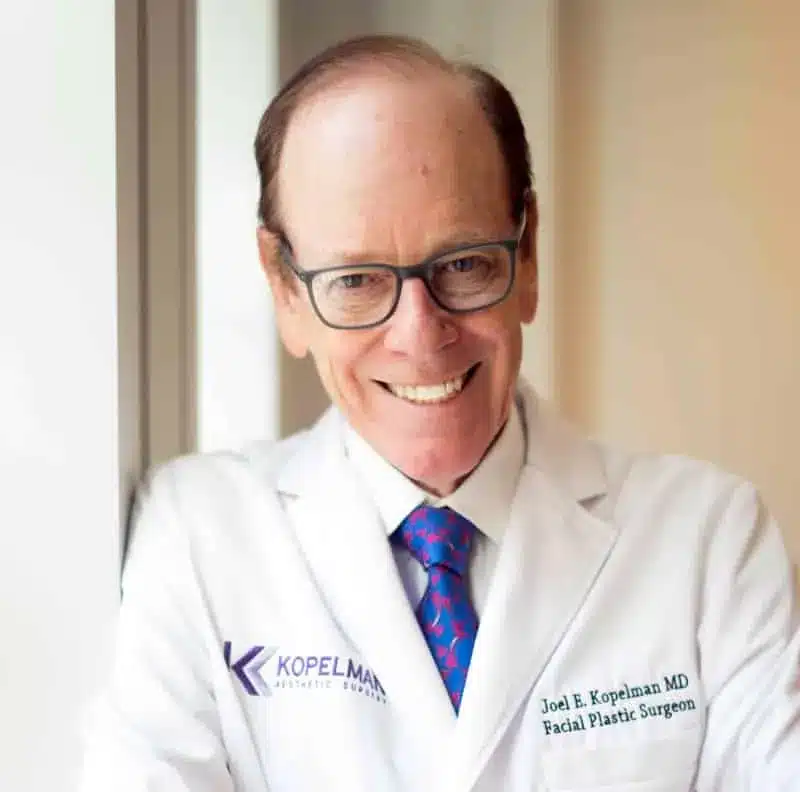
Dr. Joel E. Kopelman is both a facial plastic and oculoplastic surgeon with over 35 years of experience in cosmetic rejuvenation of the face, neck, and eyes. Renowned for his innovative techniques and meticulous approach, Dr. Kopelman has built a reputation as a trusted expert among patients seeking transformative results that are both beautiful and natural.
Page updated in August 2026 by Dr. Joel Kopelman (Facial Plastic Surgeon) of Kopelman Aesthetic Surgery.
Schedule a Consultation
For Fraxel Dual Laser
To schedule a private consultation with Dr. Kopelman,
please call the office or request an appointment online.








Lorem ipsum dolor sit amet, consectetur adipiscing elit. Ut elit tellus, luctus nec ullamcorper mattis, pulvinar dapibus leo.